 carjourney
From the CarJourney journal
Yearly Vehicle Maintenance Guide for Car Enthusiasts

Every vehicle owner knows that regular maintenance keeps cars running smoothly, but yearly vehicle maintenance often gets overlooked in favor of more frequent oil changes and tire rotations. Understanding what needs attention annually versus monthly or quarterly can save thousands in repair costs while extending your vehicle's lifespan. Whether you drive a daily commuter, weekend project car, or modified performance vehicle, establishing a comprehensive annual maintenance routine ensures reliability and preserves value. This guide breaks down everything you need to know about yearly vehicle maintenance, from essential tasks to tracking methods that help you stay organized.
Understanding the Importance of Annual Maintenance
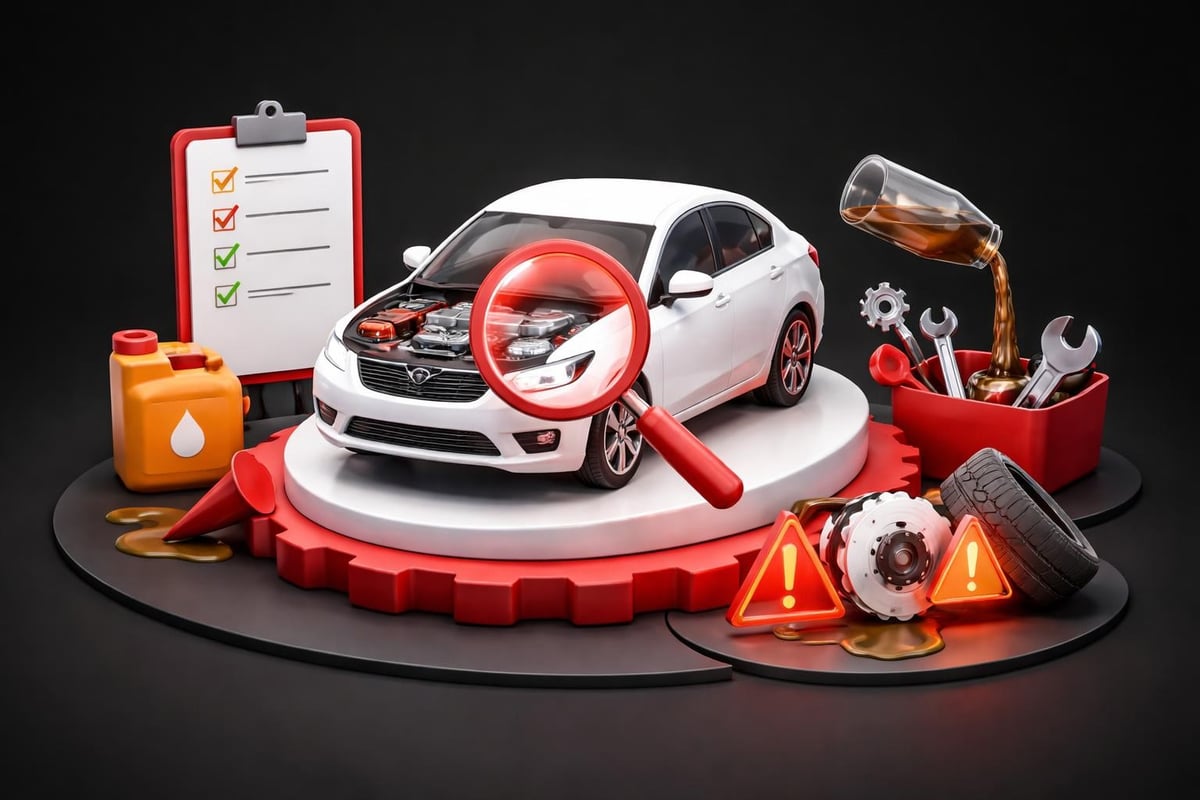
Yearly vehicle maintenance serves as your comprehensive health checkup for your car. While routine tasks like oil changes happen more frequently, annual inspections catch issues that develop slowly over time.
These yearly services focus on components that wear gradually or require attention based on calendar time rather than mileage alone. Rubber seals, fluids with time-based degradation, and seasonal exposure all demand yearly evaluation.
Key benefits of structured annual maintenance include:
- Early detection of wear patterns before they become expensive failures
- Validation that all systems meet manufacturer specifications
- Opportunity to address recalls or technical service bulletins
- Baseline documentation for tracking vehicle condition over time
Many car enthusiasts discover that systematic yearly vehicle maintenance actually simplifies ownership. Rather than reacting to problems, you're preventing them through scheduled intervention.
Essential Yearly Maintenance Tasks
The foundation of yearly vehicle maintenance consists of specific tasks that ensure every major system receives attention. These tasks complement your regular maintenance schedule rather than replacing it.
Fluid System Inspection and Replacement
Several fluids require annual evaluation even if you haven't reached mileage-based replacement intervals. Coolant degrades over time, losing its ability to protect against corrosion and temperature extremes. Most manufacturers recommend inspection annually and replacement every 30,000 to 50,000 miles, though some extended-life coolants last longer.
Brake fluid absorbs moisture from the atmosphere, which lowers its boiling point and can cause brake fade. Annual testing with a moisture meter determines whether replacement is necessary, typically every two to three years.
Power steering fluid, differential fluid, and transmission fluid all deserve yearly checks. While these may not need annual replacement, verifying levels and condition prevents sudden failures.
Brake System Evaluation
Your brake system requires more than just pad thickness checks during yearly vehicle maintenance. Comprehensive brake inspections should include rotor measurement, caliper operation, and brake line condition.
| Component | What to Check | Replacement Indicators |
|---|---|---|
| Brake Pads | Thickness, wear pattern | Less than 3mm remaining |
| Rotors | Thickness, scoring, runout | Below minimum thickness spec |
| Calipers | Piston movement, seal condition | Sticking, leaking, or uneven wear |
| Lines | Cracks, bulges, corrosion | Any visible damage |
Brake performance directly impacts safety, making this yearly evaluation non-negotiable. Many issues develop gradually and remain unnoticeable during daily driving until they become critical.
Suspension and Steering Components
Suspension components experience constant stress from road impacts, weight, and cornering forces. Annual inspections should cover ball joints, tie rod ends, control arm bushings, and shock absorbers.
Look for torn boots, excessive play, and leaking dampeners. These components often fail gradually, creating handling problems you might adapt to without realizing performance has degraded.
Seasonal Considerations in Annual Planning
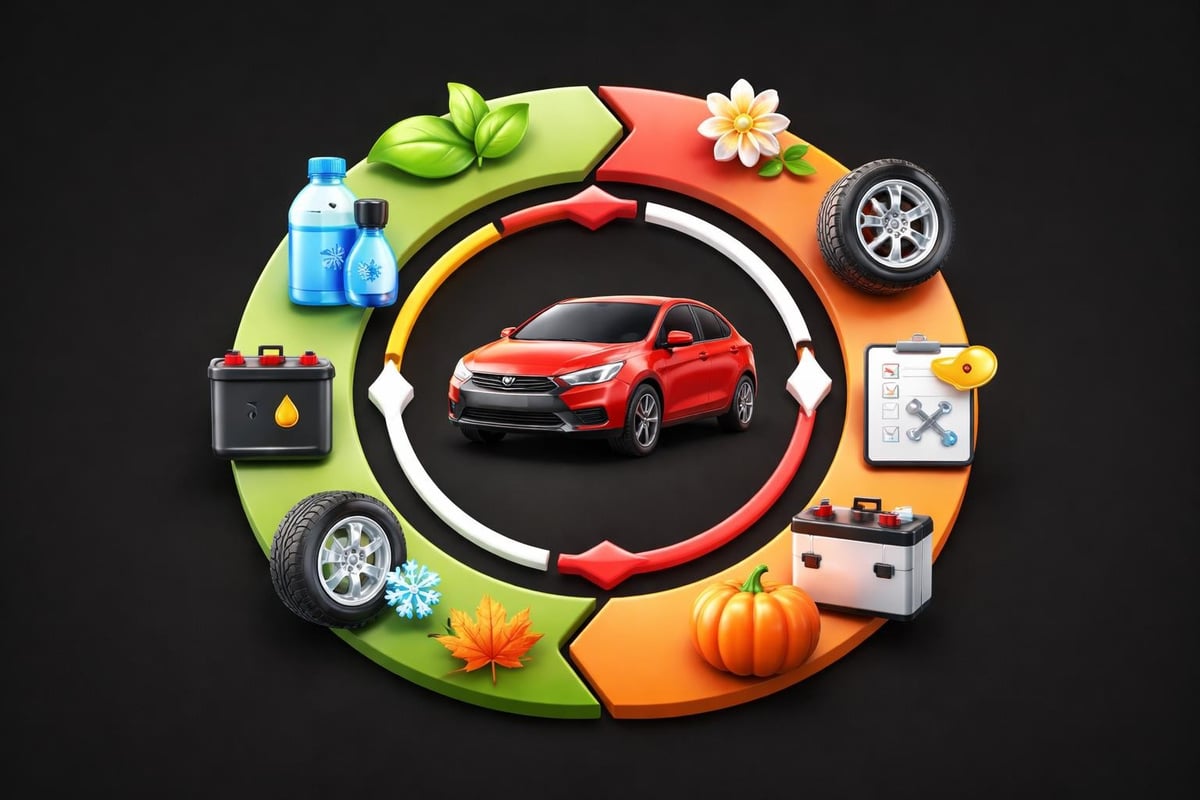
Timing your yearly vehicle maintenance around seasonal changes optimizes both convenience and vehicle readiness. Many car owners align major service work with spring or fall to prepare for extreme weather.
Spring Maintenance Focus
Spring represents an ideal time for comprehensive yearly vehicle maintenance after winter's harsh conditions. Winter salt accelerates corrosion, cold temperatures stress batteries, and road debris accumulates in vulnerable areas.
Spring priorities include:
- Thorough underbody cleaning to remove salt and corrosion
- Battery testing after cold-weather stress
- Air conditioning system performance verification
- Tire inspection for winter damage or uneven wear
Professional maintenance schedules often recommend spring for major services because it allows addressing winter damage before summer driving season.
Fall Preparation Tasks
Fall maintenance prepares vehicles for winter challenges. This timing works especially well for yearly vehicle maintenance in regions with distinct seasons.
Check coolant concentration to ensure protection at expected low temperatures. Verify battery condition since cold weather reduces capacity. Inspect wiper blades and lighting systems for reliable operation during shorter daylight hours.
Mileage-Based vs. Time-Based Maintenance
Understanding the difference between mileage and time-based maintenance helps you create an effective yearly vehicle maintenance schedule. Some components deteriorate based on use, while others degrade simply with age.
Time-based maintenance items include:
- Rubber components (hoses, belts, seals)
- Fluids with hygroscopic properties
- Battery condition
- Paint and protective coatings
Vehicles driven infrequently might reach annual service intervals before mileage-based requirements. Tracking both metrics ensures nothing gets overlooked.
Creating Your Custom Schedule
Your specific yearly vehicle maintenance schedule depends on several factors: manufacturer recommendations, driving conditions, climate, and vehicle modifications. Start with the owner's manual as your baseline, then adjust for your situation.
Modified vehicles often require enhanced maintenance. Performance upgrades, lowered suspensions, or increased power output all accelerate wear on related components. Track these modifications alongside your maintenance history to identify patterns.
Digital platforms make scheduling significantly easier than paper logs. Modern tools send reminders, track expenses, and maintain comprehensive histories accessible from anywhere. For enthusiasts managing multiple vehicles or extensive modifications, this organization proves invaluable. CarJourney Pro - Yearly provides unlimited vehicle tracking with AI-powered maintenance reminders, helping you stay ahead of service intervals for all your cars in one centralized platform.

Critical Annual Inspections
Beyond routine maintenance, certain inspections should happen yearly regardless of apparent condition. These preventive checks catch developing problems before they strand you.
Exhaust System Evaluation
Exhaust systems corrode from inside out due to combustion byproducts. Annual visual inspection identifies rust-through, loose hangers, and failing components. Pay special attention to the catalytic converter, which can fail internally without obvious external symptoms.
Listen for changes in exhaust note. Leaks create distinctive sounds and reduce efficiency. Check all mounting points and heat shields for security.
Electrical System Testing
Modern vehicles rely heavily on electrical systems. Yearly vehicle maintenance should include comprehensive electrical evaluation beyond basic battery testing.
| System | Test Procedure | Normal Range |
|---|---|---|
| Battery | Load test, voltage check | 12.6V rested, 14.4V charging |
| Alternator | Output test at various RPM | 13.8-14.7V under load |
| Starter | Draw test, engagement check | Varies by vehicle |
| Grounds | Resistance testing | Less than 0.5 ohms |
Poor electrical connections cause mysterious problems that seem to come and go. Annual testing establishes baselines for comparison year over year.
Tire and Wheel Assessment
While tire pressure and tread depth deserve monthly attention, yearly vehicle maintenance includes deeper tire analysis. Check for uneven wear patterns indicating alignment or suspension issues. Inspect sidewalls for cracks, bulges, or damage from impacts.
Have wheels inspected for bends, cracks, or damage that might not be visible during casual observation. Bent wheels cause vibration and accelerate tire wear.
Documentation and Record Keeping
Proper documentation transforms yearly vehicle maintenance from a task into an asset. Comprehensive records increase resale value, simplify warranty claims, and help diagnose recurring issues.
What to Document
Record every service with details beyond just the date. Note mileage, specific parts used, who performed the work, and any observations about vehicle condition. Understanding service costs and tracking them over time reveals patterns in your maintenance expenses.
Photography provides valuable documentation. Annual photos of undercarriage condition, brake components, and fluid cleanliness create visual timelines showing how components age.
Digital Tracking Advantages
Digital maintenance logs offer significant advantages over paper records. Searchable histories let you quickly find when specific services occurred. Cloud backup ensures records survive even if you lose access to the vehicle.
Sharing capabilities matter for modified vehicles. Detailed build documentation with maintenance history adds credibility when selling or sharing your project. Many enthusiasts find digital platforms essential for managing complex modification schedules alongside routine maintenance.
Age-Specific Maintenance Considerations
Yearly vehicle maintenance evolves as cars age. Newer vehicles require different attention than older ones, though both benefit from systematic annual care.
Vehicles Under Five Years
Newer vehicles typically need less intensive yearly vehicle maintenance but still benefit from comprehensive annual inspections. Focus on maintaining warranty compliance and establishing baseline documentation.
Annual priorities for newer vehicles:
- Verification of all manufacturer-required services
- Documentation for warranty protection
- Early detection of defects or recalls
- Establishing performance baselines
Many issues covered by warranty only qualify if you've maintained proper service records. Detailed maintenance documentation protects your investment.
Vehicles Over Ten Years
Older vehicles demand more thorough yearly vehicle maintenance as components reach end of design life. Rubber parts become brittle, metal fatigues, and systems designed to last the vehicle's expected lifespan start failing.
Increase inspection frequency for wear items. Budget for replacement of original components like water pumps, thermostats, and hoses. Many parts never replaced from new deteriorate simply from age regardless of mileage.
Common Mistakes in Annual Maintenance
Even experienced car owners make mistakes with yearly vehicle maintenance. Recognizing these pitfalls helps you avoid unnecessary expenses and missed issues.
Over-Maintenance Traps
Some service providers recommend unnecessary services to increase revenue. Avoiding over-maintenance requires understanding what your vehicle actually needs versus what someone wants to sell you.
Trust manufacturer recommendations over generic service schedules. Modern synthetic oils often last well beyond traditional 3,000-mile intervals. Automatic transmission fluid might not need changing for 60,000 to 100,000 miles despite shops suggesting 30,000-mile service.
Neglected Systems
Conversely, some systems get overlooked during yearly vehicle maintenance because they're not obviously failing. Differential service, transfer case fluid, and power steering fluid often fall into this category.
Review comprehensive maintenance checklists annually to ensure you're not missing critical but less obvious items. Create a rotating schedule for items that don't need yearly attention but shouldn't be forgotten entirely.
Advanced Maintenance for Modified Vehicles
Modified vehicles require enhanced yearly vehicle maintenance beyond stock specifications. Performance upgrades, suspension modifications, and engine tuning all accelerate wear on related components.
Performance Modification Considerations
Increased power output stresses drivetrain components. Annual inspection should verify differential, transmission, and clutch condition more thoroughly than stock vehicles require. Look for signs of stress like metal particles in fluids or unusual noises.
Suspension modifications change alignment needs and wear patterns. Lowered vehicles may require more frequent alignment checks. Upgraded brakes might need different pad compounds or fluid specifications.
Tracking Modification History
Comprehensive modification documentation helps with yearly vehicle maintenance planning. Understanding what's changed from stock guides inspection priorities and service intervals.
Many enthusiasts maintain separate logs for modifications and routine maintenance. Linking these records reveals how changes affect reliability and service needs. Digital platforms excel at organizing this complexity, especially for vehicles with extensive build histories.
Professional vs. DIY Annual Service
Deciding between professional service and DIY yearly vehicle maintenance depends on your skills, tools, and time availability. Both approaches have merits when done properly.
When to Seek Professional Help
Certain yearly vehicle maintenance tasks require specialized equipment or expertise. Wheel alignment needs precision tools most home garages lack. Emission testing and some diagnostic procedures require professional equipment.
Safety-critical systems like brakes deserve professional attention if you're uncertain about procedures. Professional maintenance facilities provide warranties on work performed and catch issues you might miss.
DIY Maintenance Benefits
Performing your own yearly vehicle maintenance builds intimate knowledge of your vehicle's condition. You notice subtle changes professionals might overlook during quick inspections.
Cost savings matter, especially for multiple vehicles or extensive service lists. DIY maintenance also allows using preferred parts and fluids rather than whatever the shop stocks.
Essential DIY maintenance tools include:
- Quality jack stands and floor jack
- Torque wrench for proper fastener tightening
- Fluid transfer equipment
- Basic diagnostic scanner
- Inspection light and mirror
Document DIY work as thoroughly as professional service. Detailed records prove maintenance compliance whether you perform work yourself or pay professionals.
Planning Your Annual Maintenance Budget
Yearly vehicle maintenance costs vary significantly based on vehicle age, type, and condition. Planning ahead prevents surprise expenses and ensures necessary work gets completed.
Estimating Annual Costs
Calculate expected yearly vehicle maintenance costs by reviewing manufacturer recommendations and pricing common services. Factor in your vehicle's age and any deferred maintenance from previous years.
| Vehicle Age | Expected Annual Maintenance | Budget Range |
|---|---|---|
| 0-3 years | Routine services, inspections | $300-$600 |
| 4-7 years | Added fluid services, wear items | $600-$1,200 |
| 8-12 years | Component replacements, aging systems | $1,200-$2,500 |
| 12+ years | Comprehensive replacements, restoration | $2,000-$4,000+ |
These ranges assume proper ongoing maintenance. Neglected vehicles require significantly higher investment to return to good condition.
Prioritizing Services
When budget constraints limit what's possible, prioritize safety-critical systems. Brakes, tires, and steering components come first. Defer cosmetic items or convenience features if necessary.
Create a multi-year plan for expensive services. Some items don't need annual attention but should be scheduled regularly. Planning helps spread costs across multiple years rather than facing everything simultaneously.
Leveraging Technology for Maintenance Tracking
Modern technology transforms how car enthusiasts approach yearly vehicle maintenance. Digital tools provide capabilities impossible with traditional paper logs.
AI-Powered Maintenance Assistance
Artificial intelligence helps predict maintenance needs based on your driving patterns, climate, and vehicle specifications. Smart reminders ensure services happen on schedule rather than when something fails.
Advanced platforms analyze maintenance history to identify patterns. If certain components consistently fail at specific intervals, AI recommendations adjust future service schedules accordingly.
Community Knowledge Sharing
Digital platforms connect you with other owners of similar vehicles. Learning from their maintenance experiences helps you anticipate issues and optimize your yearly vehicle maintenance schedule.
Shared build profiles let modified vehicle owners see how different upgrades affect reliability and service needs. This collective knowledge proves invaluable for planning modifications and budgeting future maintenance.
Regional and Climate Considerations
Your location significantly impacts yearly vehicle maintenance requirements. Coastal areas, desert regions, and northern climates each present unique challenges.
Coastal Environment Maintenance
Salt air accelerates corrosion on all exposed metal components. Annual undercoating inspection and touch-up protects vulnerable areas. Electrical connections need corrosion protection and periodic cleaning.
Brake components corrode more quickly in coastal regions. Yearly vehicle maintenance should include thorough brake cleaning and lubrication of slide pins and mounting hardware.
Cold Climate Priorities
Freezing temperatures stress batteries, fluids, and rubber components. Annual battery testing becomes critical before winter. Coolant concentration must protect to expected minimums with safety margin.
Block heaters, battery warmers, and other cold-weather equipment need yearly verification. Test these systems in fall rather than discovering failures during winter's first cold snap.
Desert and Hot Climate Needs
Extreme heat accelerates fluid degradation and stresses cooling systems. Yearly vehicle maintenance in hot climates emphasizes coolant system condition, hose integrity, and air conditioning performance.
UV exposure damages paint, rubber, and plastic components faster than moderate climates. Annual inspection identifies deteriorating parts before they fail.
Establishing a thorough yearly vehicle maintenance routine protects your investment while ensuring reliable performance throughout the year. By understanding which tasks matter most for your specific vehicle and circumstances, you can create a sustainable maintenance schedule that prevents problems rather than just reacting to failures. Whether you're managing a daily driver or tracking modifications on multiple project cars, CarJourney helps you organize maintenance schedules, document service history, and leverage AI-powered insights to keep every vehicle in your garage running at its best. Start building your comprehensive maintenance timeline today and enjoy the confidence that comes from knowing your vehicles receive the care they deserve.