
Car Build Documentation Guide That Works
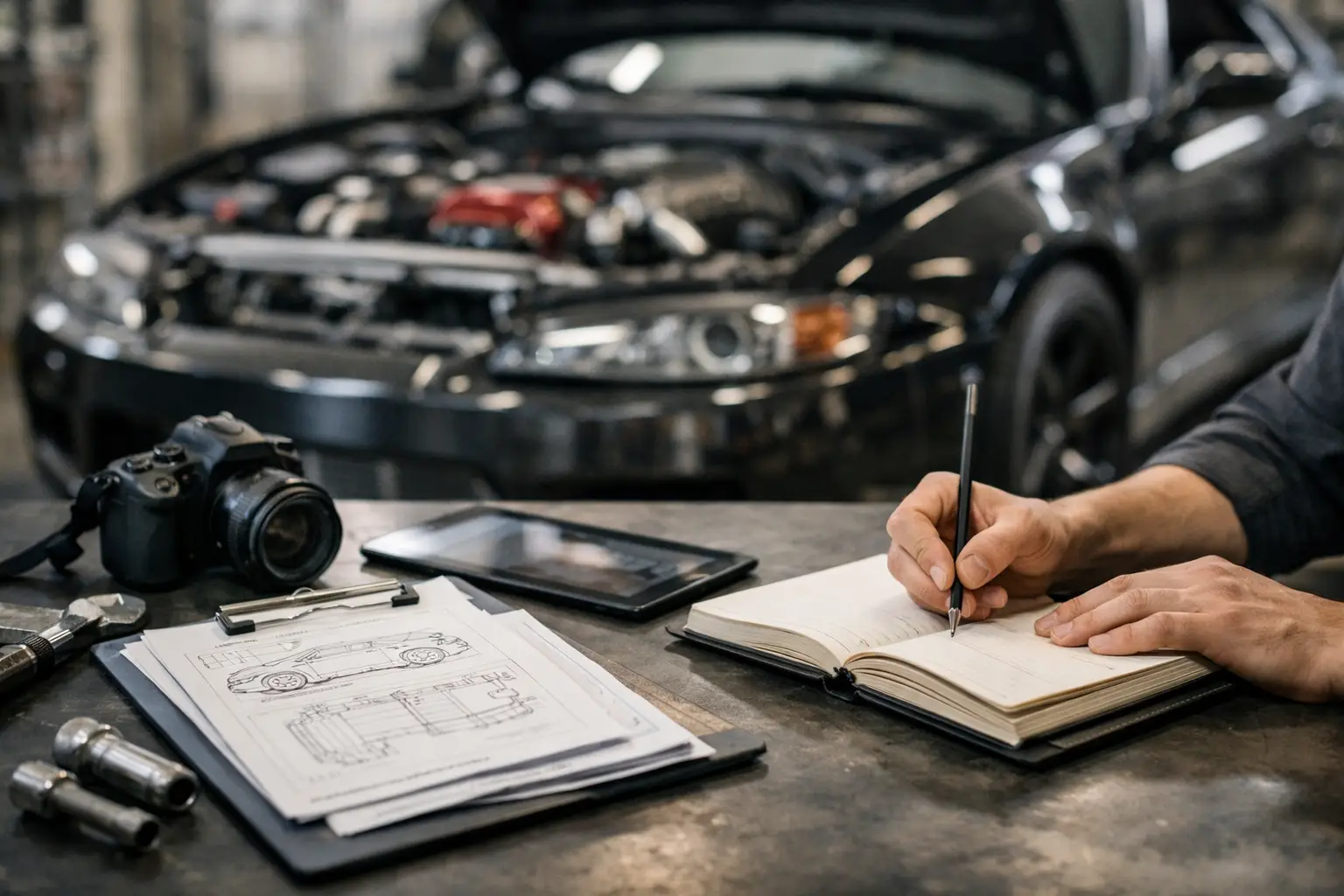
You remember the turbo install, the coilovers, the alignment that finally made the car feel right. What gets fuzzy later is the exact date, mileage, part number, labor cost, and which shop handled what. That is where a solid car build documentation guide matters. If you care about your vehicle’s history, future maintenance, and resale trust, documenting the build is not extra admin - it is part of owning the car properly.
A lot of enthusiasts start with good intentions. A folder of receipts turns into a glove box mess. Photos live in three phones and an old cloud backup. Maintenance notes sit in a spreadsheet that stops getting updated the second life gets busy. Then a warranty question comes up, a buyer asks for proof, or you forget when a supporting mod went on. The problem is not effort. The problem is having no structure.
What a car build documentation guide should actually do
Good documentation should answer three things fast: what was done, when it was done, and why it matters now. That means your records need to work for more than social posts or your own memory. They should help you maintain the car, troubleshoot issues, explain the build to a buyer, and keep a clear picture of total investment.
For a mostly stock daily driver, basic service logs may be enough. For a project car, track car, overland rig, or modified street build, you need more detail. Once parts start interacting with each other, documentation becomes operational. Spring rates, wheel specs, tune revisions, fluid types, torque notes, and supporting maintenance all affect what comes next.
That is the key shift. Build documentation is not just a scrapbook. It is your reference system.
Start with the vehicle profile
Every record set should begin with the car itself. Year, make, model, trim, VIN, engine, transmission, drivetrain, and current mileage create the foundation. Add the purchase date, purchase price, and any relevant baseline condition notes. If the car came with existing modifications, document those separately from what you have added.
This sounds basic, but it prevents one of the most common mistakes in build tracking: blending your ownership history with the car’s unknown past. If a previous owner installed an intake, note that as a pre-existing modification. If you later replace it, log the new part and the removal of the old one. Clear timelines make the whole record more trustworthy.
Photos matter here too. Take clean baseline shots of the exterior, interior, engine bay, undercarriage if possible, and odometer. Those images become surprisingly valuable later, especially if the car changes a lot over time.
Separate maintenance from modifications, but connect them
Owners often lump everything into one long timeline. That is better than nothing, but it gets messy fast. Oil changes, spark plugs, brake fluid flushes, downpipes, wheels, coding changes, and dyno sessions all deserve records, but they are not the same kind of record.
Maintenance logs should focus on service history. Capture the date, mileage, service performed, fluids or parts used, who did the work, total cost, and the next due interval if one applies. This is what helps you avoid missed service and protect reliability.
Modification logs should focus on the build itself. Record the part brand and model, part number, install date, mileage, purchase cost, labor cost, reason for the change, and any paired parts or tuning changes. If a modification requires future maintenance or changes service intervals, tie that into your service tracking.
That connection matters. If you install a big brake kit, your pad and rotor replacement path changes. If you add forced induction, oil choice, plug intervals, and cooling system attention may change too. A build log without maintenance context looks complete, but it leaves out the part that actually keeps the car healthy.
Keep receipts, warranties, and photos together
The most convincing record is the one that can be verified. Anyone can write that a part was installed. Receipts, invoices, warranty documents, and before-and-after photos prove it.
Store every purchase receipt you can, even for smaller parts. That includes fluids, sensors, gaskets, alignment sheets, tire invoices, tuning receipts, and shop work orders. If a part fails, those documents save time. If you sell the car, they build trust. If you are trying to understand total spend, they tell the truth in a way memory never does.
Photos should do more than show the final look. Capture packaging labels, part numbers, install stages, and any hidden work that will not be visible later. Buyers and future-you both appreciate this. A finished engine bay photo looks good. A photo sequence showing supporting hardware, fresh hoses, clamps, and installation quality is far more useful.
Track the details enthusiasts actually ask about
A strong car build documentation guide goes beyond generic notes. Car people ask specific questions, and your records should answer them without guesswork.
Wheel and tire setups should include wheel size, width, offset, tire size, tire model, date installed, and alignment specs if they were adjusted around that setup. Suspension records should include part names, spring rates if relevant, ride height notes, corner balancing or alignment reports, and any damper settings you settled on.
Power mods need even tighter detail. Record tune version, fuel type, boost targets if relevant, supporting mods, dyno results, and the shop or tuner involved. If you revise the setup later, do not overwrite old data. Keep the build history in sequence. That way, if something changes in drivability or reliability, you can trace it.
Consumables deserve attention too. If you track events, autocross, or backroad mileage hard, brake pads, tires, and fluids are part of the build story. They show how the car is used, not just how it is accessorized.
Use a timeline, not a pile
Documentation falls apart when records exist but cannot be read as a story. You want a timeline that shows the car evolving over time. Purchase. Baseline service. First modification. Supporting maintenance. Tuning. Follow-up fixes. Cosmetic updates. Seasonal changes. The sequence gives context.
This is where digital systems beat folders and scattered notes. A centralized timeline lets you see what happened at 42,000 miles versus 58,000 miles, and whether one change may have affected another. It also makes the record shareable and easier to update from your phone right after a shop visit or garage session.
If you use a dedicated platform, the best setup is one that combines service logs, modification tracking, reminders, photos, and document storage in one place. That gives you control without forcing you into separate apps or a homemade system that only works until it doesn’t. CarJourney is built around exactly that problem.
Don’t document only the wins
One of the biggest holes in build history is selective memory. Owners record big upgrades but skip the reversals, troubleshooting, and mistakes. That makes the car look cleaner on paper, but it makes the history less useful.
If a part caused fitment issues, note it. If a tune revision fixed cold-start behavior, log that too. If you removed a setup because it rubbed, droned, overheated, or simply was not worth it, include the change. Honest documentation helps with future decisions and makes the record more credible to the next owner.
There is a trade-off here. You do not need to write a diary entry for every washer and bolt. But if a change affected cost, reliability, drivability, or compatibility, it deserves a place in the history.
Build for resale, even if you plan to keep the car
Most enthusiasts say they are keeping the car forever until life changes, garage space shrinks, or the next project shows up. When that day comes, documentation turns into leverage.
A buyer pays differently for a car with a believable, organized history. Not always dramatically, and not in every market, but trust changes the conversation. Instead of defending the build, you can present it clearly. Here is the maintenance timeline. Here are the parts used. Here are the shop invoices. Here are the photos. Here is what was stock, what was changed, and when.
Even if resale is years away, records help now. They reduce duplicate purchases, missed service, and vague troubleshooting. They also give you a better read on what the car has actually cost to own. Some owners love that number. Some hate it. Either way, it is better than guessing.
The simplest system is the one you will keep using
A perfect documentation process that takes too long will die after three updates. Keep it practical. Log work the same day when possible. Upload receipts immediately. Use consistent names for parts and services. Add mileage every time. If you miss a week, catch up before it becomes six months.
The best car build documentation guide is not the most complicated one. It is the one that gives you a clean, believable, usable history without turning ownership into office work. Treat your records like part of the build itself. The car gets the attention, but the history is what keeps that attention useful later.