 carjourney
From the CarJourney journal
Multi Vehicle Maintenance Tracker That Works
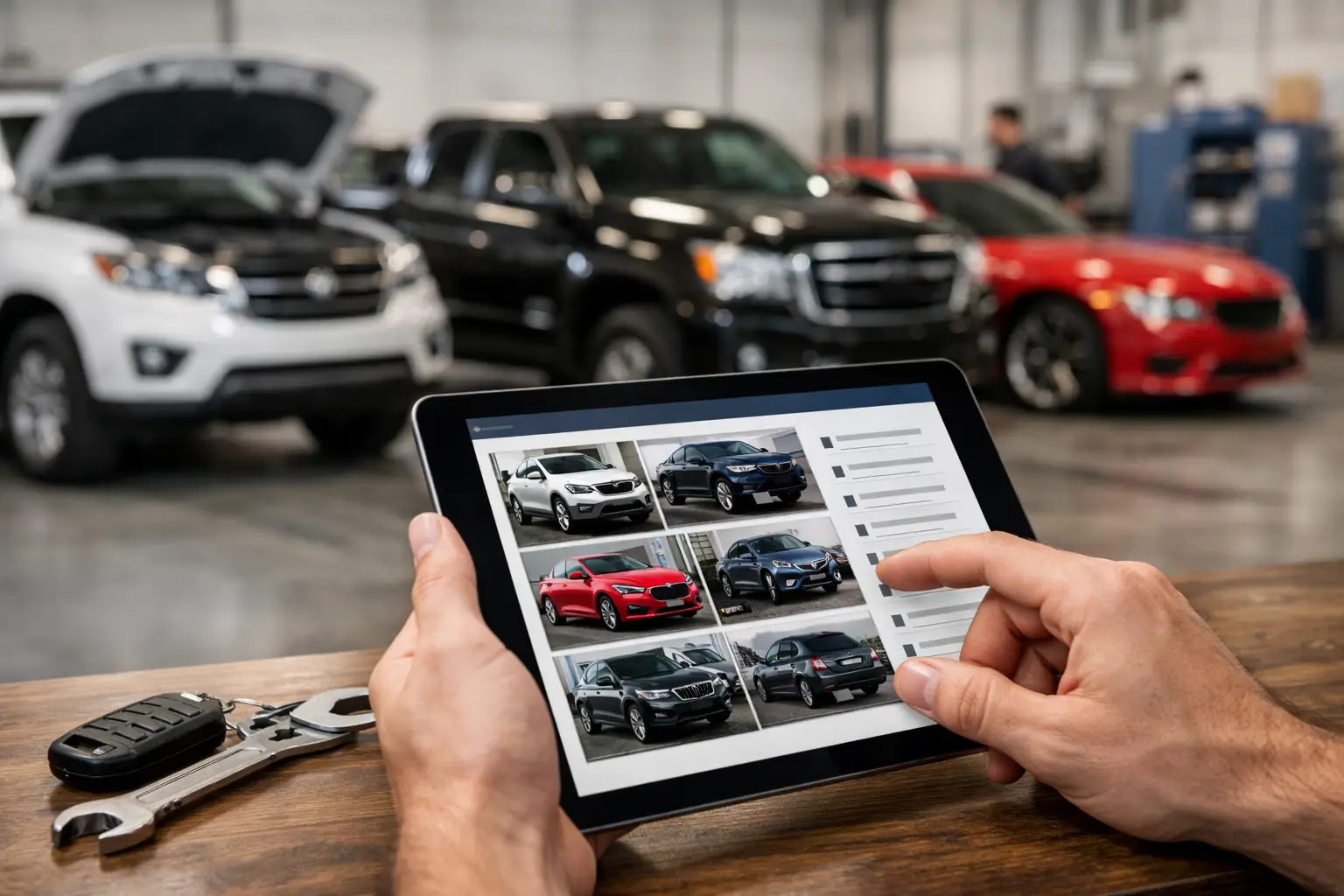
If you have more than one vehicle, maintenance stops being a simple reminder problem and turns into a recordkeeping problem. A good multi vehicle maintenance tracker gives you one place to manage oil changes, tires, brakes, mileage-based service, receipts, and repair history without bouncing between glovebox paperwork, notes apps, and old spreadsheets.
That matters even more when your garage is a mix of daily drivers, project cars, trucks, or family vehicles. Each one has a different schedule, different parts history, different costs, and different stakes if something gets missed. The challenge is not just remembering the next oil change. It is keeping control of the full history so you can protect reliability, avoid repeat work, and show a record buyers actually trust.
What a multi vehicle maintenance tracker should actually do
Most tools can send a reminder. That alone is not enough once you are managing multiple vehicles with different use cases. You need a system that can separate each vehicle clearly while still giving you a garage-wide view of what is due, what was done, and how much you have invested.
At a minimum, a multi vehicle maintenance tracker should let you log service by vehicle, store mileage and dates, attach receipts or photos, and set reminders based on either time or miles. If you are an enthusiast, that baseline grows quickly. You also need to track modifications, parts brands, warranty details, install dates, and the total cost of ownership over time.
This is where generic reminder apps fall short. They can tell you something is due next month, but they usually cannot tell you which brake pad compound you installed last year, how many miles are on your coilovers, or whether that transmission service happened at 60,000 or 75,000 miles. For a serious owner, those details are the history.
Why spreadsheets break down in a multi-car garage
A spreadsheet can work for a while. If you have one vehicle and strong habits, it may even work well enough. But the cracks start to show when you add a second or third vehicle, especially if one is a build, one is a daily, and one is shared with family.
The first issue is consistency. Data only helps if you log it every time, in the same format, with the same level of detail. Spreadsheets rely on discipline. Skip one receipt, forget one mileage entry, or name services differently across tabs, and the value drops fast.
The second issue is usability. When you are standing in a garage, at a parts counter, or in a shop parking lot, you do not want to zoom around a mobile spreadsheet trying to find the last diff fluid service. You want fast access to the vehicle record, the service history, and the documents attached to it.
The third issue is trust. A clean, organized digital history is useful to you, but it is also useful to the next owner. If you ever sell the car, a scattered spreadsheet plus a folder of loose receipts does not present the same confidence as a clear maintenance timeline with documented work and costs.
The real value is not reminders. It is control.
A strong multi vehicle maintenance tracker is less about notifications and more about control. It gives you a home base for each car so you can see patterns, plan future work, and make better decisions about money.
That control shows up in small ways first. You stop double-buying parts because you cannot remember what is installed. You stop guessing whether the battery is still under warranty. You stop wondering which car is due for brake fluid this season.
Then it starts paying off in bigger ways. You can spot rising maintenance costs on an aging vehicle. You can prove upkeep on a collector car. You can budget for future service on a truck that sees hard use. You can separate actual repairs from optional upgrades, which matters a lot if you are trying to understand what a vehicle is truly costing you to own.
For multi-vehicle households, that visibility is hard to overstate. Without a system, everything blends together. With one, each vehicle has a clear story.
What to track for each vehicle
The best setup is detailed enough to be useful, but not so heavy that logging becomes a chore. For most owners, the core records should include basic maintenance, repairs, modifications, documents, and recurring reminders.
Basic maintenance covers the usual work like oil changes, tire rotations, brake service, filters, fluid changes, alignments, batteries, and inspections. Repairs are different because they often tell you more about long-term reliability. Water pumps, sensors, alternators, suspension components, leaks, and diagnostics should all be logged clearly with mileage and date.
If you modify your vehicles, that history deserves its own record. Wheels, tires, suspension, exhaust, tuning, lighting, audio, cosmetic parts, and performance upgrades all affect value and ownership decisions. A buyer may care about those changes. So will you, six months later, when you are troubleshooting fitment, planning your next step, or trying to remember what brand you used.
Documents matter just as much as the entries themselves. Receipts, warranties, shop invoices, alignment sheets, dyno results, inspection forms, and part photos give context that plain text cannot. They also make your records far more credible when you share or transfer vehicle history.
How a multi vehicle maintenance tracker saves money
People usually think of tracking as an organization tool, but it is also a money tool. Missed maintenance gets expensive fast. So does duplicate work, bad recordkeeping, and forgotten warranties.
Say one vehicle needs routine fluid service every 30,000 miles and another is on a strict time-based schedule because it sits more than it drives. If both are managed from memory, one gets ignored and the other gets serviced too early. Neither outcome is ideal. A tracker helps you service at the right interval, not just whenever you happen to remember.
It also helps you make cleaner decisions when repair bills start stacking up. If your app shows a pattern of recent repairs, rising parts costs, and upcoming major maintenance, you can evaluate whether keeping the vehicle still makes sense. Without records, that choice becomes emotional and vague.
For enthusiasts, there is another financial angle. Mods and maintenance get mixed together all the time. If you are building a car, that can distort your sense of ownership cost. Keeping service, repair, and upgrade logs separate gives you a more honest picture of what it takes to keep the car healthy versus what you chose to spend to make it yours.
Choosing the right tracker depends on your garage
Not every owner needs the same level of detail. If you have two family vehicles and just want service reminders, almost any organized system will feel like an upgrade from paper notes. But if you own a daily driver, a weekend toy, and a project car, your needs are different.
You probably need mileage-based reminders, document storage, modification tracking, mobile access, and a way to review total spend by vehicle. You may also want cross-device syncing so the same records are available in the garage, at the shop, and on the couch when you are planning the next round of work.
This is where a platform built for enthusiasts tends to win. It treats maintenance history as part of ownership history, not as a narrow reminder checklist. That means you are not just logging oil changes. You are preserving the full record of the vehicle, including the work that reflects your time, money, and priorities.
CarJourney fits that approach well because it is built around a centralized garage experience instead of a single-car reminder model. That matters when your goal is not just to keep up with service, but to build a clean, shareable history across multiple vehicles.
The best system is the one you will keep using
There is always a trade-off between simplicity and depth. A lightweight tracker is easier to start, but it may leave out the details that matter later. A highly detailed tracker gives you better records, but only if logging feels fast enough to become a habit.
That is why the best multi vehicle maintenance tracker is usually not the one with the longest feature list. It is the one that makes it easy to add a vehicle, log work in a minute or two, attach proof, and keep each record updated without friction.
If a tool helps you stay consistent, the value compounds. A single oil change entry is not impressive. Three years of documented maintenance, repairs, modifications, and receipts across every vehicle you own is a real asset. It protects reliability, supports resale, and gives you a clearer picture of your garage than memory ever will.
When every vehicle has its own timeline and every dollar has a place, ownership feels a lot less reactive. You stop chasing records and start building history on purpose.