 carjourney
From the CarJourney journal
Project Car Build Tracker That Actually Helps
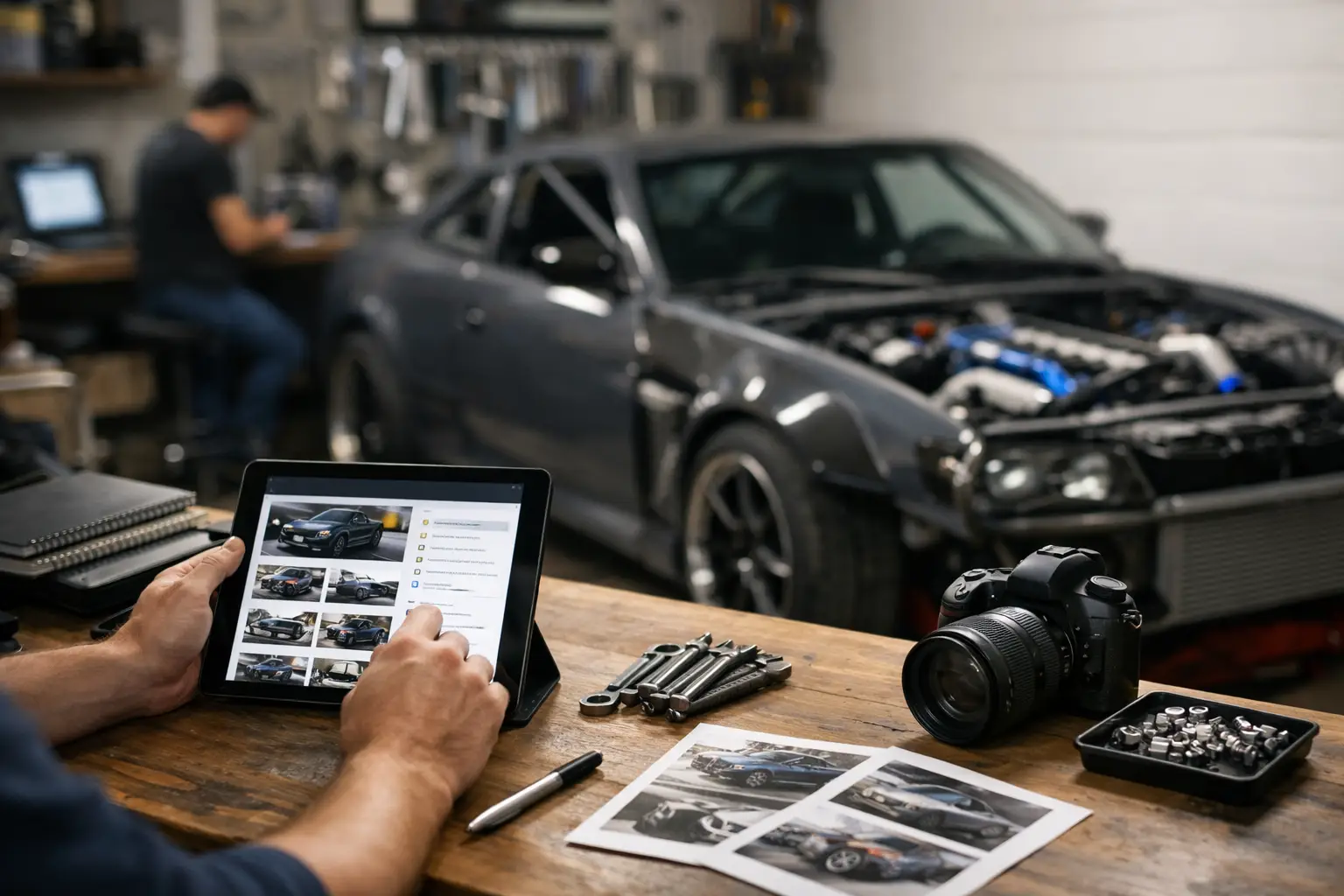
The problem with most project builds is not motivation. It’s memory. Three months after a late-night parts order, it gets harder to remember which coilovers went on, what the alignment specs were, or why the idle changed after that intake install. A good project car build tracker fixes that. It gives your build a clear history you can actually use, whether you’re planning the next mod, chasing a problem, or proving the car was cared for.
For a lot of owners, the first version of a tracker is a notes app, a shoebox full of receipts, and a camera roll packed with unlabeled photos. That works for a while. Then the build gets more complex. You start mixing maintenance with modifications, tracking labor costs, watching service intervals, and trying to remember if that fuel pump warranty is still valid. At that point, the issue isn’t effort. It’s structure.
What a project car build tracker should actually track
A real build tracker does more than list parts. It should connect the full story of the vehicle, because project cars don’t live in neat categories. A brake upgrade can affect future wheel choices. A tune changes maintenance priorities. A suspension overhaul often leads to tire wear questions later. If your system only tracks purchases, you’re missing the context that makes those purchases useful.
The basics matter most. You want a record of every modification, when it was installed, what it cost, and which brand or part number was used. Photos help, especially before-and-after shots and install photos that show routing, mounting, or fitment. Service history belongs in the same place, because a project car that gets modified but not maintained usually turns into a headache.
Documents are part of the picture too. Receipts, warranty details, inspection paperwork, dyno sheets, alignment printouts, and even paint codes can save time later. When your build history lives across five apps and a glove box folder, simple questions turn into scavenger hunts.
Why spreadsheets break once the build gets serious
A spreadsheet can get you started, and for a basic parts budget it may be enough. But once the car becomes a long-term project, spreadsheets tend to show their limits fast.
They’re great at rows and columns. They’re not great at vehicle history. Photos are awkward, reminders are manual, and service tracking usually becomes a second sheet that never stays updated. If you own more than one car, things get messy even faster. You end up maintaining a system instead of maintaining the vehicle.
That matters because project cars change over time. You might buy a car as a weekend toy, then turn it into a track car, then pull it back toward a street setup. Each phase affects parts decisions, maintenance intervals, and total spend. A tracker should reflect that evolution without forcing you to rebuild your records every six months.
The best project car build tracker balances mods and maintenance
This is where a lot of tools miss the mark. Some are basically maintenance reminder apps. Others feel like social feeds with no real recordkeeping behind them. Enthusiasts usually need both.
If you only track modifications, you lose the reliability side of ownership. Oil changes, fluid flushes, brake service, tire rotations, and mileage-based checks still matter, especially when power levels rise or the car sees hard use. If you only track maintenance, you lose the identity of the build. The wheels, aero, suspension, interior work, and engine changes are the reason many owners want a history in the first place.
The sweet spot is a system where mods, service, costs, dates, and files all live together. That gives you control. It also gives you trust in your own records. When something starts acting up, you can look back and see what changed, when it changed, and what else was done around the same time.
What to look for in a build tracker app
The best tool depends on how you use your car, but a few features make a big difference for almost everyone.
First, logging has to be fast. If entering a mod or service takes too many steps, you’ll stop using it. Good mobile access matters because a lot of updates happen in the garage, at a shop, or in a parking lot right after a parts install.
Second, cost tracking should be built in, not treated like an extra field nobody uses. Most project owners want a real view of money invested, even if the number hurts a little. That’s not just for budgeting. It helps with insurance discussions, resale conversations, and deciding what the next step should be.
Third, reminders need to be flexible. A project car doesn’t always follow factory timing. Turbo builds, track use, seasonal driving, and age-related issues all change service needs. A useful tracker should let you work off mileage, time, or your own schedule.
Finally, the record should be easy to share. That could mean showing your build to friends, documenting progress for followers, or presenting a clean history to a buyer. A shareable profile has real value when it reflects actual ownership discipline instead of a highlight reel.
A project car build tracker can save money, not just time
A lot of owners think tracking is about organization for organization’s sake. It’s not. Better records often lead to better decisions.
When you know exactly what’s been installed and serviced, you’re less likely to buy duplicate parts, miss warranty windows, or replace something that was never the problem. You also get a clearer picture of total build cost versus future plans. That matters when you’re deciding between a cosmetic upgrade and a maintenance job the car actually needs.
There’s also the resale side. Modified cars usually raise questions. Was the work done properly? Were quality parts used? Was the car serviced on time? A documented build history won’t make every buyer comfortable with every modification, but it reduces uncertainty. And uncertainty is what hurts trust.
For the same reason, recordkeeping helps even if you never plan to sell. Life changes. Cars get traded, transferred, inherited, or repurposed. Clean documentation protects value because it proves the story behind the vehicle.
The trade-off between simple and complete
Not every owner needs the same level of detail. If your project is light - wheels, tires, suspension, a few bolt-ons - a basic tracker may be enough. If you’re deep into engine work, custom fabrication, tuning revisions, and multiple shop visits, you need something more complete.
The trade-off is pretty simple. The lighter the system, the easier it is to keep up with. The more detailed the system, the more useful it becomes later. The right answer is usually somewhere in the middle. Track enough that the record has value, but not so much that logging every update feels like another chore.
That’s why a purpose-built platform tends to work better than forcing generic tools into an enthusiast workflow. CarJourney, for example, makes more sense than a plain spreadsheet for owners who want to log service, track mods, store receipts, set reminders, and keep a build history they can actually share. The point isn’t adding complexity. It’s replacing scattered records with one home base.
How to start using a tracker without turning it into a project of its own
If your records are already messy, don’t wait for the perfect cleanup day. Start with the current state of the car. Log what’s on it now, add the service items you know, and upload the documents you can find quickly. You can always fill in older details later.
Focus first on the entries that matter most in real ownership: current modifications, recent maintenance, open issues, active warranties, and upcoming services. That gives you an immediately useful record instead of a half-finished archive.
From there, make the habit simple. Every time you buy a part, install something, visit a shop, or do maintenance, log it right away. Add the receipt before it disappears into your email. Snap photos while the work is happening, not weeks later when you’re trying to remember what changed.
A tracker only works if it stays current. The good news is that once you get into the rhythm, it takes less time than hunting for old invoices or trying to remember which spark plugs are in the car.
Project builds always change. Plans shift, budgets move, parts fail, better ideas show up. That’s part of the fun. A solid tracker doesn’t remove that chaos. It gives you control over it, so your build history stays as sharp as the car you’re putting together.