 carjourney
From the CarJourney journal
The Role of Car History Reports in Used Car Buying

You pull up a listing for a used SUV with great mileage, a fair price, and clean photos. Everything looks right. The seller seems honest. But the role of car history reports isn’t just to confirm your optimism. It’s to reveal what the seller may not know, or may not be telling you. A vehicle history report is not a guarantee that a car is problem-free. It’s a risk map, and knowing how to read that map is the difference between a smart purchase and an expensive mistake.
Table of Contents
- Key takeaways
- What car history reports actually contain
- Why the role of car history reports goes beyond basic research
- What reports can’t tell you
- Comparing the major report providers
- How to apply report findings in your buying process
- My take on reports as a used car buyer
- Track your car’s history with CarJourney
- FAQ
Key takeaways
| Point | Details |
|---|---|
| Reports reveal hidden risks | 1 in 5 used vehicles have a title issue that a visual inspection alone would never catch. |
| Reports have real blind spots | Unreported repairs and data lag mean a clean report is not the same as a perfect car. |
| Use reports early in your search | Pull a report before scheduling a test drive to filter out high-risk listings from the start. |
| Multiple sources give a fuller picture | Combining reports from different providers reduces the chance of missing critical data gaps. |
| Service history affects real money | Documented maintenance records influence resale value, loan approval, and insurance costs. |
What car history reports actually contain
Before you can use a vehicle history report effectively, you need to know what’s inside one. What is a vehicle history report, exactly? It’s a document compiled from dozens of data sources, tied to a car’s unique VIN (Vehicle Identification Number), and it aggregates events recorded over the vehicle’s lifetime.
Here’s what a typical report covers:
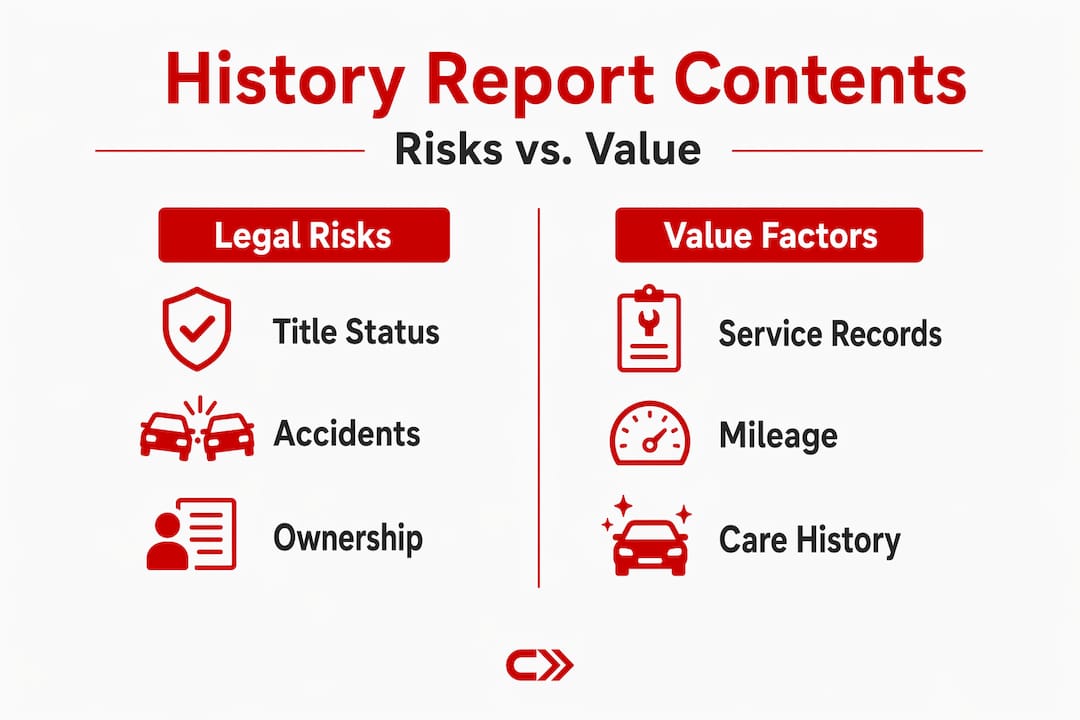
- Ownership history: How many owners the vehicle has had, the states where it was registered, and whether it was used as a fleet, rental, or lease vehicle.
- Title status: Whether the title is clean or branded with designations like salvage, flood, lemon law buyback, or rebuilt.
- Accident records: Reported collisions, severity indicators, and whether airbags deployed.
- Odometer readings: Multiple timestamped readings that help spot rollbacks or discrepancies.
- Service and maintenance records: Oil changes, inspections, and repairs recorded at dealerships or shops that report to the database.
- Recall information: Open or resolved safety recalls tied to the specific VIN.
- Theft records: Whether the vehicle was reported stolen and recovered.
The data comes from insurance companies, state DMVs, auto auctions, police departments, and repair shops. Carfax, for example, adds over 5.9 million new records to its database every single day. That scale sounds reassuring, but the key detail is that records only exist if they were reported. More on that shortly.
| Data category | What it tells you |
|---|---|
| Title status | Legal and financial risks tied to the vehicle |
| Accident records | Structural damage potential and repair quality concerns |
| Odometer history | Whether mileage has been manipulated |
| Service records | How well the previous owner maintained the car |
| Recall status | Active safety issues that may still need to be addressed |
Why the role of car history reports goes beyond basic research
Here’s where most buyers underestimate the importance of car history. Reports aren’t just background reading. They’re your first line of defense against buying a car that will cost you far more than the sticker price.

1 in 5 used vehicles in the U.S. carries a title issue. That means one out of every five cars you browse could have a salvage, flood, or otherwise branded title hiding behind clean paint and a seller’s smile. The National Motor Vehicle Title Information System (NMVTIS) covers 81% of U.S. motor vehicles, which makes it one of the most powerful tools for catching these issues early.
Title brands like salvage or flood are permanent. Repairs don’t remove these brands from the title. A flooded car can look and drive fine for months before electrical corrosion or mold causes serious problems. A salvage vehicle may have been rebuilt competently, or it may have been pieced together with mismatched parts. Either way, you’ll face higher insurance costs and a much harder time reselling.
Beyond title issues, reports help you assess value through the lens of documented care. The most reliable used car deals show single owners, no accidents, and 7+ service records in the history report. That combination signals a car that was driven consistently and maintained responsibly.
Pro Tip: If a car has a service record gap of two or more years with significant mileage added during that period, treat it as a red flag. Ask the seller for paper receipts to fill in what the report missed.
Reports also give you real negotiation leverage. If you find a prior accident or a title discrepancy, that’s a documented reason to request a lower price or walk away entirely. You’re not just guessing. You have evidence.
The benefits of vehicle reports extend into financing and insurance too. Documented service history improves vehicle valuation and can actually influence loan approval decisions. Lenders see consistent maintenance records as a signal that the car is less likely to become a problem asset.
What reports can’t tell you
A car history report is one of the best tools you have. It is not a guarantee. Every buyer needs to understand the gaps before placing too much confidence in a clean report.
The biggest blind spot is unreported incidents. Reports depend on voluntary data sharing. Independent repairs, cash transactions, and minor accidents often go completely unreported. A car could have been in three fender benders, repaired by a cousin with a body shop, and paid for in cash, and none of it would appear anywhere in the report.
The second issue is reporting lag. Accidents may not appear in reports for weeks or months after they occur. That’s because the data depends on insurance claims processing, police reports, and database aggregation delays. A car that was rear-ended two months ago could show up on a lot today with a clean report, and the incident would appear later.
Additional limitations include:
- No mechanical condition data. Reports tell you what happened to a car, not what’s failing right now. A worn transmission, a failing water pump, or a slow oil leak won’t show up anywhere.
- Provider database differences. Not every report service accesses the same data, meaning coverage gaps vary by provider.
- State reporting inconsistencies. Some states share data more thoroughly than others, which creates uneven coverage depending on where the car spent its life.
Pro Tip: Always pair a vehicle history report with a pre-purchase inspection from a trusted independent mechanic. Budget around $100 to $150 for this. It’s the best money you’ll spend before handing over thousands.
The honest framing is this: a vehicle history report is a risk map, not a pass/fail document. Use it to decide whether a car deserves your time and money for deeper evaluation, not as a final verdict.
Comparing the major report providers
Not all vehicle history reports are created equal, and knowing the differences helps you get more out of the car history report details you’re paying for.
| Provider | Strengths | Best for |
|---|---|---|
| Carfax | Insurance and dealership records, wide dealer network | Retail and private party purchases |
| AutoCheck | Auction data, Experian financial records, scoring system | Auction or fleet vehicle research |
| NMVTIS | Government database, title and brand records | Verifying title status independently |
Carfax excels in insurance and dealership records, while AutoCheck links to auction and financial databases, complementing each other’s data sets. That’s the key insight most buyers miss. These aren’t competing products where you pick the winner. They’re different windows into the same vehicle’s past.
In terms of cost, reports typically run $25 to $40 per report, with subscription options around $29 per month for buyers shopping multiple vehicles at once. If you’re seriously considering three or more cars, a short-term subscription pays for itself quickly.
Practical strategies for getting the most out of your reports:
- Pull reports from at least two different providers for any car you’re seriously considering.
- Cross-reference with the NMVTIS database to verify title status independently.
- Look for patterns across reports, not just individual flags. A single minor incident is different from a pattern of accidents and ownership changes.
How to apply report findings in your buying process
Knowing how car history affects buying decisions is only useful if you act on that knowledge at the right moments.
Start early. Pull a report before you schedule a test drive. This filters out high-risk listings before you invest time and emotional energy. Many buyers do this backward, falling in love with a car before checking its history. By then, confirmation bias has set in.
Here’s a practical sequence for using reports in your search:
- Get the VIN from the listing and run a report immediately.
- Flag any title brands, accident records, or ownership anomalies for follow-up questions.
- Use the service history to gauge how the car was maintained. Cross-reference it with the resale value implications of consistent documentation.
- Bring a printed copy of the report to any in-person showing. Ask the seller directly about discrepancies. Their reaction tells you as much as their words.
- If the report is clean but the car is pricey, use the absence of documented service records as a negotiating point.
- Share the report with your mechanic before the pre-purchase inspection so they know exactly what to verify.
Pro Tip: When contacting a seller, ask for the VIN before agreeing to meet. Any seller who hesitates to share it before a scheduled visit is worth being cautious about.
Financing and insurance steps follow naturally from what you find. A car with documented, consistent maintenance is a stronger asset in the eyes of a lender. Service records that reflect regular maintenance are a genuine factor in loan approval decisions, and they translate directly into buyer confidence and resale premiums down the road.
My take on reports as a used car buyer
I’ve used vehicle history reports on every used car purchase I’ve made for the past decade. And the single biggest shift in my approach came when I stopped treating a clean report as approval and started treating it as a starting point.
The moment that changed my thinking was a car with a spotless report that my mechanic found had a cracked subframe. Repaired, yes. Reported, no. The cash repair kept it invisible to every database. That experience crystallized why combining multiple report sources and cross-checking with physical inspections gives you the best protection. No single source is enough.
What I’ve also learned is that reports give you social cover in negotiations. Most sellers expect you to just drive the car and feel your way to a price. When you walk in with a report showing a prior accident or a title flag, you shift the dynamic entirely. You’re a prepared buyer, not a passive one.
My honest advice: treat the report as your filter and your fact-checker. Not your final answer.
— Chally
Track your car’s history with CarJourney
A vehicle history report tells you what happened before you owned a car. CarJourney helps you build the record of what happens after. For enthusiasts and everyday drivers alike, keeping a clean, detailed ownership history is one of the smartest things you can do for resale value, loan conversations, and your own peace of mind.
CarJourney’s AI scans your service documents, tracks your maintenance schedule, and gives you one place to store everything that matters about your vehicle. You can explore how service history builds value over time, or start logging your own records today at CarJourney. The buyers who eventually purchase your car will pull a report on it. Give them something worth finding.
FAQ
What is a vehicle history report?
A vehicle history report is a document compiled from insurance, DMV, auction, and repair data tied to a car’s VIN, covering ownership history, accidents, title status, and service records.
How many used cars have title issues?
1 in 5 used vehicles in the U.S. has a title issue, which makes running a report before any purchase a practical necessity rather than an optional step.
Can a car with a clean history report still have problems?
Yes. Unreported repairs, cash transactions, and data reporting lags mean a clean report reflects only what was recorded. A pre-purchase mechanical inspection is the required companion to any report.
Which vehicle history report provider is best?
There’s no single best provider. Carfax leads on dealership and insurance data, while AutoCheck offers stronger auction records. Using both gives you the most complete picture of a vehicle’s past.
How much does a vehicle history report cost?
Reports typically cost $25 to $40 each, with subscription options around $29 per month. If you’re shopping multiple vehicles at once, a short-term subscription is usually the better value.