 carjourney
From the CarJourney journal
How service history boosts car resale value and trust

Most sellers assume that when it comes to resale value, mileage and age tell the whole story. They’re wrong. A complete service history can increase resale value by 10 to 25% compared to similar vehicles without documentation, which means an older car with clean records can fetch significantly more than a newer one with a blank maintenance slate. If you’re preparing to sell and wondering whether those oil change receipts and repair invoices are worth anything, this article will show you exactly what service documentation does to your asking price, what buyers actually look for, and how to use your records to close faster and for more money.
Table of Contents
- Why service history matters for resale value
- How much value does a complete service record really add?
- What makes a service history credible to buyers?
- Partial histories, high mileage, and other seller situations
- A realistic take: What actually sells cars faster in 2026
- Ready to boost your resale? Organize your service history now
- Frequently asked questions
Key Takeaways
| Point | Details |
|---|---|
| Proven value boost | A thorough service history can increase your car’s resale price by 10-25% or more. |
| Trust wins buyers | Documented maintenance reassures buyers, making them more likely to pay your asking price. |
| Partial records still help | Even a couple years of organized records add value over having none at all. |
| Digital records preferred | Buyers trust and favor digital or dealer-provided records over paper or handwritten logs. |
| Better than low mileage | A higher-mileage car can outshine a low-mileage one if it has complete maintenance records. |
Why service history matters for resale value
With that myth busted, let’s dig into why service history plays such a big role in how much you can sell your car for.
Buyers shopping the used car market carry one constant fear: they don’t want to inherit someone else’s problem. A car that looks good on the outside might be hiding deferred maintenance, ignored warning lights, or botched repairs. Service records are the antidote to that anxiety. Service history builds buyer trust by reducing the perceived risk of hidden issues, acting as documented proof of responsible ownership.
When you hand a buyer a folder of organized service records, you’re doing something powerful. You’re shifting the conversation away from “I hope this car is okay” and toward “this is clearly a well-maintained vehicle.” That mental shift changes negotiation dynamics completely. Buyers who feel confident in the car’s history are far less likely to lowball you, and far more likely to close quickly.
Here’s what documented service history signals to a buyer:
- Regular oil changes and fluid services (basic care was taken seriously)
- Timely replacement of wear items like brakes and tires
- Proactive attention to manufacturer-recommended services
- A paper trail of any repairs, so nothing is being hidden
- Consistency with a trusted service provider over time
“A car with complete service records isn’t just a vehicle. It’s a vehicle with a story you can verify, and that verification is worth real money.” — Used car market insight
Keeping thorough maintenance receipts is something most owners put off because it feels tedious in the moment. But when sale time comes, every receipt you’ve saved is working in your favor. Buyers in today’s market, especially post-pandemic where used car inventory remains tight, are more educated than ever. They know what to ask for, and they know that a seller without records is a seller with something to hide, whether that’s actually true or not. Learning what constitutes trusted service history from a buyer’s perspective gives you a real advantage at the negotiating table.

How much value does a complete service record really add?
Understanding service history’s importance, let’s look at the actual dollars-and-cents difference it makes.
The numbers here are not trivial. For a $20,000 vehicle, complete records add $3,000 to $5,000 in resale value. For luxury vehicles, that premium climbs even higher, sometimes reaching 30 to 35% above comparable undocumented examples. That’s not a rounding error. That’s the difference between a transaction that feels like a loss and one that covers your next down payment.
| Vehicle value | Service history boost | Estimated dollar gain |
|---|---|---|
| $10,000 | 10 to 25% | $1,000 to $2,500 |
| $20,000 | 15 to 25% | $3,000 to $5,000 |
| $40,000 (luxury) | 25 to 35% | $10,000 to $14,000 |
| $60,000 (high-end) | 30 to 35% | $18,000 to $21,000 |
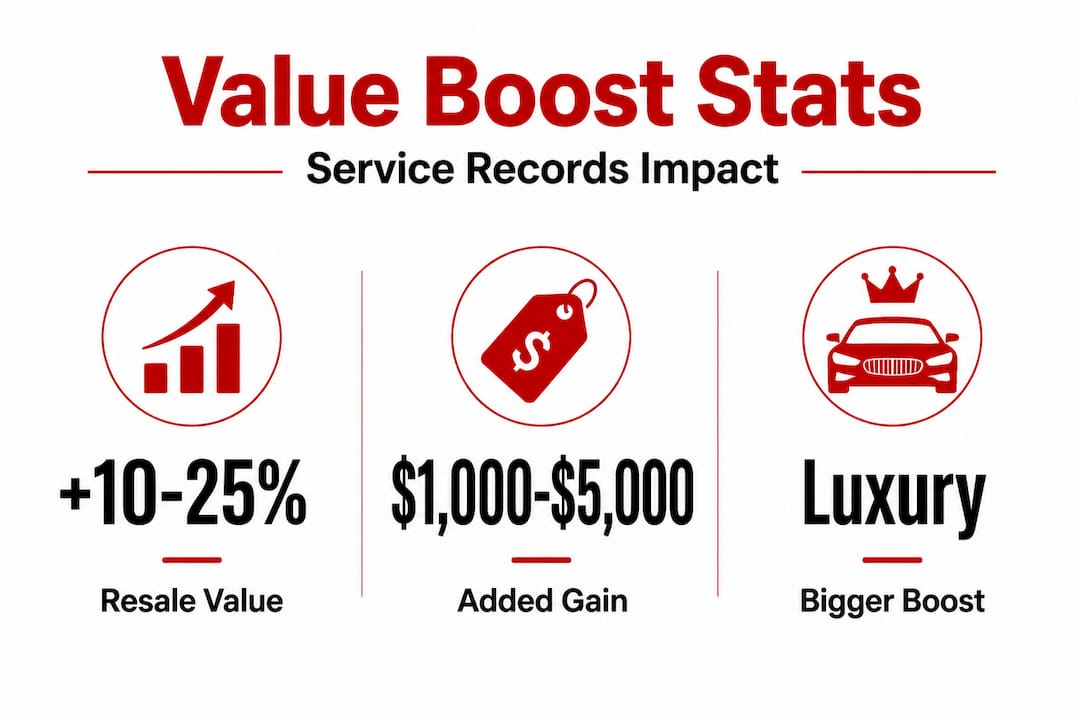
One of the most misunderstood situations is the high-mileage vehicle. Many sellers assume that a 130,000-mile car is automatically at a disadvantage, and they mentally write off the chance of getting top dollar. But the impact of mileage on resale is more nuanced than raw numbers suggest. A 130,000-mile car with a complete, verified service history routinely outsells an 80,000-mile car with no records at all. Why? Because buyers can see exactly how those miles were accumulated and know the car was properly cared for along the way.
Partial records are also worth far more than sellers typically assume. Even two to three years of recent documentation, showing that oil was changed, brakes were serviced, and tires were replaced, is enough to meaningfully shift buyer perception. The last chapter of a car’s life, in the hands of a conscientious owner, matters a lot.
Pro Tip: Even if you’ve lost older records, start documenting everything right now. A well-kept maintenance log showing the last two to three years of services can still add hundreds or even thousands to your selling price.
The math on this is compelling enough that sellers should treat documentation as a financial investment. Spending $30 on a proper binder or digital service to organize your records could return ten times that at the negotiating table.
What makes a service history credible to buyers?
So, what counts as a “good” service history, and how can you make sure yours stands out?
Not all service records carry equal weight. A buyer isn’t just looking for pieces of paper. They’re evaluating whether those records are believable, complete, and verifiable. According to data from the used car industry, key records include dates, mileage at time of service, the specific work performed (oil changes, brake replacements, tire rotations), and the provider’s name. Without all four elements, a receipt is little more than a suggestion.
Here’s a quick comparison of how different types of documentation stack up in buyer credibility:
| Record type | Credibility level | Why |
|---|---|---|
| Dealer service records | Very high | Digitally traceable, professionally stored |
| National chain (e.g., Jiffy Lube) | High | Consistent format, can be reprinted |
| Independent shop receipts | Moderate | Trustworthy but harder to verify |
| Handwritten notes | Low | Easy to fabricate, lacks third-party verification |
| No records | Negative | Buyers assume the worst by default |
The quality and credibility of service records make a real difference when buyers are making decisions. Dealer records, because they’re stored digitally and tied to your VIN (vehicle identification number), are considered the most credible. National chain records are also strong because buyers know they can call and verify. Independent shops vary, but a professional receipt with a business name, address, and phone number carries weight. Handwritten notes, no matter how honest, often raise more questions than they answer.
When it comes to presentation, organization matters just as much as content. Buyers who receive a chaotic stack of crumpled receipts get a different impression than those who receive a clean binder with records organized by date and mileage. You can go even further by building buyer trust through digital presentation, using apps and platforms to generate clean service summaries. Using service history apps gives your documentation a polished, professional feel that buyers genuinely respond to.
Here are the elements every good service record should include:
- Date of service
- Mileage at time of service
- Specific services performed (not just “maintenance”)
- Parts replaced, with brand names if possible
- Shop name, address, and contact information
- Total cost (adds authenticity)
Pro Tip: If you’ve been using the same shop for years, ask them to print a full service history from their system. Many shops maintain digital records going back five or more years and will print them for free. Pair that with organized maintenance records you’ve kept yourself, and you have a compelling package.
Partial histories, high mileage, and other seller situations
But what if your records aren’t perfect or your car isn’t the lowest-mileage option out there?
The reality is that most people selling a car don’t have a pristine, unbroken chain of documentation going back to day one. Life gets in the way. Receipts get lost. Services get done at shops that closed. The good news: even partial history is significantly better than none. Even partial recent records, covering two to three years, boost perceived value over having nothing at all. Organizing those partial records in a binder or digital format makes a strong impression even when the history isn’t complete.
Here’s how to approach different seller situations:
- Partial history: Lead with what you have. Organize recent records neatly, note the mileage range they cover, and be upfront that older records weren’t retained. Transparency is a feature, not a weakness.
- High-mileage vehicle: Lean into the records. A high-mileage car with records can sell for more than a low-mileage car without, because documented miles are trusted miles. Highlight timing belt or chain replacements, major fluid services, and any preventive work.
- Modified or enthusiast vehicle: Good history is even more important here. Buyers of modified cars are especially cautious about corner-cutting. Detailed records showing quality parts and professional installation go a long way.
- EV or hybrid: Battery health documentation is rapidly becoming the service history equivalent for electric vehicles. Logs showing consistent charging habits, software updates, and any battery-related services are what EV buyers now seek first.
“No records don’t automatically mean poor condition, but buyers will always assume the worst when documentation is absent.” — Sell Car Advisor
One important psychological reality: buyers assume worst-case scenarios when records are missing. This isn’t irrational. In a market full of flipped and resold vehicles, undocumented history is a genuine red flag. Sellers who understand this don’t treat record-keeping as an afterthought. They treat it as a core part of the selling strategy from day one.
If you’re dealing with a specialized situation, check out resources on selling tips for unique cars and review vehicle maintenance sheet advice to make sure you’re presenting your car’s history in the most compelling way possible.
A realistic take: What actually sells cars faster in 2026
Zooming out, here’s the unpolished truth from years of industry insight and what today’s buyers really look for.
Here’s something most articles won’t tell you: the freshly detailed car with no service history is a harder sell than the dusty one with a complete paper trail. Sellers spend hundreds on paint correction, new floor mats, and professional detailing, but skip the fifteen minutes it takes to organize their maintenance receipts. That’s a fundamental misunderstanding of what buyers actually trust.
Today’s used car buyers are research-oriented in a way that wasn’t true even five years ago. They run Carfax reports, cross-check asking prices against market data tools, and ask specific questions about timing belts, coolant flushes, and brake pad thickness. They’ve been burned, or they know someone who has. An undocumented “great deal” raises immediate suspicion rather than excitement.
It’s worth noting that while the industry consistently points to documentation value, direct empirical research on the exact financial impact of service records is still evolving. But the market behavior doesn’t wait for academic confirmation. Buyers are acting on this preference right now, and sellers who ignore it pay the price in lower offers and longer time on market.
What we’ve seen, both in the community at CarJourney and in the broader used car landscape, is that the sellers who close fastest and for the best prices are the ones who treat their organized maintenance receipts as part of their listing package from day one. They’re not an afterthought. They’re the headline.
Invest in documentation the same way you invest in curb appeal. The return on that investment is measurable and real.
Ready to boost your resale? Organize your service history now
If you want real-world resale results, the best thing you can do today is get started tracking your maintenance, all in one place.
CarJourney was built for exactly this situation. Our AI scans your service documents, organizes them by date and mileage, and gives you a clean, professional history you can share with any buyer. No more hunting through the glove box the night before a test drive.
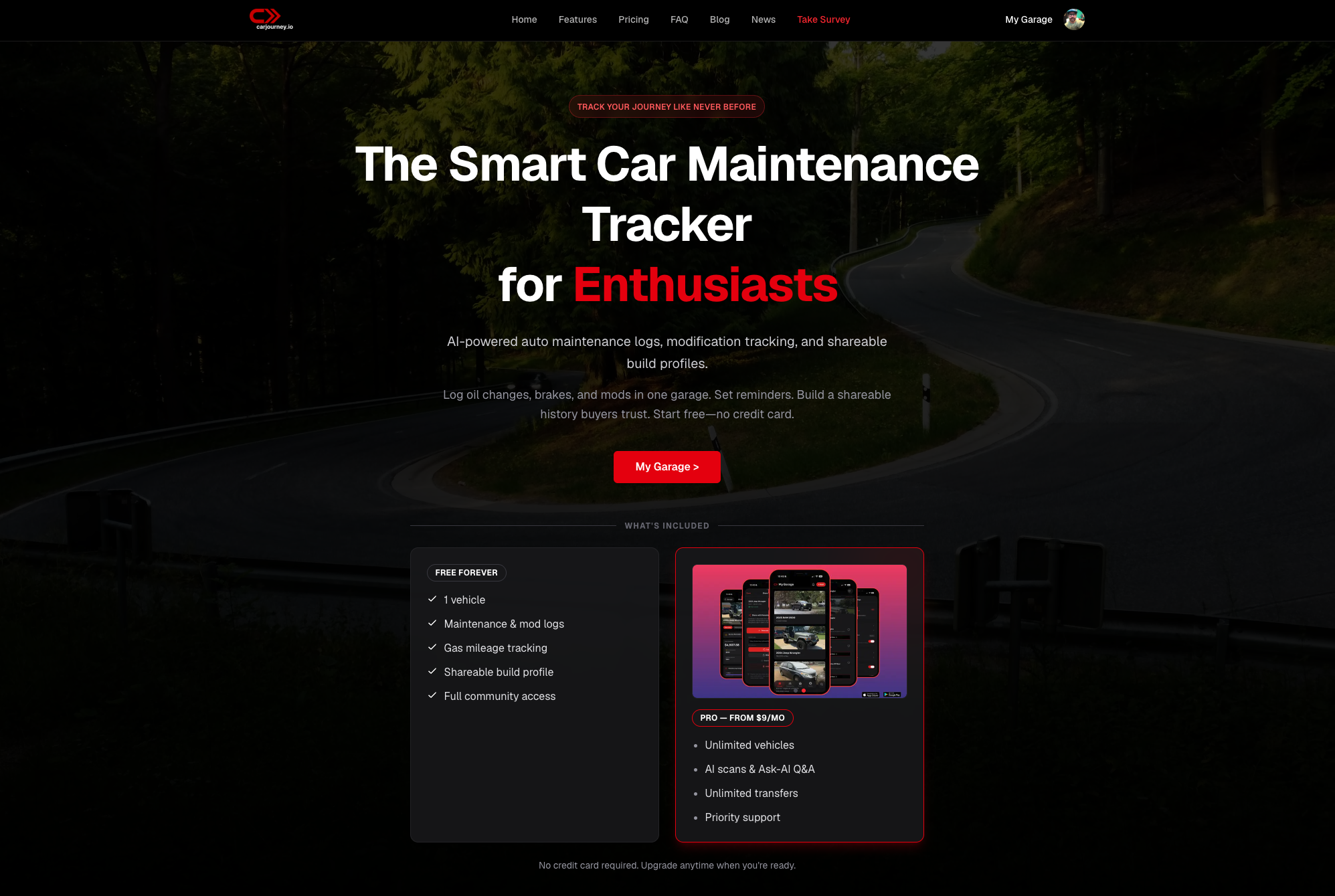
Whether you’re six months from selling or planning ahead, starting now means every service from this point forward is documented and ready to work for you. The CarJourney maintenance tracker makes it effortless to log services, store receipts digitally, and generate the kind of organized history that serious buyers expect. We built this because we believe documented cars sell faster, for more money, and with far less negotiation friction. Learn more about CarJourney and see how we can help you turn your service history into real resale leverage.
Frequently asked questions
What if I don’t have a full service history?
You can still boost your car’s value with recent and major service records, especially if they’re well organized. Even partial records covering the last two to three years meaningfully increase perceived value over having no documentation at all.
Do digital service records matter more than paper ones?
Digital and dealer-provided records are viewed as more credible than handwritten or paper logs by most buyers. Digital and dealer records are preferred because they’re harder to fabricate and easier for buyers to verify independently.
Is service history more important than low mileage?
A higher-mileage car with complete records can absolutely outsell a low-mileage car without any history. A documented high-mileage car gives buyers confidence that the miles were properly managed, which outweighs the raw number.
How much more can I sell my car for with full records?
A complete service history can add 10 to 25% to your resale value, with higher premiums on luxury vehicles. Based on resale value research, a $20,000 car with full records can command $3,000 to $5,000 more than an identical undocumented vehicle.
Why do buyers care so much about service documentation?
Buyers care because used car purchases always carry risk, and service records reduce that risk in a tangible way. Service history reduces perceived risk by proving responsible ownership, which directly translates to buyer confidence and faster, cleaner sales.