 carjourney
From the CarJourney journal
How mileage impacts your car's resale value and sale
How mileage impacts your car’s resale value and sale
Mileage is one of the first things buyers look at when browsing used car listings, but treating it as the only number that matters is one of the most expensive mistakes a seller can make. A car at 98,000 miles with a spotless service history can outsell a neglected 60,000-mile vehicle sitting across the lot. The relationship between miles driven and resale price is real but far more nuanced than most people realize, and if you’re preparing to sell, understanding these dynamics can mean hundreds or even thousands of dollars in your pocket.
Table of Contents
- How mileage influences car value
- Mileage bands and buyer psychology
- Mileage vs. maintenance: What matters more?
- Strategies for selling cars with higher mileage
- Why mileage is overrated, or misunderstood
- Track, document, and maximize your car’s value
- Frequently asked questions
Key Takeaways
| Point | Details |
|---|---|
| Mileage affects price | Value typically drops sharply at specific mileage thresholds. |
| Maintenance records matter | A well-documented car can overcome mileage concerns for buyers. |
| Sell before milestones | You’re likely to get a better price by listing your car before it hits major mileage bands. |
| Transparency wins buyers | Openly sharing records and service history boosts trust and saleability. |
How mileage influences car value
With the basics established, let’s dig into exactly how mileage impacts market value and what the numbers look like in practice.
Mileage is the single most visible variable a buyer uses to shortlist used vehicles. Before checking the trim level, checking the color, or even looking at photos, a huge portion of shoppers filter listings by odometer reading. That means your mileage number acts as a gatekeeper, either pulling buyers into your listing or sending them elsewhere before they ever read a word you wrote.
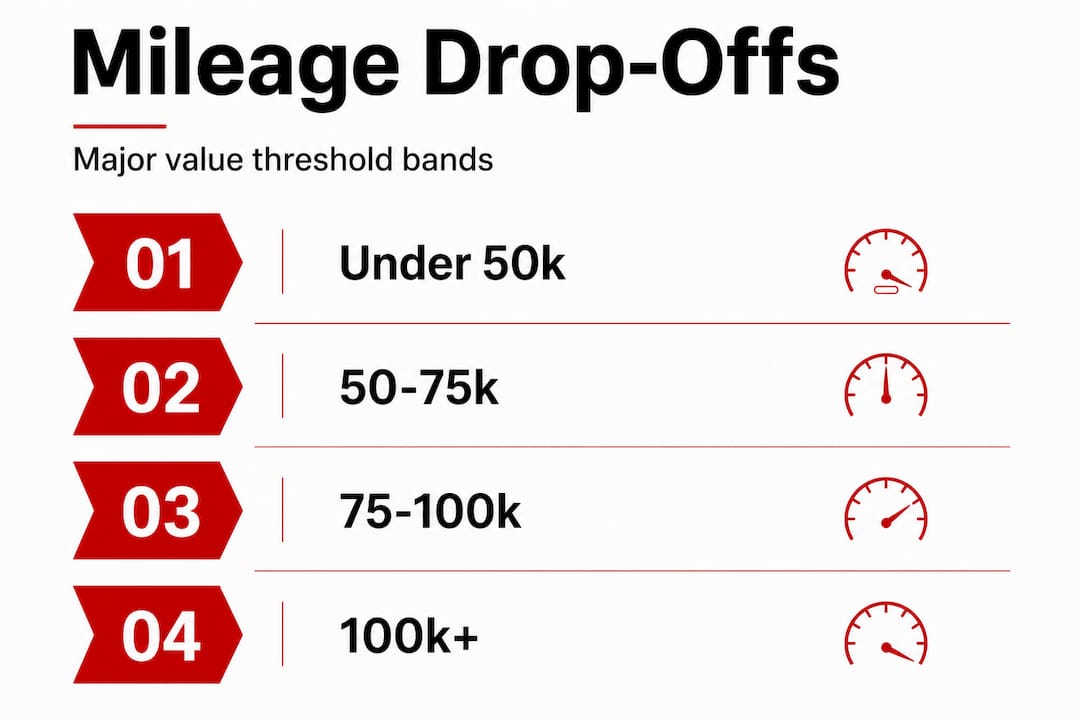
The financial impact is measurable and significant. A vehicle crossing from 49,000 to 51,000 miles does not simply tick two numbers higher. In buyers’ minds, it has crossed a psychological wall. Research on odometer thresholds and left-digit bias confirms that price sensitivity spikes sharply at the 50,000, 75,000, and 100,000-mile marks, with buyers adjusting their offers and mental valuations substantially at each threshold. The phenomenon driving this is called left-digit bias, where the brain anchors on the leftmost digit of a number rather than processing the full value. A car at 99,800 miles genuinely feels closer to 99,000 than to 100,000 in the buyer’s mind, even though the actual gap is tiny.
Here’s what typical price behavior looks like across mileage bands for a popular mid-size sedan:
| Mileage band | Estimated value range | Buyer perception |
|---|---|---|
| Under 30,000 miles | $28,000 to $34,000 | Near-new, low risk |
| 30,001 to 50,000 miles | $22,000 to $28,000 | Lightly used, solid choice |
| 50,001 to 75,000 miles | $17,000 to $22,000 | Mid-life, some hesitation |
| 75,001 to 100,000 miles | $12,000 to $17,000 | Aging, scrutiny increases |
| Over 100,000 miles | $7,000 to $12,000 | High risk in buyer’s mind |
These figures are ballpark estimates, but they reflect the real pattern: value does not drop in a smooth curve. It drops in cliff-like steps at those key thresholds.
“The left digit of the odometer reading significantly affects consumer willingness to pay, with buyers discounting vehicles that have crossed round-number milestones even when the actual mileage difference is trivial.”
Keeping up with car maintenance by mileage intervals throughout ownership plays directly into this picture. Cars that receive timely service at each maintenance milestone show less wear at any given odometer reading, which means that even if you cannot change where your mileage number falls, you can influence how the car’s physical condition reinforces or undercuts that number.
Key ways mileage affects buyer decisions include:
- Search filtering: Most listing platforms default to mileage filters, meaning a car at 101,000 miles disappears from searches set to “under 100,000.”
- Insurance and financing rates: Lenders and insurers sometimes apply stricter terms to higher-mileage vehicles, which affects a buyer’s total cost and purchasing confidence.
- Perceived remaining life: Buyers mentally estimate how many miles they expect to get from a car, and high existing mileage shrinks that projection.
- Negotiation room: Sellers with mileage near or over a threshold often face more aggressive lowball offers because buyers know the psychological advantage they hold.
Mileage bands and buyer psychology
Now that we understand the value impact, let’s look closer at how typical buyers view certain mileage brackets in the market.
Buyers do not evaluate mileage linearly. They think in bands. A buyer searching for a used car mentally groups vehicles into categories: under 40k feels almost new, 40k to 60k is a sweet spot of value, 60k to 100k is the working-life phase, and over 100k is the high-risk zone that triggers a different set of questions entirely. Understanding this psychology is something every seller can use to their advantage.
Car depreciation research reinforces that buyers rely on these bands during both their initial search and price negotiation, with sellers who allow their vehicle to cross a key threshold often leaving real money on the table.
Here is a direct comparison of the seller’s and buyer’s perspective at each major band:
| Mileage band | What the seller thinks | What the buyer thinks |
|---|---|---|
| Under 40,000 miles | “This is practically new.” | “I’ll pay a premium but expect near-perfect condition.” |
| 40,000 to 75,000 miles | “Great shape, solid mid-life car.” | “Good deal if the service history checks out.” |
| 75,000 to 99,999 miles | “Still has plenty of life.” | “I need reassurance before 100k.” |
| 100,000 to 120,000 miles | “Ran strong for 100k, should keep going.” | “Higher risk, I want a steep discount.” |
The moment a car crosses 100,000 miles, the negotiating dynamic shifts noticeably. Buyers begin asking about timing belts, water pumps, and major planned repairs with much more urgency. That’s not always fair, but it’s real.
Pro Tip: If your car is sitting at 98,500 miles and you’re close to pulling the trigger on selling, list it now. The gap between 98,500 and 100,000 miles is tiny mechanically, but it is enormous psychologically. The same logic applies at 48,500 vs 50,000 and at 73,000 vs 75,000.
Here’s a step-by-step approach for timing your sale around mileage bands:
- Check your current mileage against the thresholds of 50k, 75k, and 100k. Determine how close you are to each.
- Estimate your monthly mileage to project when you’ll cross the next threshold.
- If you’re within 2,000 to 3,000 miles of a threshold, accelerate your sale timeline rather than waiting.
- Use the band you’re currently in to frame your listing positively. “Under 75,000 miles” reads better than “74,900 miles.”
- Price relative to your band, not just your exact number. Buyers filtering for “under 75k” will see your car; price it to compete with others in that group.
For more guidance on presenting your vehicle’s history and timing your decision, the car sale tips section on CarJourney offers practical frameworks for getting listings right the first time.
Mileage vs. maintenance: What matters more?
Buyer perceptions matter, but real value also depends on how well the car’s been kept up. Let’s see how maintenance influences this equation.

Here’s the uncomfortable truth for buyers who obsess over odometer readings: a well-maintained car at 120,000 miles is often a better buy and a better sell than a neglected car at 55,000 miles. The odometer tells you how far a car has traveled. It tells you almost nothing about the condition of the engine, transmission, cooling system, or suspension. Maintenance records fill that gap.
Research on high-mileage vehicle value consistently shows that maintenance records can offset high mileage, with well-maintained high-mile cars frequently commanding more than poorly maintained low-mile counterparts. Buyers who understand vehicles know this. The broader market is slowly learning it too.
What maintenance history actually communicates to buyers:
- Oil change frequency: Regular oil changes signal that the engine was never starved of lubrication, which is one of the primary causes of premature engine wear.
- Timing belt or chain service: Documented replacement removes one of the biggest fears buyers have about high-mileage vehicles.
- Brake, tire, and suspension records: Show the car has been kept safe and functional, not just driven into the ground.
- Transmission service history: Especially important for automatic transmissions, which can fail catastrophically without fluid changes.
- Recall completion records: Proving all manufacturer recalls have been addressed signals responsible ownership.
Pro Tip: Organize your service records chronologically before listing your car. A stack of receipts in the right order takes a buyer from skeptical to confident faster than almost anything else you can do. Digital logs are even better because buyers can review them before they ever drive to see the car.
Keeping a consistent car maintenance log and following a structured car maintenance schedule throughout ownership creates exactly this kind of documentation trail automatically. Sellers who arrive at the transaction with a complete digital history are increasingly seen as more credible than sellers who can’t account for what happened to the car between oil changes.
A quick example: Two identical 2018 Toyota Camrys. One has 85,000 miles and complete records showing every oil change, all four tire replacements, a brake job at 60k, and a timing service at 80k. The other has 62,000 miles and a single dealer record from three years ago. The 85,000-mile car will likely command a higher price from any buyer who takes time to look at the paperwork, because the evidence of care is compelling and the unknowns are minimized.
Strategies for selling cars with higher mileage
For those ready to sell, especially with more miles than average, here are some proven ways to boost your outcome and avoid common stumbles.
Selling a high-mileage vehicle successfully is not about hiding the mileage. It’s about reframing it. The sellers who get top dollar for high-mileage vehicles are the ones who lead with the story behind the miles, not the number itself.
Well-documented service histories are consistently cited as the factor that helps high-mileage cars compete with lower-mileage alternatives in the used car market. Transparency, backed by paper, is your most powerful tool.
Here’s a step-by-step approach for listing and selling a higher-mileage vehicle:
- Gather every service record you have. This includes oil change receipts, dealer invoices, independent shop records, and even photos of major repairs. If you’ve been using an app like CarJourney, pull your complete maintenance history report.
- Identify and highlight completed major services. If you’ve done the timing belt, water pump, or transmission service, lead with that in your listing description. These are the exact things buyers worry about on high-mileage cars.
- Get a pre-sale inspection. A clean third-party inspection report from a reputable shop is a powerful objection-killer. It shifts the conversation from “this car has a lot of miles” to “this car passed a professional inspection.”
- Price realistically within your mileage band. Don’t price at the bottom of your band out of insecurity. Use completed sale data from platforms like Carmax, AutoTrader, or private sales in your region to find the actual market rate for documented, well-maintained vehicles in your mile range.
- Write a listing description that tells the story. Mention that the car has been regularly serviced, describe major work completed, and invite buyers to review the full maintenance history. Confidence in your records creates confidence in buyers.
- Be available and transparent during the test drive. Buyers of high-mileage vehicles have more questions. Welcoming those questions rather than deflecting them signals trustworthiness.
You can find additional tips for car sellers on CarJourney, including specific advice on writing listings and handling negotiations for vehicles in every condition tier.
Why mileage is overrated, or misunderstood
Let’s step back and consider what most car owners and buyers miss about the real meaning and limits of mileage in today’s market.
The cultural fixation on odometer readings is, at its core, a legacy artifact. It made a lot more sense in the 1970s and 1980s, when reaching 100,000 miles was genuinely a milestone that signaled the mechanical limits of most vehicles. An engine from that era hitting six figures was legitimately near the end of its useful life. Modern vehicles are categorically different. Today’s well-engineered cars regularly exceed 200,000 miles with proper maintenance, and some models routinely push beyond 300,000 in fleet and enthusiast settings.
Yet the psychological thresholds haven’t moved. Buyers still panic at 100,000 miles on a 2020 Honda Accord, even though that engine was designed to run well past 200k with basic upkeep. This is an opportunity for sellers who understand what mileage actually measures, which is distance traveled, not health.
Maintenance records offsetting high mileage is not a new idea in automotive circles, but it remains underused by most private sellers because they assume buyers will focus only on the number. The enthusiast market has understood this for years. A well-documented car with a clear ownership history commands respect and premium pricing, regardless of what the odometer says.
The sellers who understand this dynamic consistently outperform those who don’t. Instead of apologizing for their mileage, they present the full picture. Instead of pre-emptively slashing their asking price at 105k miles, they show buyers why the car has more life ahead than most 75k-mile vehicles that were never properly serviced.
Using a car maintenance tracker throughout ownership is the single most practical thing you can do today to protect your resale value tomorrow. Not because it changes the mileage, but because it builds the evidence base that helps buyers look past the number and see the car for what it actually is.
Track, document, and maximize your car’s value
All of which points to the practical payoff. Here’s how to put these principles to work and ensure you get the sale you deserve.
CarJourney was built specifically for situations like this. When you’re preparing to sell, the last thing you want to do is dig through a glove box full of crumpled receipts trying to prove your car’s history to a skeptical buyer.
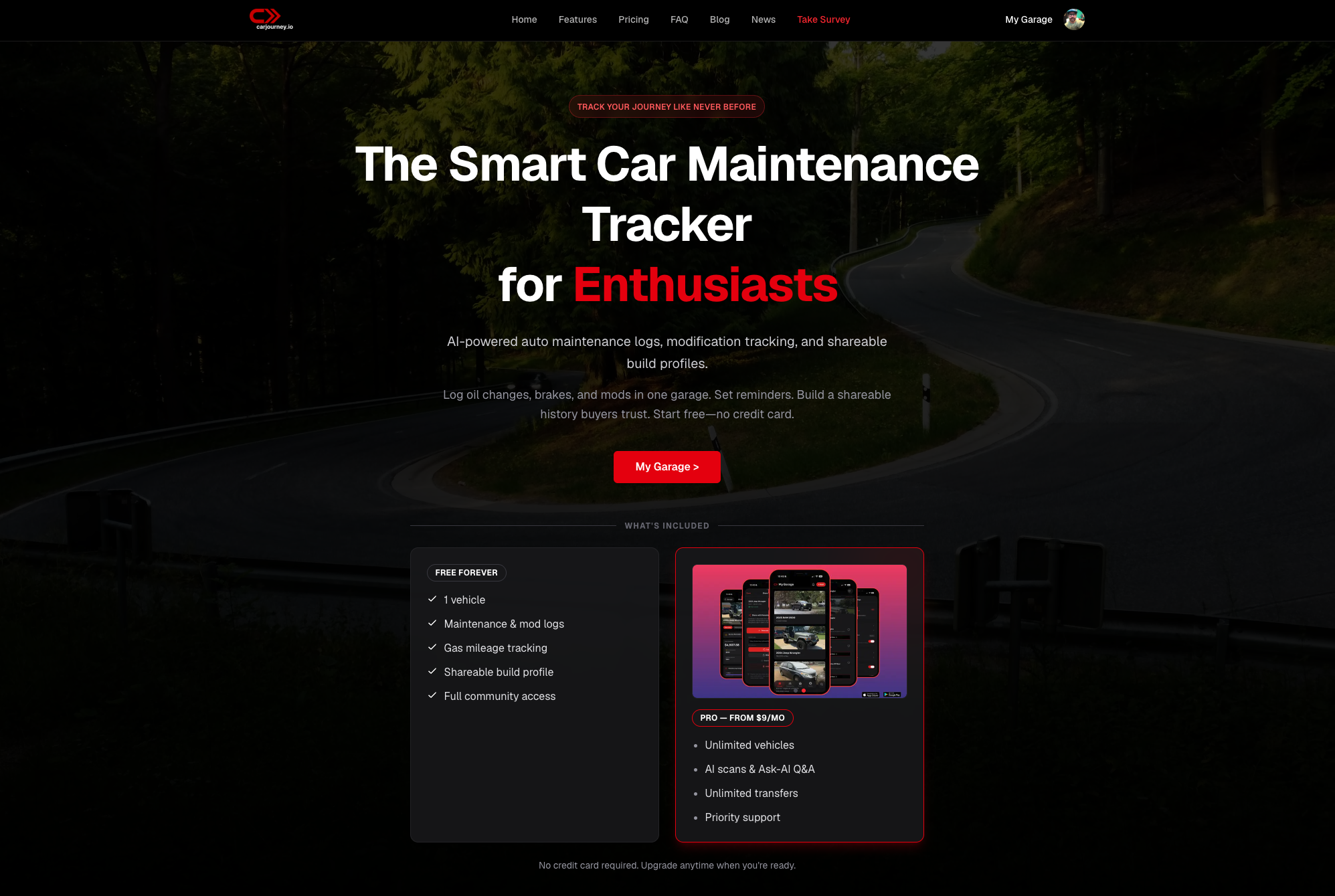
CarJourney’s AI-powered platform lets you log every service event, scan and store receipts digitally, and generate a clear ownership history report that you can share directly with prospective buyers. Our maintenance schedule tools are tailored to your exact vehicle, so you’re not working from generic advice. If you want to demonstrate to buyers that you cared for this car the right way, CarJourney gives you the documentation to prove it. Visit carjourney.io to start building your vehicle’s history today and walk into your next sale with confidence.
Frequently asked questions
Does high mileage always make a car harder to sell?
No. High-mileage cars with complete records often sell more easily than poorly maintained low-mileage vehicles because documented care removes buyer uncertainty.
What are the major mileage thresholds that affect car value?
The biggest value drops typically occur at 50,000, 75,000, and 100,000 miles, driven by left-digit bias and buyer psychology at round-number odometer milestones.
How can I make my high-mileage car more appealing to buyers?
Show clear maintenance logs, provide details of completed major services, and let the documented maintenance history tell the story of how the car was cared for.
Should I sell my car before reaching a milestone mileage band?
Yes. Selling before crossing thresholds at 50k, 75k, or 100k miles typically results in a better price because buyers in lower bands have higher willingness to pay.