 carjourney
From the CarJourney journal
Mileage Service: Your Complete Maintenance Guide

Vehicle ownership comes with ongoing responsibilities, and understanding the importance of mileage service is critical for keeping your car running smoothly for years to come. Whether you're driving a classic muscle car, a modified import, or a daily commuter, following manufacturer-recommended service intervals based on your odometer reading helps prevent costly repairs and maintains optimal performance. This comprehensive guide explores everything you need to know about mileage-based maintenance, from understanding service schedules to tracking your vehicle's service history effectively. Planning car service every year alongside maintenance by mileage helps; a service reminder app keeps milestones on track.
Understanding What Mileage Service Really Means
Mileage service refers to scheduled maintenance performed at specific odometer intervals as recommended by your vehicle's manufacturer. Unlike reactive repairs that address problems after they occur, this proactive approach follows a predetermined timeline based on how many miles you've driven.
Most manufacturers design service schedules around major milestones: 30,000 miles, 60,000 miles, 90,000 miles, and 120,000 miles. At each interval, specific components require inspection, adjustment, or replacement to ensure your vehicle continues operating as designed.
The Science Behind Mileage-Based Maintenance
Vehicle components wear at predictable rates based on usage. Engine oil breaks down after a certain number of miles, brake pads thin from repeated friction, and timing belts stretch over time. Manufacturers invest millions in research to determine exactly when these components typically need attention.
Key reasons why mileage matters more than time:
- Mechanical wear correlates directly with distance traveled
- Component degradation follows predictable patterns based on use
- Oil and fluid contamination increases with engine cycles
- Friction-based parts deteriorate proportionally to mileage
The relationship between mileage and maintenance needs is particularly important for understanding regular service costs and budgeting appropriately for vehicle ownership.

Major Mileage Service Intervals and What They Include
Understanding what happens at each service interval helps you prepare financially and ensures nothing gets overlooked. Each milestone builds on previous maintenance while addressing components that reach critical wear points.
The 30,000-Mile Service Checkpoint
Your first major service interval typically occurs around 30,000 miles. This checkpoint focuses on replacing consumables and inspecting systems that experience moderate wear during the break-in period and early vehicle life.
Standard 30K service includes:
- Air filter replacement to maintain optimal airflow
- Fuel filter replacement for proper fuel delivery
- Cabin air filter replacement for interior air quality
- Tire rotation and alignment check
- Brake system inspection and pad measurement
- Coolant system inspection for leaks and proper levels
- Battery terminal cleaning and voltage testing
For modified vehicles with performance upgrades, the 30,000-mile mark is also an ideal time to review how modifications are affecting wear patterns and adjust maintenance schedules accordingly.
The Critical 60,000-Mile Service
The 60,000-mile interval represents a significant maintenance checkpoint where more substantial components require attention. This service often costs more than the 30K checkpoint because it involves more complex systems and labor-intensive procedures.
| Service Item | Why It Matters | Typical Cost Range |
|---|---|---|
| Transmission Fluid | Prevents shifting issues and internal wear | $150-$250 |
| Spark Plugs | Ensures efficient combustion and fuel economy | $100-$300 |
| Timing Belt | Prevents catastrophic engine damage if it fails | $500-$1,000 |
| Drive Belt Replacement | Maintains accessory operation (alternator, A/C) | $100-$200 |
| Differential Fluid | Protects drivetrain components from wear | $80-$150 |
Many car enthusiasts find that performing mileage checks regularly helps them stay ahead of these more expensive service intervals through proper budgeting and planning.
The Comprehensive 90,000-Mile Service
At 90,000 miles, your vehicle essentially receives a thorough health assessment. This interval repeats many 30K services while adding inspections for systems that show wear only after extended use.
The 90K service typically mirrors the 30K checklist with added attention to suspension components, CV joints, and steering systems. Bushings, ball joints, and other rubber components often begin showing wear at this mileage, especially in vehicles used for performance driving or in harsh climates.
The Major 120,000-Mile Overhaul
Reaching 120,000 miles represents a significant achievement in vehicle longevity. At this point, you're essentially performing a comprehensive refresh of major systems to extend the vehicle's useful life well into the future.
Critical 120K service components:
- Complete coolant system flush and hose inspection
- Power steering system service
- Major tune-up with comprehensive diagnostics
- Suspension component replacement as needed
- Comprehensive brake system overhaul
- Engine mount inspection and potential replacement
The importance of major mileage service checkpoints becomes increasingly apparent as vehicles age, with proper maintenance often determining whether a car lasts 150,000 miles or 250,000 miles.
How Mileage Service Affects Vehicle Value and Performance
Adhering to recommended mileage service intervals significantly impacts both your vehicle's resale value and its day-to-day performance. Prospective buyers scrutinize maintenance records when evaluating used vehicles, and documented service history can increase sale prices by 10-15% compared to vehicles with unknown maintenance backgrounds.
The Direct Connection to Resale Value
When selling a vehicle, complete maintenance records demonstrate responsible ownership. Understanding what constitutes good mileage for a used car helps buyers evaluate whether your asking price aligns with market expectations, but documented service history can justify premium pricing even for higher-mileage vehicles.
Buyers value proof over promises. A well-maintained 100,000-mile vehicle with complete service documentation often commands higher prices than a 75,000-mile vehicle with gaps in its maintenance history.
Performance Benefits of Regular Mileage Service
Beyond monetary value, proper mileage service maintains the driving experience you enjoyed when the vehicle was new. Fresh fluids reduce friction and heat, new filters optimize airflow and fuel delivery, and properly maintained ignition systems ensure smooth operation.
Performance improvements from regular maintenance:
- Better fuel economy from optimized combustion
- Improved throttle response and acceleration
- Smoother shifting in manual and automatic transmissions
- Enhanced braking performance and pedal feel
- Reduced vibrations and noise from worn components
For modified vehicles, maintaining manufacturer service intervals becomes even more critical since aftermarket parts often increase stress on related components.
Tracking Your Mileage Service History Effectively
Maintaining accurate records of completed mileage service separates responsible vehicle owners from those who struggle with unexpected breakdowns and depreciation. Modern technology has transformed how enthusiasts track maintenance, moving beyond paper receipts stuffed in glove compartments.
Traditional vs. Digital Tracking Methods
Paper-based tracking systems worked for decades but present significant limitations. Receipts fade, folders get lost during moves, and reconstructing service history becomes nearly impossible without meticulous organization.
| Tracking Method | Advantages | Disadvantages |
|---|---|---|
| Paper Records | No technology required, immediate | Easy to lose, hard to organize, no backups |
| Spreadsheets | Customizable, searchable | Requires manual updates, not mobile-friendly |
| Digital Platforms | Automated reminders, cloud backup, shareable | Requires internet access, learning curve |
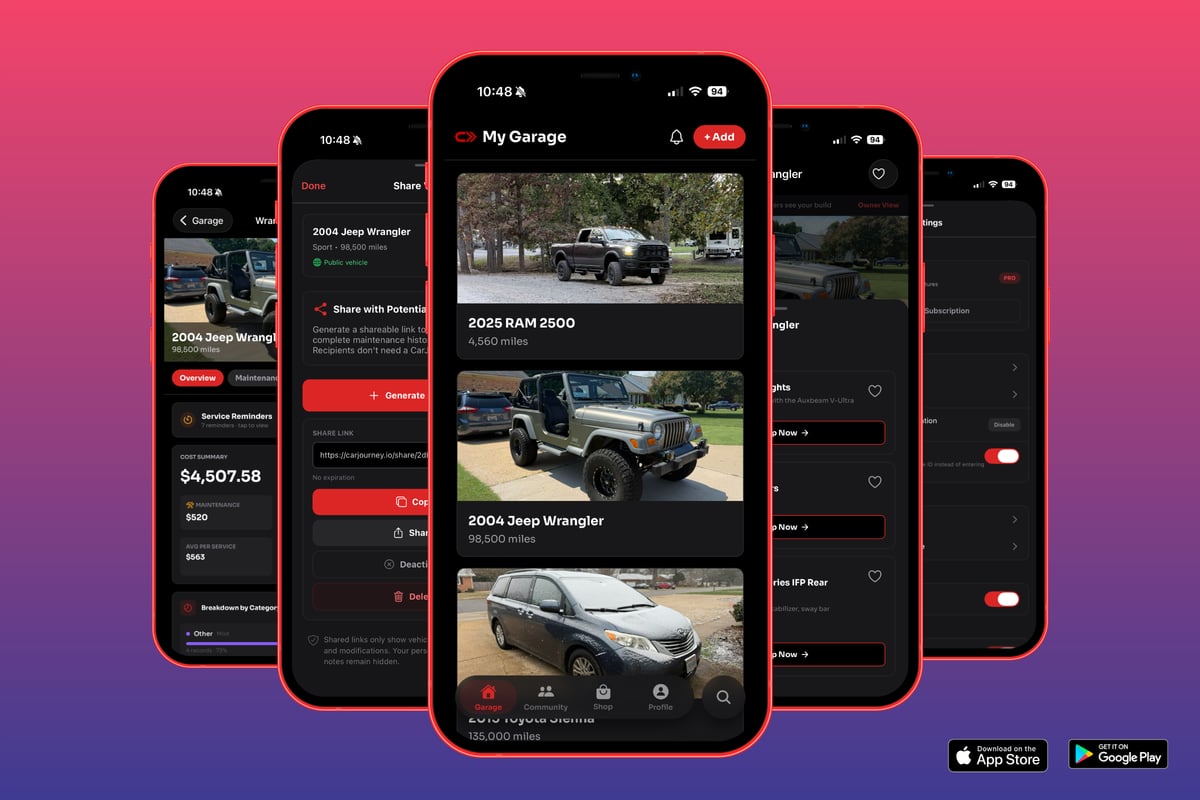
CarJourney Pro offers car enthusiasts a comprehensive solution that combines digital maintenance logs with modification tracking, ensuring every service interval and upgrade gets documented in a centralized, accessible platform. The platform's AI-powered features help predict upcoming service needs based on your driving patterns and modification setup, making it easier to budget and plan for maintenance. Whether you're tracking a single daily driver or managing multiple project cars, having unlimited vehicle tracking ensures nothing falls through the cracks.
Creating Accurate Mileage Logs
Accurate mileage documentation serves multiple purposes beyond basic maintenance tracking. For business use, maintaining precise mileage logs ensures proper tax deductions and reimbursements, while enthusiasts benefit from understanding exactly how modifications affect component wear rates.
Essential elements of effective mileage logs:
- Date of service with exact odometer reading
- Detailed description of work performed
- Parts replaced with brand and part numbers
- Labor costs and shop information
- Photos of completed work when applicable
- Notes on vehicle performance before and after service
Digital platforms make this documentation process seamless by allowing you to snap photos of invoices, record voice notes about work performed, and automatically calculate intervals until the next service is due.
Adapting Mileage Service for Modified Vehicles
Vehicle modifications introduce unique maintenance considerations that standard manufacturer schedules don't address. Forced induction, suspension upgrades, brake modifications, and engine tuning all affect service requirements and intervals.
How Modifications Change Service Needs
Installing a turbocharger or supercharger dramatically increases engine stress and heat generation. This necessitates more frequent oil changes, potentially different oil viscosities, and closer monitoring of cooling system performance. What might be a 5,000-mile oil change interval in a stock vehicle could become 3,000 miles with significant power upgrades.
Performance brake systems with larger rotors and multi-piston calipers require different pad compounds and fluid specifications. While these upgrades improve stopping power, they also demand more frequent brake fluid flushes to prevent moisture contamination under higher operating temperatures.
Developing Custom Service Schedules
Creating a modified maintenance schedule requires understanding how each upgrade affects related systems. Suspension modifications alter tire wear patterns, requiring more frequent alignments. Engine modifications increase heat and stress throughout the drivetrain, potentially shortening fluid service intervals.
Modification-specific service adjustments:
- Forced induction: Oil changes every 3,000-4,000 miles instead of 5,000-7,500
- Performance clutches: Transmission fluid changes every 15,000 miles
- Track use: Complete brake fluid flush every 6 months regardless of mileage
- High-performance tires: Alignment checks every 5,000 miles
- Tuned engines: Spark plug replacement every 20,000 miles
The general importance of adhering to service schedules applies even more critically to modified vehicles, where component stress exceeds manufacturer design parameters.
Mileage Service for Electric Vehicles
Electric vehicles fundamentally change the mileage service equation by eliminating many traditional internal combustion engine maintenance requirements. However, this doesn't mean EVs require no maintenance at all.
Understanding the reduced maintenance needs of electric vehicles helps set appropriate expectations for EV ownership while recognizing that certain systems still require attention at specific intervals.
What EVs Still Require
Electric vehicles eliminate oil changes, spark plug replacements, timing belt services, and transmission fluid changes. However, they still need tire rotations, brake inspections (though regenerative braking reduces wear), cabin air filter replacements, and coolant system maintenance for battery thermal management.
EV-specific mileage service items:
- Battery coolant system inspection every 50,000 miles
- Brake fluid replacement every 3 years (despite minimal use)
- Tire rotation every 5,000-7,500 miles (increased weight affects wear)
- High-voltage battery health diagnostics annually
- Charging port and cable inspection every 30,000 miles
Preventing Unnecessary Mileage Service Upsells
Understanding manufacturer-recommended service intervals protects you from unnecessary upsells at service centers. While mechanics generally have your best interests in mind, some shops recommend services earlier than necessary to increase revenue.
Differentiating Essential from Optional Services
Manufacturer maintenance schedules represent minimum requirements for warranty compliance and longevity. Understanding what basic motor vehicle service entails helps you evaluate whether recommended services align with actual needs or represent profit-driven suggestions.
When a service advisor recommends work, ask these questions:
- Does the manufacturer recommend this at my current mileage?
- What symptoms indicate this service is necessary now?
- What happens if I defer this service to the next interval?
- Can you show me physical evidence of wear or contamination?
Requesting visual confirmation of wear (photos of contaminated fluids, worn brake pads, or degraded belts) ensures you're making informed decisions based on actual condition rather than arbitrary mileage thresholds.
Creating Your Reference Guide
Maintain a copy of your vehicle's manufacturer maintenance schedule from the owner's manual. Many automakers now provide this information online, making it easy to verify recommended service intervals before authorizing work.
Compare shop recommendations against manufacturer specifications and cross-reference with enthusiast forums for your specific make and model. Car communities often identify patterns of unnecessary upsells specific to certain service chains or dealerships.
Seasonal Considerations in Mileage Service Planning
Geographic location and climate significantly impact how you should approach mileage service intervals. Vehicles in extreme temperatures or harsh conditions often require more frequent attention than those in moderate climates.
Climate-Specific Adjustments
Cold climates accelerate battery degradation, thicken fluids during winter months, and introduce salt exposure that requires additional undercarriage protection and inspections. Hot climates stress cooling systems, degrade rubber components faster, and increase air conditioning system demands.
Climate-based service modifications:
- Northern climates: Undercarriage rust inspections every oil change
- Desert regions: Coolant system checks every 15,000 miles
- Coastal areas: Brake component inspections for corrosion quarterly
- High-altitude locations: More frequent air filter changes due to dust
These environmental factors work independently of mileage but should integrate with your mileage-based maintenance planning for comprehensive vehicle care.
The Role of Technology in Modern Mileage Service Tracking
Advanced diagnostic tools and connected vehicle technologies have revolutionized how we approach mileage service. Modern vehicles continuously monitor dozens of systems, alerting drivers to potential issues before they become serious problems.
Onboard Diagnostics and Maintenance Reminders
Many vehicles manufactured after 2010 include oil life monitoring systems that calculate service intervals based on driving conditions rather than simple mileage thresholds. These systems consider engine temperature, RPM ranges, ambient conditions, and driving patterns to provide more accurate service timing.
While these systems offer convenience, they shouldn't completely replace awareness of actual mileage intervals. Understanding both manufacturer recommendations and real-time vehicle feedback provides the most comprehensive maintenance approach.
Integration with Digital Maintenance Platforms
Connecting vehicle data with digital tracking platforms creates a complete picture of your car's health and service history. Modern apps can pull diagnostic codes, track fuel economy trends that might indicate developing problems, and automatically log service appointments.
For those managing questions about their vehicle's maintenance needs, exploring frequently asked questions about digital tracking platforms helps clarify how technology enhances rather than replaces traditional maintenance knowledge.
Building a Long-Term Mileage Service Strategy
Successful vehicle ownership requires planning beyond the next oil change. Developing a multi-year maintenance strategy helps you budget appropriately, maintain optimal performance, and maximize resale value when you eventually upgrade.
Creating a Five-Year Maintenance Forecast
Estimate your annual mileage and project when major service intervals will occur over the next five years. This forward-looking approach allows you to budget for expensive 60K and 120K services rather than being caught off-guard by four-figure repair bills.
Calculate average costs for each service interval based on your specific vehicle, then set aside monthly amounts to create a maintenance fund. This proactive financial planning transforms unpredictable maintenance expenses into manageable, expected costs.
Documenting Everything for Future Value
Every service receipt, modification invoice, and maintenance record contributes to your vehicle's story. Comprehensive documentation demonstrates care and attention that translates directly into resale value and buyer confidence.
Digital platforms make this documentation seamless and shareable. When selling your vehicle, providing buyers with complete service history through shareable build profiles showcases transparency and justifies premium pricing.
For car enthusiasts passionate about their vehicles, exploring resources available through CarJourney's support channels helps optimize tracking systems and maintenance planning approaches.
Implementing proper mileage service practices protects your investment while ensuring optimal performance throughout your vehicle's lifespan. By understanding manufacturer recommendations, documenting every service interval, and adapting schedules for modifications or driving conditions, you'll enjoy reliable transportation and maximize resale value when it's time to upgrade. CarJourney makes this process effortless with AI-powered maintenance tracking, digital service logs, and comprehensive vehicle profiles that keep all your important information organized in one place.