 carjourney
From the CarJourney journal
Maintenance Receipts: A Complete Guide for Vehicle Owners

Keeping track of your vehicle's maintenance history goes beyond simply remembering when you last changed the oil. Maintenance receipts serve as the foundation of comprehensive vehicle documentation, providing proof of service, protecting your investment, and ensuring you have a complete record of every repair, upgrade, and routine service performed on your car. Whether you're managing a single daily driver or tracking modifications on multiple project vehicles, understanding how to properly collect, organize, and leverage these critical documents will save you time, money, and headaches down the road.
Why Maintenance Receipts Matter for Vehicle Owners
Every service performed on your vehicle generates documentation that serves multiple important purposes. These receipts aren't just pieces of paper to stuff in your glove box and forget about.
Financial protection stands as one of the primary benefits of maintaining organized records. When warranty claims arise, manufacturers and dealerships require proof that you've followed recommended maintenance schedules. Without proper documentation, you risk having valid warranty claims denied, potentially costing thousands of dollars in out-of-pocket expenses.
The impact on resale value cannot be overstated. Prospective buyers pay premium prices for vehicles with complete service histories. Maintaining comprehensive car service records demonstrates that you've cared for the vehicle properly, instilling confidence in buyers and justifying higher asking prices.

Legal and Tax Implications
Business owners who use vehicles for work purposes face additional requirements. The IRS demands substantiation for vehicle expense deductions, and maintenance receipts provide exactly that evidence. These documents prove the legitimacy of claimed expenses during audits or reviews.
Insurance companies may also request service records when processing claims, particularly for mechanical failures or disputes about vehicle condition. Having receipts readily available expedites these processes and supports your position in disagreements.
Essential Information Every Maintenance Receipt Should Include
Not all receipts contain the same level of detail, and incomplete documentation can prove nearly as problematic as having no records at all. Understanding what information should appear on every maintenance receipt helps you identify quality service providers and ensure adequate documentation.
Core Receipt Components
| Information Type | Why It Matters | Example |
|---|---|---|
| Service Date | Establishes timeline for maintenance intervals | March 15, 2026 |
| Mileage | Tracks service intervals and vehicle usage | 45,230 miles |
| Service Description | Details exactly what work was performed | Oil change, tire rotation, brake inspection |
| Parts Used | Identifies specific components for future reference | Mobile 1 Extended Performance 5W-30 |
| Labor Charges | Separates parts costs from service fees | $45.00 labor |
| Total Cost | Documents complete expense | $89.47 total |
| Service Provider | Identifies who performed the work | ABC Auto Service, License #12345 |
| Technician Name | Provides accountability for work quality | John Smith, ASE Certified |
Beyond these basics, quality receipts include warranty information for parts and labor, detailed descriptions of any issues discovered during service, and recommendations for future maintenance. This additional context transforms receipts from simple payment records into valuable reference documents.
For modified vehicles or custom builds, receipts should also note specific part numbers, brand names, and installation specifications. This level of detail proves invaluable when troubleshooting issues or planning future upgrades that need to integrate with existing modifications.
Digital vs. Paper Receipt Management
The debate between digital and paper record-keeping has largely been settled in favor of digital solutions, though each approach offers distinct advantages and challenges.
Paper receipts provide tangible proof that doesn't depend on technology, but they face serious vulnerabilities:
- Thermal paper fades over time, often becoming completely illegible within months
- Physical storage requires dedicated space and organization systems
- Damage from water, heat, or simple wear and tear remains a constant risk
- Retrieval requires manually searching through files
- Sharing copies with buyers or service providers requires scanning or photocopying
Digital storage addresses most of these limitations while introducing new considerations. Best practices for handling and storing receipts emphasize the importance of secure backup systems and consistent organization protocols.
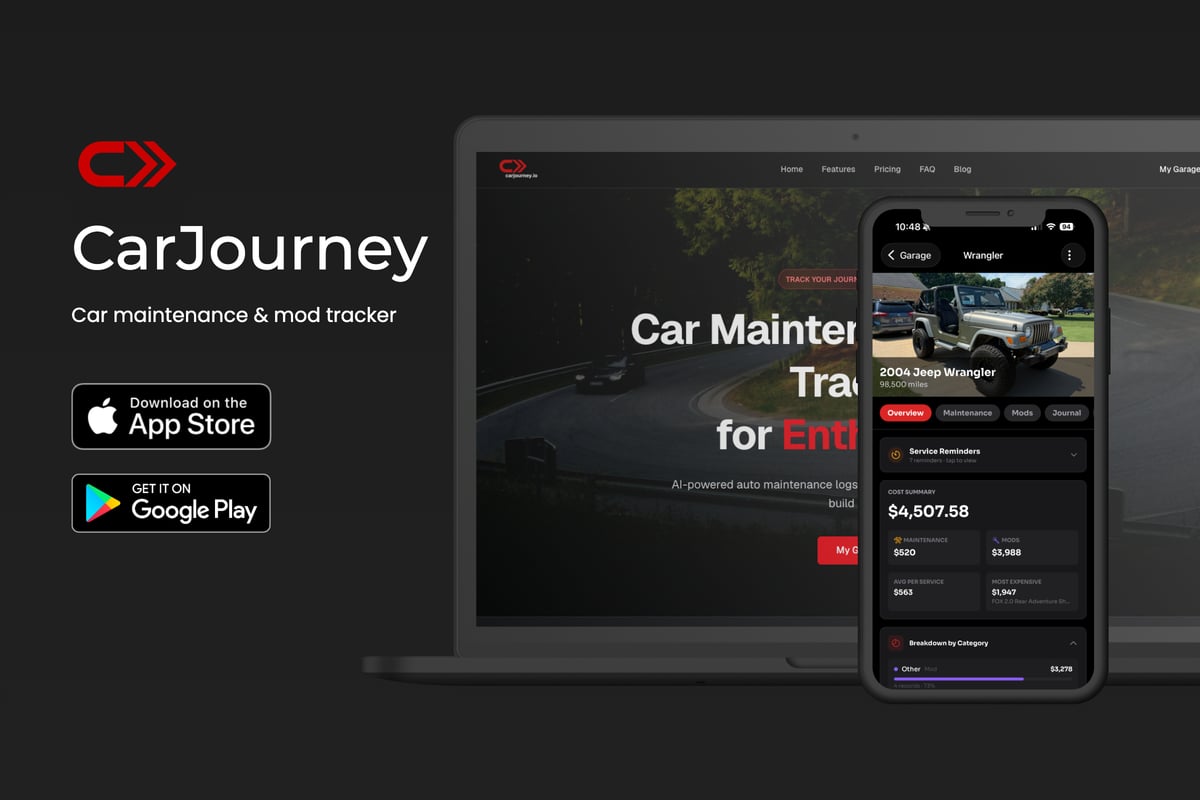
Modern vehicle owners increasingly rely on dedicated platforms that not only store receipt images but also extract key information automatically. CarJourney Pro offers exactly this functionality, providing unlimited vehicle tracking with AI-powered features that automatically categorize maintenance receipts, track service intervals, and generate comprehensive vehicle logs without manual data entry. This approach combines the security of digital backup with intelligent organization that makes retrieving specific records effortless.
Hybrid Approaches
Many vehicle owners adopt hybrid systems during transition periods. This might involve:
- Photographing paper receipts immediately after service
- Uploading digital copies to cloud storage or dedicated platforms
- Filing paper originals in a designated location
- Periodically reviewing and purging outdated physical documents
This redundancy provides extra protection during the critical period when you're establishing digital habits, though it does require more effort than fully committing to one system.
Organizing Maintenance Receipts Effectively
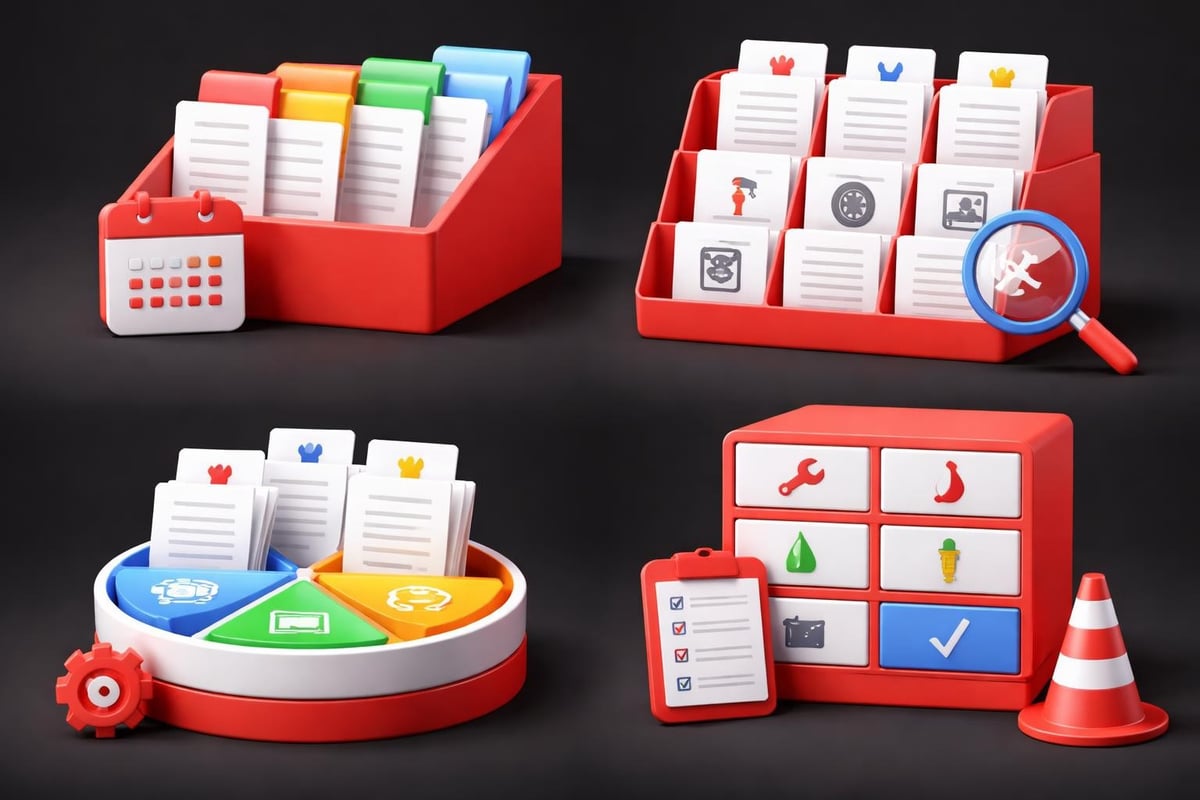
The best storage system means nothing without effective organization. Several organizational frameworks help vehicle owners find specific receipts quickly when needed.
Organization by Service Type
Categorizing receipts by the type of service performed creates intuitive groupings:
- Routine maintenance (oil changes, tire rotations, fluid checks)
- Repairs (brake replacements, engine work, transmission service)
- Inspections (state inspections, pre-purchase inspections, diagnostics)
- Modifications (performance upgrades, aesthetic changes, custom installations)
- Emergency services (towing, roadside assistance, accident repairs)
This approach works particularly well for tracking yearly vehicle maintenance patterns and identifying recurring issues within specific categories.
Chronological Organization
Dating remains the most straightforward organizational method. Simple chronological filing allows you to:
- Track maintenance intervals accurately
- Identify gaps in service history
- Calculate time between specific service types
- Present a clear timeline to potential buyers
Many owners combine chronological and categorical systems, organizing first by year, then by service type within each year. This hybrid approach balances simplicity with functionality.
System-Based Organization
Enthusiasts managing modified vehicles or tracking complex builds often prefer organizing by vehicle system:
- Engine and drivetrain
- Suspension and steering
- Brakes and wheels
- Electrical and electronics
- Exterior and body
- Interior and comfort features
This method excels when planning complementary modifications or diagnosing issues affecting specific systems. Understanding how recommended maintenance schedules align with different systems helps prevent oversights.
Common Receipt Management Mistakes to Avoid
Even well-intentioned vehicle owners fall into predictable traps that undermine their record-keeping efforts. Recognizing these mistakes helps you avoid them.
Delaying digitization ranks among the most common errors. Many owners intend to scan or photograph receipts "later," but later never comes. Thermal receipts fade quickly, and memories of specific services grow hazy. Making digitization part of your immediate post-service routine prevents this problem entirely.
Incomplete information capture occurs when owners save receipts but fail to add context. A receipt showing "$47.83" tells you nothing six months later. Adding notes about what prompted the service, any symptoms observed, or technician recommendations transforms that receipt into a valuable reference document.
Ignoring small receipts creates gaps in your maintenance history. That $15 cabin air filter replacement or $8 wiper blade purchase might seem insignificant, but these small services contribute to your vehicle's overall care narrative and demonstrate thoroughness to potential buyers.
Tracking questionable receipts requires special attention. Services performed by friends, cash transactions at independent shops, or work you complete yourself still deserve documentation, even if the receipts look informal or handwritten.
Failing to backup digital files exposes your records to catastrophic loss. Hard drive failures, phone damage, or accidental deletions can erase years of careful documentation instantly. Cloud storage with automatic backup features provides essential protection.
Leveraging Maintenance Receipts for Better Vehicle Management
Beyond simple record-keeping, maintenance receipts enable sophisticated vehicle management strategies that improve ownership experiences and reduce costs.
Predictive Maintenance Planning
Analyzing patterns in your receipt history reveals maintenance trends specific to your vehicle and driving habits. You might discover that your brake pads consistently need replacement every 35,000 miles, or that your battery typically fails around the four-year mark. These insights enable proactive planning and budgeting.
Creating a car maintenance budget becomes far more accurate when based on actual historical data rather than generic estimates. Your receipts show exactly what services cost in your area, from your preferred providers, accounting for your specific vehicle and usage patterns.
Warranty and Recall Management
Manufacturers occasionally issue recalls or extended warranty coverage for specific components. Maintenance receipts prove whether your vehicle experienced the problem before official announcements, potentially qualifying you for reimbursement of repairs you paid for out-of-pocket.
Similarly, component warranties often require proof of proper maintenance. A failed part under warranty might be denied if you cannot demonstrate appropriate care through maintenance receipts.
Service Provider Accountability
Detailed receipt records protect you when services are performed incorrectly or incompletely. If a shop claims they rotated your tires but you notice uneven wear patterns two weeks later, your receipt provides evidence of the service date and scope of work. This documentation proves invaluable when requesting corrections or pursuing refunds.
Documenting maintenance processes with thoroughness also helps you evaluate service provider quality over time. Comparing costs, service duration, and outcome quality across different shops helps identify the best partners for your vehicle's needs.
Industry-Specific Receipt Considerations
Different vehicle types and usage patterns create unique receipt management requirements that go beyond general best practices.
Commercial Vehicle Operators
Business use demands stricter documentation standards. Fleet operators must track maintenance receipts for multiple vehicles, often correlating them with driver assignments, route schedules, and compliance requirements. Regulatory agencies may audit these records with little notice, making organized, accessible storage essential.
Classic and Collector Vehicles
Vintage car owners face different challenges. Original receipts for restoration work or period-correct parts add value to the vehicle itself, sometimes commanding prices comparable to the services they document. These historical receipts deserve archival-quality storage separate from routine maintenance documentation.
Modified Performance Vehicles
Enthusiasts tracking builds need especially detailed receipt records. Modification sequences matter significantly-knowing that you installed stronger axles before adding power helps explain why certain components survived while others failed. Dyno results, tuning sessions, and custom fabrication work all generate receipts that contribute to your vehicle's story.
The CarJourney platform specializes in helping modification enthusiasts document these complex builds through shareable profiles that integrate maintenance receipts with modification tracking, creating comprehensive vehicle histories that showcase both routine care and performance upgrades.
Receipt Retention Guidelines and Best Practices
How long should you keep maintenance receipts? The answer depends on several factors, though longer retention generally serves you better than aggressive purging.
Recommended Retention Periods
| Receipt Type | Minimum Retention | Optimal Retention |
|---|---|---|
| Routine maintenance | Ownership period + 1 year | Permanent (entire ownership + transfer to new owner) |
| Major repairs | Ownership period + 3 years | Permanent |
| Modification work | Permanent | Permanent |
| Warranty-related service | Warranty period + 2 years | Ownership period + 3 years |
| Business vehicle expenses | 7 years (IRS requirement) | Permanent |
Routine maintenance receipts should follow your vehicle through ownership changes. Many buyers specifically request complete service histories, and providing organized maintenance receipts significantly enhances resale value and buyer confidence.
Major repair documentation deserves permanent retention because patterns may emerge years after initial service. Transmission work performed at 80,000 miles might inform decisions about similar issues at 160,000 miles.
Modification receipts should never be discarded if you track builds or plan to document your vehicle's evolution. These records tell your car's story and prove the quality of work performed.
Understanding why maintenance records matter extends beyond automotive contexts-the principles apply across all valuable assets requiring ongoing care and documentation.
Digital Archive Strategies
Cloud-based storage platforms offer practically unlimited retention capacity at minimal cost. Services providing automatic backup, version history, and redundant storage across multiple data centers ensure your maintenance receipts survive hardware failures, natural disasters, and accidental deletions.
When evaluating digital storage solutions, prioritize platforms offering:
- Automatic backup that requires no manual intervention
- Search functionality allowing quick retrieval by date, vendor, service type, or cost
- Export capabilities enabling you to transfer records if you change platforms
- Access controls protecting sensitive information while allowing sharing when appropriate
- Mobile access letting you reference records anywhere
Keeping receipts organized requires consistent habits more than sophisticated tools. Even the most advanced platform fails if you don't actually upload receipts promptly after each service.
Integrating Receipts with Comprehensive Vehicle Documentation
Maintenance receipts represent just one component of complete vehicle documentation. Integrating them with other records creates a holistic view of your vehicle's history and condition.
Supporting Documentation
Complete vehicle files should include:
- Purchase records (bill of sale, financing documents, title transfers)
- Insurance documentation (policy information, claim history)
- Registration renewals (annual registrations, smog certificates)
- Inspection reports (pre-purchase inspections, state safety inspections)
- Modification logs (parts lists, installation photos, performance results)
- Fuel economy tracking (mileage logs, fuel receipts)
- Incident reports (accident reports, police reports, repair estimates)
Maintenance records serve critical functions across various industries, and understanding their role in comprehensive asset management helps vehicle owners appreciate why thorough documentation matters.
Creating Shareable Vehicle Profiles
Modern vehicle ownership increasingly involves sharing information with various stakeholders. Potential buyers, insurance companies, warranty administrators, and fellow enthusiasts all benefit from accessing appropriate portions of your vehicle documentation.
Digital platforms excel at creating shareable profiles that present selected information without exposing private data. You might share complete maintenance history with a prospective buyer while limiting an insurance company's access to accident-related repairs only.
For car enthusiasts documenting builds, shareable profiles transform maintenance receipts and modification records into engaging narratives. Followers can track your project's evolution, learn from your successes and mistakes, and gain insights that inform their own builds.
Receipt Management for Multiple Vehicles
Owners managing multiple vehicles face compounded organizational challenges. Keeping separate, clearly labeled records prevents confusion and ensures each vehicle receives appropriate attention.
Vehicle identification must be absolutely clear on every receipt. If your service provider doesn't include make, model, and VIN, add this information immediately. When managing similar vehicles-two Honda Civics or three Jeep Wranglers-clear identification becomes critical.
Separate organizational systems work better than combined files for multiple vehicles. Even within digital platforms, maintaining distinct profiles prevents accidentally referencing the wrong vehicle's service history when planning maintenance or diagnosing issues.
Cross-vehicle insights emerge when analyzing receipt data across your fleet. You might discover that your vehicles share common maintenance needs based on similar mileage or usage patterns, enabling bulk purchasing of common consumables or identifying particularly reliable service providers.
Understanding mileage-based service requirements helps coordinate maintenance across multiple vehicles, potentially scheduling services together to save time and negotiate better rates.
Maintenance receipts form the backbone of responsible vehicle ownership, protecting your investment while enabling smarter maintenance decisions and better resale value. By implementing organized storage systems, capturing complete information, and leveraging digital tools, you transform these simple documents into powerful assets that serve you throughout your ownership experience. CarJourney makes this process effortless with AI-powered receipt tracking, modification logs, and shareable build profiles that help you manage your vehicles effectively while connecting with a community of fellow enthusiasts who share your passion for proper vehicle care.