
 carjourney
12 Best Apps for Car Enthusiasts
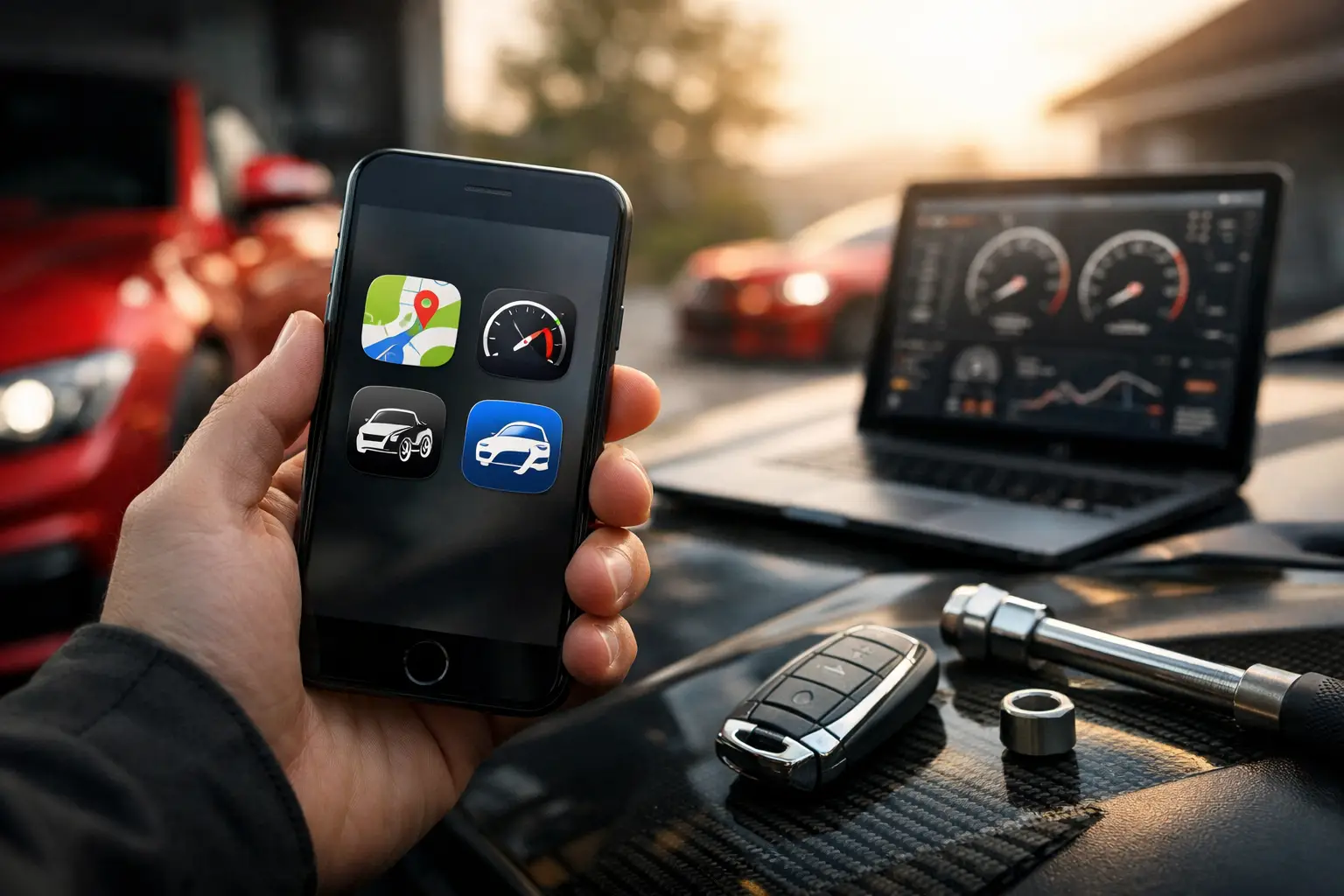
Some apps earn a spot on your home screen. Others get buried after one weekend. When you’re serious about ownership, the best apps for car enthusiasts are the ones that actually help you keep a car running right, document what you’ve done, and make smarter decisions before a problem or purchase gets expensive.
That matters even more if you own a project car, a modified daily, or multiple vehicles. Car life gets messy fast - receipts in glove boxes, maintenance notes in your phone, part numbers in old emails, and photos spread across three different apps. A good app should give you more control, not just more notifications.
What makes the best apps for car enthusiasts?
Not every automotive app is built for enthusiasts. Some are fine for basic commuting, but they fall apart when you need to track modifications, compare repair costs over time, or keep a clean ownership history that actually means something when it’s time to sell.
The best options usually do one of four jobs well. They help you manage maintenance, diagnose issues, buy parts, or connect with the broader car community. Very few do all four well, which is why most enthusiasts end up using a small stack instead of relying on one app for everything.
There’s also a trade-off between simplicity and depth. A lightweight gas tracker may be easy to use, but it won’t help much if you need service records, warranty photos, and mileage-based reminders. On the other hand, a feature-heavy platform is only useful if it stays organized enough to use regularly.
1. CarJourney
If your biggest problem is scattered records, this is the category leader to watch. CarJourney is built for owners who want one place to log maintenance, track modifications, store receipts and warranties, set reminders, and build a shareable history around each vehicle.
That combination matters because enthusiasts rarely need just a maintenance reminder. They need proof of what was done, when it was done, what parts were used, and how much was invested. If you’ve ever tried to remember which coilovers went on at 62,000 miles or whether the diff fluid was changed before your last track weekend, you already understand the value.
It also fits multi-car households and long-term owners particularly well. You’re not just checking boxes. You’re protecting resale value, keeping build history clean, and making sure nothing important disappears when a phone gets replaced or a folder goes missing.
2. FIXD
FIXD is popular for a reason. It gives casual and moderately experienced owners an easier way to understand check engine lights and fault codes without jumping straight into professional scan tools.
Its strength is accessibility. If you want plain-English explanations, maintenance alerts, and a fast sense of whether your issue is urgent, it does the job well. The limitation is that serious DIY users may outgrow it once they want deeper live data, brand-specific diagnostics, or more advanced troubleshooting.
For newer enthusiasts, though, it can save money quickly. Catching a minor issue early beats guessing, clearing a code, and hoping for the best.
3. OBD Fusion
OBD Fusion is a stronger fit for data-minded owners who want more than basic code reading. Paired with a compatible OBD-II adapter, it can show live gauges, read and clear codes, and provide a more detailed look at what the car is doing in real time.
This is where the app stack starts to separate by user type. If you’re tuning, troubleshooting drivability issues, or watching parameters closely after modifications, a more advanced scan app makes sense. If you just want to know why the check engine light came on, it may be more app than you need.
The upside is flexibility. The downside is setup. These tools can be extremely useful, but they usually ask for more from the user.
4. Drivvo
Drivvo is best known for expense tracking, fuel logs, and service entries. If your priority is understanding what a vehicle really costs to own month after month, it’s a practical pick.
That said, it leans more toward operational tracking than enthusiast ownership culture. It’s useful for budgeting and recurring costs, but less compelling if you want a polished build record, modification history, or something you’d actually want to share with a potential buyer or fellow enthusiast.
Still, for people trying to get a handle on fuel spend, maintenance costs, and total ownership math, it covers the basics well.
5. Fuelly
Fuelly has long been a favorite for MPG tracking and fuel economy history. If you like spotting trends, comparing fill-ups, and monitoring how tires, driving style, weather, or bolt-ons affect efficiency, it’s still relevant.
Its scope is narrow, and that’s both its strength and weakness. It does not try to be a full garage management platform. But if fuel tracking is the one metric you care about most, a focused tool can be better than a bloated all-in-one app.
For truck owners, commuters with modified dailies, and anyone watching range or fuel costs closely, it can still earn its place.
6. AutoZone
Retail parts apps are not glamorous, but they’re useful. The AutoZone app makes it easier to look up parts, check fitment, manage rewards, and in some cases pull basic code information if you’re already in its ecosystem.
What makes it valuable is speed. When your battery dies, a sensor fails, or you need brake pads today, convenience matters more than brand romance. The downside is obvious - retail apps are built to help you buy parts from that retailer, not to serve as your central ownership system.
Use it for sourcing. Don’t expect it to organize your whole car life.
7. Advance Auto Parts
Advance Auto’s app plays a similar role. It helps with parts lookup, availability, and account-based purchasing, which is handy when you already know what you need or want to confirm fitment before heading to the store.
For DIY owners, having at least one major retailer app installed can save time during repairs. The trade-off is that fitment data is only as good as the catalog, and enthusiasts with swapped drivetrains, trim-specific changes, or custom setups should always double-check.
That’s not a flaw unique to one retailer. It’s the reality of modified cars.
8. eBay Motors
If you hunt discontinued parts, OEM take-offs, used wheels, vintage trim, or oddball hardware, eBay Motors is still one of the most useful apps you can have. It’s especially strong for older platforms where dealer inventory is gone and forum classifieds aren’t what they used to be.
The obvious benefit is selection. The risk is variation in seller quality, listing accuracy, and part condition. Smart enthusiasts already know the drill - verify part numbers, read descriptions carefully, and assume photos matter more than optimistic titles.
For project cars and restorations, though, this app can be the difference between stalled progress and a finished job.
9. Facebook Marketplace
A lot of enthusiasts won’t admit how often they use it, but Facebook Marketplace has become one of the biggest local parts and vehicle sourcing tools in the country. Wheels, seats, body panels, complete engines, trailers, donor cars - it’s all there.
Its biggest advantage is proximity. You can find deals the same day and avoid shipping on bulky items. Its biggest weakness is noise. You’ll sort through mislabeled listings, unrealistic pricing, and sellers who think “needs nothing” is a complete condition report.
Still, if you buy used parts regularly, ignoring Marketplace means missing inventory.
10. Bring a Trailer
Bring a Trailer is less of a daily-use app for wrenching and more of a market-awareness tool. If you own something collectible, special, low-production, or unusually well documented, watching real auction results can help you understand how presentation and history affect value.
This matters because enthusiasts often underestimate how much records shape buyer confidence. Clean photos are good. A documented story is better. If you’re building a car with future resale in mind, auction platforms show what people actually reward.
Even if you’re not selling, it sharpens your sense of where your vehicle sits in the market.
11. Hagerty
Hagerty’s app is useful for owners of classics, collector cars, and vehicles that have started to cross from hobby object into insured asset. Depending on your needs, tools around valuation, insurance access, and collector-focused content can make it worthwhile.
It’s not for everyone. If your garage is mostly modern daily drivers and budget project cars, you may not get much out of it. But for owners with appreciating vehicles or limited-use cars, it fits a different stage of ownership than a general maintenance app.
That distinction matters. The best app depends a lot on what kind of enthusiast you are.
12. YouTube
Yes, it counts. For diagnostics, install research, product comparisons, and platform-specific walkthroughs, YouTube remains one of the most powerful tools available to car enthusiasts.
The catch is quality control. One excellent how-to video can save you hundreds. A bad one can waste an entire weekend or convince you to install parts incorrectly. Treat it like a research tool, not gospel, and compare multiple sources before turning a wrench.
How to choose the best apps for car enthusiasts
Start with the problem you actually need to solve. If your check engine light keeps coming back, get a diagnostics app. If you lose track of service intervals and part receipts, choose a vehicle record platform. If you spend half your weekends hunting parts, put marketplace and retailer apps first.
Most enthusiasts do best with three categories: one app for ownership records, one for diagnostics, and one or two for sourcing parts. That setup covers the real-world stuff - preventing missed service, understanding issues faster, and finding what you need when the car is apart in the garage.
What usually fails is relying on memory. Memory doesn’t protect resale value, prove maintenance, or help you remember whether that coolant flush happened last spring or two years ago. Good apps reduce friction. Great ones build trust around the car itself.
The right app stack should make ownership easier, not noisier. If it helps you save money, stay ahead of maintenance, and build a history you’d be proud to show the next owner, it’s probably worth keeping.