 carjourney
From the CarJourney journal
Car Maintenance Tracking Spreadsheet or App?
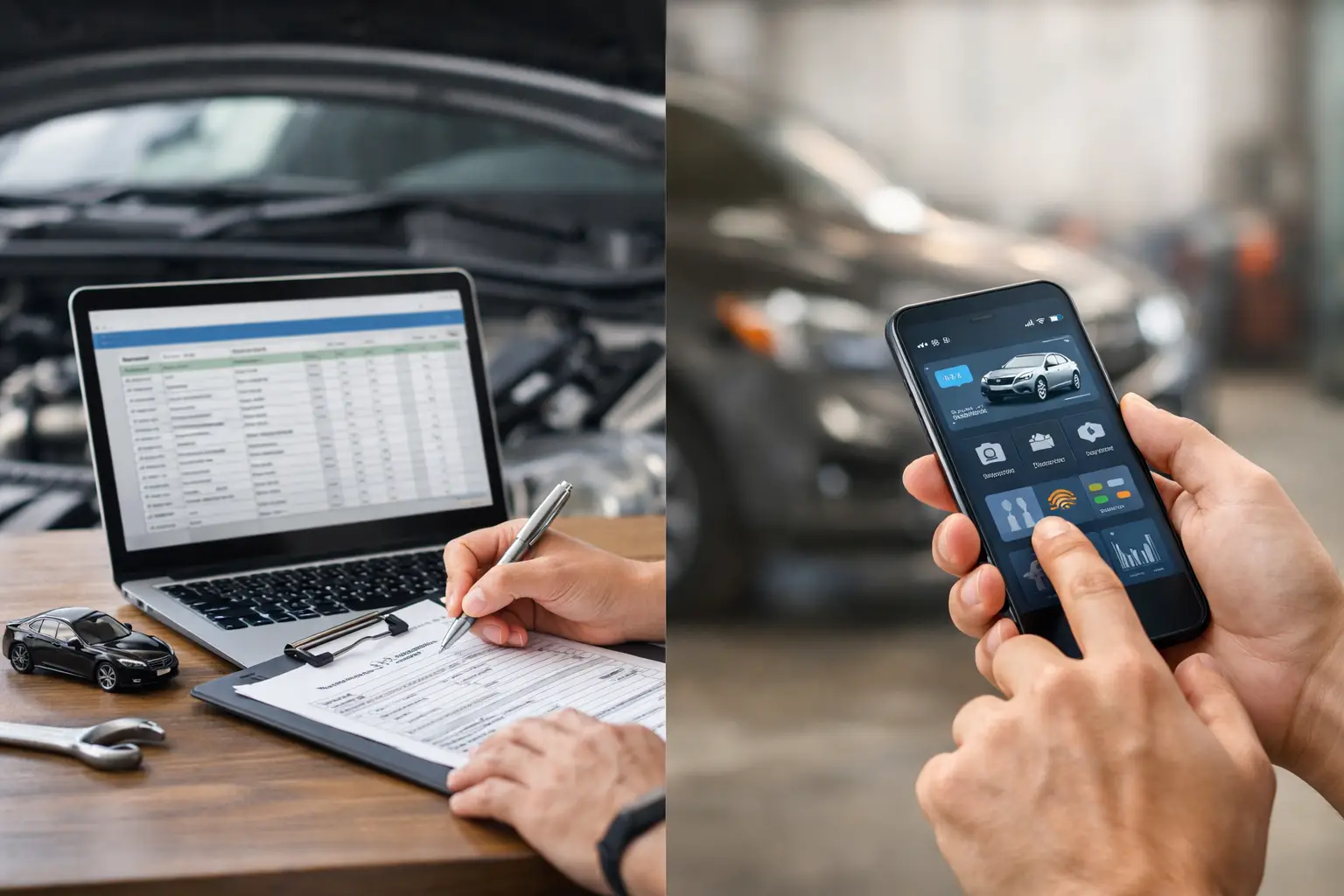
You probably started with a car maintenance tracking spreadsheet for a good reason. It is cheap, familiar, and gives you more control than trying to remember oil changes in your head or digging through glovebox receipts. For a while, it works. Then the second vehicle shows up, the mod list gets longer, and you realize your "simple" tracker now lives across tabs, note apps, photos, and old emails.
That is the real issue. A spreadsheet is not bad. It is just limited once your vehicle history starts to matter.
When a car maintenance tracking spreadsheet works well
If you own one vehicle, do most service at predictable intervals, and mainly want a clean log of dates, mileage, and cost, a spreadsheet can absolutely do the job. It is especially useful for owners who like full manual control. You decide the columns, the naming, the categories, and the level of detail.
For basic maintenance, that flexibility is appealing. You can build rows for oil changes, tire rotations, brake fluid flushes, battery replacement, inspections, and registration dates. Add a few formulas, and you can total annual costs or estimate average spend per mile. If you are organized, a spreadsheet gives you a decent ownership timeline without much friction.
It also works well for short-term ownership. If you lease, cycle through daily drivers quickly, or just want a simple service ledger for one car, there may not be much reason to build something more advanced.
Where spreadsheets start breaking down
The cracks usually show up when ownership gets more serious.
A spreadsheet can tell you what happened. It is much worse at helping you stay ahead of what needs to happen next. Unless you build reminder logic yourself and keep it updated, it is easy to miss time-based items, mileage-based services, and the less obvious jobs that matter on aging cars.
Then there is the documentation problem. A row that says "front brakes - $640" is helpful, but it is not the same as having the receipt, parts brand, shop details, warranty info, torque specs, or photos of the work. Enthusiast ownership creates more context than a flat table handles well.
Modifications make this even more obvious. Once you start logging wheels, suspension, exhaust, tuning, aero, lighting, or audio work, a car maintenance tracking spreadsheet becomes part service log, part build journal, part cost tracker. You can force all of that into cells, but the system starts fighting you.
The hidden cost of a spreadsheet
Most people think the benefit of a spreadsheet is that it is free. Technically, yes. In practice, it often costs time, accuracy, and trust.
Time goes first. Every service visit means manual entry. Every receipt has to be renamed, stored somewhere, and tied back to the right row. Every reminder requires you to notice that mileage is getting close. If you forget to update one line, the whole system is slightly less reliable.
Accuracy goes next. Tabs get duplicated. Formulas break. Mileage gets entered wrong. One document ends up on a laptop, another in cloud storage, another buried in your camera roll. That might be manageable for casual maintenance, but it gets messy fast if you care about complete records.
Trust matters most when you sell. Buyers love hearing that a car was "meticulously maintained," but what actually builds confidence is clear, organized proof. A scattered spreadsheet plus a folder of random screenshots does not create the same credibility as a clean, chronological ownership history.
What a good tracking system should actually do
A maintenance system should do more than store data. It should help you make decisions and protect the value of your vehicle.
That means logging services with mileage, dates, notes, and cost. It also means storing receipts, warranty info, and photos alongside each entry. For many owners, it should track both routine maintenance and modifications without forcing them into the same generic format.
Reminders matter too, but they need to be useful. Some items are based on mileage. Others are based on time. Some depend on driving style, climate, or whether the car is stock or modified. A real system should account for that instead of asking you to babysit formulas.
For enthusiasts, there is another requirement: the record should feel like a real ownership history, not just an expense sheet. Your car is not only a maintenance burden. It is also a build, a project, an investment, and in many cases part of your identity.
Why enthusiasts outgrow spreadsheets faster
A commuter can get away with less detail. An enthusiast usually cannot.
If you track service intervals closely, compare brands and part numbers, switch wheel and tire setups seasonally, or document every upgrade for resale, you already know how fast records pile up. The same goes for project cars and multi-vehicle households. Once you are managing a daily, a weekend car, and maybe a truck or SUV too, manual spreadsheets become admin work.
There is also the presentation side. A spreadsheet is built for the owner, not for sharing. That is fine until you want to show the history to a buyer, a shop, an insurer, or even friends following the build. Then you are exporting files, cleaning up tabs, and trying to explain what each abbreviation means.
That is where a purpose-built platform starts making more sense. Instead of adapting a general tool to fit car ownership, you use something designed around how enthusiasts actually maintain and document vehicles.
Car maintenance tracking spreadsheet vs app
This is not really about old school versus modern. It is about fit.
A car maintenance tracking spreadsheet is best when your needs are simple, your recordkeeping habits are strong, and you do not mind handling reminders and files yourself. It gives you flexibility, and for one car with basic needs, that can be enough.
An app is better when you want the system to do more of the work. That includes service reminders, mobile logging, receipt storage, mileage tracking, build documentation, and records that stay organized across devices. It is also the better move if you want long-term ownership history that is easy to review and easy to share.
The trade-off is control versus convenience. Spreadsheets let you customize everything, but that freedom often means more maintenance of the tracker itself. Apps limit some customization, but they remove a lot of manual effort and reduce the chance of missing something important.
When it makes sense to move on from a spreadsheet
You do not need to wait until your current system fully collapses.
If you are forgetting services, losing receipts, managing multiple cars, or tracking mods in separate places, that is already enough reason to consider a better setup. The same is true if resale value matters to you. A clean service and build history is not just for your own reference. It gives the next owner confidence, and confidence protects value.
This is also a practical move if you work on your own car. DIY owners tend to have the most fragmented records because the details live everywhere - parts orders, install photos, torque notes, warranty emails, and handwritten reminders. Centralizing that information saves time later, especially when troubleshooting or preparing the car for sale.
CarJourney is built for exactly that stage of ownership. It gives you one place to log service, track modifications, store documents, set reminders, and build a shareable history buyers trust.
If you still want to use a spreadsheet, make it better
If you are not ready to switch, at least tighten up the system.
Use consistent service categories. Log every entry with date, mileage, cost, provider, and notes. Create separate fields for routine maintenance and modifications. Keep file names consistent for receipts and photos so they can be found quickly. And make sure your backup plan is real, not theoretical.
Most importantly, review the spreadsheet regularly. A tracker only works if it stays current. The biggest failure point is not the format. It is the gap between what happened to the car and what actually made it into the record.
A spreadsheet is a good starting point. But if your vehicle history matters - for reliability, resale, or just pride of ownership - it is worth asking whether your system still matches the way you use the car. The best tracker is the one you will actually keep complete, and the one that makes your history stronger every time you drive, wrench, or upgrade.