 carjourney
From the CarJourney journal
Examples of Vehicle History Reports for Used Car Buyers

A vehicle history report is a compiled record of a car’s documented past, covering ownership changes, accidents, title brands, odometer readings, and service events. Providers like Carfax, AutoCheck, and NMVTIS-approved services generate these reports using data from state DMVs, insurance companies, repair shops, and auction houses. Reviewing examples of vehicle history reports before you buy a used car is the single most effective way to spot hidden risks before they become your problem. This guide breaks down what each section of a report actually means and how the leading providers differ.
1. What do examples of vehicle history reports typically include?
Every standard vehicle history report follows a chronological timeline of recorded events tied to a specific VIN. The format varies by provider, but the core sections appear in nearly every report.
The most common sections you will find include:
- Title brands: Labels like salvage, rebuilt, flood, or lemon law buyback. A salvage title means an insurer declared the car a total loss. A rebuilt title means it was repaired and reinspected. Either brand significantly affects resale value and insurability.
- Ownership history: The number of previous owners, how long each held the vehicle, and whether it was registered as personal, fleet, rental, or commercial use.
- Accident and damage history: Reported collisions, airbag deployments, and structural damage. Reports pull this data from insurance claims and repair shop submissions.
- Odometer readings: A log of recorded mileage at each registration or inspection. Gaps or drops in mileage signal a possible rollback.
- Service and maintenance records: Oil changes, tire rotations, and major repairs submitted by participating shops. Not every shop reports to every provider.
- Open recalls: Unresolved manufacturer safety recalls tied to the VIN. This section is especially useful for older vehicles.
- Warranty information: Some reports note active or expired factory and extended warranties.
Pro Tip: Preview a sample report on any provider’s website before you pay. Providers differ significantly in data scope, and a sample shows you exactly what you are getting before you commit.
2. How Carfax reports are structured
Carfax is the most recognized name in vehicle history reporting in the United States. A Carfax report opens with a summary banner that flags major issues in plain language, such as “Accident Reported” or “Salvage Title.” That banner is designed to give you an instant read on the car’s risk level.

Below the summary, Carfax lays out a detailed timeline with dates, mileage, and event descriptions. Carfax reports include an estimated vehicle value based on the car’s history, which helps you judge whether the asking price is fair. A car with three reported accidents will show a lower estimated value than a clean one with identical mileage.
Carfax pulls data from over 100,000 sources, including dealerships, body shops, state agencies, and auctions. Single reports typically cost in the $25–$45 range, though bundle pricing reduces the per-report cost. Many dealerships provide Carfax reports free when you ask.
3. How AutoCheck reports differ from Carfax
AutoCheck, owned by Experian, takes a different approach. Its most distinctive feature is the AutoCheck Score, a numeric grade that compares a vehicle’s history against similar cars of the same make, model, and year. A score of 85 out of 100 on a 2018 Honda Accord means that car has a cleaner history than most comparable Accords.
AutoCheck draws heavily from auction data, particularly from Manheim and other wholesale channels. That makes it especially useful if you suspect a car has been through dealer auctions multiple times. Auction sale records show up as line items in the timeline, which Carfax does not always surface as clearly.
AutoCheck single reports fall in a similar price range to Carfax. Buyers who want both perspectives can purchase a bundle that includes reports from both providers, which is the most thorough approach for high-value purchases.
4. What NMVTIS reports cover
The National Motor Vehicle Title Information System, known as NMVTIS, is a federal database managed by the U.S. Department of Justice. NMVTIS-approved reports focus specifically on title history, theft records, and total-loss designations reported by insurers and salvage yards. They do not include service records or auction data.
NMVTIS reports cost less than Carfax or AutoCheck, often under $10. That lower price reflects narrower data coverage. For buyers who only need to confirm a clean title and check for theft flags, an NMVTIS report is a cost-effective first step. For a full picture, pair it with a more detailed report from another provider.
You can find NMVTIS-approved report providers through the official vehiclehistory.gov website. Always verify that a provider carries NMVTIS approval to avoid fraudulent report services.
5. How carVertical and Vektracer approach vehicle history
CarVertical and Vektracer are newer entrants in the vehicle history report space, and both draw on international data sources. CarVertical uses blockchain technology to store and verify report data, which makes individual records harder to alter after the fact. That feature is particularly relevant for imported vehicles or cars with histories spanning multiple countries.
Vektracer emphasizes a step-by-step car history search process and provides guidance on interpreting results alongside the report itself. Both services offer pricing that competes with Carfax and AutoCheck, and both allow you to preview sample reports before purchasing.
For domestic used car purchases, Carfax and AutoCheck remain the most data-rich options. CarVertical and Vektracer add real value when you are buying a vehicle with international history or want an additional cross-reference point.
6. Provider comparison: key features at a glance
| Provider | Data focus | Auction data | Price range | Best for |
|---|---|---|---|---|
| Carfax | Accidents, service, title | Limited | $25–$45 | Domestic used car buyers |
| AutoCheck | Score, auction history | Strong | $25–$45 | Auction and dealer purchases |
| NMVTIS providers | Title, theft, total loss | None | Under $10 | Quick title verification |
| CarVertical | International history | Moderate | Comparable | Imported or cross-border vehicles |
| Vektracer | Guided history search | Moderate | Comparable | Buyers who want report guidance |
Pro Tip: Cross-referencing reports from two providers is the most reliable way to catch issues one report misses. Different providers pull from different data sources, so gaps in one often show up in another.
7. How to read a vehicle history report effectively
Approach every report as a timeline, not a pass-or-fail grade. One minor fender bender on a 10-year-old car is very different from three structural damage events in two years. Context matters as much as the raw data.
Focus first on title brands. A salvage or flood title is a deal-breaker for most buyers because reports only capture recorded damage, and the actual condition could be worse than what is documented. Frame damage listed without a salvage title still warrants a professional inspection.
Check odometer readings carefully. A 2015 pickup truck showing 45,000 miles at its last registration but 38,000 miles at the previous one has a problem. Odometer rollbacks are illegal, and a mismatch in the timeline is a clear red flag.
Use service records to gauge how well the previous owner maintained the car. Regular oil changes and scheduled maintenance logged by a dealer or shop suggest a car that was cared for. A long gap in service records on a high-mileage vehicle is a warning sign.
Verify the VIN on the physical vehicle against the report and the title. A mismatch between the VIN stamped on the dashboard, the door jamb, and the title documents is a major fraud indicator. Cloned vehicles use a clean VIN from one car to mask the identity of a stolen one.
8. Specialized report examples for specific vehicle types
Some vehicle histories require closer attention based on how the car was used. These specialized scenarios show up in report data in specific ways.
- Rental and fleet vehicles: Reports flag prior rental or fleet use in the ownership section. These cars often have high mileage relative to their age and may have received only minimum maintenance. Rental companies typically service vehicles on schedule, but the driving conditions are harder than private ownership.
- Lease returns: A lease return shows a defined ownership period, usually two to four years, with a single registered owner. Lease agreements require buyers to keep mileage within limits and maintain the car, so lease returns often have clean service records.
- Taxi and rideshare vehicles: Some reports flag prior taxi or livery use. These vehicles accumulate extreme mileage and wear. A car with 80,000 miles that spent three years as a rideshare vehicle has experienced far more stress than a privately owned car with the same odometer reading.
- Theft and recovery: A theft and recovery notation means the car was reported stolen and later found. The report will show the theft date and recovery date. Recovered vehicles sometimes have hidden damage from the theft event itself.
- Flood and natural disaster exposure: Flood damage is one of the most dangerous hidden issues in used cars. Reports flag flood titles when an insurer declares a total loss due to water damage. However, not all flood damage is reported, so a clean report does not guarantee a car was never flooded.
- Auction history: Multiple auction sales in a short period suggest a car that dealers kept passing on. That pattern is worth investigating before you commit to a purchase.
- Luxury and collector cars: High-value vehicles benefit from the deepest possible history check. Carfax and AutoCheck both offer more detailed service histories for cars maintained at franchised dealerships, which is common for luxury brands like BMW, Mercedes-Benz, and Porsche.
You can explore Carfax alternatives if you want to compare additional providers for specialized vehicle types.
Key takeaways
A vehicle history report is a starting point for due diligence, not a final verdict on a car’s condition. Pair every report with a professional inspection before you buy.
| Point | Details |
|---|---|
| Title brands matter most | Salvage, flood, and rebuilt titles signal major past damage and affect insurance and resale value. |
| Cross-reference providers | Run reports from two providers to catch issues one database may have missed. |
| Verify the VIN physically | Match the VIN on the dashboard and door jamb to the report and title to rule out fraud. |
| Reports have limits | Only recorded and reported events appear. Unreported repairs and private damage will not show up. |
| Specialized use flags | Rental, taxi, flood, and theft notations change how you evaluate mileage and condition. |
What I have learned from reading hundreds of vehicle history reports
The biggest mistake buyers make is treating a clean report as a green light. A clean report means no recorded problems. It does not mean no problems. I have seen cars with spotless Carfax reports that had obvious flood damage the moment you opened the door and smelled the interior.
The second mistake is relying on a single provider. Carfax and AutoCheck pull from overlapping but not identical sources. A collision reported to one insurer may not appear in both databases. Running two reports on any car over $10,000 is worth the extra $30.
The third mistake is skipping the physical VIN check. VIN mismatches are the clearest fraud signal available to a buyer, and they take about 30 seconds to check. Look at the dashboard plate, the door jamb sticker, and the title. All three should match exactly.
Reports are most powerful when you use them as a negotiating tool. A car with two reported accidents is worth less than a clean one. Pull the report, document the findings, and use them to justify a lower offer. That is the practical value of understanding vehicle history before you sit down at the negotiating table.
— Chally
How Carjourney helps you track and use vehicle history
Carjourney was built for buyers and owners who want one place to store, organize, and act on vehicle history data. After you pull your reports from Carfax, AutoCheck, or any NMVTIS-approved provider, Carjourney lets you upload and track that information alongside your ongoing maintenance records.
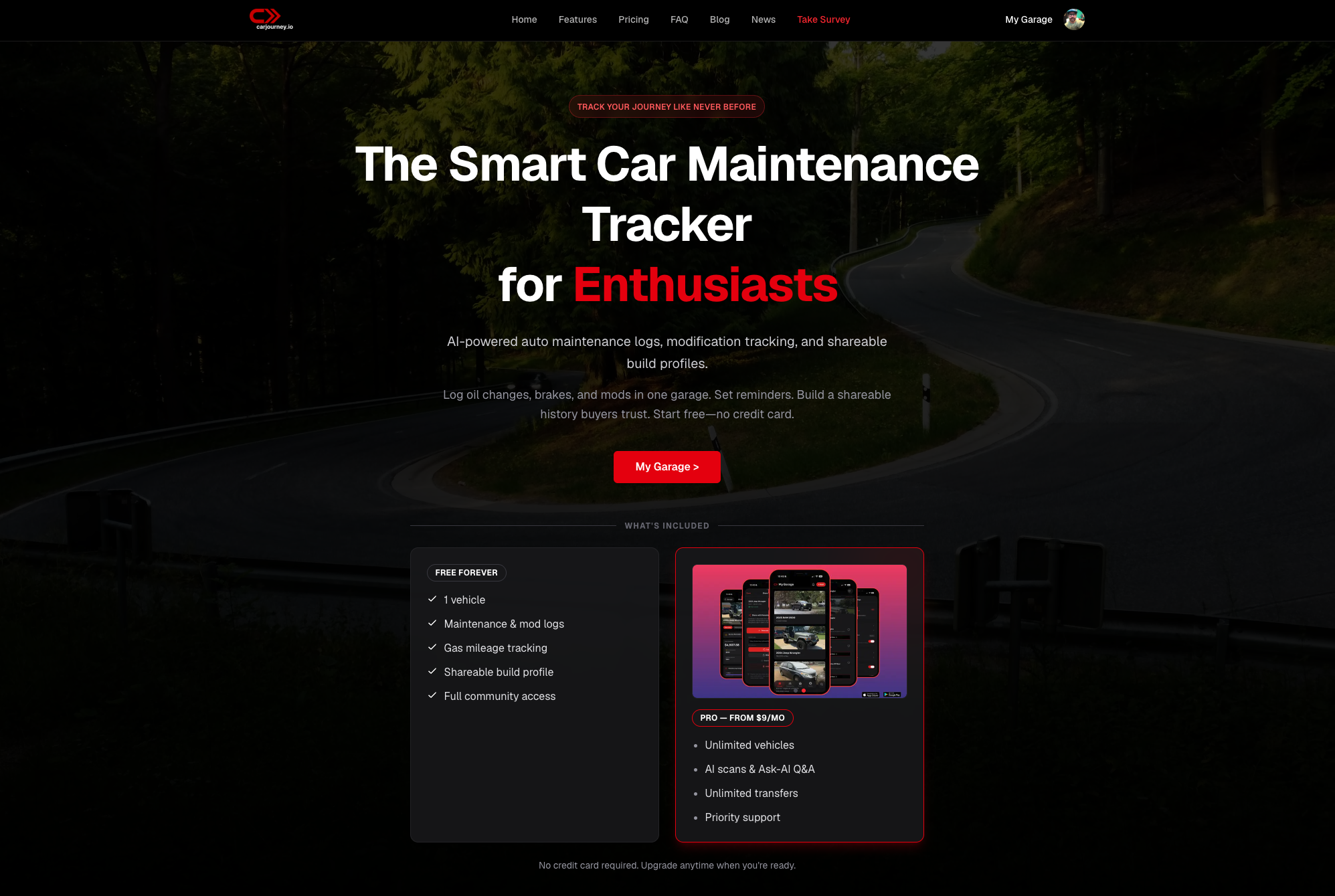
The platform uses AI to scan your service documents and answer specific questions about your vehicle’s history and maintenance needs. Whether you are evaluating a used car purchase or managing a vehicle you already own, Carjourney connects report data with real-world maintenance schedules and community knowledge. Visit Carjourney to see how it fits into your car buying process.
FAQ
What is a vehicle history report?
A vehicle history report is a documented record of a car’s past, compiled from DMV records, insurance claims, auction data, and repair shops. Providers like Carfax, AutoCheck, and NMVTIS-approved services generate these reports using a vehicle’s 17-digit VIN.
How much does a vehicle history report cost?
Single reports typically cost between $25 and $45. NMVTIS-approved reports cost less, often under $10, though they cover only title and theft data. Sellers and dealers sometimes provide reports free.
Can I get a vehicle history report with a license plate?
Some providers allow license plate searches in addition to VIN searches. The VIN search is more reliable because it ties directly to the vehicle’s unique identifier rather than a registration that can change.
Do vehicle history reports show all accidents?
Reports only show recorded accidents that were reported to an insurer or repair facility. Private repairs and unreported collisions do not appear, which is why a professional pre-purchase inspection remains necessary.
Which vehicle history report provider is best?
Carfax is the most widely used provider for domestic used car purchases. AutoCheck adds value for auction-sourced vehicles due to its scoring system and auction data. Running reports from both providers gives you the most complete picture before you buy.