 carjourney
From the CarJourney journal
What Is Integrated Vehicle History? A Car Buyer's Guide

What Is Integrated Vehicle History? A Car Buyer’s Guide
Integrated vehicle history is a unified record that consolidates ownership, title status, accident data, odometer readings, and maintenance events for a single VIN into one accessible timeline. Think of it as the difference between reading scattered sticky notes and reading a complete logbook. The industry standard term for this is a vehicle history report, and providers like Carfax, AutoCheck, and the National Motor Vehicle Title Information System (NMVTIS) each contribute to how that record gets built. For any car buyer or current owner, understanding what this data includes and where it comes from is the single most effective way to avoid costly surprises.
What is integrated vehicle history and why does it matter?
An integrated vehicle history unifies multiple data types for one VIN into a single timeline, covering ownership transfers, title brands, accident records, odometer readings, and service events. That consolidation is what separates a useful report from a fragmented collection of paperwork. Without it, a buyer might see a clean title and miss a prior flood designation buried in an insurance database.
The practical value is immediate. A buyer reviewing a unified report can spot a salvage brand, a mileage discrepancy, or a gap in service records before ever test-driving the car. Sellers benefit too, because a documented history supports asking price and builds buyer confidence. For current owners, keeping records unified means better warranty documentation and a stronger position at resale time.

Three data categories carry the most weight in any integrated report: title and ownership status, accident and insurance records, and odometer history. Each one draws from a different set of sources, which is why the integration layer matters so much. A report that only pulls from one database is not truly integrated. It is just a partial snapshot.
What components make up an integrated vehicle history report?
A complete integrated vehicle report draws from dozens of upstream databases, and the 17-character VIN is the universal key that ties every record to a specific vehicle. No two VINs are identical, which makes it the only reliable anchor for cross-source data matching.
The core components include:
- Title and ownership history. This covers every registered owner, the state of registration, and any title brands applied to the vehicle. Title brands like salvage, flood, rebuilt, or lemon law buyback are permanent designations that follow the VIN regardless of how many times the car changes hands.
- Accident and insurance records. Collision data reported to insurance carriers, total loss declarations, and airbag deployments all feed into this layer. Not every fender-bender gets reported, but significant structural damage almost always does.
- Odometer readings. Each time a vehicle is titled, inspected, or serviced at a reporting shop, the mileage gets logged. Comparing readings across time reveals rollback fraud or unexplained mileage jumps.
- Service and repair records. Maintenance events from dealerships, franchise repair chains, and some independent shops appear here. Oil changes, transmission work, recall completions, and major repairs all contribute to the timeline.
- Salvage and auction records. When a vehicle passes through an insurance auction or salvage yard, that transaction is logged. This data often surfaces vehicles that were declared total losses but later repaired and retitled.
The depth of any report depends directly on how many data providers the aggregator has relationships with. Carfax, for example, draws from over 100,000 data sources. A report from a provider with fewer partnerships will show the same VIN but with more gaps. That difference is not a flaw in the concept. It is a reminder that no single report is exhaustive.
Pro Tip: Pull reports from two different providers before buying any used vehicle. Cross-referencing Carfax and AutoCheck often surfaces records that appear in one but not the other.
How does integrated vehicle history data get collected and unified?
Data collection for a vehicle history report happens across multiple channels simultaneously, and the process is more layered than most buyers realize. Here is how the pipeline typically works:
- State motor vehicle agencies report title transfers, brand applications, and odometer readings every time a vehicle is titled or retitled. This is the most authoritative data layer.
- Insurance carriers submit total loss declarations, salvage designations, and major claim events to shared databases and to NMVTIS.
- Salvage yards and recyclers report vehicles they receive, which catches cars that were totaled but never formally retitled as salvage in the original state.
- Repair shops and dealerships submit service records to aggregators like Carfax through voluntary data-sharing agreements. This layer is the least complete because participation is not mandatory.
- Auction houses log vehicle condition reports and sale records, which adds another checkpoint for vehicles that have cycled through the wholesale market.
The NMVTIS Consumer Access Program pulls directly from state titling agencies, insurance carriers, salvage yards, and recyclers to provide official title verification and fraud prevention. It is the backbone of title brand accuracy in the United States. NMVTIS also supports an integrated solution model that embeds title verification directly into state titling workflows, which means updates happen in near real time rather than through periodic batch uploads.
Two distinct integration layers exist in this ecosystem. Operational integration refers to workflow tools that let dealers or buyers pull reports without leaving their primary platform. Data integration refers to the actual merging of multi-source records into one coherent timeline. AutoXplorer’s AutoCheck integration is a practical example of operational integration: dealers pull full AutoCheck reports without manual data entry, keeping their workflow tight and their evaluations accurate. The data integration layer is what happens behind the scenes at Carfax or AutoCheck before that report ever reaches the dealer.
Pro Tip: When reviewing a report, pay attention to the data sources listed at the bottom. A report citing NMVTIS as a source carries more weight for title accuracy than one that does not.
What are the limitations of integrated vehicle history reports?
Understanding vehicle history data means understanding what it cannot tell you, not just what it can. Several important caveats apply to every report you read.
- Unreported incidents are invisible. A cash repair after a minor collision, a flood event in a private driveway, or an engine swap done by a private seller leaves no trace in any database. Reports are snapshots and may not provide the entire vehicle story.
- Database update delays exist. State agencies and insurance carriers do not always transmit data instantly. A vehicle totaled last month may not yet show a salvage brand in a report pulled today.
- Service gaps are not always red flags. A two-year gap in maintenance records does not automatically mean the car was neglected. It may mean the owner used a shop that does not report to aggregators. Gaps or abrupt timeline changes can indicate missing data transmissions rather than actual maintenance lapses.
- Geographic inconsistencies affect completeness. A vehicle titled in multiple states may have records that did not transfer cleanly between state databases, creating apparent ownership gaps.
- Rebuilt titles can look clean in some states. Title branding laws vary by state. A vehicle declared a total loss in one state can sometimes be retitled without a salvage brand in another, a practice known as title washing.
Approach every vehicle history report with a verify-don’t-assume mindset. Use the report to generate questions, not to reach final conclusions.
Physical inspection by a qualified mechanic remains non-negotiable. A pre-purchase inspection combined with a multi-source report gives you the most complete picture available. No digital record replaces a trained eye under the hood.
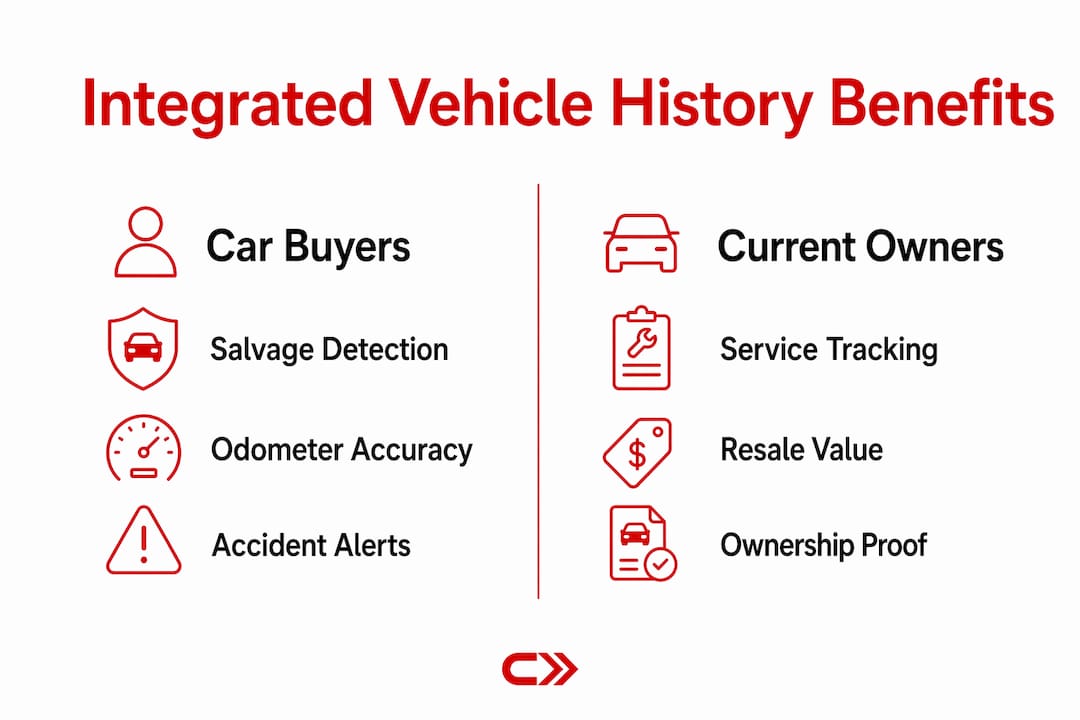
How integrated vehicle history benefits car buyers and owners
The practical benefits of a unified vehicle record split cleanly between buyers and current owners, and the value compounds over time.
| Scenario | Benefit of integrated vehicle data |
|---|---|
| Buyer evaluating a used car | Identifies salvage brands, odometer fraud, and accident history before negotiating |
| Seller preparing for resale | Documents full service history to justify asking price and build buyer trust |
| Owner tracking maintenance | Creates a unified record that supports warranty claims and future resale |
| Dealer assessing trade-in value | Pulls title brand and mileage data quickly to price vehicles accurately |
| Insurance underwriter | Verifies vehicle condition and prior claims to set accurate premiums |
For buyers, title brand and odometer integrity signals from NMVTIS sources are the most impactful data points for resale and insurance evaluations. A salvage brand permanently reduces a vehicle’s market value and can affect insurability. Catching it before purchase protects you from paying clean-title prices for a compromised vehicle.
For current owners, the benefit is less obvious but equally real. Keeping your own service records updated and accessible means that when you sell, you can present a documented history rather than asking a buyer to take your word for it. Buyers who can verify a complete service history consistently pay more for used vehicles than for identical cars with no documentation.
Pro Tip: Scan and upload your service receipts to a digital tracker after every maintenance visit. Over three to five years, that habit builds a verifiable record that adds real dollars to your resale price.
The integration of digital tools that continuously update vehicle histories is also changing how owners manage their cars. Platforms that let you log your own maintenance data alongside official report data give you a more complete picture than either source alone.
Key takeaways
Integrated vehicle history is only as useful as the sources behind it and the inspection that follows it.
| Point | Details |
|---|---|
| VIN is the foundation | Every integrated report uses the 17-character VIN to match records across dozens of databases. |
| NMVTIS anchors title accuracy | Official title brands and odometer data from NMVTIS are the most reliable signals for fraud prevention. |
| Reports have real gaps | Unreported repairs, state database delays, and title washing mean no report tells the full story. |
| Two integration layers exist | Operational integration eases access; data integration merges multi-source records into one timeline. |
| Inspection is non-negotiable | A pre-purchase mechanical inspection remains the only way to verify what digital records cannot show. |
Why I read vehicle history reports differently now
Most buyers treat a clean vehicle history report as a green light. I used to do the same thing. After years of working with vehicle data and watching buyers get burned on cars with spotless reports, I read them differently now.
The most useful thing a report tells you is not what happened. It is what is missing. A vehicle with three owners in two years and a six-month service gap in year one deserves more scrutiny than a vehicle with a single accident report and consistent maintenance records. The accident is documented and repaired. The gap is unknown territory.
I also think buyers underestimate how much state-level variation affects report quality. A car that spent time in states with weaker title branding laws or slower database reporting will have a thinner record than an identical car that lived its whole life in a state with tight reporting requirements. That is not the report’s fault. It is a structural reality of how vehicle data gets collected across 50 different regulatory environments.
The technology is genuinely improving. NMVTIS coverage has expanded, more repair shops are reporting voluntarily, and platforms like Carjourney are making it easier for owners to add their own data to the record. But the right posture is still skeptical optimism. Use the report to ask better questions. Use the inspection to answer them.
— Chally
How Carjourney helps you build a complete vehicle record
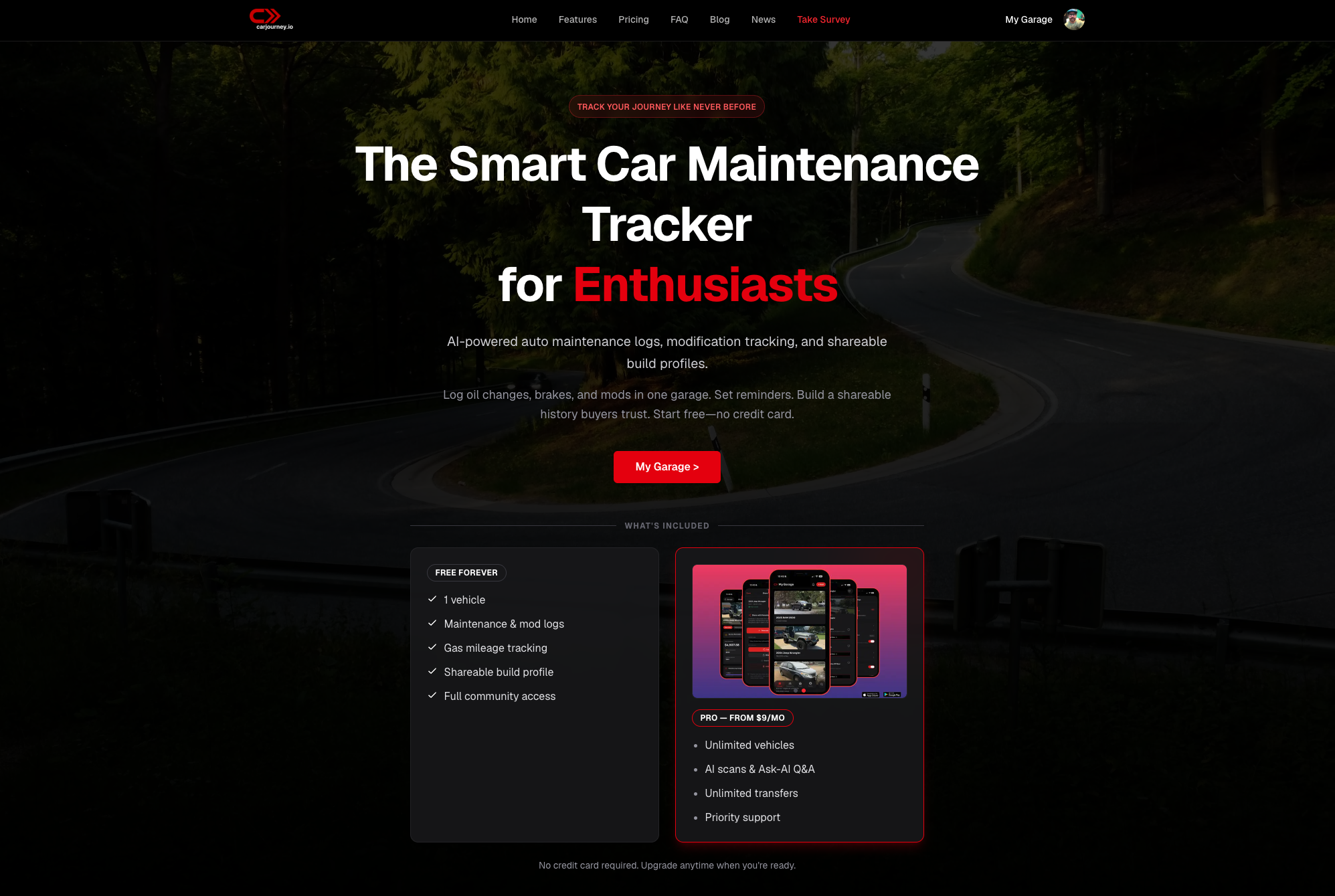
Carjourney is built for car owners who want more than a one-time report. The platform lets you log every service event, scan receipts, and build a running maintenance record tied to your specific VIN. That owner-entered data fills the gaps that official reports miss, particularly for repairs done at independent shops or private mechanics who do not report to aggregators.
When you go to sell, your Carjourney record gives buyers something no third-party report can: a verified, owner-maintained history that documents every oil change, tire rotation, and repair you actually paid for. Start building your vehicle’s record today with the Carjourney maintenance tracker and turn scattered receipts into a documented asset.
FAQ
What is the difference between a vehicle history report and an integrated vehicle history?
A vehicle history report is the standard industry term for the document you receive. “Integrated vehicle history” describes the process of unifying data from multiple sources, including state agencies, insurers, and repair shops, into that single report.
Which VIN-based systems are most reliable for title accuracy?
NMVTIS is the most authoritative source for title brand and odometer data because it pulls directly from state titling agencies, insurance carriers, and salvage yards across the country.
Can a vehicle history report miss important information?
Yes. Reports rely on data that was actually submitted to a database. Unreported repairs, private-sale transactions, and title washing across state lines can all result in gaps that a report will not show.
How do I access an integrated vehicle report?
Enter the vehicle’s 17-character VIN on a provider’s website such as Carfax or AutoCheck, or use a platform like Carjourney that aggregates service data alongside official report sources.
Does a clean vehicle history report mean the car is safe to buy?
A clean report reduces risk but does not eliminate it. Physical inspection by a qualified mechanic is still required to verify structural integrity, mechanical condition, and anything that was never reported to a database.