 carjourney
From the CarJourney journal
Modification Tracking for Serious Car Owners
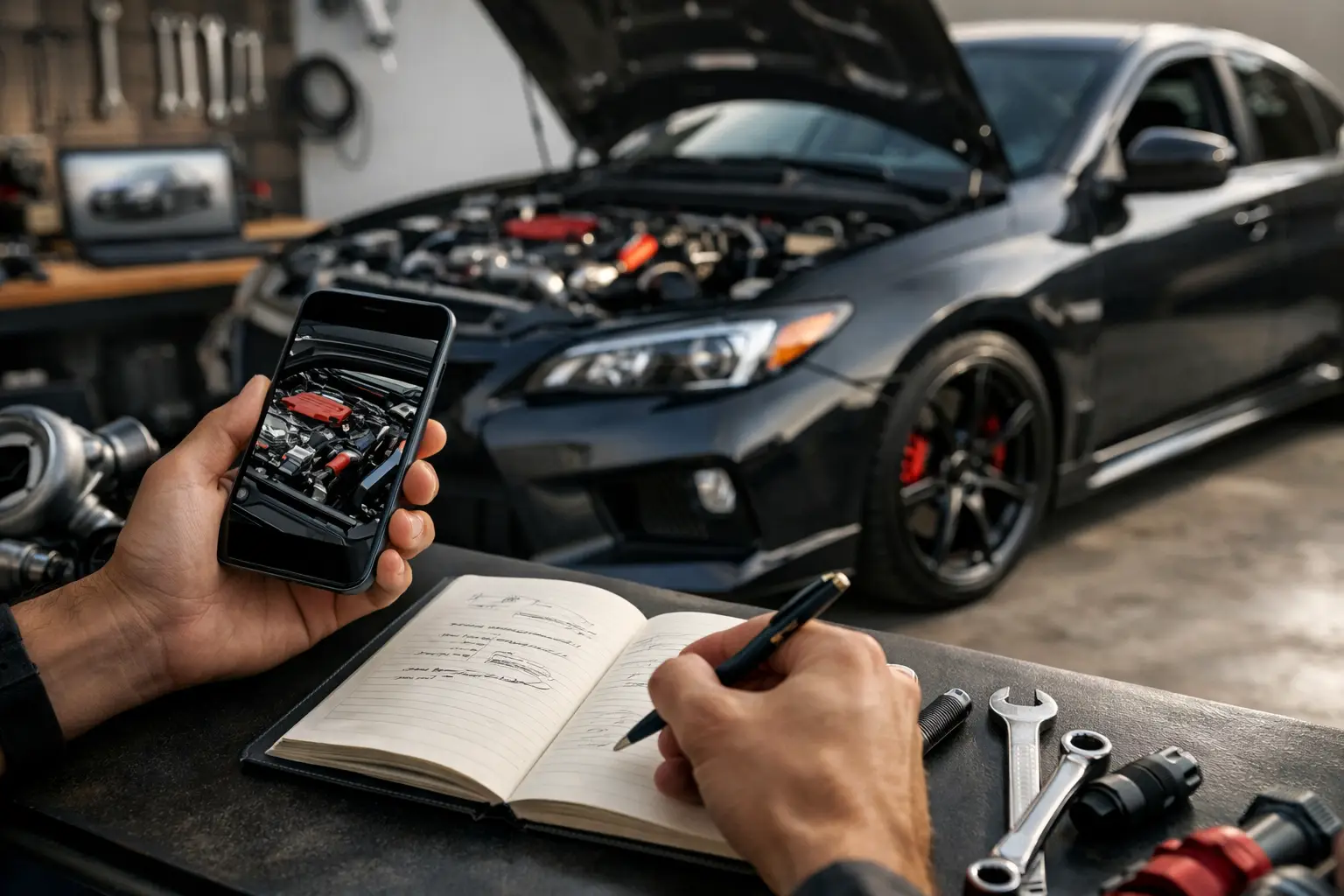
You remember the big upgrades. The coilovers, the wheels, the tune. What slips through the cracks are the details that matter later - part numbers, install dates, receipts, alignment specs, warranty info, and what changed after what. That is where modification tracking stops being a nice-to-have and starts protecting your car, your money, and your build history.
For enthusiasts, a modified car is never just transportation. It is a project, a record of choices, and often a serious investment. But once the parts list lives half in your camera roll, half in email, and half in your memory, things get messy fast. You lose context. You forget timelines. And when it is time to troubleshoot, maintain, insure, or sell, you are left reconstructing your own car from scraps.
What modification tracking actually does
At its core, modification tracking is a structured record of every non-stock change made to a vehicle. That includes performance parts, cosmetic changes, suspension work, wheels and tires, audio upgrades, lighting, aero, interior pieces, and supporting hardware. A good record also captures cost, mileage at install, date, brand, part number, vendor, photos, and any notes about fitment or tuning.
That level of detail might sound excessive if you only think about mods as a shopping list. In practice, it creates control. You know what is on the car, when it went on, how much you spent, and what depends on what. If you changed wheels, then added spacers, then rolled fenders, that sequence matters. If you installed a tune before replacing aging plugs and coils, that matters too.
A build gets harder to manage as soon as parts start interacting. A simple intake install is easy to remember. A car with suspension, brakes, forced induction, engine management, supporting fuel upgrades, and multiple rounds of revisions is not. Good records keep the history usable.
Why modification tracking matters more than most owners think
The first reason is maintenance. Modified cars do not follow a completely separate reality from stock cars, but they often create new service considerations. Lowering springs may change tire wear patterns. Bigger wheels can affect rotation strategy and alignment intervals. Power mods can put more stress on supporting components. If your records only show maintenance and not modifications, you are missing half the picture.
The second reason is troubleshooting. When a vibration appears, a CEL pops up, or drivability changes, the timeline matters. If you can see that the issue started shortly after a downpipe install, tune revision, brake swap, or wheel change, diagnosis gets faster. Without records, you are relying on memory, and memory gets worse the longer you own the car.
The third reason is money. Most owners underestimate what they have invested. Not because they are careless, but because spending happens in phases. A few hundred here, a supporting part there, shipping, tax, installation, alignment, tuning, replacement hardware - it adds up quickly. Modification tracking gives you an honest view of total cost, which helps with budgeting and future decisions.
Then there is resale. A lot of buyers get nervous around modified cars, and not without reason. The concern is rarely the existence of mods alone. It is undocumented work, unclear quality, and missing proof. A car with a clean, organized build history feels very different from a car being sold with "I have receipts somewhere." One inspires trust. The other raises questions.
The difference between tracking mods and just keeping receipts
Receipts are proof of purchase. They are not a usable history by themselves. They do not show the order of changes, the mileage at install, whether the part is still on the car, whether it replaced another setup, or how it affected service intervals. You can have a folder full of invoices and still have no clear record of the build.
True modification tracking connects the parts to the ownership story of the vehicle. It gives each change context. You are not just storing that you bought brakes in March. You are recording which kit, which pads, which fluid, who installed it, what mileage the car had, and whether the stock setup was retained. That is useful later in a way a PDF invoice alone is not.
This is also where photos matter. A photo of the installed part, the odometer, the packaging label, or the condition before and after install can answer questions months later. It helps validate work for buyers, supports warranty claims, and creates a cleaner story of how the car evolved.
What to include in a modification tracking system
The best setup is the one you will actually keep updated, but a few fields make a huge difference. Start with the basics: part name, brand, install date, mileage, cost, and category. Then add the details that save you later: part numbers, vendor, receipt image, warranty terms, installer notes, and photos.
You should also track whether the modification is currently installed, removed, replaced, or pending. That sounds small until you are years into ownership and trying to remember which exhaust, shifter, tune, or tire setup the car currently has versus what it had two versions ago.
Notes are where enthusiast records become genuinely valuable. This is where you log tire sizes that actually cleared, alignment specs that worked, torque values worth remembering, tuning revisions, rubbing issues, ride height changes, or the exact reason you chose one setup over another. A serious car owner usually learns things the hard way. Good tracking makes sure you do not have to learn the same lesson twice.
Why spreadsheets break down
A spreadsheet is better than nothing. For a lightly modified daily, it may be enough for a while. But as soon as you are storing photos, service records, warranties, recurring reminders, and multiple vehicles, spreadsheets start asking too much from you.
They are manual. They rely on perfect discipline. They rarely work well from your phone in the garage, at the parts counter, or while talking to a buyer. And they do not naturally connect maintenance and modifications into one ownership history.
That last point matters. Most enthusiasts do not think about their car in separate boxes. A brake upgrade is both a modification and a maintenance event. A clutch replacement on a tuned car is part repair, part supporting upgrade. A proper system reflects how ownership actually works instead of forcing you to maintain scattered records.
Modification tracking and resale trust
Modified cars can absolutely sell well, but presentation changes everything. Buyers want proof that the car was cared for, that the parts were chosen with intention, and that the owner paid attention to the details. Modification tracking helps you present that clearly.
Instead of listing upgrades from memory, you can show a documented history with dates, mileage, photos, and supporting records. You can explain what is on the car now, what was removed, and what maintenance was performed alongside the build. That lowers uncertainty, and lower uncertainty usually means better conversations and stronger offers.
It also helps with insurance and ownership transitions. If a car is stolen, damaged, or transferred to a new owner, having a clean record of installed parts and their value is far better than trying to rebuild that list under stress.
A better way to keep your build organized
The strongest approach is simple: use one place to log modifications, maintenance, costs, photos, documents, and reminders together. That keeps the history complete and easy to update. It also means the record stays useful beyond the excitement of the install day.
This is where a purpose-built platform makes more sense than a notes app, folder of screenshots, or spreadsheet. If you are serious about your vehicles, you want a system that lives with the car over time, works across devices, and gives you a shareable history buyers trust. That is exactly why tools like CarJourney resonate with enthusiast owners - they treat build tracking as part of real ownership, not as an afterthought.
The goal is not to turn your hobby into paperwork. It is to keep control. When every mod has a place, your build becomes easier to maintain, easier to explain, and easier to value.
Cars change. Plans change. Parts come and go. The owners who stay ahead are not always the ones with the biggest mod lists. They are the ones who can look at their history and know exactly what their car needs, what it has, and what it is worth.