 carjourney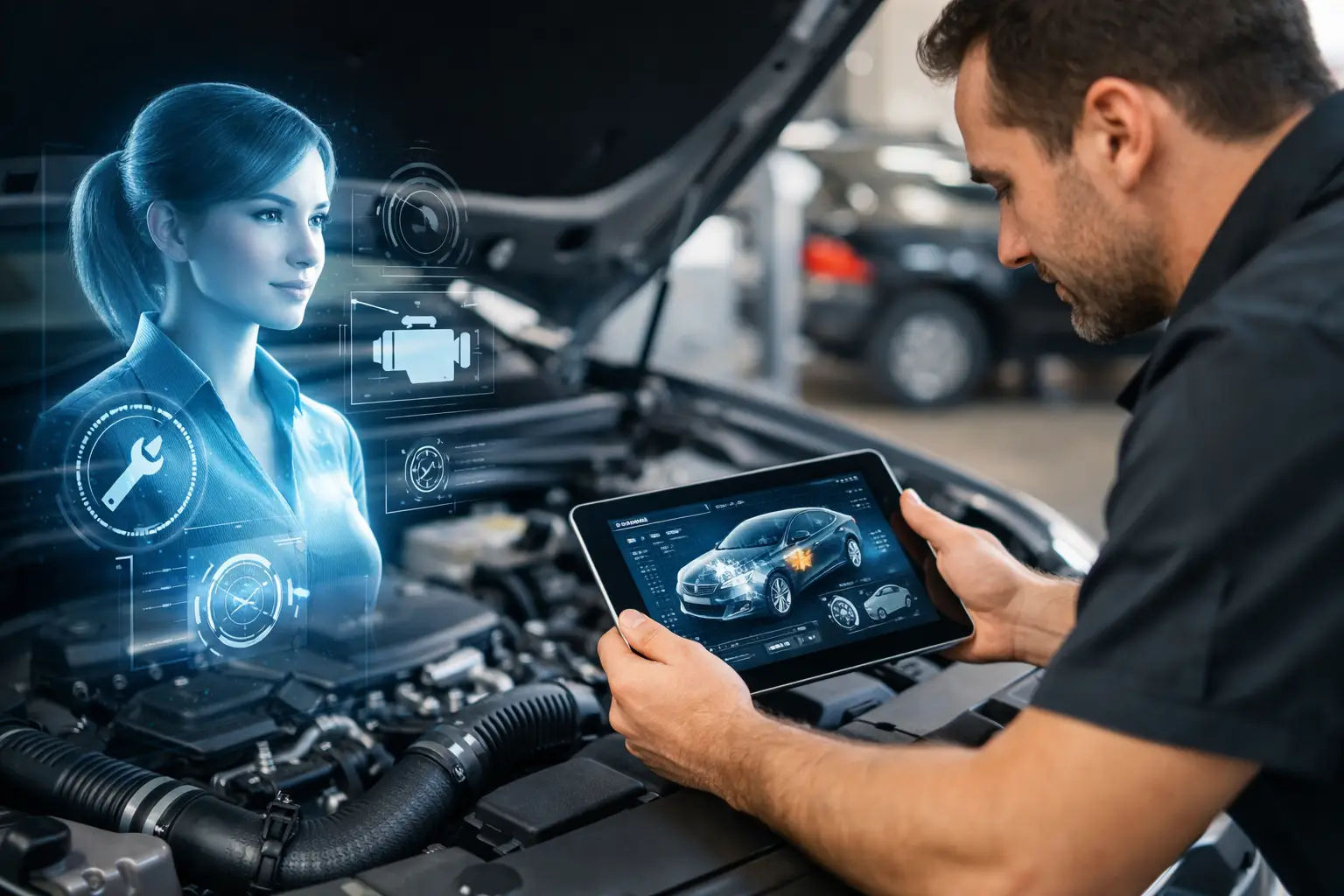
You remember the oil change. You remember the brake pads. Then six months later, you are trying to recall which fluid got changed, what mileage the tires were rotated at, and whether that coilover install happened before or after the alignment. That is where an ai car maintenance assistant starts making real sense - not as a gimmick, but as a better system for keeping a vehicle’s history clear, useful, and easy to act on.
For enthusiasts, maintenance is never just maintenance. It is reliability, drivability, money invested, and proof that the car has been cared for properly. If you also modify your vehicles, the picture gets even more complicated. A basic reminder app can tell you when an oil change is due. It cannot really help you connect service history, parts changes, mileage, receipts, and build decisions into one record you can actually trust later.
What an ai car maintenance assistant actually does
At its best, an ai car maintenance assistant is not replacing your judgment or your mechanic. It is organizing information, spotting patterns, and reducing the mental load of ownership. That matters whether you have one daily driver, a weekend project, or a small fleet in the family garage.
The first job is recordkeeping. A strong system helps you log maintenance events, track mileage, save invoices, and keep a running history of what has been done. AI improves that process by making it faster. Instead of manually typing every line item from a receipt, it can scan documents, pull out service details, and sort them into the right vehicle record.
The second job is reminders with context. Standard reminders are simple: change oil every 5,000 miles. AI can do more by looking at your service history, recent mileage, and timing between jobs to suggest what deserves attention next. It does not magically know the future, but it can give you a smarter shortlist than a sticky note in the glovebox.
The third job is answering ownership questions in plain language. If you cannot remember the last brake fluid flush, want to check when spark plugs were replaced, or need a quick view of money spent on suspension work over the last year, AI can surface the answer from your records instead of making you dig through photos, PDFs, and old texts.
Why enthusiasts get more value from it
A commuter who just wants a service reminder can get by with something basic. An enthusiast usually cannot. Once you start tracking wheels, tires, brake upgrades, tuning parts, suspension components, cosmetic changes, and repeat maintenance, your vehicle history becomes layered.
That is where an ai car maintenance assistant feels less like a convenience and more like infrastructure. It helps connect what was installed, when it was installed, how much it cost, and what maintenance followed after. If a new set of performance pads wears faster than expected, or a tire setup changes alignment intervals, your records become more useful when they are tied together.
There is also the resale side. Buyers trust documentation. A clean history with dates, mileage, receipts, and part details tells a much stronger story than “I took good care of it.” The same goes for insurance claims, warranty questions, and simply proving the value of what you have put into the car. Good records protect the ownership story, and AI makes those records easier to build consistently.
The best ai car maintenance assistant features to look for
Not every tool with AI slapped on it is worth using. Some products add a chatbot and call it innovation. The better approach is practical. AI should remove friction from the work you already need to do.
Receipt and invoice scanning is one of the most useful examples. If you can snap a photo and have service type, mileage, cost, and date pulled into the right fields, you are much more likely to keep records current. The same goes for document storage that keeps warranties, part invoices, and inspection paperwork attached to the vehicle instead of scattered across your phone.
Smart reminders matter too, but they need to be flexible. Manufacturer intervals are a starting point, not the whole story. A modified turbo car, a tow rig, and a lightly driven collector car do not all follow the same rhythm. The best tools let you track by time, mileage, and your actual usage patterns.
Natural-language search is another feature that sounds small until you use it. Being able to ask, “When did I last change the transmission fluid?” or “How much have I spent on this build this year?” is far better than scrolling through logs manually.
For serious owners, multi-vehicle support also matters. If you manage a truck, a daily driver, and a project car, you need clean separation between records without losing one central place to control everything.
Where AI helps, and where it does not
There is a temptation to think AI can diagnose every problem from a few symptoms. Sometimes it can point you in the right direction. Often, it cannot. That is the trade-off people should understand upfront.
AI is strongest when the data is structured and the task is administrative. It can organize receipts, suggest upcoming services, summarize vehicle history, and surface patterns from your logs. It is much weaker when the issue depends on sound, feel, smell, driving conditions, or hands-on inspection. A rough idle could be a vacuum leak, a dirty sensor, bad fuel, tuning issues, or something more serious. No app should pretend to know that with certainty.
That does not make the tool less valuable. It just defines the role clearly. An ai car maintenance assistant should help you stay ahead of maintenance, preserve records, and ask better questions. It should not replace a proper inspection, quality parts selection, or experienced mechanical work.
How to use an ai car maintenance assistant the right way
The biggest mistake is waiting until your records are already a mess. Start with the current vehicle status. Add your present mileage, recent services, active mods, and any major documents you still have. Once the baseline is in place, the system becomes useful quickly.
From there, consistency beats perfection. Log oil changes, tire rotations, brake work, battery replacements, alignments, and fluid services as they happen. Add modifications the same way, especially if they affect future maintenance or resale value. A documented intake, exhaust, suspension setup, or wheel and tire package matters more than people think when you are trying to explain the car later.
It also helps to treat every upload as future proofing. The receipt you are too lazy to save today becomes the exact proof you want two years from now. The note about which shop did the alignment after lowering springs can save time and confusion later. This is one reason platforms built for enthusiasts stand apart from generic reminder tools. They understand that ownership history is not just about due dates. It is about context.
A platform like CarJourney fits that use case well because it combines service logging, modification tracking, reminders, document storage, and AI-powered organization in one place. That means less jumping between notes apps, folders, spreadsheets, and photo albums just to answer a basic question about your car.
Is an ai car maintenance assistant worth it?
If you barely keep records, it will only be worth it if the tool makes recordkeeping simple enough that you actually use it. Ease matters more than feature count. If logging a service takes too long, most people stop.
If you already track everything in spreadsheets, notebooks, or scattered files, the value is different. In that case, AI is not creating discipline from scratch. It is giving you speed, searchability, cleaner organization, and a better way to preserve a vehicle story over time.
The strongest case is for owners who care about three things at once: staying on top of maintenance, documenting modifications, and protecting vehicle value. That combination describes a lot of enthusiasts. For them, an ai car maintenance assistant is not about novelty. It is about control.
Cars get expensive fast when details slip. A missed service can turn into a bigger repair. An undocumented mod can hurt buyer confidence. A lost receipt can erase proof of real money invested. Better records do not remove every risk, but they do make ownership clearer and smarter.
If you take pride in your vehicles, the standard should be simple: your history should be as dialed-in as the car itself.