 carjourney
From the CarJourney journal
Why Update Service Records Before Selling Your Car

Updated service records are the single most powerful document a seller can hand a buyer. Knowing why update service records before selling matters comes down to one fact: documented maintenance converts your verbal claims into verifiable proof. Buyers and dealers treat a complete service history as evidence, not just reassurance. Without it, they price in the risk. With it, they compete for your car. This article breaks down exactly how service records affect your sale price, why digital logs are replacing paper booklets, and what steps to take before you list.
Why updating service records before selling affects your price
Service records transform a buyer’s decision from trust-based to evidence-based. That shift is worth real money. Dealers discount vehicles by £500 or more when a full service history is missing, because they absorb the cost of unknown maintenance risks before they can resell. That discount comes directly out of your pocket.
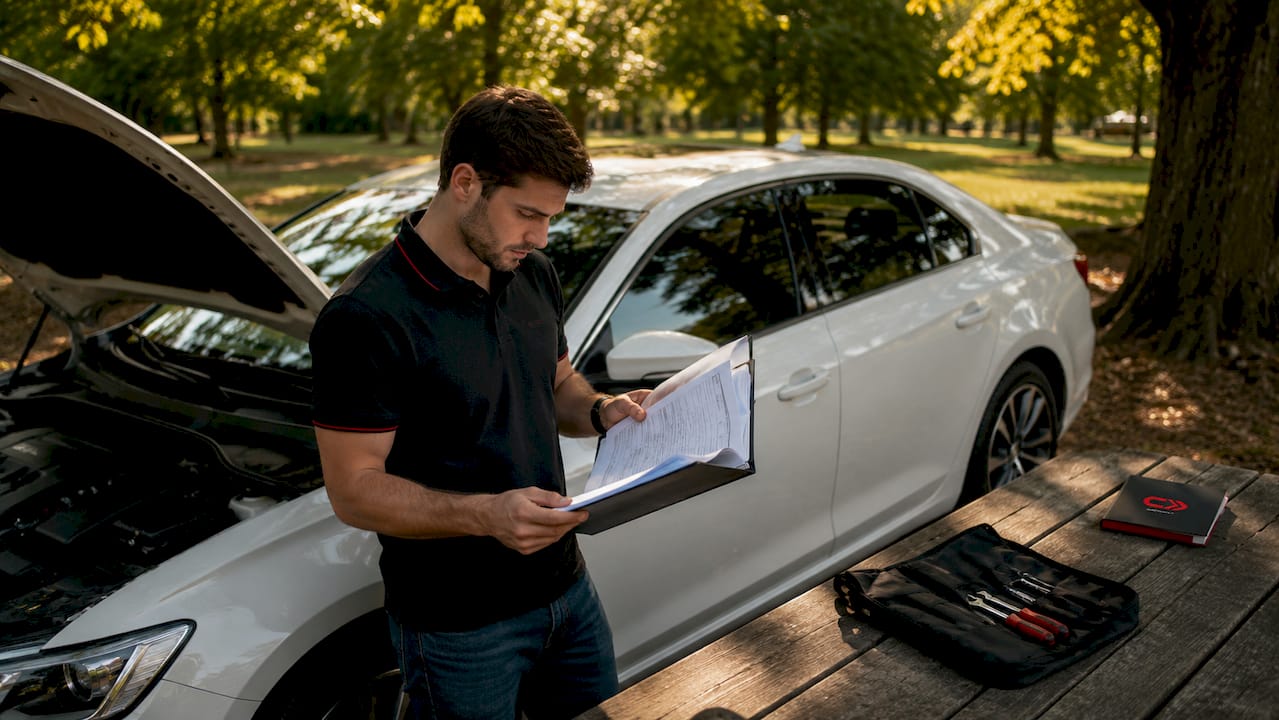
The effect is even sharper for high-mileage vehicles. A car with 90,000 miles and a complete log reads very differently from one with 90,000 miles and a glove box full of silence. Documented maintenance reduces perceived risk and validates every claim a seller makes about the car’s condition. Buyers stop wondering what was skipped and start focusing on whether the price is right.
Full service history also moves cars faster. Cars with complete records sell faster because buyers have more confidence to commit quickly. Less hesitation means fewer days on the market and fewer lowball offers to field.
- A full service history places your vehicle in the upper pricing quartile.
- Missing records give buyers a concrete bargaining chip to push your price down.
- High-mileage cars benefit most from thorough documentation.
- Service history is the primary document buyers use for due diligence.
Pro Tip: Before listing your car, pull every receipt and invoice you have. Even partial records are better than none. A continuous log from day one is ideal, but showing the last three to four years of consistent service still signals responsible ownership.
What are the real benefits of digital service records?
Paper service booklets get lost, damaged, and forged. Digital records solve all three problems at once. Digital service records enable instant verification of manufacturer-approved maintenance, which speeds up appraisal and cuts price negotiation down significantly.
The fraud angle matters more than most sellers realize. Digital records are harder to falsify than stamped paper booklets, so buyers and dealers trust them more. A verified digital history removes the friction that makes buyers hesitant. When a dealer can pull up your car’s maintenance record in 30 seconds and confirm every oil change and timing belt replacement, the appraisal conversation changes completely.
Dealerships have a direct financial reason to prefer digital histories. Dealerships prioritize cars with verifiable digital histories because it reduces costly pre-sale inspections and repairs on their end. That preference translates into better trade-in offers and faster private sales.
- Digital logs survive phone upgrades, house moves, and water damage that destroy paper booklets.
- Authorized dealer databases allow buyers to verify records independently.
- Digitalization of records is a growing market trend that improves record quality and buyer trust.
- Digital histories reduce back-and-forth negotiation because the facts speak for themselves.
Pro Tip: Contact your authorized dealer or manufacturer’s service portal before listing your car. Many brands maintain digital service logs you can request and share directly with buyers. This takes one phone call and costs nothing.
Common mistakes sellers make with service history
Most sellers treat record keeping as paperwork rather than as a pricing tool. Sellers often mistake record keeping for an administrative task, missing its real value in pricing and negotiations. That mindset costs them money at the exact moment it matters most.
The four most damaging mistakes follow a predictable pattern:
- Waiting until listing day to gather records. Receipts go missing, dealers take time to pull records, and the scramble creates gaps in your history. Start collecting at least four weeks before you plan to sell.
- Relying on verbal assurances. Telling a buyer “I always kept up with oil changes” carries zero weight without documentation. Buyers use missing records as real bargaining chips during negotiation, and a seller’s word does not stop that.
- Presenting a reconstructed history. A partial log assembled after the fact is noticeably less convincing than a continuous record. Gaps between service dates raise questions that a seller cannot easily answer.
- Skipping the milestone services. The 30k, 60k, and 90k mileage services are the ones buyers look for first. Missing documentation for these specific intervals signals neglect more than any other gap.
Pro Tip: Log every service visit within 24 hours of completing it. Spending just a minute after each visit to record the date, mileage, work done, and shop name creates a dependable continuous log. That habit prevents the last-minute scramble that costs sellers hundreds of dollars.
How to organize and present service records before selling
Getting your records in order is a straightforward process. The goal is to hand a buyer something they can read in five minutes and feel confident about.
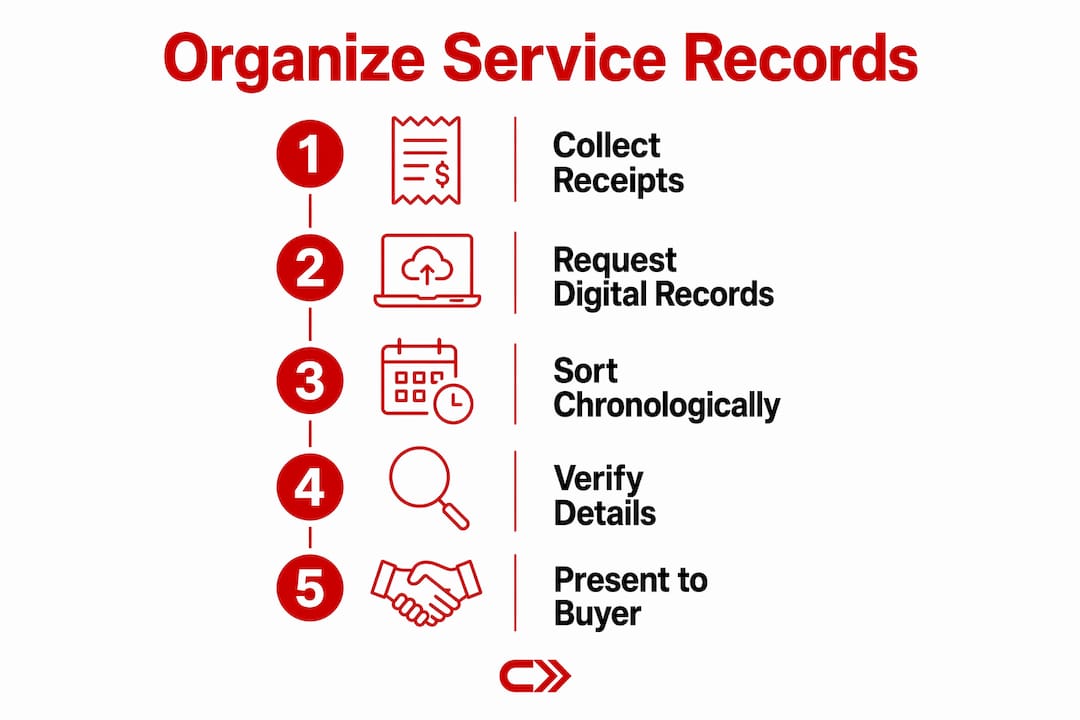
- Collect every paper receipt. Check the glove box, home filing cabinet, email inbox, and any app you used to track expenses. Include oil changes, tire rotations, brake jobs, and any repair work.
- Request digital records from your dealer. Most authorized service centers maintain a digital log of every visit. Call them, provide your VIN, and ask for a printout or digital export.
- Build a one-page summary timeline. List each service by date and mileage, the work performed, and the shop that did it. This gives buyers a quick overview without making them read through a stack of receipts.
- Organize originals chronologically. Place the oldest records at the back and the most recent at the front. Use a simple folder or binder. Presentation signals care.
- Present records proactively. Do not wait for a buyer to ask. Handing over a clean, organized folder at the start of a viewing builds immediate confidence and shortens the negotiation.
| Step | Action | Time required |
|---|---|---|
| Collect paper receipts | Search glove box, files, and email | 30–60 minutes |
| Request dealer digital records | Call dealer with VIN | 1 phone call |
| Build summary timeline | One-page chronological list | 20–30 minutes |
| Organize originals | Sort by date in a folder | 15 minutes |
| Present to buyers | Hand over at first viewing | Immediate |
Sellers who prepare records upfront avoid the price-haggling that drains time and money. A buyer who sees a complete, organized history has far less reason to negotiate aggressively. The records do the selling for you.
Key Takeaways
Updated service records directly protect your asking price and reduce the time your car sits unsold.
| Point | Details |
|---|---|
| Records replace trust with proof | Documented maintenance converts buyer skepticism into confidence, protecting your asking price. |
| Missing records cost real money | Dealers and private buyers discount vehicles by £500 or more when service history is incomplete. |
| Digital logs outperform paper | Digital records are harder to falsify, faster to verify, and preferred by dealers and buyers alike. |
| Consistent logging prevents gaps | Recording each service within 24 hours creates a continuous history that commands top-quartile pricing. |
| Organized presentation shortens sales | Sellers who present clean, complete records upfront face less negotiation and sell faster. |
Service records are your best negotiating tool
Sellers consistently underestimate how much a folder of receipts changes a buyer’s behavior. I have watched sellers with identical cars get wildly different offers, and the gap almost always traces back to documentation. The seller with records fields questions about price. The seller without records fields questions about what went wrong.
The shift to digital verification has made this even more pronounced. Buyers in 2026 expect to verify a car’s history the same way they verify a product review. When you can hand someone a digital record that an authorized dealer confirms in real time, you remove the single biggest reason buyers hesitate. That hesitation is what drives lowball offers.
What surprises most sellers is how little effort the habit actually requires. Car owners underestimate how much updating records influences offers from trade buyers and private purchasers alike. A minute of logging after each service visit pays back in hundreds of dollars at sale time. The sellers who skip it are essentially paying a penalty for convenience they did not actually enjoy.
The other thing worth saying plainly: reconstructed histories do not work. Buyers and dealers recognize a last-minute assembly. A continuous log built over years of ownership reads completely differently from one assembled in a weekend. If you are still in the ownership phase, start logging now. If you are days from listing, gather what you have and present it honestly. Partial records with clear gaps are still better than nothing, but they will not command the same premium as a complete history.
— Chally
How Carjourney helps you build a sale-ready service history
Keeping every service record organized and accessible is exactly what Carjourney was built for. The platform lets you log maintenance visits, upload receipts, and build a complete digital service history for your specific vehicle.
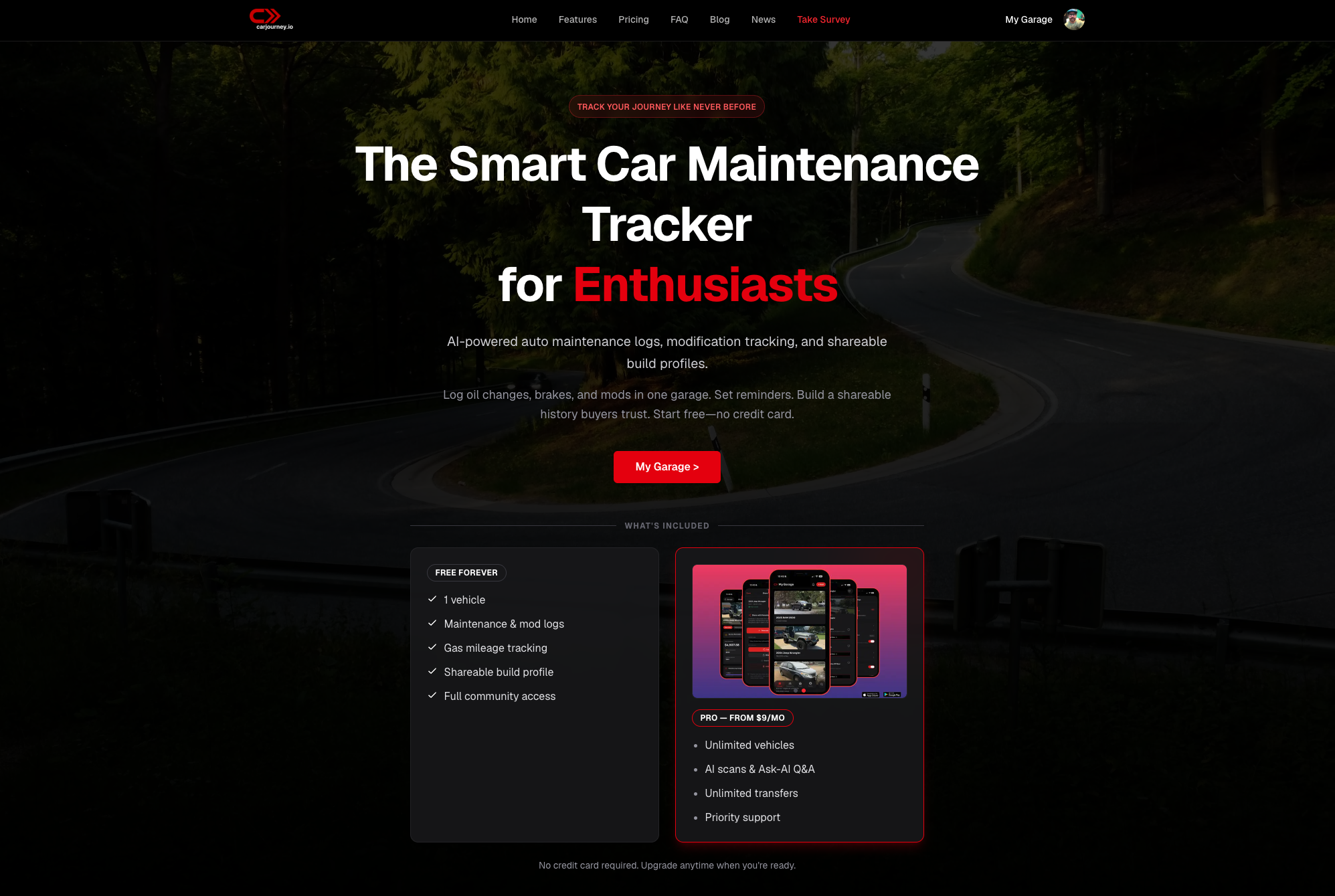
When it is time to sell, you can present a clean, verified record that buyers and dealers can review instantly. Carjourney’s AI scans your service documents and answers detailed questions about your vehicle’s exact maintenance history, so nothing gets lost between the glove box and the negotiating table. Whether you are preparing to list this month or building good habits for the future, track your service history with Carjourney and walk into every sale with the documentation that protects your price.
FAQ
Does a full service history really increase sale price?
Yes. Dealers discount vehicles by £500 or more when service history is missing, and complete records place a car in the upper pricing quartile.
Are digital service records better than paper booklets?
Digital records are harder to falsify and faster to verify, making them the preferred format for both dealers and private buyers in 2026.
What if I am missing some service records?
Gather what you have and present it honestly. Partial records still reduce buyer skepticism compared to no documentation, though gaps will limit the premium you can command.
How far in advance should I organize records before selling?
Start at least four weeks before listing. This gives you time to request digital records from your dealer and fill any gaps without scrambling.
Do service records matter more for high-mileage cars?
High-mileage vehicles benefit most from complete documentation because buyers assume more wear and more risk. A thorough log shifts buyer perception from concern to confidence on high-mileage cars specifically.