 carjourney
From the CarJourney journal
Why Disclose Service Records: Boost Value and Trust

Disclosing service records is the single most effective way to prove your vehicle’s maintenance history and protect its resale value. Known formally as a full service history (FSH), this documentation covers every oil change, brake job, timing belt replacement, and inspection your car has received. Sellers who skip this step leave money on the table and invite buyer suspicion. Whether you are listing privately on Facebook Marketplace, trading in at a dealership, or selling through an online platform, the question of why disclose service records has a direct financial answer: documented cars sell faster and for more.
Why disclosing service records increases resale value
A complete service history adds 10–25% to a vehicle’s resale value compared to partial or missing documentation. That is not a minor rounding error on a $20,000 car. It is a $2,000 to $5,000 swing based entirely on paperwork.
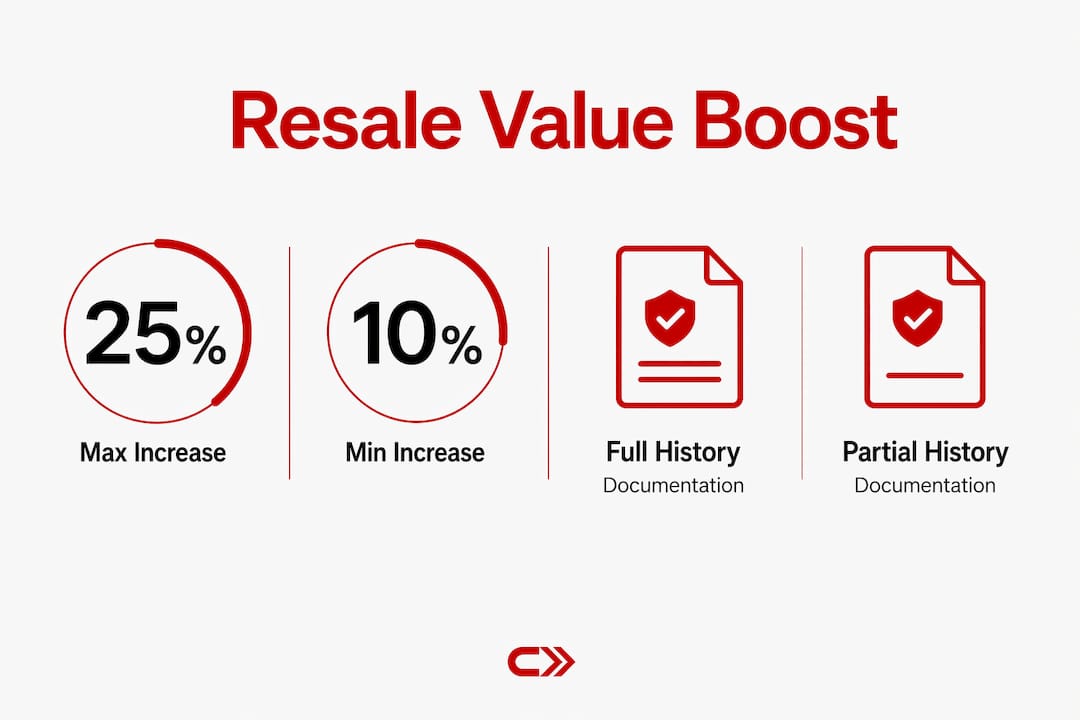
Buyers use service records to assess risk. A car with documented oil changes every 5,000 miles signals an owner who treated the vehicle as an asset. A car with no records forces the buyer to assume the worst, and they price their offer accordingly. The importance of service record disclosure becomes obvious the moment you see two identical vehicles listed side by side, one with FSH and one without.
The financial case is also a long-term strategy. Complete service histories protect your primary depreciating asset by preserving documented proof of care at every stage of ownership. Skipping a single service and losing the receipt costs you far more at resale than the service itself.
| Service History Status | Estimated Resale Impact | Buyer Confidence Level |
|---|---|---|
| Full service history (FSH) | +10–25% above market average | High |
| Partial history (some gaps) | Near market average | Moderate |
| No history available | Below market average | Low |
| Digital FSH with verified records | Maximum value retention | Very High |
Pro Tip: If you have a gap in your records, gather any bank statements or credit card receipts that show payments to a garage. Partial proof is better than no proof, and it shows buyers you are being honest rather than hiding something.
How do service records build buyer trust?
Trust is the core commodity in any private or online car sale, and full disclosure of service records is the strongest trust signal a seller can send. Buyers who cannot verify a car’s history default to suspicion. That suspicion translates directly into lower offers, longer negotiation cycles, and deals that fall through entirely.

Transparent records address the three biggest buyer fears: hidden mechanical faults, odometer tampering, and undisclosed accident damage. A car with documented mileage at every service interval makes odometer fraud nearly impossible to hide. A record showing a timing belt replacement at 90,000 miles removes one of the most expensive buyer anxieties. This is how service record transparency speeds up purchase decisions and reduces negotiation friction.
The benefits of sharing service records go beyond price. Sellers with complete documentation report fewer tire-kickers, more serious inquiries, and faster closings. Buyers who feel informed make decisions. Buyers who feel uncertain stall.
Key elements that build buyer trust in a service record package:
- Stamped service book or digital log showing every scheduled service with dates and mileage
- Invoices from garages or dealerships for major repairs, including parts and labor costs
- MOT or state inspection certificates confirming roadworthiness at regular intervals
- Recall completion records showing any manufacturer safety work was performed
- Receipts for recent work such as new tires, brakes, or battery replacement
Pro Tip: When selling online, share a digital link to your service records rather than photographs of paper receipts. A shareable digital record accelerates buyer confidence far more than blurry phone photos of a service book.
Paper service books vs. digital records: which is better?
Paper service books have been the standard for decades, but they carry serious limitations. They can be lost in a move, damaged by water, or simply forgotten in a glove box. More critically, they can be forged. A stamped service book from an unregistered garage means very little to a skeptical buyer.
Digital service records are harder to forge, accessible via cloud storage, and eliminate the loss risk entirely. Manufacturers like BMW, Ford, and Volkswagen maintain digital service portals that mechanics update in real time. Buyers can verify the history with a VIN lookup in seconds, which removes doubt from the transaction completely.
One underappreciated fact: independent garages registered with recognized trade bodies can update manufacturer digital portals directly. You do not need to pay main dealer prices to maintain a verified digital service history. This makes the switch to digital records practical for any owner, regardless of where they service their vehicle.
Digital records also cover territory that paper books cannot. Digital service histories support EV maintenance tracking, including software updates and battery health checks, which are critical data points for buyers of Tesla, Rivian, or Chevrolet Bolt vehicles.
| Feature | Paper Service Book | Digital Service Record |
|---|---|---|
| Forgery risk | High | Very low |
| Loss or damage risk | High | None (cloud-based) |
| Instant buyer verification | No | Yes (VIN or link) |
| EV and software update tracking | No | Yes |
| Cost to maintain | Low | Low to none |
| Accepted by dealers and insurers | Yes | Yes |
For a deeper look at why the shift matters, Carjourney covers digital maintenance records and their advantages in detail.
How to organize service records before you sell
Presentation matters as much as completeness. A disorganized stack of receipts signals carelessness even when the maintenance itself was thorough. Chronological documentation with a summary page makes your listing stand out and prompts buyers to overlook lower-priced but poorly documented alternatives.
Follow these steps to prepare your records before listing:
- Gather everything first. Pull together all physical receipts, the service book, inspection certificates, and any digital records from manufacturer portals or garage apps.
- Sort chronologically. Arrange documents from oldest to most recent. Buyers read history like a story. Make it easy to follow.
- Create a one-page summary. List each service by date, mileage, work performed, and the garage name. This single page does more for buyer confidence than a folder of loose receipts.
- Include invoices for recent major work. A new timing belt, clutch, or set of tires at high mileage is a selling point. Show the receipt and highlight it.
- Address gaps honestly. If you have a 12-month gap with no service record, write a brief note explaining it. “Vehicle was in storage” or “owner performed oil change, receipt unavailable” is far better than silence.
- Digitize everything. Scan paper receipts and upload them to a platform like Carjourney or a manufacturer portal. Share a single link with buyers instead of a folder of documents.
Digital records also simplify warranty compliance and vehicle appraisals by giving mechanics and insurers instant proof of maintenance status. That benefit extends beyond the sale itself.
Should you worry about privacy when sharing service records?
Service records confidentiality concerns are legitimate. A typical garage invoice includes your name, home address, phone number, and sometimes your email. Sharing that document unredacted with a stranger is a real privacy risk.
The good news is that you do not need to share personal details to prove maintenance history. Dealers routinely provide redacted service records that remove customer information while preserving the service dates, mileage, and work performed. You can do the same with a simple PDF editor or by requesting a redacted copy from your garage.
What to remove before sharing:
- Your full name and home address from any invoice header
- Phone numbers and email addresses listed on receipts
- Payment method details if shown on invoices
What to keep visible:
- Service dates and mileage at each visit
- Work performed and parts replaced
- Garage name and registration number for verification
The balance between transparency and privacy is straightforward. Share the maintenance facts. Protect the personal details. Buyers need to know the car was serviced, not where you live.
Key takeaways
Disclosing a full service history is the most direct way to increase resale value and close a sale faster, with documented vehicles commanding 10–25% more than those with missing records.
| Point | Details |
|---|---|
| Resale value impact | Full service history adds 10–25% to resale value versus partial or missing records. |
| Trust and negotiation | Transparent records reduce buyer suspicion, lower-ball offers, and deal friction. |
| Digital beats paper | Digital records are tamper-proof, cloud-accessible, and verifiable by VIN in seconds. |
| Organize before listing | A one-page chronological summary makes your listing stand out and sell faster. |
| Privacy is manageable | Redact personal details from invoices before sharing; service facts are what buyers need. |
Why i think most sellers get this completely wrong
Chally’s take on service record disclosure
Most sellers treat service records as an afterthought. They dig through a glove box the night before a test drive, hand over a crumpled folder, and wonder why the buyer knocked $1,500 off the asking price. The records were there. The presentation destroyed the trust they were supposed to build.
I have watched sellers with genuinely well-maintained vehicles lose negotiating power because their documentation looked chaotic. And I have watched sellers with average maintenance histories close at asking price because they handed over a clean, organized summary with a digital link. Buyers do not just buy the car. They buy the story the car tells about itself.
The other mistake I see constantly is sellers hiding gaps instead of explaining them. A buyer who finds an unexplained 18-month gap in a service history assumes the worst. A seller who notes “vehicle stored during relocation, oil changed at home” removes that anxiety entirely. Honesty about imperfection builds more trust than a suspiciously perfect record.
Digital tools have removed every excuse for disorganized records. Platforms like Carjourney let you scan documents, track maintenance by vehicle, and share a verified link with any buyer in seconds. The auto service history you build today is a financial asset you cash in at sale time. Treat it that way.
— Chally
Track and share your service history with Carjourney
Carjourney was built for exactly this situation. The platform lets you upload service documents, scan receipts with AI, and generate a shareable maintenance history that buyers can verify instantly.
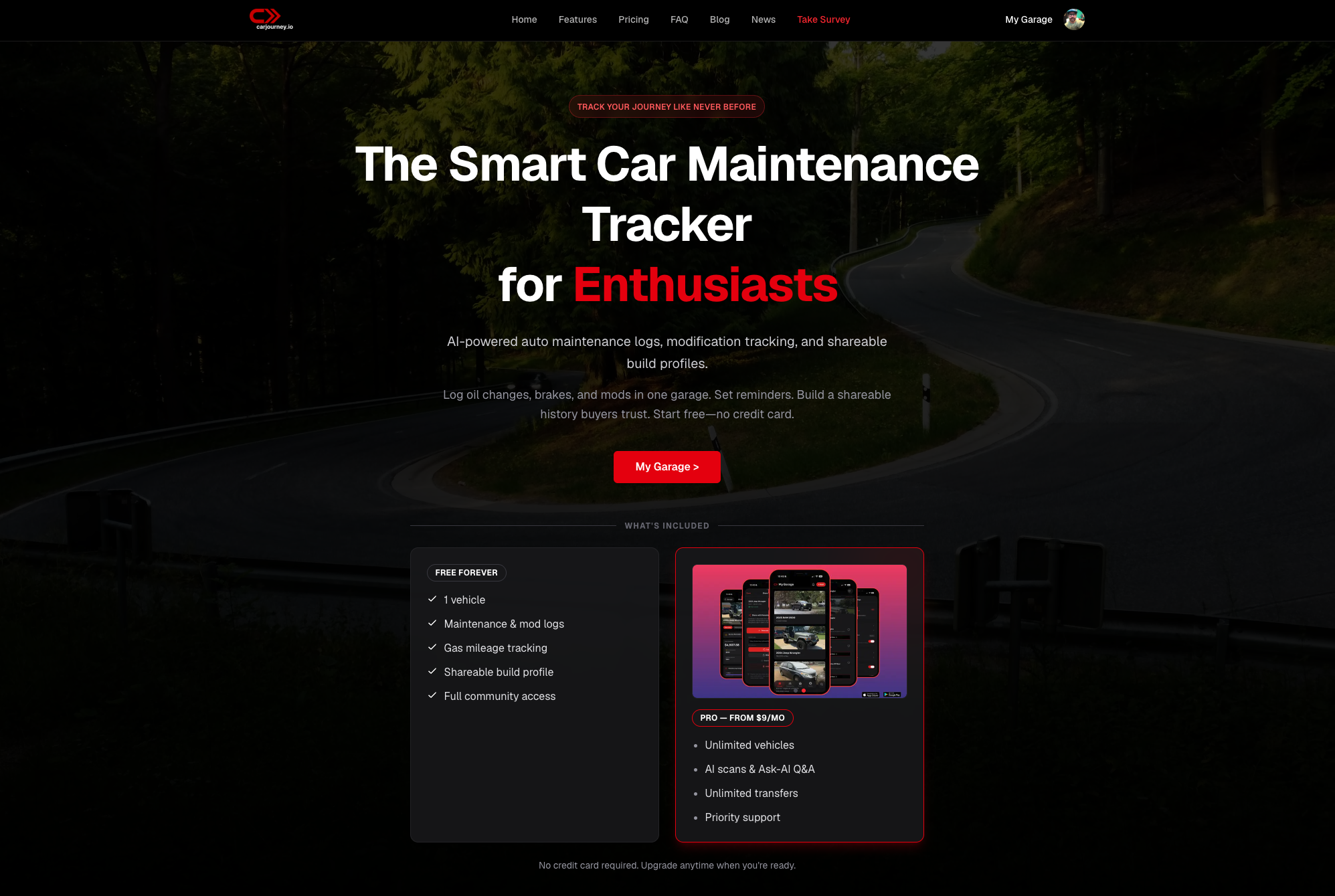
Whether you drive a 2015 Ford F-150 or a 2023 Chevrolet Bolt, Carjourney organizes your records chronologically, flags upcoming maintenance, and gives you a single link to share with any buyer. No more glove box chaos. No more lost receipts costing you thousands at resale. The team at Carjourney, based in Virginia and built by gearheads who have sold their own vehicles, designed the tool around the exact problem this article covers. Start building your verified service history today and walk into your next sale with confidence.
FAQ
Does disclosing service records really increase sale price?
Yes. A full service history adds 10–25% to resale value compared to vehicles with partial or missing documentation. That difference reflects the reduced risk buyers perceive when maintenance is proven.
What records should i include when selling my car?
Include your service book or digital log, garage invoices, inspection certificates, recall completion records, and receipts for recent major work like brakes or tires. Chronological order with a summary page makes the strongest impression.
Are digital service records accepted by dealers?
Yes. Most manufacturers and franchised dealers accept digital service records, and digital records simplify appraisals by giving appraisers instant, verifiable proof of maintenance status.
How do i share service records without exposing personal data?
Redact your name, address, and contact details from invoices before sharing. Keep service dates, mileage, work performed, and garage details visible. Dealers use this same approach routinely.
Do service records matter for electric vehicles?
They matter more for EVs than for most gas vehicles. Digital records for EVs include battery health checks and software update logs, which are the primary data points buyers of Tesla, Rivian, or Chevrolet Bolt vehicles use to assess long-term reliability.