 carjourney
From the CarJourney journal
Types of Car Warranties: What Buyers Need to Know

The main types of car warranties are bumper-to-bumper (comprehensive), powertrain, corrosion/perforation, emissions, hybrid/EV battery, restraint systems, and roadside assistance coverage — all typically included with a new vehicle purchase. Separately, you can buy a vehicle service contract (VSC), often marketed as an “extended warranty,” which kicks in after factory coverage ends. Most new cars come with at least a 3-year/36,000-mile bumper-to-bumper warranty and a 5-year/60,000-mile powertrain warranty, though some brands like Hyundai, Kia, Genesis, and Mitsubishi stretch powertrain coverage to 10 years or 100,000 miles.
The FTC draws a clear line between factory warranties and VSCs: factory warranties are legal promises from the manufacturer, while VSCs are separate contracts with their own terms, exclusions, and cancellation rules. The EPA adds another layer, requiring manufacturers to back certain emissions components for up to 8 years or 80,000 miles under federal rules. Knowing which type applies to your car, and what it actually covers, is the difference between a smooth claim and an expensive surprise.
- Bumper-to-bumper: Covers nearly everything except wear items; typically 3 yr/36,000 mi
- Powertrain: Engine, transmission, drivetrain; typically 5 yr/60,000 mi or longer
- Corrosion/perforation: Rust and sheet-metal perforation; duration varies by brand
- Emissions: Federally mandated; up to 8 yr/80,000 mi for major components
- Hybrid/EV battery: Separate battery pack warranty; often 8 yr/100,000 mi by federal rule
- Restraint systems: Airbags, seat belts; often covered for the life of the vehicle or a long term
- Roadside assistance: Towing, tire changes; usually matches bumper-to-bumper duration
- VSCs (extended warranties): Separate purchase; $900–$2,000 annually depending on coverage
Table of Contents
- What is a car warranty and who actually provides it?
- How do combined time and mileage warranty limits work?
- What does each warranty type actually cover?
- What do warranties cover, and what do they almost always exclude?
- Extended warranties and VSCs: what do they cost and are they worth it?
- Transferability, second-owner coverage, and CPO warranties
- How do you file a warranty claim?
- Should you buy an extended warranty? A practical checklist
- Keep your warranty records and service history organized
- Key Takeaways
- The extended warranty decision is simpler than dealers make it seem
- Carjourney keeps your warranty evidence where you need it
- Authoritative sources for warranty rules and guidance
What is a car warranty and who actually provides it?
A warranty is a written promise from a vehicle manufacturer to repair or replace specific components that fail due to defects in materials or workmanship. It comes included in the purchase price of a new car. A vehicle service contract (VSC) is something different: a separate, optional contract you buy from a manufacturer, dealer, or third-party company to cover repair costs, usually after the factory warranty expires.
The practical difference matters more than the legal one. Factory warranties carry federal protections under the Magnuson-Moss Warranty Act, which sets minimum standards for how manufacturers must honor written warranties. VSCs are governed by contract law, not warranty law, which means the terms, cancellation policies, and arbitration clauses are whatever the contract says they are. Reading the fine print on a VSC is not optional.
The FTC is direct on this point: “A service contract is sometimes called an ‘extended warranty,’ but service contracts are not warranties under federal law.” Dealers often present VSCs late in the sale process when buyers are fatigued — the FTC recommends pausing the decision and comparing the contract terms to your existing factory coverage before signing.
Who sells what: manufacturers and their authorized dealers issue factory warranties. VSCs are sold by manufacturers (through dealers), independent dealers, and third-party companies. Some insurers also sell mechanical breakdown insurance (MBI) as a policy-based alternative. Each source carries different accountability, so checking provider reputation before buying a VSC is worth the time.
Pro Tip: Before buying any VSC, check the contract start date. If it starts the day you buy the car, you may be paying for coverage that duplicates your factory warranty for years — money wasted on overlap.
How do combined time and mileage warranty limits work?
A “4-year/50,000-mile” warranty ends when either limit is reached, whichever comes first. That’s the rule, and it catches a lot of owners off guard. Drive 50,000 miles in three years? The warranty ends at mile 50,000, not at year four. Keep the car for five years but only put 30,000 miles on it? The warranty ends at year four regardless of the low mileage.
Two quick examples make this concrete:
- You buy a car with a 3-year/36,000-mile bumper-to-bumper warranty. You commute 15,000 miles a year. You hit 36,000 miles in about 2.5 years. Coverage ends then, not at the 3-year mark.
- You buy the same car but drive only 8,000 miles a year. At year three, you’ve put on 24,000 miles. The warranty expires at year three, even though you have 12,000 miles of “room” left.
Common factory warranty combinations in the U.S. market:
- 3 yr/36,000 mi: Standard bumper-to-bumper for most major brands
- 4 yr/50,000 mi: Bumper-to-bumper for some brands (Ford, Lincoln, others)
- 5 yr/60,000 mi: Standard powertrain for most brands
- 10 yr/100,000 mi: Powertrain for Hyundai, Kia, Genesis, and Mitsubishi
For managing warranty expiration against your actual mileage, tracking your odometer consistently matters more than most owners realize.
High-mileage drivers burn through time-based coverage fast and should prioritize powertrain duration over bumper-to-bumper breadth when comparing vehicles. Low-mileage drivers often let time expire before mileage, which means a longer-year warranty is worth more to them than a higher-mileage cap. Lessees typically return vehicles well within both limits, so factory coverage usually covers the entire lease term without a VSC.
Pro Tip: Log your odometer reading every time you get an oil change. That single habit gives you a running estimate of when each warranty layer expires, so you’re never caught off guard by a repair that falls just outside coverage.

What does each warranty type actually cover?
Understanding each warranty type by name is one thing. Knowing what it means for your specific repair bill is another.
Bumper-to-bumper (comprehensive) warranty
This is the broadest factory coverage. Rather than listing everything it covers, the contract lists a short set of exclusions. Everything else is in. A power window failure, a buggy infotainment screen, a faulty sensor — all covered. Routine maintenance, brake pads, tires, and wear items are not. Most automakers provide at least 3 years or 36,000 miles; some offer 4 years or 50,000 miles.
Powertrain warranty
Covers the components that move the car: engine block, cylinder heads, pistons, crankshaft, oil pump, transmission housing, gears, torque converter, drive axles, driveshafts, and differentials. Four-wheel-drive and all-wheel-drive vehicles also get the transfer case. On EVs, it covers the electric motors. Most automakers offer powertrain coverage lasting several years or moderate mileage; some brands provide extended multi-year, high mileage warranties. Electronics, comfort features, and infotainment are not included.

Corrosion and perforation warranty
Covers rust damage to sheet-metal body panels. There’s an important distinction: perforation (rust that eats through the metal) is covered; surface rust caused by environmental factors like road salt or flooding typically is not. Duration varies widely by manufacturer, but often lasts multiple years for perforation coverage.
Emissions warranty
Federally mandated. The EPA requires manufacturers to guarantee that a vehicle’s emissions system will function as designed. Basic emissions components carry a 2-year/24,000-mile warranty. Major components — the catalytic converter, electronic emissions control unit, and onboard emissions diagnostic computer — are covered for up to 8 years or 80,000 miles under federal rules. This coverage applies regardless of what the rest of the factory warranty says.
Hybrid and EV battery warranty
The large battery pack that powers an EV or hybrid’s electric motor has its own warranty, separate from the powertrain coverage. Federal regulations require EV and plug-in hybrid battery warranties of at least several years and substantial mileage for vehicles sold in California-emissions states. Many manufacturers match or exceed this nationally. Degradation coverage (how much capacity loss is acceptable before the warranty kicks in) varies by brand, so check the specific threshold.
Restraint systems warranty
Airbags, seat belts, and related safety components are typically covered for longer than the standard bumper-to-bumper term. Some manufacturers cover these for the life of the vehicle or for a very long fixed period. This coverage rarely comes up in claims but matters significantly if a sensor or pretensioner fails outside the bumper-to-bumper window.
Roadside assistance and limited warranties
Roadside assistance (towing, flat tire help, lockout service) usually runs concurrent with the bumper-to-bumper warranty. Tire and wheel warranties, glass coverage, and satellite/navigation warranties are often add-ons or separate limited warranties with their own terms. These are worth checking individually because they are easy to overlook.
| Warranty Type | Typical Coverage Scope | Common Duration | Who Issues It |
|---|---|---|---|
| Bumper-to-bumper | Nearly all components except exclusions | 3 yr/36,000 mi or 4 yr/50,000 mi | Manufacturer |
| Powertrain | Engine, transmission, drivetrain | 5 yr/60,000 mi to 10 yr/100,000 mi | Manufacturer |
| Corrosion/perforation | Sheet-metal rust perforation | 3–5 years (varies) | Manufacturer |
| Emissions | Emissions system components | 2 yr/24,000 mi; major parts 8 yr/80,000 mi | Manufacturer (federally required) |
| Hybrid/EV battery | Battery pack and related components | 8 yr/100,000 mi (federal minimum) | Manufacturer |
| Restraint systems | Airbags, seat belts | Often longer than bumper-to-bumper | Manufacturer |
| Roadside assistance | Towing, flat tires, lockouts | Matches bumper-to-bumper | Manufacturer |
| VSC (extended warranty) | Varies by plan tier | Purchased separately | Manufacturer, dealer, or third party |
Emissions coverage callout: Federal rules protect major emissions components — including the catalytic converter and onboard diagnostic computer — for up to 8 years or 80,000 miles. Many owners don’t realize this coverage exists independently of their bumper-to-bumper warranty and can save thousands on a catalytic converter replacement.
What do warranties cover, and what do they almost always exclude?
Factory warranties cover defects in materials and workmanship. That phrase is the key. If a part fails because it was manufactured incorrectly or assembled with a flaw, the warranty pays. If it wears out through normal use, it doesn’t.
Typical inclusions:
- Engine, transmission, and drivetrain components (under powertrain)
- Electrical systems including power windows, sensors, and infotainment (under bumper-to-bumper)
- Heating, ventilation, and air conditioning components
- Suspension and steering hardware
- Seals and gaskets that fail due to manufacturing defects
- Emissions components (federally mandated terms apply)
Standard exclusions:
- Routine maintenance: oil changes, filters, fluid top-offs, spark plugs
- Wear-and-tear items: brake pads, rotors, tires, wiper blades, clutch discs
- Accident damage or collision-related repairs
- Cosmetic damage: paint chips, upholstery, glass (unless a separate warranty applies)
- Modifications or aftermarket parts that cause a failure
- Pre-existing conditions at time of purchase
- Damage from improper maintenance or neglect
Modifications are a specific risk. Installing an aftermarket turbo, lift kit, or tuning module doesn’t automatically void your entire warranty, but the manufacturer can deny a claim if they can show the modification caused or contributed to the failure. The Magnuson-Moss Warranty Act protects you from blanket voiding, but the burden of proof can still fall on you in a dispute.
Missed maintenance is the other common denial trigger. If you skip oil changes and your engine fails, the manufacturer can argue neglect caused the damage. Keeping service records by mileage is your primary defense against that argument.
Pro Tip: Keep every service receipt, even for work done at an independent shop. The manufacturer cannot require you to use their dealership for routine maintenance to keep your warranty valid — that’s also protected under Magnuson-Moss. But you do need proof the maintenance happened.
Extended warranties and VSCs: what do they cost and are they worth it?
What dealers call an “extended warranty” is technically a vehicle service contract under federal law. The distinction matters because VSCs don’t carry the same legal protections as manufacturer warranties. They are separate contracts with their own terms, and those terms vary enormously.
VSC costs typically run $900–$2,000 annually, or roughly $40–$100+ per month depending on coverage level, vehicle age, and mileage. Most require a down payment, and deductibles are common per repair visit. A deductible charged per visit (rather than per part) can work in your favor if multiple issues are addressed in one appointment.
Coverage tiers for VSCs generally break down into three levels:
- Powertrain-only: Engine, transmission, drive axle. The most affordable tier, but narrow.
- Mid-tier: Adds electrical systems, air conditioning, cooling, and steering.
- Exclusionary (bumper-to-bumper style): Covers nearly everything except a short exclusions list. Most expensive, closest to factory coverage.
Some insurers offer mechanical breakdown insurance (MBI) as a policy-based alternative to dealer-sold VSCs. MBI can integrate with an existing auto insurance policy and may offer more flexibility on repair shop choice.
| Pros of VSCs | Cons of VSCs |
|---|---|
| Predictable monthly cost for repairs | High markups common; some contracts overpriced |
| Can cover expensive powertrain or electrical failures | Exclusions and waiting periods reduce value |
| Transferable to a new owner in some contracts | Network restrictions limit repair shop choice |
| Peace of mind for high-mileage or older vehicles | May overlap with existing factory coverage |
| Some plans include roadside assistance | Cancellation fees can be significant |
Essential questions to ask before buying a VSC:
- When does coverage actually start — day of purchase or after a waiting period?
- What is the deductible, and is it per visit or per repair item?
- Which repair shops are authorized, and can you use your own mechanic?
- What is the cancellation policy, and is any portion of the premium refundable?
- Is the contract transferable to a new owner, and is there a transfer fee?
- Who administers the contract — the dealer, the manufacturer, or a third party?
Pro Tip: The FTC advises comparing the specific contract terms of any VSC against your remaining factory coverage before signing. A VSC that starts the day you buy a new car and runs for five years is largely redundant for the first three — you’re paying for coverage you already have.
Transferability, second-owner coverage, and CPO warranties
Factory warranties typically transfer automatically to a subsequent owner for the remainder of the original term. If you buy a used car with 18 months and 15,000 miles left on a bumper-to-bumper warranty, that coverage is generally yours. Some manufacturers charge a small transfer fee or require notification within a set window, so verify the specific brand’s policy.
VSCs are more variable. Some transfer with a fee; others are non-transferable. A transferable VSC can add real negotiating leverage when selling a vehicle, since the buyer inherits protection they didn’t have to purchase separately.
Certified Pre-Owned (CPO) warranties are a different category. A CPO vehicle has passed a manufacturer-specific inspection, been reconditioned to the automaker’s standards, and must fall within specific age, mileage, and condition limits to qualify. The CPO warranty is typically a manufacturer-backed extension of the original factory coverage, not a third-party VSC. That distinction matters for claim reliability.
When buying a used car with warranty coverage, verify:
- The original warranty start date and the current expiration date (both time and mileage)
- Whether the warranty is still active based on current odometer reading
- Proof of maintenance history to confirm coverage hasn’t been voided
- Transfer paperwork requirements and any associated fees
- Whether a VSC is transferable and what the remaining term is
A remaining powertrain warranty on a used vehicle has real dollar value. A car with three years left on a 10-year/100,000-mile powertrain warranty is a meaningfully different purchase than the same car without it. Tracking how mileage affects resale value helps you quantify that difference when negotiating.
Numbered checklist for used-car warranty verification:
- Pull the VIN and check the manufacturer’s warranty lookup tool for exact expiration data
- Request the full service history and cross-reference against manufacturer maintenance requirements
- Confirm the warranty is in the seller’s name or has been properly transferred
- Ask for the original window sticker or purchase agreement to verify the original in-service date
- If a VSC is included, read the full contract before closing — not after
How do you file a warranty claim?
Filing a warranty claim is straightforward when you’re prepared. The process breaks down into five steps:
- Verify coverage. Confirm the repair falls within your warranty’s time and mileage limits and that the failure type is covered. Check your warranty booklet or the manufacturer’s online lookup tool.
- Contact the provider. For factory warranties, call the dealership’s service department. For VSCs, call the contract administrator’s number listed in your contract before any work begins.
- Get pre-authorization if required. Many VSCs require pre-authorization before repairs start. Skipping this step is one of the most common reasons claims are denied.
- Choose an authorized repair facility. Factory warranties can be honored at any authorized dealership. VSCs often restrict repairs to a network of approved shops — confirm before dropping the car off.
- Keep all documentation. Request an itemized repair invoice showing parts, labor, and the specific failure. Keep this with your maintenance records permanently.
What the provider will request:
- Proof of ownership (title or registration)
- Maintenance records showing the vehicle was serviced per manufacturer recommendations
- The itemized repair invoice from the shop
- Odometer reading at the time of the repair
Typical claim timelines vary. Dealer-handled factory warranty repairs often move quickly, sometimes same-day for straightforward failures. VSC claims can take longer because the administrator may require an inspection or additional documentation before approving payment.
On claim denials: If a claim is denied, ask for the denial reason in writing. Collect your maintenance records, the repair invoice, and any evidence that the failure was a manufacturing defect rather than neglect. You can escalate to the manufacturer’s customer service line or, for VSCs, to the contract administrator. The FTC’s consumer guidance on auto service contracts outlines your rights if you believe a denial is improper — and your state attorney general’s office handles complaints about VSC providers.
Pro Tip: Take photos of the failed component before any repair begins. A timestamped photo showing the failure condition gives you evidence if the claim is disputed later.
Should you buy an extended warranty? A practical checklist
The honest answer is: it depends on the vehicle, your finances, and how long you plan to keep the car. Here’s a framework for making the call.
Work through these questions first:
- How old is the vehicle, and how many miles does it have?
- What is the reliability history for this specific make and model?
- How long do you plan to own it?
- What is your tolerance for a $3,000–$5,000 unexpected repair bill?
- Is there a gap between your factory coverage expiration and your planned ownership period?
- What are the deductible, exclusions, and authorized shop restrictions in the VSC?
- What is the provider’s reputation? Check the Better Business Bureau and state attorney general complaints.
A simple cost comparison:
Say a VSC costs $1,500 per year. Over three years, that’s $4,500 in premiums plus deductibles. If the vehicle’s reliability record suggests average annual repair costs of $600–$800 after the factory warranty, a dedicated repair savings account funded at $150/month builds to $5,400 over three years — with no exclusions, no network restrictions, and no cancellation fees. For lower-risk vehicles, self-insuring with a car repair fund is often the more cost-effective path.
Red flags that should stop a VSC purchase:
- The contract start date overlaps significantly with your existing factory warranty
- Terms are vague about which components are covered (named-component lists should be specific)
- Cancellation fees are high or the refund policy is unclear
- The provider has significant complaint volume with the BBB or state regulators
- The dealer pressures you to decide at the point of sale without time to review the contract
For EVs and plug-in hybrids, the calculus shifts. Battery replacement costs can run into the tens of thousands of dollars. Targeted coverage for the battery or electric-drive components may be worth more than a broad bumper-to-bumper VSC for a conventional car, because those components carry the highest replacement costs.
Keep your warranty records and service history organized
A warranty claim denied for “lack of maintenance documentation” is one of the most preventable losses a car owner faces. The fix is a consistent record-keeping workflow.
Step-by-step workflow:
- Create a dedicated folder (physical and digital) for each vehicle. Label it with the VIN.
- Scan every service receipt immediately after a visit. A phone photo works; a PDF scan is better.
- Log the odometer reading at every service appointment and save it with the receipt.
- Store warranty documents (original warranty booklet, VSC contract, CPO paperwork) in the same folder.
- Back up digitally to cloud storage (Google Drive, iCloud, or similar) so records survive a lost phone or flooded glove box.
- Note the expiration dates for each warranty layer in a calendar or reminder app so you’re never caught off guard.
Carjourney is built specifically for this workflow. The platform uses AI to scan your service documents, log mileage, and organize your vehicle’s full maintenance history in one place. For owners managing multiple warranty layers or preparing for a claim, a car maintenance tracker that centralizes records is worth using from day one.
What to keep and for how long:
- All service receipts: keep for the life of the vehicle
- Warranty documents and VSC contracts: keep until the contract expires plus two years
- Repair invoices related to warranty claims: keep permanently
- Recall completion notices from NHTSA: keep permanently
Pro Tip: Scan service receipts the same day you get them. Thermal paper receipts fade within months, and a faded receipt is nearly useless in a claim dispute. A clear photo taken in good lighting takes 30 seconds and can save you thousands.
Key Takeaways
Factory warranties and VSCs are fundamentally different contracts, and knowing which type applies to your vehicle determines both what’s covered and what legal protections you have.
| Point | Details |
|---|---|
| Warranty types vary by scope | Bumper-to-bumper, powertrain, emissions, corrosion, EV battery, and roadside each cover distinct components and durations. |
| “Whichever comes first” is the rule | A 4-year/50,000-mile warranty ends at whichever limit you hit first — time or mileage. |
| Emissions coverage runs longer | Federal rules protect major emissions components for up to 8 years or 80,000 miles, independent of the bumper-to-bumper term. |
| VSCs require careful comparison | At $900–$2,000 annually, a VSC must be weighed against a self-funded repair account and the vehicle’s actual reliability record. |
| Carjourney centralizes your records | Carjourney’s AI-powered tracker stores service receipts, logs mileage, and organizes warranty documents to protect your claims. |
The extended warranty decision is simpler than dealers make it seem
The finance office at a dealership is designed to make VSCs feel urgent. You’ve just spent hours negotiating a car price, you’re tired, and someone slides a menu of protection plans across the desk. That moment is exactly when the FTC says you should pause.
Here’s the cleaner way to think about it: a VSC is a bet that your repair costs will exceed the contract price. For most modern vehicles from reliable brands, that bet doesn’t pay off. The math on self-insuring — setting aside $100–$150 a month into a dedicated repair fund — beats a VSC premium for the majority of owners who drive average mileage on a dependable model. The fund has no exclusions, no network restrictions, and no cancellation fees.
The cases where a VSC genuinely makes sense are narrower than dealers suggest. A high-mileage vehicle with a known reliability weakness, a luxury car with expensive electronic systems, or an EV where battery replacement costs are catastrophic — those are the scenarios where targeted coverage earns its price. Even then, the contract terms matter more than the brand name on the brochure. A VSC with a long exclusions list and a restricted repair network isn’t protection; it’s a fee.
The single most useful thing you can do right now: check your factory warranty expiration dates, pull your last three service receipts, and log them somewhere you’ll actually find them. That five-minute task is worth more than any extended warranty decision you’ll make at the dealership.
Carjourney keeps your warranty evidence where you need it
Winning a warranty claim often comes down to one thing: documentation. Carjourney was built by a team of gearheads and engineers in Virginia who got tired of scattered receipts and generic maintenance schedules that ignore your specific vehicle. The platform uses AI to scan your service documents, answer questions about your exact build, and keep your full maintenance history organized in one place.
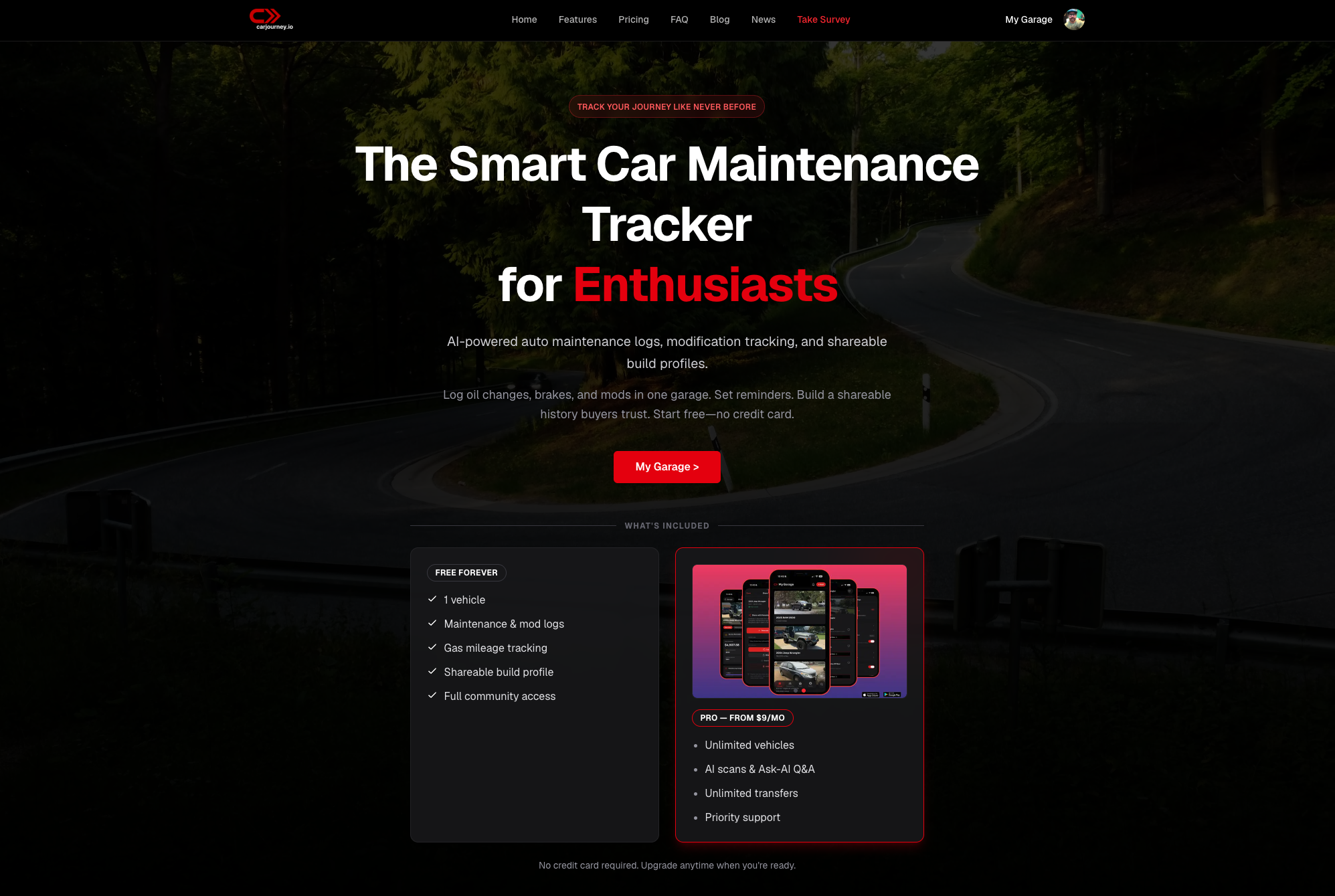
For owners managing overlapping warranty layers — factory bumper-to-bumper, a separate powertrain term, an emissions warranty, and possibly a VSC — Carjourney’s tracker logs every service visit, stores receipts, and flags upcoming mileage milestones before they become claim problems. The Carjourney Pro Lifetime plan gives you permanent access to document storage and AI-powered maintenance insights without a recurring subscription. If you want to start with the free tier and see how it fits your workflow, that’s available too.
Start protecting your warranty evidence at carjourney.io before your next service visit.
This article is general information, not legal or professional advice. Warranty terms vary by manufacturer, contract, and state. Confirm the current rules for your specific vehicle and situation with the manufacturer, your VSC administrator, or a qualified professional.
Authoritative sources for warranty rules and guidance
The following sources provide primary regulatory guidance, manufacturer-level data, and consumer protection information referenced throughout this article.
- U.S. EPA emissions warranty guidance: The primary source for federal emissions warranty requirements, including the 8-year/80,000-mile rule for major emissions components. Essential reading if you’re disputing an emissions-related claim.
- FTC — auto warranties and service contracts: The FTC’s consumer guidance covers the legal distinction between warranties and VSCs, what dealers are required to disclose, and your rights if a claim is denied. Start here before buying any VSC.
- NHTSA recalls database: Recall information is separate from warranty coverage but directly affects repair decisions. A recall repair is free regardless of warranty status.
- Kelley Blue Book warranty guide: Practical consumer-facing explanations of warranty types, duration examples, and cost/value analysis for extended warranties. Useful for comparing coverage across brands.
- Consumer Reports car warranty guide: Detailed breakdowns of each warranty type by coverage scope and duration, with brand-specific examples. Strong source for bumper-to-bumper and powertrain specifics.
- Progressive — mechanical breakdown insurance: Explains MBI as a policy-based alternative to dealer-sold VSCs, including how it integrates with existing auto insurance.