 carjourney
From the CarJourney journal
Does a Vehicle Tracking App Increase Resale Value?
Table of Contents
- Does a Vehicle Tracking App Increase Resale Value? The Short Answer
- How Vehicle Tracking Apps Build a Verifiable Service History
- How to Document Car Service History for Resale: What Buyers Actually Check
- The Impact of Vehicle Modifications on Resale Value: Track What Matters
- Hardware Trackers vs. a Digital Garage for Car Enthusiasts
- Cost-Benefit Analysis: Subscription Fees vs. Resale Gains
- Common Mistakes That Kill Resale Value (And What to Ignore)
- Final Verdict: Is a Tracking App Worth It for Your Car's Resale Value?
- Frequently Asked Questions
Last Updated: September 7, 2026
Does a Vehicle Tracking App Increase Resale Value? The Short Answer
Yes, a dedicated vehicle tracking app can increase your car's resale value, but not in the way most guides suggest. The device itself doesn't add a dollar to your asking price. What adds value is the verifiable, organized documentation of care that a tracking app enables you to build over time. Proper maintenance documentation is estimated to increase a vehicle's resale value by 15-25%, according to Rastrac's fleet resale analysis.
The broader market context supports this trend. The vehicle tracking system market is projected to reach $35.4 billion by 2026, growing at a 13.9% compound annual rate as owners shift from simple theft prevention toward comprehensive asset management (Grand View Research market report). That growth reflects a fundamental change in what tracking technology can do. Modern apps don't just show where your car is; they document its entire life story.
How Vehicle Tracking Apps Build a Verifiable Service History
A vehicle tracking app is a digital tool that records location, driving behavior, and service milestones to create an auditable record of how a car was used and maintained. The core value for resale lies in the data trail, not the live map.
GPS trackers provide granular data on speed, idling, braking, and acceleration, which helps in monitoring vehicle health and usage patterns (Quartix savings analysis). When you combine that driving data with logged oil changes, tire rotations, and repair receipts, you create something rare: a complete, timestamped history that survives the "trust me" problem.
A common mistake is assuming a clean Carfax report is enough. Carfax only captures what shops report. DIY oil changes, fluid flushes, and aftermarket part installations rarely appear. A tracking app that lets you log those services fills the gaps.
Key Takeaway The resale premium comes from documentation depth. A buyer who sees every service logged with dates and mileage trusts the car more than one with an incomplete paper trail.How to Document Car Service History for Resale: What Buyers Actually Check
Buyers check three things when evaluating a used car's service history: consistency of oil changes, evidence of major maintenance, and whether the mileage matches the records. If any of these raise questions, they either walk away or negotiate hard.
Knowing how to document car service history for resale means capturing dates, odometer readings, and the specific work performed. A digital log that timestamps each entry and ties it to your VIN carries more weight than a shoebox of faded paper.
The most convincing documentation includes:
- Oil and filter changes with mileage intervals
- Tire rotations and replacement dates
- Brake pad and rotor service records
- Fluid flushes (coolant, transmission, brake)
- Any diagnostic trouble codes and their resolutions
Quicken's 2026 guide to digital asset records categorizes digital vehicle record management as a best practice for maintaining asset value, noting that organized service history is critical when proving a vehicle's condition to a future buyer.
Pro Tip Photograph every receipt and log the odometer reading at the moment of service. Digital records with matching mileage and dates are nearly impossible for buyers to dismiss as fabricated.The Impact of Vehicle Modifications on Resale Value: Track What Matters
The impact of vehicle modifications on resale value is more nuanced than "mods lower value." Some upgrades help, many hurt, and all of them raise questions if undocumented.
Performance modifications like engine tunes, suspension changes, and exhaust swaps typically reduce resale value because buyers worry about reliability and insurance complications. Conversely, documented maintenance upgrades like new brakes, fresh tires, and quality shocks can support a higher asking price.
The key is documentation. An undocumentated aftermarket intake makes buyers suspicious. The same intake with a log showing installation date, mileage, and the shop that performed the work tells a story of an enthusiast who cared. Modern platforms are moving beyond simple location tracking to include service milestone management and build history, reflecting this shift (Bouncie and CarJourney 2026 platform context).
Hardware Trackers vs. a Digital Garage for Car Enthusiasts
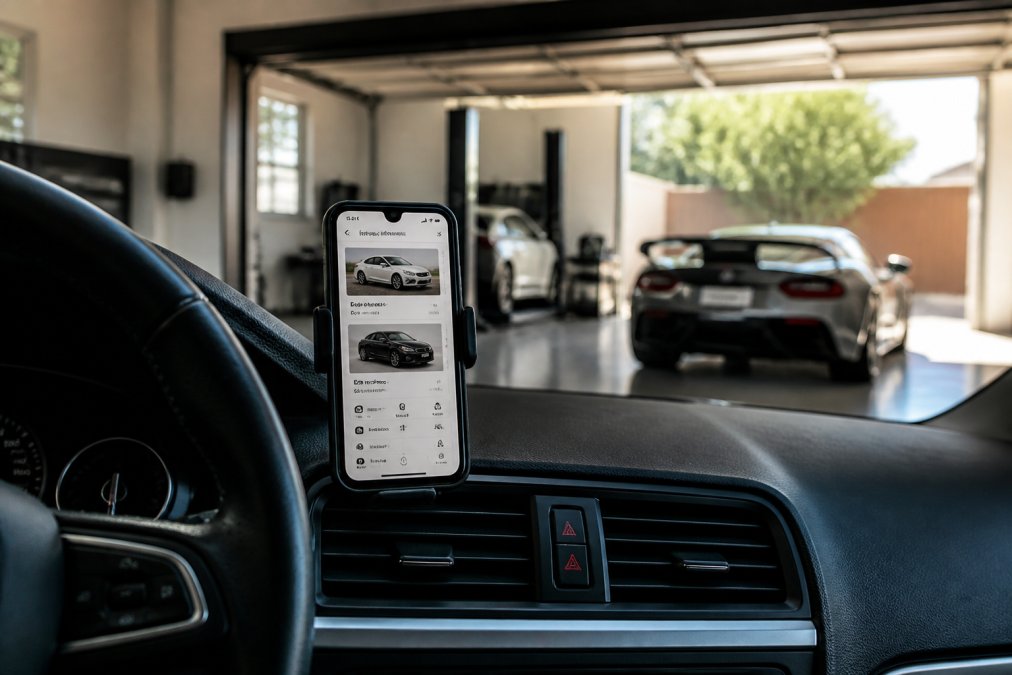
The market separates into two distinct product categories. A hardware tracker is a telematics device that reports location and driving behavior. A digital garage is a record-keeping platform that documents service history and modifications. For resale value, the second matters far more, but the hardware decision is not as simple as 'skip it.'
The hardware reality: network sunsets and installation marks.
If you do choose a hardware tracker, the single most important factor for long-term value is cellular network compatibility. The 3G shutdown in 2022 rendered countless standalone trackers useless overnight, and the ongoing 4G sunset is already underway as carriers reallocate spectrum for 5G. A tracker purchased today on a 4G-only radio will likely have a shorter functional life than the car it is installed in. Before buying any OBD-II or hardwired device, verify that the manufacturer commits to 5G-band compatibility or offers a free hardware upgrade path when the network sunsets. Most budget brands do not, which means you are buying a disposable device with a recurring subscription.
Installation method also leaves a trace. Hardwired trackers that tap into the fuse box or the OBD-II port can leave behind clipped wires, tap marks, or a permanently occupied diagnostic port. A careful buyer or a pre-purchase inspector will notice these signs and may assume the car was used for commercial fleet duty or aggressive driving, two assumptions that directly lower your asking price. If you must install hardware, use a plug-and-play OBD-II device that leaves no permanent trace, and remove it before listing the car for sale.
What a hardware tracker cannot do for resale.
Even the best hardware tracker generates data that is not structured for a buyer. A log of GPS breadcrumbs, hard-braking events, and idle time does not translate into a compelling sales narrative. Buyers ask 'when was the last oil change, and can you prove it?' A hardware tracker cannot timestamp a receipt, log a fluid flush, or document a suspension upgrade.
The digital garage advantage: structured, shareable, VIN-linked records.
A digital garage for car enthusiasts solves the documentation problem without hardware. VIN-based setup automatically populates your vehicle's make, model, year, and engine configuration. You log services and modifications as they happen, attaching photos of receipts and odometer readings. The output is a clean, chronological build profile that you can share as a link or a PDF during a private sale.
The resale premium comes from verifiable, structured history, not from raw telemetry. A buyer who sees a digital garage profile with every oil change logged at 5,000-mile intervals and every modification tied to a date and mileage figure is looking at proof of stewardship.
Key Takeaway Choose a digital garage for resale documentation. If you also want theft recovery, add a plug-and-play OBD-II tracker, but remove it before sale and verify its network compatibility will outlast your ownership period.| Approach | Primary Function | Resale Impact | Recurring Cost | Network Risk |
|---|---|---|---|---|
| OBD-II hardware tracker | Live location, driving behavior | Indirect (maintenance alerts) | $10-$35/month per asset | 4G sunset within 5-7 years |
| Hardwired GPS tracker | Theft recovery, fleet management | Negative if installation marks remain | $15-$40/month + installation | 4G sunset within 5-7 years |
| Portable GPS tracker | Theft recovery, location | Minimal | Device + $20-$30/month | 4G sunset within 5-7 years |
| Digital maintenance garage | Service history, build log | Direct (documentation premium) | Varies by platform | None, data is cloud-based |
Cost-Benefit Analysis: Subscription Fees vs. Resale Gains
Vehicle tracking plans typically range from $10 to $35 per asset per month, according to Hapn's 2026 GPS tracker cost analysis. That translates to $240 to $360 per vehicle per year. Over five years of ownership, you are looking at $1,200 to $1,800 in subscription costs. But that math only makes sense if you are comparing the wrong things.
The documentation premium only materializes under three conditions.
First, the records must be complete and consistent. A platform that logs an oil change in January and then goes silent for 14 months produces a history with gaps, raising the same red flags as a missing service booklet. The premium only applies when the log is uninterrupted from purchase to sale.
Second, the records must be transferable. Most tracking apps tie data to your account, not to the vehicle. If the data disappears when you cancel the subscription, the buyer has no ongoing proof, and the premium evaporates. Look for platforms that allow you to export a PDF or share a permanent link tied to the VIN.
Third, the buyer must be able to verify the records independently. Receipts photographed at the moment of service, odometer readings logged in real time, and diagnostic trouble codes with their resolution dates create a chain of evidence a skeptical buyer cannot easily dismiss.
The break-even math on a realistic scenario.
Consider a $22,000 used car, the median transaction price for a used vehicle in recent years. The 15-25% documentation premium cited in resale analyses translates to $3,300 to $5,500 in retained value, but that premium assumes the documentation is complete, transferable, and verifiable. If your platform costs $15 per month, you spend $900 over five years. The net gain is still $2,400 to $4,600, provided you actually maintained the log.
Now consider the same car with a $30-per-month theft-tracking subscription and no documentation log. You spend $1,800 over five years, and at sale time you have nothing to show the buyer except a clean Carfax. That is the difference between spending on telemetry and investing in documentation.
Where the math breaks down.
Idling can be decreased by up to 30% using tracking data, which also cuts fuel costs and engine wear over the ownership period (Quartix savings potential analysis). But those savings accrue to the current owner, not the next one. A buyer does not pay more because you saved on fuel, they pay more because they trust the maintenance record.
The calculation also changes for low-value vehicles. On a car worth less than $8,000, the documentation premium is unlikely to exceed $1,200 to $2,000, barely covering the subscription cost over five years. The premium only justifies the cost on vehicles priced above $10,000 where a $1,500 undocumented repair could wipe out the savings.
Watch Out Do not confuse a theft-recovery subscription with a documentation investment. One protects you while you own the car; the other pays you when you sell it. Only the latter belongs in a resale-value calculation.The bottom line on cost.
A $10-15 monthly platform that logs maintenance, tracks modifications, and generates a shareable history report delivers measurable return at sale time, but only if you use it consistently for the entire ownership period. A $30 monthly theft-tracking subscription rarely pays for itself on a daily driver, and it never contributes to resale documentation. The decision is not about the monthly fee; it is about whether the platform produces evidence a buyer will pay for.
Common Mistakes That Kill Resale Value (And What to Ignore)
The most damaging mistake is inconsistency. Logging an oil change in January and then going silent for 18 months tells buyers you stopped caring, raising the same red flags as a gap in a service booklet.
Another error is relying solely on the dealer or shop to keep records. Independent shops change systems, close down, or lose data. If you do not maintain your own records, your car's history can vanish with a single business failure.
Ignore the pressure to install a permanent hardwired tracker purely for theft deterrence. The immobilization and tamper-alert features are valuable, but they do not contribute to resale documentation and can leave marks a careful buyer will question.
What matters most is the verifiable story. A buyer who sees consistent, timestamped maintenance records and documented modifications understands the car was owned by someone who cared, translating directly into a higher offer and a faster sale.
Final Verdict: Is a Tracking App Worth It for Your Car's Resale Value?
The verdict depends entirely on which type of tracking you choose. A hardware tracker focused solely on location will not move your resale price. A platform that documents service history, tracks modifications, and generates a shareable report absolutely can.
The vehicle tracking market's growth toward AI-powered maintenance and history tracking confirms where the industry is heading. Buyers increasingly expect verifiable digital records, and sellers who provide them capture the premium.
CarJourney offers a digital garage where you log every service and modification, with VIN-based setup and shareable build profiles that prove vehicle care to buyers. Start free and build the documentation that turns your car's history into its strongest selling point.
Frequently Asked Questions
Does a GPS tracker increase the resale value of a used car?
A GPS tracker alone does not directly increase resale value, but the documented service history it enables can. Proper maintenance documentation is estimated to boost a vehicle's resale value by 15-25%. A vehicle tracking app that logs service milestones and usage data provides verifiable proof of care, which builds buyer trust and supports a higher asking price.
What documentation do buyers look for when purchasing a used vehicle?
Buyers look for a complete service history showing routine maintenance like oil changes and tire rotations, repair records, and proof of mileage accuracy. A digital garage that organizes receipts and logs service dates by VIN makes this documentation easy to share. Buyers also value records of vehicle condition and any modifications, since undocumented changes raise concerns about wear and reliability.
Can a vehicle tracking app help prove a car's service history?
Yes. A vehicle tracking app with maintenance logging features records service milestones as they happen, creating a timestamped history tied to your VIN. This provides more credible proof than a folder of paper receipts because it shows consistent, time-based care. When selling, you can share this organized history to demonstrate the car was maintained properly.
Is a GPS tracker worth it for resale value compared to a maintenance log?
A GPS tracker focused only on location adds little resale value. What matters is documented maintenance. A maintenance log or digital garage that tracks service history and modifications gives buyers the verifiable proof they want. If you choose a tracking device, select one that logs maintenance alerts and vehicle health data, not just position.
Getting top dollar for your car comes down to proving you maintained it. A scattered pile of receipts rarely convinces anyone. CarJourney organizes your service milestones, gas mileage, and build upgrades into one trusted history you can share instantly. Start free and give buyers the confidence they need to pay your asking price.
Start free