
Digital Garage vs Paper Records
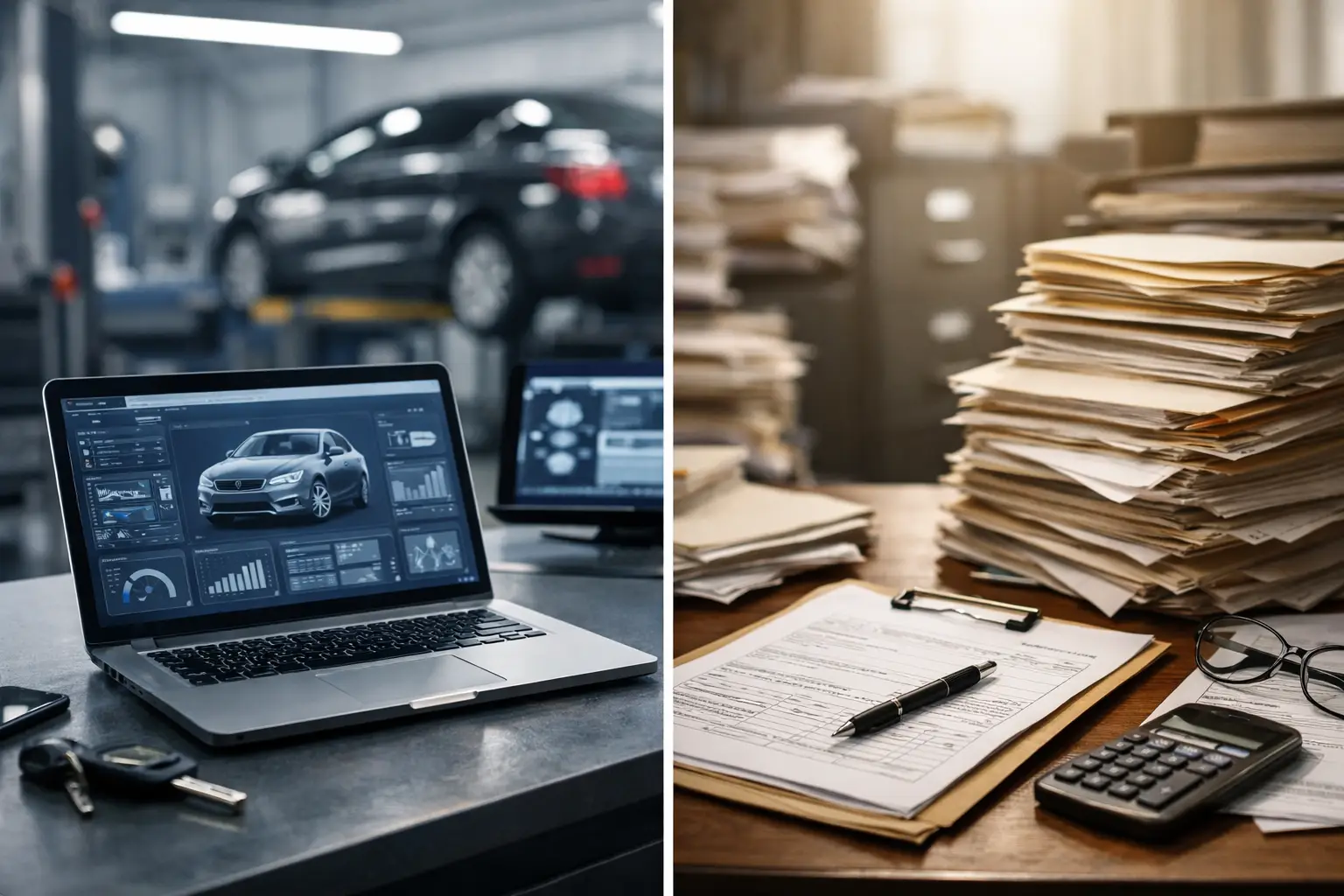
You find an old receipt for brake pads in the glovebox, a tire invoice in the kitchen drawer, and the warranty card for your coilovers... somewhere. That mess is exactly why the digital garage vs paper records question matters to serious car owners. If you care about maintenance, mods, resale value, and having a clear history for every vehicle you own, the way you keep records affects more than convenience.
Paper records still have value. A folder full of dated invoices can reassure a buyer, and some owners simply like having a physical trail. But once your car has years of services, part swaps, alignment sheets, inspection reports, and warranty documents, paper starts showing its limits fast.
A digital garage gives you one place to track the life of a vehicle. Not just oil changes and tire rotations, but modification history, costs, mileage, photos, receipts, reminders, and notes that actually stay connected to the car. For enthusiasts, that difference is huge.
Digital garage vs paper records: what really changes?
At a basic level, both systems try to answer the same question: what happened to this car, when, and why? The difference is how easy that answer is to find, trust, and share.
Paper records are familiar. You can hold them, file them, and hand them over. They work fine when you are disciplined, your collection is small, and your storage system is consistent. If you own one daily driver and keep a neat folder in a cabinet, paper may feel good enough.
The problem shows up over time. Cars are not static assets. Mileage increases, service intervals stack up, parts get replaced, mods evolve, and ownership goals change. A project car that starts with a simple maintenance folder can turn into years of receipts, tuning notes, install dates, before-and-after photos, and part numbers. Paper rarely scales well once the car story gets deeper.
Digital records change the experience because they turn scattered information into a usable timeline. Instead of remembering where you put the invoice, you search by service, date, mileage, or vehicle. Instead of guessing when the spark plugs were last done, you see the exact entry. Instead of trying to explain your build from memory, you have a documented history.
Where paper records still make sense
Paper is not obsolete just because digital tools are better for most owners. In some cases, physical documents still carry weight.
Original invoices, title paperwork, signed inspection forms, and warranty documents can be worth keeping in physical form. Some buyers like seeing original dealership paperwork. Some shops still hand out print-only records. If you are restoring a classic car, factory literature, old registrations, and vintage service receipts can add character and provenance in a way a scan cannot fully replace.
There is also a simplicity advantage. Paper never needs a login, an app update, or a battery charge. For owners who hate software and only want a basic service file, that matters.
But paper works best as an archive, not as your active operating system. Once you need reminders, cost tracking, mod history, photo evidence, or quick access across devices, the friction starts to pile up.
The biggest advantage of a digital garage
The real win is control. A digital garage does more than store receipts. It helps you manage ownership.
You can log maintenance as it happens, attach a receipt immediately, note which oil weight you used, track mileage at service, and set the next reminder before you forget. That turns records from passive proof into something that actually helps you prevent missed work.
For enthusiast owners, modification tracking is where digital usually pulls away for good. Paper can prove that you bought a cat-back exhaust or a set of wheels, but it does a poor job of telling the full build story. A digital system can show install dates, brands, costs, photos, notes, and the order in which the car evolved. That is useful for your own planning, and it builds trust when someone else wants to understand the car.
This is why platforms built for vehicle history feel different from generic notes apps or spreadsheets. They are organized around the car, not around random files. That sounds small until you are trying to compare maintenance history across multiple vehicles or figure out what exactly was done before a track day, road trip, or sale.
Resale trust is not just about having records
A lot of owners think any stack of receipts is enough. Sometimes it is. Often it is not.
Buyers do not just want proof that money was spent. They want clarity. They want to know whether maintenance was consistent, whether mods were installed thoughtfully, and whether the owner can explain the car without gaps or guesswork.
A folder of crumpled invoices says, “I kept some stuff.” A clean, chronological record says, “I know this car.” That difference matters, especially for enthusiast vehicles, older performance cars, project builds, and anything with aftermarket parts.
Paper can support trust if it is well organized. The trouble is that many paper systems fall apart right when they matter most. Documents go missing. Dates are hard to follow. Mileage is incomplete. Receipts fade. Notes live in a separate notebook, if they exist at all.
A digital garage gives you a cleaner narrative. Buyers can see what was done, when, and often why. If your records include photos, service intervals, and modification details, you are not just claiming the car was cared for. You are showing it.
The trade-offs nobody mentions enough
Digital is better for most people, but it is not perfect.
A bad digital system can be almost as frustrating as a bad paper one. If the app is cluttered, the setup is annoying, or entries are too hard to make, people stop using it. And if you never log anything consistently, the platform will not magically create history for you.
There is also the issue of data quality. A digital garage is only as trustworthy as what you put into it. If you backfill years of records with vague entries like “engine work” or “suspension stuff,” you lose a lot of the value. Specificity matters whether your records are digital or physical.
Paper has its own risks, of course. Fire, water, fading ink, misplaced folders, and the classic “I know I put that receipt somewhere” problem are all real. Digital systems reduce those risks but replace them with different concerns, like platform reliability and whether your data is easy to access when you need it.
That is why the smartest approach is often not digital only or paper only. It is digital first, with physical copies kept for high-value originals.
Digital garage vs paper records for multi-car owners
If you own more than one vehicle, this comparison gets less close.
Paper records become a sorting exercise almost immediately. One folder per car sounds easy until one of them is a project, another is a daily, and a third is your spouse's SUV that still needs regular maintenance. Then you are dealing with separate calendars, separate intervals, and separate stacks of receipts that all need to stay current.
A digital garage handles that better because the structure already exists. Each vehicle gets its own history, reminders, and document set. You can switch between them without mixing records or losing context. For households with multiple cars, that alone can save a lot of missed services and duplicate purchases.
This is one reason digital platforms tend to stick once people start using them seriously. They remove the mental overhead of staying organized.
What serious enthusiasts should actually do
If your car is more than transportation, paper alone is usually leaving value on the table. You need a system that captures service history, modification details, costs, documents, and photos in one place. That gives you better maintenance discipline now and a better ownership story later.
The practical move is simple. Keep physical originals for titles, major invoices, warranty paperwork, and anything rare or legally important. Then build your active vehicle history in a digital garage where you can log work as it happens, attach documents, and keep the full timeline current.
If you already have years of paper records, you do not need to convert everything overnight. Start with the latest major services, your core mods, and any documents that would matter to a buyer or to your future self. Once the recent history is organized, add older records over time. Even partial digitization is better than a drawer full of fading receipts.
For owners who want one home base for maintenance, mods, reminders, and shareable build history, that is exactly where a platform like CarJourney fits. The point is not to replace your passion with admin work. It is to give your car's history the structure it deserves.
The best recordkeeping system is the one you will actually keep using, but for most enthusiasts, the answer is getting clearer. Paper can preserve a few documents. A digital garage helps preserve the whole car.