 carjourney
From the CarJourney journal
10 Car Repair Myths Every Driver Should Stop Believing
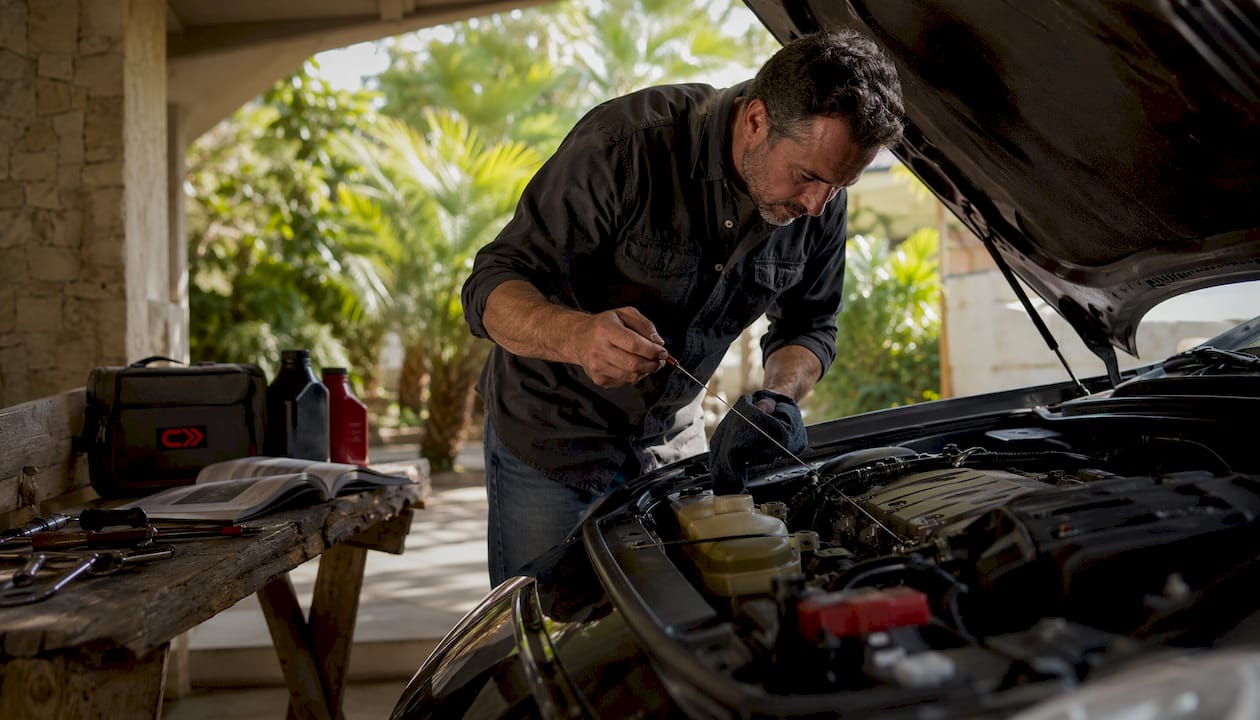
Most of the “rules” you’ve heard about car maintenance are either outdated, oversimplified, or flat-out wrong. AAA research consistently flags several widely repeated car repair myths as misconceptions that cost drivers real money and, in some cases, create genuine safety risks. The fix is straightforward:
- Open your owner’s manual. Manufacturer schedules replace almost every rule of thumb you’ve heard.
- Check your tire tread and brake fluid now. These two items cause more preventable failures than any other overlooked service.
- Get an in-person inspection before authorizing any repair. If a quote came over the phone, treat it as a rough guess, not a price.
Table of Contents
- 1. The 3,000-mile oil change rule is still valid
- 2. You need to warm up your engine for several minutes before driving
- 3. Premium fuel makes every car run better
- 4. Tires are fine until they hit 2/32" tread depth
- 5. Brake fluid never needs replacing
- 6. You must use the dealership or your warranty is void
- 7. Tire rotation is optional
- 8. A battery always gives you warning before it dies
- 9. Blasting the A/C damages your engine or kills fuel economy
- 10. Phone quotes are reliable enough to authorize work
- Why do these auto repair misconceptions keep spreading?
- What the Magnuson-Moss Act actually means for your warranty
- Red flags of a bad mechanic and questions to ask before you say yes
- A practical maintenance checklist (manufacturer-first, always)
- Two safety findings you should act on this week
- Key Takeaways
- Why Carjourney built a tool around this problem
- Useful sources and further reading
1. The 3,000-mile oil change rule is still valid
Myth. This one has been dead for years, but it refuses to stay buried. AAA found that 45% of drivers still believe oil should be changed every 3,000 miles. For most vehicles built in recent years, the actual manufacturer interval is generally longer than every 3,000 miles, and full-synthetic oils in many modern engines can support extended intervals between changes.
The 3,000-mile rule made sense when engines ran conventional oil and tolerances were looser. Today’s engines are tighter, and synthetic formulations hold up far better under heat and stress. Changing oil more often than needed wastes money without adding protection.
Do this instead: Open your glove box, find the owner’s manual, and look up the oil change interval for your specific engine. That number beats any sticker on your windshield.
2. You need to warm up your engine for several minutes before driving
Myth. This advice comes directly from the era of carbureted engines, which genuinely needed time to stabilize fuel delivery in cold weather. Modern fuel-injected engines reach operating temperature faster when you drive gently than when you sit idling in the driveway.
Extended idling wastes fuel, adds unnecessary wear to spark plugs and cylinders, and does nothing useful for a fuel-injected engine. Thirty seconds is enough to let oil circulate before you pull out.

Do this instead: Start the car, give it 30 seconds, then drive at moderate throttle for the first mile or two. The engine warms up faster that way.
3. Premium fuel makes every car run better
Myth. Unless your owner’s manual says “premium required” or “premium recommended,” you are paying extra for zero benefit. Engines are calibrated for a specific octane rating. Pouring higher-octane fuel into an engine designed for regular unleaded does not add power, improve efficiency, or clean anything.
Premium fuel is engineered for high-compression, high-performance engines that would otherwise knock on regular gas. In a standard commuter engine, it just costs more at the pump.
Do this instead: Check the fuel door or owner’s manual for the required octane. If it says 87, use 87.
4. Tires are fine until they hit 2/32" tread depth
Myth, and a safety-critical one. The 2/32" mark is the legal minimum in most U.S. states, not a performance benchmark. AAA research shows wet-weather stopping performance deteriorates significantly at 4/32", well before tires are legally “worn out.” Waiting until 2/32" means you’ve been driving on compromised grip in rain for a while already.
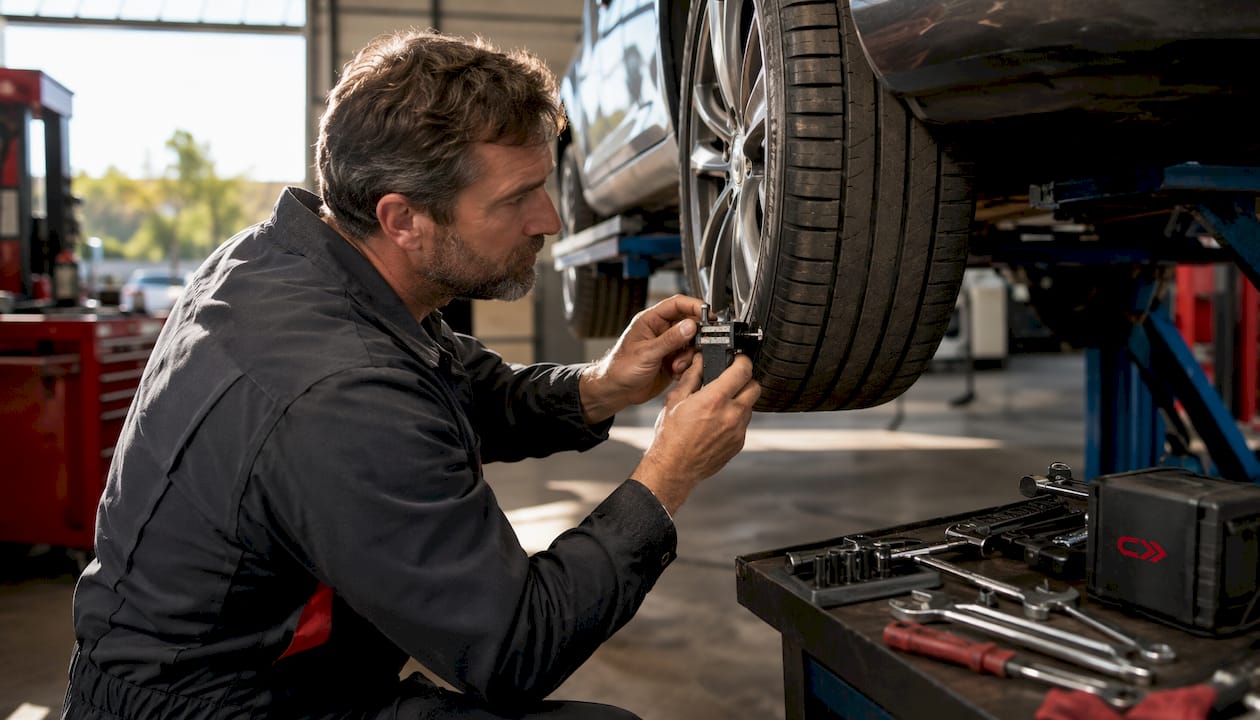
Do this instead: Use a tread-depth gauge or the quarter test (insert a quarter upside down — if you can see the top of Washington’s head, you’re at or below 4/32"). Replace at 4/32" — AAA research demonstrates that wet-weather performance declines noticeably at this depth.
5. Brake fluid never needs replacing
Myth, and one of the most dangerous ones on this list. Brake fluid is hygroscopic, meaning it actively absorbs moisture from the air over time. That absorbed water lowers the fluid’s boiling point and accelerates corrosion inside brake lines and calipers. ASE-certified mechanics at Al’s Automotive call brake-fluid neglect one of the most serious and most overlooked safety oversights they see.
Brakes can feel perfectly normal right up until the fluid is badly degraded. There’s no obvious warning sign until something fails.
Do this instead: Replace brake fluid periodically, typically every few years, or follow your manufacturer’s interval. It’s a low-cost service that protects expensive calipers and, more importantly, your stopping distance.
6. You must use the dealership or your warranty is void
Myth. The Magnuson-Moss Warranty Act protects your right to use any qualified independent repair shop without automatically voiding your manufacturer’s warranty. AAA confirms that consumers can use non-dealer facilities as long as the work meets manufacturer specifications and is properly documented.
Dealers sometimes imply otherwise. They are not required to tell you about Magnuson-Moss.
Do this instead: Use whichever shop you trust. Keep every invoice, note the mileage, and make sure the shop records the parts used. Documentation is your protection.
7. Tire rotation is optional
Myth. Front and rear tires wear at different rates depending on drivetrain layout and driving habits. Skipping rotation creates uneven wear patterns that shorten tire life and can affect handling. Regular rotation extends the usable life of a full set and keeps wear even across all four corners.
Do this instead: Rotate tires regularly, often recommended around your oil-change intervals. Many shops bundle it for free or at low cost.
8. A battery always gives you warning before it dies
Myth. Batteries can test fine at 80% capacity one week and fail to start the car the next cold morning. Cold temperatures and age can cause a battery to fail with little or no warning. Most batteries have a service life of several years, but that varies with climate and usage.
Do this instead: Have your battery load-tested at any auto parts store (usually free) once it hits the 3-year mark. Don’t wait for a no-start to find out it’s gone.
9. Blasting the A/C damages your engine or kills fuel economy
Mostly myth, with nuance. Running the A/C does draw power from the engine, which affects fuel economy at low speeds and during city driving. At highway speeds, the impact is minimal. It does not damage a properly maintained A/C system or engine. The real fuel-economy killer is running A/C with windows down, which creates drag while also taxing the compressor.
Do this instead: At highway speeds, use A/C normally. In stop-and-go traffic, cracking windows and using A/C sparingly saves a bit of fuel. Have the system inspected if it stops cooling efficiently — a refrigerant leak is a real problem, not a myth.
10. Phone quotes are reliable enough to authorize work
Myth. BCAA’s guidance is direct: accurate diagnosis and pricing require a physical inspection or test drive. A shop quoting a brake job over the phone has no idea whether your rotors need resurfacing or replacement, whether a caliper is seized, or whether there’s a secondary issue driving the symptom.
Phone quotes are starting points. They are not prices.
Do this instead: Get the car in front of a technician. Ask for a written, itemized estimate before authorizing anything. If a shop won’t put it in writing, that’s a red flag.
Why do these auto repair misconceptions keep spreading?
Three forces keep bad car advice alive long after it stops being accurate.
Outdated advice that was once correct. The warm-up idling myth and the 3,000-mile oil-change rule were both reasonable guidance for carbureted engines and conventional oils. Automotive technology moved on; the advice didn’t. People who learned these rules on older vehicles passed them down as universal truths.
Upselling incentives. Some shops profit from services that aren’t necessary. Expensive “fuel system flushes,” for example, are often little more than a bottle of fuel-injector cleaner that you can buy yourself for around $10. Maintenance schedules exist to prevent failure, not to generate revenue. The preventive maintenance approach is almost always the lowest-cost path over a vehicle’s life because catching wear early prevents collateral damage.
Complexity of modern vehicles. Today’s cars have dozens of interconnected systems. Most drivers don’t have the time or training to understand all of them, which creates space for misinformation to fill the gap. When something sounds authoritative and comes from a trusted source (a neighbor, a mechanic, a forum), it sticks.
The simple principles that actually matter: follow manufacturer schedules, prioritize safety systems (brakes, tires, fluids), document every service, and get an in-person diagnosis before authorizing any repair over a few hundred dollars.
What the Magnuson-Moss Act actually means for your warranty
The core fact: using an independent repair shop does not automatically void your manufacturer’s warranty. The Magnuson-Moss Warranty Act prohibits manufacturers from requiring consumers to use dealer service as a condition of warranty coverage, unless the manufacturer provides that service for free.
What does matter is documentation. If a warranty dispute arises, you need to show that maintenance was performed on schedule and with appropriate parts. A dealer claiming your warranty is void because you used an independent shop has no legal standing — but only if you have the paperwork to back up your service history.
Checklist for protecting your warranty at an independent shop:
- Ask for a written invoice that includes part numbers, part descriptions, and labor performed.
- Record the mileage at each service visit on the invoice.
- Keep all receipts in a dedicated folder or scan them into a digital record.
- Confirm the shop is using parts that meet OEM specifications (not necessarily OEM brand, but meeting the same standards).
- Follow manufacturer intervals, not shop-suggested intervals that deviate from the manual.
The routine service documentation habit is what protects you, not which shop you chose.
Red flags of a bad mechanic and questions to ask before you say yes
Treat vague phone quotes and refusal to show credentials or a parts warranty as immediate red flags. A trustworthy shop welcomes questions. One that gets defensive when you ask for documentation is telling you something.
Red flags to watch for:
- Estimates given over the phone with no inspection
- Unwillingness to test-drive the vehicle before diagnosing a drivability issue
- No written warranty on parts or labor
- Pressure to approve a long list of “while we’re in there” add-ons during a routine visit
- Cash-only transactions with no paperwork
- Inability or refusal to show ASE certification
Six questions to ask before authorizing any repair:
- Can I see the worn or failed part before you replace it?
- Will the estimate be itemized in writing, with parts and labor listed separately?
- Do you provide photos of the issue before and after the repair?
- What warranty do you offer on parts and labor?
- Are your technicians ASE-certified for this type of work?
- What happens if the repair doesn’t fix the problem?
If work is done incorrectly: You have grounds to demand the shop fulfill the original service agreement or issue a refund. Consumer guidance is clear that shops are contractually obligated to deliver the agreed-upon repair. Do not pay for additional work to “fix” a mistake without written documentation of what went wrong and what the new scope covers.
A practical maintenance checklist (manufacturer-first, always)
Your owner’s manual is the authority. This checklist supplements it for drivers who want a quick reference.
Pro Tip: Carjourney’s maintenance reminder feature lets you set interval-based alerts for every item below, tied to your specific vehicle’s mileage and service history.
Monthly:
- Check tire pressure (use the door-jamb sticker, not the tire sidewall)
- Inspect all exterior lights
- Check engine oil level and color
- Look for fluid spots under the car
Every 3–6 months or at oil-change intervals:
- Rotate tires (every 5,000–7,500 miles)
- Inspect brake pads and rotors visually
- Check coolant level and condition
- Inspect wiper blades and replace if streaking
Annually or per manufacturer schedule:
- Replace cabin air filter (safe DIY)
- Replace engine air filter (safe DIY)
- Test battery load (free at most auto parts stores)
- Inspect belts and hoses
- Check brake fluid age and condition and replace it every 2–3 years to maintain proper safety.
- Inspect A/C operation before summer
Safe DIY: Wiper blades, cabin air filter, engine air filter, tire pressure checks, battery terminal cleaning.
Leave to a pro: Brake jobs, fluid flushes, complex diagnostics, suspension work, anything involving the fuel system beyond a bottle of injector cleaner.
A car maintenance checklist built around your specific vehicle beats any generic schedule.
Two safety findings you should act on this week
Two items stand out from the research because the consequences of ignoring them are immediate and severe.
Tire tread at 4/32": the number that actually matters
The 2/32" legal limit exists to keep dangerously bald tires off the road. It was never meant to be a performance target. At 4/32", wet stopping distances increase enough to matter in an emergency braking situation. Replacing tires at 4/32" is the safety-focused standard that AAA recommends, and it’s the one worth following.
Brake fluid: the safety item mechanics say gets ignored most
Brake fluid absorbs moisture continuously from the moment it’s installed. That moisture lowers the fluid’s boiling point, which means hard braking in demanding conditions (mountain descents, emergency stops) can cause vapor lock. It also corrodes brake lines and caliper internals from the inside out, silently. Al’s Automotive mechanics consistently flag this as the most-overlooked safety service they see. The brake fluid replacement interval of every 2–3 years is a widely recommended schedule for preventing hidden failures due to moisture contamination.
Key Takeaways
Most car repair myths persist because they were once true, and nobody updated the advice. Following your owner’s manual, replacing tires at 4/32", and documenting every service visit are the three habits that protect both your car and your wallet.
| Point | Details |
|---|---|
| Follow the owner’s manual | Manufacturer intervals replace every rule of thumb — oil changes, tire rotation, fluid service. |
| Replace tires at 4/32" | AAA research shows wet-weather performance drops significantly at 4/32", not the 2/32" legal limit. |
| Replace brake fluid every 2–3 years | Brake fluid absorbs moisture over time, degrading performance and corroding internal components. |
| Document independent service | Keep invoices and part numbers to protect your warranty under the Magnuson-Moss Act. |
| Get in-person inspections | Phone quotes are estimates only; accurate pricing requires a physical inspection or test drive. |
Why Carjourney built a tool around this problem
The myths in this article persist partly because most drivers have no reliable system for tracking what’s been done to their car, when it was done, and what’s coming due. Scattered receipts and memory are not a maintenance strategy.
Carjourney was built to close that gap. The app scans your service documents with AI, sets interval-based maintenance reminders tied to your specific vehicle, and gives you AI-powered recommendations verified against your actual build. When a shop hands you an invoice, you can log it immediately. When a warranty question comes up, your service history is already documented. It’s the kind of vehicle maintenance tracking that turns good intentions into an actual record.
Useful sources and further reading
The findings in this article draw from the following primary sources. When in doubt about your specific vehicle, the owner’s manual and NHTSA’s recall database are always the first stops.
- Debunking Common Myths about Car Maintenance — AAA Automotive: AAA’s direct myth-by-myth breakdown covering oil changes, tire tread, brake fluid, and warranty rights.
- Car Myths Busted: What Mechanics Really Want You to Know — Al’s Automotive: ASE-certified mechanic perspective on brake fluid and deferred maintenance risks.
- Six Common Myths and Misconceptions About Auto Maintenance — BCAA: Covers phone-quote reliability and maintenance-schedule purpose.
- Auto Repair Myths: Common Misconceptions Debunked — Bret’s Auto Repair: Preventive maintenance framing and the cost of waiting for failure.
- 5 Costly Car Repair Myths Mechanics Still Push on Drivers — AOL: Consumer guidance on fuel-system upsells and repair contract rights.
- NHTSA Vehicle Safety: Primary source for U.S. safety recalls and vehicle safety standards.
The owner’s manual for your specific vehicle remains the single most authoritative source for maintenance intervals, fluid specifications, and tire requirements. No article, including this one, replaces it.