 carjourney
From the CarJourney journal
How Do You Diagnose Engine Overheating Warning Signs?
Last Updated: October 26, 2026
Quick Summary
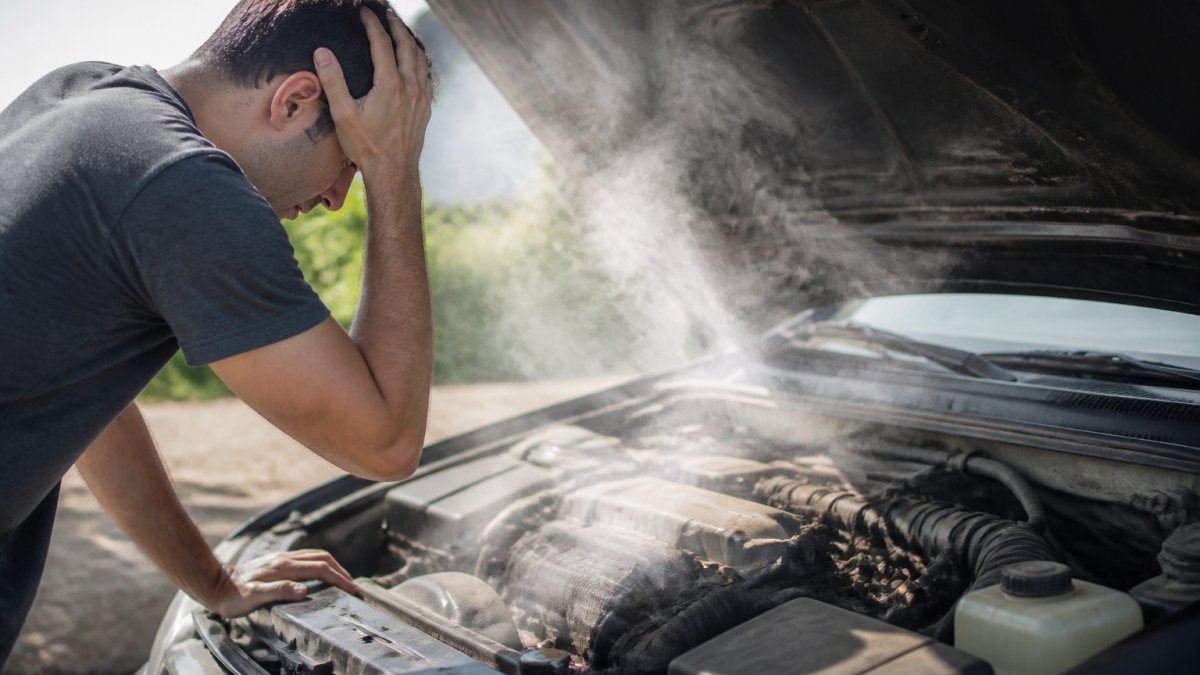
To diagnose engine overheating, start with the temperature gauge, warning lights, and your senses: a needle climbing toward the red zone, a red thermometer light, steam, a sweet syrupy smell, or clicking from the engine bay. Pull over safely, shut off the engine, and let it cool at least 30 minutes before checking the coolant reservoir, leaks, cap, hoses, belt, and fan. Stop at the first step that fails and fix it before moving on.
- Never open the radiator cap or reservoir until the engine has fully cooled, at least 30 to 45 minutes after shutdown.
- A cold heater with a warm engine often means low coolant or a stuck thermostat.
- A crusty white or chalky residue marks a dried coolant leak path.
- If the gauge climbs in stop-and-go traffic but drops on the highway, the fan or airflow is the likely culprit.
- Tow if you see steam, a red warning light that stays on, or a gauge that climbs within minutes.
Table of Contents
- Car Overheating Symptoms You Should Never Ignore
- How to Check Engine Temperature Without a Gauge
- A Safe, Ordered Diagnostic Checklist Before You Touch Anything
- Common Causes of Engine Overheating
- What to Do When Your Car Overheats
- When to Tow Instead of Driving to a Repair Shop
- Log Your Cooling System Repairs in CarJourney
- Frequently Asked Questions
Car Overheating Symptoms You Should Never Ignore
Engine overheating warning signs rarely appear without notice. Most cars give you several clues first, and catching them early is the difference between a cheap fix and a warped cylinder head.
Knowing how to diagnose engine overheating warning signs starts with three things: the temperature gauge, the warning lights, and your own senses. This guide walks you through each one, in order, so you can act before damage sets in.
Reading the Temperature Gauge and Warning Lights
The temperature gauge shows coolant temperature, and a needle climbing past the normal range is your first real warning. Most gauges sit near the middle during normal driving. If the needle creeps toward the red zone, the cooling system is losing its ability to keep up.
A red thermometer light on the dash means the same thing, only louder. Some cars also flash a "COOLANT" or "ENGINE HOT" message. Treat any of these as a stop-and-check signal, not a suggestion.
If a symbol on your dash is unfamiliar, our guide on how to read dashboard warning lights breaks down what each one means and whether it's safe to keep driving.
Steam, Sweet Smell, and Unusual Engine Noise
Steam rising from the hood is the most obvious sign, but it's not the first. A sweet, syrupy smell usually means coolant is leaking onto a hot surface. That smell often shows up before you ever see steam.
Listen, too. A clicking or clanking noise from the engine bay can point to a failing water pump or a loose drive belt. These sounds often come and go at first, which makes them easy to dismiss.
How to Check Engine Temperature Without a Gauge
Plenty of older cars and base models have no temperature gauge at all, just a warning light. So how do you check engine temperature without a gauge? You watch for behavior instead of a number.
- The heater blows cold. A cold heater with a warm engine often means low coolant or a stuck thermostat.
- The radiator fan runs constantly. The fan staying on points to a cooling system that can't keep up.
- The engine idles rough or loses power. Heat changes how the engine runs.
- The warning light flickers on hills or in traffic. Rising temperature under load is a classic early sign.
A simple infrared thermometer aimed at the upper radiator hose can give you a rough reading, but treat it as a guide, not a diagnosis.
A Safe, Ordered Diagnostic Checklist Before You Touch Anything
Safety comes first. A hot cooling system holds pressurized coolant well above the boiling point of water, and cracking the radiator cap too soon can send scalding fluid and steam into your face and arms. Never open the cap or the reservoir on a warm engine, and never lean over the radiator when steam is visible. If coolant contacts your skin, flush it with cool water immediately; coolant contains ethylene glycol or propylene glycol and is both a burn and ingestion hazard.
Do not open the radiator cap or coolant reservoir until the engine has fully cooled. On most vehicles that means at least 30 to 45 minutes after shutdown, and longer in hot weather or after a hard pull. Squeeze the upper radiator hose with a gloved hand, if it is still firm and hot, the system is still pressurized. Keep coolant away from pets; ethylene glycol tastes sweet and is toxic (Antifreeze Poisoning).
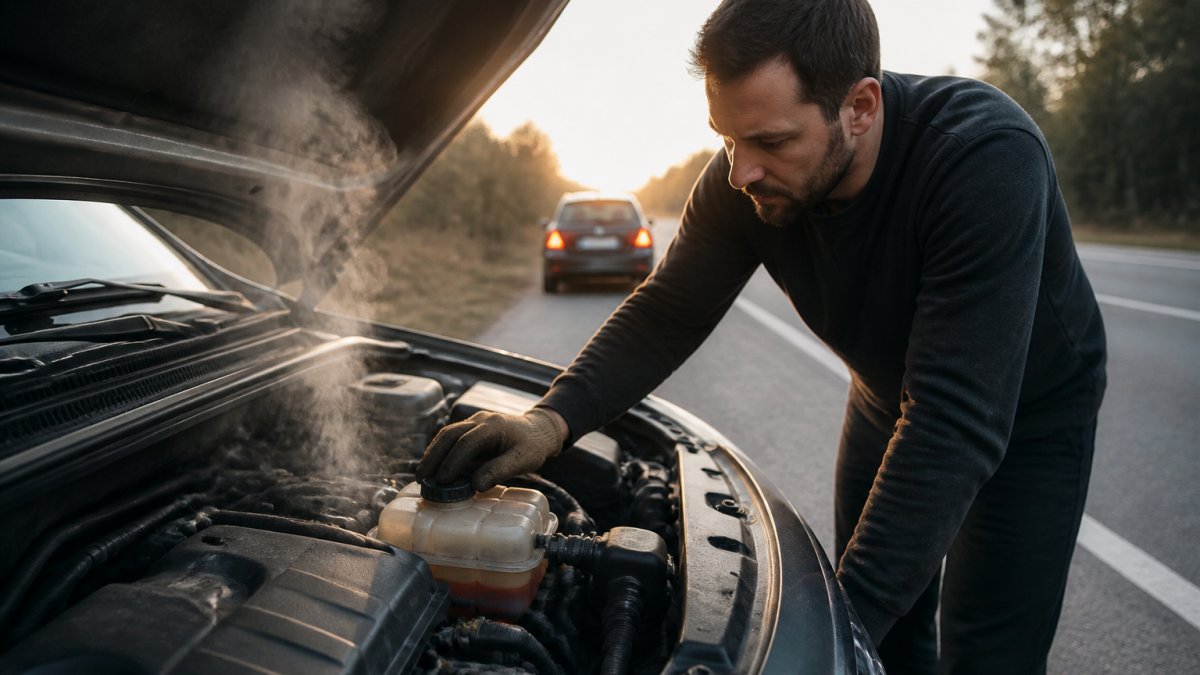
Work through this checklist in order. Stop at the first step that fails and address it before moving on. For a broader beginner framework you can apply to other symptoms, see how to troubleshoot vehicle issues.
- Pull over safely and shut off the engine. Get off the travel lane, set the parking brake, turn on hazard lights, and raise the hood to speed cooling. Do not remove any cap.
- Let it cool completely. Wait at least 30 minutes, then confirm the upper hose is cool and soft to the touch before proceeding.
- Check the coolant reservoir level against the cold-fill line with the engine off and level ground.
- Look for leaks under the car, at hose ends, and around the water-pump weep hole. A crusty white or chalky residue marks a dried leak path.
- Inspect the radiator cap and hoses for cracks, bulging, or stiffness. A cap that no longer holds pressure lowers the boiling point and causes boil-over even when the coolant level is correct.
- Check the drive belt for glazing, fraying, or looseness; a slipping belt starves the water pump.
- Confirm the fan spins when the engine reaches operating temperature, and listen for the fan clutch or electric fan relay engaging.
- Scan for stored codes if you have an OBD-II reader; cooling-fan and coolant-temperature-sensor faults often set codes before a hard failure.
Coolant Level and Visual Inspection Under the Hood
The coolant reservoir is the clear plastic tank with min and max lines. If you're new to working under the hood, this DIY car repairs guide can help you diagnose and fix issues with confidence. With the engine cold, the level should sit between them. A low level means coolant is escaping somewhere, and you need to find out where. Topping off without finding the leak only delays the next boil-over.
Scan the hoses for cracks, bulging, or a crusty white residue. That residue is dried coolant, and it marks a small leak. Check the radiator cap seal too; a worn cap lets pressure escape and lowers the boiling point. On many vehicles a failed cap is the cheapest fix in the entire cooling system and the easiest to overlook. Persistent cooling system strain often manifests as car AC issues when the compressor struggles to maintain performance under the added thermal load.
Symptom-to-Cause Chart: Matching What You See to What Failed
| Symptom | Likely Cause | Urgency |
|---|---|---|
| Sweet smell, low coolant | Leaking hose or radiator | High |
| Gauge climbs in traffic only | Failing radiator fan | Medium |
| Cold heater, warm engine | Stuck thermostat | Medium |
| Clicking or clanking noise | Bad water pump or belt | High |
| Steam from the hood | Major leak or boil-over | Stop driving |
Once you match a symptom to a likely cause, pulling the stored codes can provide additional information.
Common Causes of Engine Overheating
The usual suspects are a low coolant level, a stuck thermostat, a failing water pump, a clogged radiator, or a broken cooling fan. Each one shows up differently, and the symptom chart above helps you narrow it down.
Car Overheating Symptoms: 8 Signs and Causes
Honest Mechanic Colorado
A common mistake is topping off coolant and calling it fixed. If the level drops again, you have a leak, and no amount of refilling solves a leak. Find the source first.
Intermittent Overheating and Driving Conditions
Overheating that comes and goes is the hardest to pin down. If the gauge climbs in stop-and-go traffic but drops on the highway, the fan or airflow is the likely culprit. If it climbs on long uphill pulls, the radiator may be clogged or undersized.
Track when it happens. Note the speed, the weather, and whether the AC was on. That pattern is often more useful to a mechanic than any single reading.
What to Do When Your Car Overheats
Pull over as soon as it's safe, shut off the engine, and let it cool. Turn the heater to full hot to pull heat away from the engine while you find a safe spot. Do not open the radiator cap until the engine is fully cool.
Once cool, check the coolant level and look for obvious leaks. If the level is low and you have coolant on hand, top it off and watch the gauge closely on the drive home. If steam is still pouring out or the gauge spikes again, stop.
When to Tow Instead of Driving to a Repair Shop
Drive only if the gauge stays in the normal range after topping off and the leak is minor. Tow if you see steam, a red warning light that stays on, or a gauge that climbs within minutes.
For reliable guidance on cooling system parts and specs, the U.S. Department of Energy's vehicle maintenance resources offer practical fuel and efficiency context, and the National Highway Traffic Safety Administration publishes recall and safety information worth checking for cooling-related defects.
Log Your Cooling System Repairs in CarJourney
Every cooling system fix is a data point. Record what failed, what part you used, the mileage, and the date. Learn how to log DIY repairs with receipts and photos to protect your car's value. That history tells you whether a leak is a one-time fluke or a recurring problem.
CarJourney keeps vehicle history in one digital garage. Its AI-powered maintenance logs and Ask-AI Q&A, reminders tied to both time and mileage, and shareable build profiles support tracking maintenance and modifications and sharing vehicle history with potential buyers.
Frequently Asked Questions
How can you tell if your vehicle is overheating?
The clearest signs are a temperature gauge climbing past its normal operating range, a red temperature warning light on the dashboard, and steam or smoke rising from under the hood. A sweet smell from the engine bay can accompany a coolant leak. You may also hear clicking or clanking from the engine bay. If any of these appear, pull over safely and let the engine cool before inspecting anything.
Can low coolant cause overheating?
Yes. Low coolant can cause engine overheating. Check the coolant reservoir when the engine is cold and top it off to the marked line, then watch for drops over the next few drives.
How do you tell whether an overheating problem is caused by low coolant or a faulty thermostat?
A low reservoir level indicates that the coolant level is low. These observations alone do not establish whether the cause is low coolant or a faulty thermostat; have a qualified mechanic diagnose the problem.
Can you drive a car with an overheating engine?
No. Driving with an overheating engine can cause damage. If the gauge climbs into the red or steam appears, pull over as soon as it is safe, shut the engine off, and let it cool. If you cannot restart it without the temperature rising again, call a tow rather than driving to the shop.
A cooling system that overheats once will do it again if you don't track the cause. Get started with CarJourney and turn every repair into a record that protects your engine and your resale value.
Start free Add carjourney.io as a preferred source on Google →