 carjourney
From the CarJourney journal
Do Premium Oil Changes Increase Car Value?
Last Updated: October 22, 2026
Quick Summary
Premium oil changes do not directly increase a car's resale or trade-in value, since no appraiser adds money for expensive oil. What protects value is a complete, verifiable service history showing consistent intervals with the correct grade. Buyers pay for evidence of care, not brand names on an invoice.
- Premium is a marketing term, not a technical one; the API donut on the bottle is what matters.
- A gap of 15,000 miles or more between oil change records reads as neglect to most buyers.
- Meeting the manufacturer spec on time beats exceeding it late, because the interval matters more than the bottle.
- If you are within a year of selling, spend on presentation and documentation, not oil upgrades.
- A dealer appraises fast and discounts for missing records, while a private sale rewards documentation more.
Table of Contents
- Do Premium Oil Changes Increase Car Value?
- What Premium Oil Actually Is
- What Appraisers and Buyers Actually Check
- Does Synthetic Oil Increase Car Value?
- Oil Change Records for Selling a Car
- How to Prove Car Maintenance to a Buyer
- Full Synthetic Oil Change Cost and Return on Investment
- How Vehicle Type and Use Change the Math
- A Step-by-Step Plan Before You Sell or Trade In
- Frequently Asked Questions
Do Premium Oil Changes Increase Car Value?
Premium oil changes do not directly raise a car's resale or trade-in value. No appraiser adds money because you bought expensive oil.
At CarJourney, we track service records for daily drivers and project cars, and the pattern is consistent: buyers pay for evidence, not brand names on an invoice.
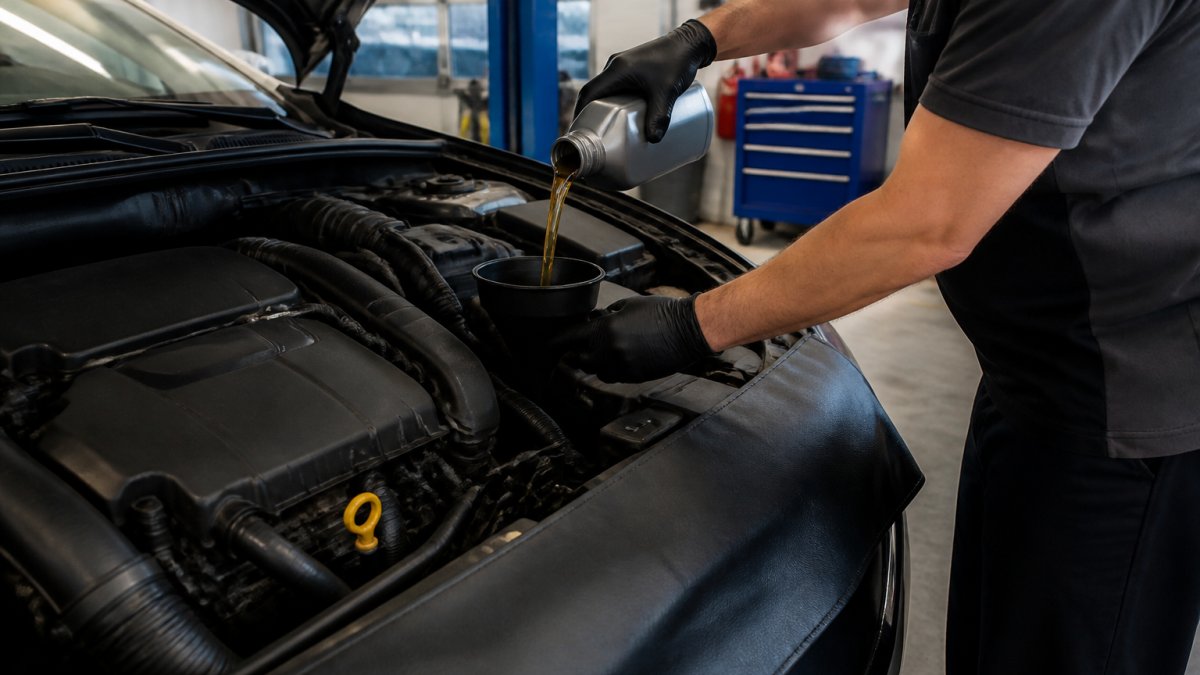
A premium oil change uses a higher-priced synthetic oil, often a longer-life formulation, instead of the oil your owner's manual specifies.
Below: what appraisers actually check, how to document oil changes so a buyer trusts them, and when paying extra is worth it.
Key Takeaway The money is in the paperwork, not the oil bottle. A complete, verifiable service history supports your asking price far more than an upgrade receipt does.What Premium Oil Actually Is
The key word is specification. Your owner's manual guidance from the National Highway Traffic Safety Administration and the oil cap under your hood list the grade and standard your engine needs.
Premium oil that meets that spec is fine. Premium oil that doesn't meet it is money wasted, or worse.
Three things separate premium oil from the standard stuff:
- Base stock: full synthetic instead of conventional or a blend
- Additive package: more detergents and anti-wear additives
- Drain interval: marketed as longer, though your manual still sets the real limit
"Premium" is a marketing term, not a technical one. No industry body certifies an oil as premium; the API donut on the back of the bottle tells you what actually matters.
What Appraisers and Buyers Actually Check
Appraisers and buyers check condition, mileage, and proof of maintenance, not which oil brand you bought.
A professional appraisal weighs mechanical and cosmetic condition, mileage against book values, and any evidence of neglect or damage. Service records support the condition claim; they don't replace it.
Here's what a buyer or appraiser actually looks for:
- Service records with dates and mileage
- Receipts that match the claimed history
- Consistency: regular intervals, no long gaps
A folder of premium oil receipts doesn't impress a buyer. A folder of consistent receipts does.
Watch Out A gap of 15,000 miles or more between oil change records reads as neglect to most buyers, no matter how premium the oil was. Missing records cost you more at sale time than cheap oil ever will.Does Synthetic Oil Increase Car Value?
Synthetic oil does not increase car value on its own.
Better lubrication means less wear on internal components, so the engine runs cleaner and lasts longer, supporting a higher private-sale price or trade-in offer.
But you can't point to a synthetic oil receipt and expect an offer bump.
Where synthetic earns its keep:
- Turbocharged and direct-injection engines that run hotter
- High-mileage vehicles where sludge buildup is a real risk
- Cold starts in northern climates
For a plain commuter car driven gently, a conventional oil changed on schedule protects value just as well.
Premium Oil vs. Manufacturer-Recommended Oil
Manufacturer-recommended oil is the spec in your owner's manual; premium oil is anything sold above it. For valuation, meeting the manufacturer spec on time beats exceeding it late.
Most people get this wrong: they buy expensive oil and stretch the interval. That's backwards. The interval matters more than the bottle.
| Factor | Manufacturer-Recommended Oil | Premium Oil |
|---|---|---|
| Meets engine spec | Yes, by definition | Only if labeled for it |
| Effect on resale value | Neutral, protects condition | Neutral, protects condition |
| Effect on engine wear | Adequate when changed on time | Slightly better in severe use |
| Effect on service cost | Lower | Higher |
| Best for | Most daily drivers | Turbo, high-mileage, severe use |
Oil Change Records for Selling a Car
Oil change records for selling a car are the single most useful thing you can hand a buyer.

What a good record set includes:
- Date of each service
- Mileage at each service
- Oil grade and brand used
Paper receipts fade and get lost. A digital log solves that. CarJourney's VIN-based setup pulls your vehicle details automatically, and every service you log stays tied to the car's mileage and date.
How to Prove Car Maintenance to a Buyer
Proving car maintenance to a buyer comes down to three things: a complete log, matching receipts, and a clean pre-purchase inspection. Buyers trust patterns, not promises.
Start with the log: every service, in order, with mileage. Back it with receipts where you have them, then let the car speak for itself.
- Pull your records into one place. Digital beats paper. Sort by date and mileage.
- Fill the gaps honestly. If you did an oil change yourself, log it and note it.
- Get a pre-purchase inspection. A clean report from a third-party shop is worth more than any receipt.
- Show the maintenance schedule. Point the buyer to the interval you followed.
- Offer the records before they ask. It signals confidence.
What most guides miss is step five. Handing over records unprompted changes the tone of the negotiation. It says you have nothing to hide.
Full Synthetic Oil Change Cost and Return on Investment
Full synthetic oil change cost runs higher than conventional, and the return on investment for premium oil services is mostly measured in engine life, not resale dollars.
Costs vary by region, shop type, and vehicle, so treat any single number as a starting point, not a quote.
Here is how to run the ROI math without inventing numbers:
- Get two quotes for the same service. Ask one independent shop and one dealer for the price of an oil and filter change using the grade in your owner's manual, and ask what the premium synthetic upgrade adds. That difference is your per-service premium.
- Multiply by services per year. If you drive 12,000 miles a year and your manual calls for service every 7,500 miles, that is roughly two services a year. Two times the per-service premium is your annual premium outlay.
- Compare against plausible repair exposure. The benefit of better lubrication is reduced wear on internal components, which can lower the odds of costly repairs over a long ownership. You cannot promise a specific repair will be avoided, but you can weigh the annual premium against the cost of a major engine repair, which is typically many times the annual premium.
What premium oil does not do is add a line to a valuation sheet.
Pro Tip If you are within a year of selling, spend on presentation and documentation, not on oil upgrades. A clean engine bay and a complete service log move the needle more than a premium receipt.Think of premium oil as insurance against wear, priced per service. It's worth buying when the exposure is real and the holding period is long. For a car you'll keep for years, especially one that runs hot or works hard, that trade can pay off. For a car you're selling next spring, put the money into detailing and a clean record instead. Prioritizing the visual presentation of a vehicle often yields a more immediate return on investment than mechanical upgrades, making the benefits of professional detailing a critical consideration for any owner preparing for a quick sale.
How Vehicle Type and Use Change the Math
Vehicle type and use change whether premium oil is worth it, and what a buyer expects to see in the records.
- Luxury and performance vehicles: these engines often already specify full synthetic, so the step up to a premium synthetic is small. The bigger factor is that buyers of these cars expect full records and will pay for them. A turbocharged or high-output engine runs hotter and stresses oil more, so the right grade changed on time protects the components that are expensive to replace. Here premium oil is less an upgrade than table stakes, and the documentation is what carries value.
- High-mileage vehicles: regular changes with the correct grade matter more than the brand. Sludge buildup is the real enemy, and consistent intervals prevent it. A buyer looking at a 120,000-mile car is reading the pattern of service, not the label on the bottle. Premium oil helps only if it comes with consistent, documented intervals.
- Severe use: towing, short trips that never fully warm the engine, dusty climates, and heavy stop-and-go traffic all stress oil and shorten its useful life. In these conditions the oil works harder, so a higher-quality synthetic and a shorter interval earn their cost. This is the clearest case where premium oil is a rational spend rather than a marketing choice.
Appraisers and buyers verify maintenance history by reading the pattern, not the price tag.
The practical takeaway is to match the oil to the engine and the use, then document it consistently. Premium oil is a rational choice for hot-running, hard-working, or high-expectation vehicles.
A Step-by-Step Plan Before You Sell or Trade In
Before you sell or trade in, run this plan. It takes a weekend and it protects more value than any single oil purchase.
- Pull every record into one digital log. Date, mileage, service, receipt.
- Check the oil change interval against your manual. Note where you were early or on time.
- Fix small issues. Warning lights, leaks, worn wipers, low fluids.
- Detail the car. Clean interior, washed and waxed exterior, tidy engine bay.
- Get a pre-purchase inspection. Use the report as a selling asset.
- Build a shareable history. CarJourney's shareable build profiles let a buyer see the full record without you exporting files.
- Price against condition and records. Compare listings with similar mileage and history.
Trade-in is different. A dealer appraises fast and discounts for missing records. Private sale rewards documentation more. If your history is strong, sell private.
Best For Sellers with a complete digital service log and a clean inspection report, who want to capture the full value of their maintenance work in a private sale.Frequently Asked Questions
Do premium oil changes increase a car's resale value?
Not directly. A buyer or appraiser cannot see which oil went into the engine, so premium oil changes do not add a line item to the valuation. What does move the number is proof that oil changes happened on schedule. A documented service history signals that the engine was protected, which supports a higher private-sale price and gives buyers confidence. Paying extra for premium oil is worth it for engine protection on vehicles that need it, but treat the resale gain as a byproduct of good records, not the oil itself.
How do I keep oil change records for selling a car?
Save every invoice and receipt, and note the date and mileage for each service. A shoebox of paper works, but a digital log is easier to hand over. CarJourney lets you log each oil change with mileage, attach receipts, and generate a shareable build profile a buyer can review before an inspection. Before you list the car, export or share the history so the buyer sees a clean timeline instead of scattered paperwork. Missing records are the most common reason a well-maintained car gets valued like an average one.
Does full synthetic oil make a car worth more?
It can help indirectly. Full synthetic oil resists breakdown better at high temperatures and in cold starts, which matters most for turbocharged engines, performance vehicles, and cars driven in stop-and-go traffic. If the owner's manual calls for synthetic, using it and documenting it protects the engine from accelerated wear. An appraiser will not pay more for the oil brand, but a healthy engine with a complete maintenance history supports a stronger trade-in offer than a comparable car with gaps in its service records.
How much does a full synthetic oil change cost, and is it worth it?
A full synthetic oil change typically runs higher than a conventional one because the oil itself costs more and some vehicles need more of it. The exact figure depends on your engine, oil capacity, oil grade, and local labor charges, so check your owner's manual and get a quote from your shop. The return comes from engine protection and a documented service history, not from a higher sale price. If your manual specifies synthetic, skipping it to save money risks repair costs that dwarf the savings.
Selling a car with scattered receipts and a half-remembered service history costs you money at the negotiating table. CarJourney keeps every oil change, tire rotation, and modification in one digital garage, with AI-powered logs, VIN-based setup, and shareable build profiles that buyers can actually trust. Start free and turn your maintenance records into a selling point.
Start free