 carjourney
From the CarJourney journal
Differential Fluid Change for Track Day: A Complete Guide
Table of Contents
- Why Differential Fluid Matters on the Track
- Differential Fluid Change Before or After Track Day: Timing Your Service
- Track Day Differential Fluid Change Interval: When to Service
- Inspecting Differential Fluid Before Track Use
- How to Change Differential Fluid: Step-by-Step Instructions
- Track Day Car Maintenance Checklist: Beyond Differential Fluid
- Common Mistakes to Avoid When Servicing Differential Fluid
- Organizing Your Track Day Maintenance History
- Frequently Asked Questions
Last Updated: October 19, 2026
Why Differential Fluid Matters on the Track
Track days push your differential harder than street driving, which is why a differential fluid change track day preparation is essential: it heats up faster and faces extreme stress during high-speed cornering and acceleration. Without proper maintenance, you risk gear wear, increased friction, and mid-session failure.
Differential fluid lubricates the gears and dissipates heat. On track, temperatures spike, the fluid breaks down, and metal particles accumulate, which is why track maintenance differs from routine street care.
Many drivers skip differential service because they can't see it, but a differential fluid change track day before your event ensures fresh lubricant with full cooling capacity. That's a mistake: a differential fluid change before track use ensures fresh lubricant with full cooling capacity, and after track use you inspect for contamination to decide if another change is needed.
CarJourney's AI-powered logs let enthusiasts document when you changed your differential fluid, what type you used, and how many track days you've completed since, history that matters when building a track car or selling one with documented track use.
Differential Fluid Change Before or After Track Day: Timing Your Service
The answer is straightforward: change differential fluid before track day, not after. Fresh fluid gives maximum cooling and full lubricant protection when you need it most.
Here's why the timing matters:
Before track day:
- Fresh fluid has full viscosity and cooling capacity
- Heat dissipation is at its peak
- You reduce the risk of differential failure during hard driving
After track day:
- Inspect for contamination and discoloration
- If the fluid looks dark or smells burnt, plan a change for your next service
- Never run back-to-back track days without at least inspecting the differential fluid
The practical approach: change your differential fluid one to two weeks before an event, giving you time to verify the job and confirm no leaks. If you run multiple track days per season, set a schedule based on vehicle type and driving intensity.
Some drivers pushing hard change fluid after every track day; others inspect and change only when needed. Let your manufacturer recommendation and driving style guide the decision.
Track Day Differential Fluid Change Interval: When to Service
Track day differential fluid change intervals depend on three factors: your vehicle's manufacturer recommendation, the severity of your track use, and the type of differential you have.
Differential Fluid Change Interval: How Often, Costs and Warning Symptoms
More Automotive
Start with the owner's manual: most manufacturers specify 30,000 to 50,000 miles for street driving, longer for limited-slip units. Track use compresses this timeline significantly.
Here's a practical framework:
Light track use (1-2 events per year):
- Follow manufacturer street intervals
- Inspect after each event; change if contamination is visible
Moderate track use (4-6 events per year):
- Cut the manufacturer interval in half
- Change differential fluid every 15,000-25,000 miles or annually, whichever comes first
- Inspect before and after each session
Severe track use (8+ events per year or back-to-back weekends):
- Change differential fluid every 5,000-10,000 miles or before every other track day
- Inspect after every session
- Monitor fluid temperature if your vehicle has a differential temperature gauge
Limited-slip differentials need more frequent service: their friction modifiers degrade faster under track stress. Increase service frequency by 25-50% compared to open differentials.
Document every change in a maintenance log. CarJourney's mileage-based reminders keep you on schedule, especially across multiple vehicles or mixed street and track use.
Inspecting Differential Fluid Before Track Use
Before heading to the track, inspect your differential fluid. This five-minute check can prevent serious problems.
What to check:
Color and clarity:
- Fresh differential fluid is amber or golden brown
- Dark brown or black indicates contamination or overheating
- Milky or cloudy fluid suggests water contamination, do not drive the car
- If fluid looks questionable, change it before track use
Smell:
- Fresh fluid smells like mineral oil
- A burnt smell indicates overheating or extreme stress
- A sharp chemical smell suggests fluid breakdown
- Trust your nose, if something seems wrong, it probably is
Fluid level:
- Remove the fill plug on the differential housing carefully
- The fluid should reach the bottom of the fill hole
- Add fluid if low, but investigate why, check for leaks
Contamination:
- Wipe the dipstick or fill plug with a clean cloth
- Metal particles or sludge mean your differential is wearing
- Fine metal dust is normal; large particles are not
- If contamination is heavy, change the fluid and investigate for damage Consistent monitoring of these deposits helps establish appropriate oil change intervals to maintain internal component longevity as the vehicle accumulates significant mileage.
Temperature:
- After a test drive, carefully touch the differential housing (use a rag, it's hot)
- It should be warm but not painfully hot
- Extreme heat suggests the fluid is breaking down or the differential is overworked
If you're uncertain about any of these checks, change the fluid. The cost of a fluid change is minimal compared to the cost of differential repair or replacement.
How to Change Differential Fluid: Step-by-Step Instructions
Changing differential fluid is straightforward for anyone comfortable under a vehicle: basic tools and about 30-45 minutes.
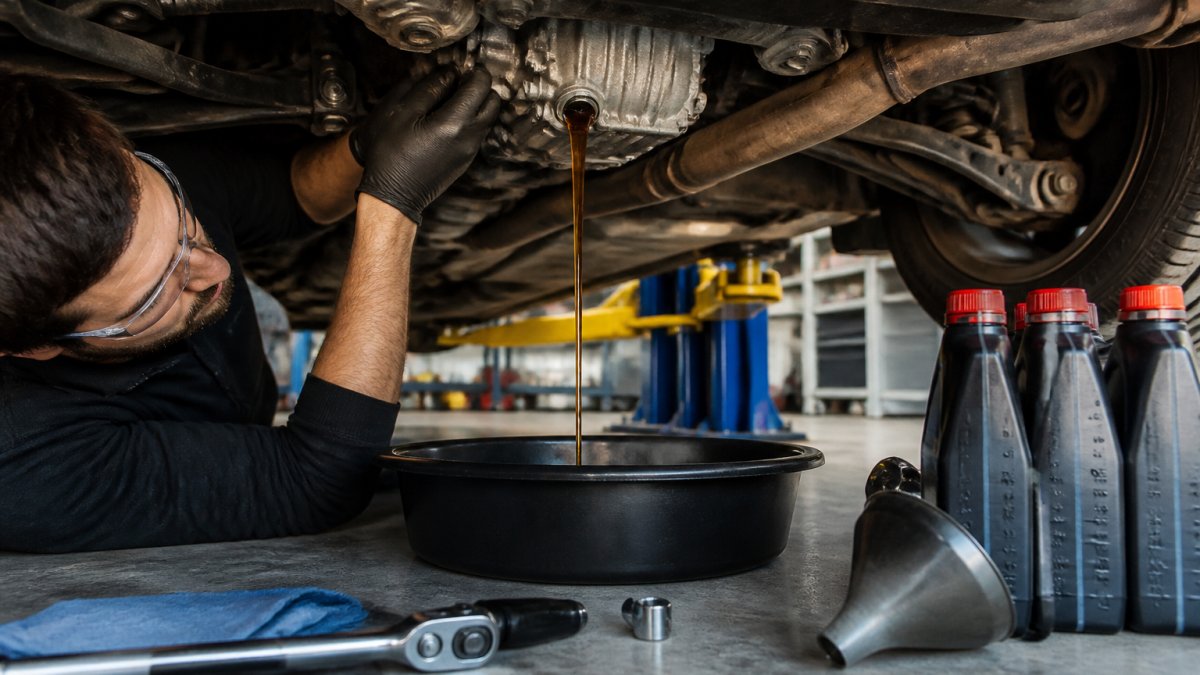
What You'll Need
- Jack and jack stands (or a lift)
- Socket set and wrenches
- Drain pan (at least 3-quart capacity)
- Fresh differential fluid (correct type and quantity for your vehicle)
- Fill pump or squeeze bottle
- Clean rags and shop towels
- Safety glasses
- Gasket scraper or plastic brush
- New crush washer for the drain plug (recommended)
Check your owner's manual for exact fluid type, capacity, and viscosity, the wrong fluid can damage your differential.
The Change Process
Step 1: Prepare the vehicle Drive 5-10 minutes to warm the fluid.
Step 2: Lift and support Raise the vehicle safely using a jack. Place jack stands under the frame.
Step 4: Drain the old fluid Position the drain pan, remove the drain plug, and let fluid drain completely (10-15 minutes).
Step 5: Inspect the drain plug Look at the drain plug for metal particles. A small amount is normal.
Step 6: Reinstall the drain plug Thread the plug back into the housing.
Step 7: Fill with new fluid Locate the fill plug on the side of the differential housing. Remove it.
Step 8: Reinstall the fill plug Thread the fill plug back in and tighten securely. Wipe away excess fluid.
Step 9: Lower the vehicle Remove the jack stands carefully. Lower the vehicle to the ground. Reinstall the wheels if removed.
Step 10: Test and verify Start the engine and listen for any unusual noises from the differential.
Allow the vehicle to cool before driving hard. The new fluid needs time to circulate and reach operating temperature.
Track Day Car Maintenance Checklist: Beyond Differential Fluid
Differential fluid is one piece of track day preparation. A complete maintenance checklist ensures your vehicle is ready for the demands of high-speed driving.
Before every track day:
- Check tire pressure and condition
- Inspect brake pads and brake fluid level
- Verify engine oil level and condition
- Check coolant level and hose condition
- Inspect transmission fluid
- Test all lights and wipers
- Verify seatbelts and safety equipment
- Check differential fluid level and condition
- Inspect suspension components for loose bolts or wear
- Verify wheel lug nuts are tight
Every 2-3 track events:
- Change engine oil and filter
- Inspect brake rotors for warping or excessive wear
- Check transmission fluid condition
- Inspect suspension bushings and links
Every 4-6 track events or annually:
- Change differential fluid
- Flush and bleed brake fluid
- Inspect suspension components thoroughly
- Check battery condition and connections
- Verify all fluid levels and top up as needed
Every 8-12 track events or before a major event:
- Replace brake pads if worn
- Inspect transmission for leaks or performance issues
- Check differential for leaks or unusual noises
- Verify all fasteners are tight
- Inspect cooling system for leaks
Track intensity matters. Hard driving at a road course stresses your vehicle more than a lapping day at a local track. Adjust your maintenance schedule accordingly.
CarJourney's mileage and time-based reminders help you stay ahead of these services. Log each maintenance task as you complete it, and the system reminds you when the next service is due, whether that's based on miles driven or days elapsed since your last track day.
Common Mistakes to Avoid When Servicing Differential Fluid
Even experienced DIY mechanics make mistakes with differential service.
Mistake 1: Using the wrong fluid type Each differential type requires specific fluid.
Fix: Check your owner's manual or the differential housing label.
Mistake 2: Overfilling or underfilling Too much fluid increases pressure and heat.
Fix: Fill to the bottom of the fill hole, not above it.
Mistake 3: Ignoring contamination Metal particles in the fluid indicate wear.
Fix: If you see heavy contamination, have a mechanic inspect the differential before driving.
Fix: Replace the crush washer every time you drain the differential. They're inexpensive and prevent frustration.
Mistake 5: Not warming the fluid before draining Cold fluid is thick and drains slowly.
Fix: Drive the vehicle gently for 5-10 minutes before draining.
Mistake 6: Over-tightening the drain or fill plug Stripped threads mean expensive repairs.
Fix: Tighten firmly until snug, then stop. If you feel resistance, you've tightened enough.
Mistake 7: Changing intervals based on guesswork Some drivers change fluid too often (wasting money).
Fix: Follow your manufacturer's recommendation as a baseline. Adjust for track use severity. Document every change so you have a clear history.
Organizing Your Track Day Maintenance History
Keeping organized maintenance records transforms how you approach track car ownership. You'll know exactly when services were completed, what was done, and what's due next.
What to document:
- Date of service
- Mileage at service
- Type and quantity of fluid used
- Who performed the service (you or a shop)
- Cost of service
- Condition of fluid before and after
- Any issues found or concerns noted
- Next recommended service date
Why this matters:
When you sell your track car, buyers want proof of maintenance. A complete service history shows you cared for the vehicle.
If you're building a project car, detailed records help you remember what you've done and what still needs attention. After a year of modifications and maintenance, memory gets fuzzy.
For insurance purposes, some policies offer discounts for documented maintenance. Having records handy when you need them saves time and stress.
Using CarJourney to organize your history:
CarJourney's maintenance logs let you record every service in one place. Upload photos of receipts. Note the exact fluid type and quantity. Set reminders based on mileage or calendar days.
The platform's AI-powered insights help you spot patterns. If your track days are compressing service intervals faster than expected, you can adjust your maintenance schedule.
Track day preparation goes beyond checking tire pressure. Your differential fluid is a critical component that directly affects performance and reliability.
With CarJourney, organizing this history becomes effortless.
Frequently Asked Questions
Should you change differential fluid before or after a track day?
Change differential fluid before a track day to ensure fresh lubrication handles the heat and stress of hard driving. If you're running multiple track sessions in one season, inspect the fluid after each event and change it if it appears dark, burnt, or contaminated. Post-track inspection is essential, but the primary service should happen beforehand. This ensures your differential operates with optimal protection during the event itself.
How often should you change differential fluid if you do track days?
Track use accelerates differential fluid degradation due to sustained high temperatures and aggressive gear engagement. Most manufacturers recommend changing differential fluid every 30,000 to 50,000 miles under normal street driving. For track cars, reduce that interval to 15,000 to 25,000 miles or change it before every 4-6 track sessions, whichever comes first. Check your owner's manual for your vehicle's specific recommendation, then adjust downward based on track frequency and intensity.
What are signs that your differential fluid needs changing?
Dark or burnt-smelling differential fluid indicates overheating and oxidation. Metal particles or sludge in the fluid signal internal wear. A whining or grinding noise from the rear axle under acceleration may indicate fluid breakdown. If you notice fluid leaking from the differential housing or the level is consistently low, have it inspected immediately. Track use makes these signs appear faster than street driving, so inspect your differential fluid monthly during the track season.
Can you drive the car normally after changing differential fluid?
Yes, but take it easy for the first 10-15 miles. New differential fluid needs time to circulate and reach all internal components. Avoid hard acceleration or aggressive cornering immediately after a fluid change. Normal street driving is fine; just allow the fluid to settle and reach operating temperature gradually. If you're changing fluid before a track day, do the service at least 24 hours in advance and take a short test drive to confirm everything feels normal before heading to the track.
Start free