 carjourney
From the CarJourney journal
How Driving Habits Affect Fuel Economy
Table of Contents
- How Driving Habits Affect Fuel Economy
- Rapid Acceleration and Speeding: The Biggest Fuel Drains
- Idling and Fuel Consumption: Wasted Gallons at a Stop
- Stop-and-Go Driving vs. Steady Speed
- Fuel-Efficient Driving Tips You Can Start Today
- How to Track Gas Mileage Over Time
- Vehicle Type and Powertrain Differences
- Frequently Asked Questions
Last Updated: October 18, 2026
How Driving Habits Affect Fuel Economy
Your driving style directly determines how much fuel your vehicle consumes. The way you accelerate, brake, and maintain speed creates measurable differences in gas mileage over time.
CarJourney helps automotive enthusiasts track fuel consumption alongside maintenance records, so you can identify which driving behaviors cost the most fuel and adjust accordingly.
The relationship is straightforward: aggressive driving burns more gas than smooth, controlled driving.
Rapid Acceleration and Speeding: The Biggest Fuel Drains
Aggressive acceleration and high highway speeds move your fuel economy the most, and both can be quantified. The U.S. Department of Energy (DOE) and the Environmental Protection Agency (EPA) publish the standard rule of thumb: aggressive driving, rapid acceleration, hard braking, and speeding, can lower gas mileage by roughly 15 to 30 percent at highway speeds and 10 to 40 percent in stop-and-go traffic.
Why acceleration consumes extra fuel
Your engine burns fuel to make power, and power demand rises steeply with acceleration. Pressing the pedal hard commands a richer air-fuel mixture and holds lower gears longer so the engine spins faster.
Compare two drivers on the same 10-mile suburban route with 12 stops: the smooth driver reaches each limit gradually and coasts to red lights, while the aggressive driver launches hard and brakes late.
Highway speeds and fuel consumption rates
Aerodynamic drag rises with the square of speed, so the power needed to push through air climbs much faster than your speedometer does. DOE and EPA data show highway fuel economy for most vehicles peaks around 50 mph and falls off above roughly 60 mph.
A 200-mile highway trip at 70 mph versus 55 mph can easily consume 1 to 2 extra gallons in a mid-size car.
Pro Tip If you frequently drive highways, dropping your cruising speed by 5-10 mph is one of the highest-return habit changes available. On a 500-mile trip, the difference between 75 mph and 65 mph can be a gallon or more of fuel, and it costs you only a few minutes.A simple way to estimate your own savings
You do not need a laboratory to put a dollar figure on your habits. Use this three-step estimate:
- Record your current average mpg over at least three fill-ups (miles driven divided by gallons pumped).
- Estimate the share of your driving that is aggressive or above 60 mph, many drivers find it is 20 to 40 percent of highway miles.
- Apply the DOE/EPA range: assume a 10 to 30 percent improvement in the aggressive portion if you smooth out acceleration and hold 60-65 mph.
Example: 12,000 miles a year at 28 mpg uses about 429 gallons. If a quarter of those miles are aggressive highway driving and you recover 20 percent on that quarter, you save roughly 21 gallons a year, about $75 at $3.50 per gallon. The exact number varies with vehicle, route, and fuel prices, but the direction is consistent: the harder you drive, the more the pump charges you.
Watch Out Fuel-saving acceleration techniques must never compromise safety. Do not merge slowly into fast-moving traffic, do not hold well below the posted limit in a way that disrupts traffic flow, and do not extend following distances so far that other drivers cut in unpredictably. Smooth does not mean timid.Idling and Fuel Consumption: Wasted Gallons at a Stop
Idling burns fuel while producing zero miles of travel. Extended idling wastes money and fuel with nothing to show for it.
Modern engines are efficient enough that restarting uses less fuel than idling for more than 10 seconds.
Excessive idling adds up fast: idling 10 minutes daily wastes roughly half a gallon per week, 25+ gallons a year.
Watch Out Letting your car warm up by idling in winter wastes fuel. Modern engines warm up faster when driving gently than when idling. Drive slowly for the first few minutes instead of sitting still with the engine running.Stop-and-Go Driving vs. Steady Speed
City driving with frequent stops consumes far more fuel than highway driving at a steady speed.
Highway driving at steady speeds is inherently more fuel-efficient: your engine operates at a consistent power level, minimizing fuel consumption per mile.
City driving typically delivers 20-30 percent lower fuel economy than highway driving. A vehicle that gets 30 mpg on the highway might only achieve 20-24 mpg in stop-and-go traffic, because city driving demands constant acceleration and deceleration.
Key differences between driving environments:
- City: frequent stops, rapid acceleration, variable speeds
- Highway: steady speed, fewer stops, consistent engine load
- Fuel economy impact: city driving burns 20-30% more fuel
Fuel-Efficient Driving Tips You Can Start Today
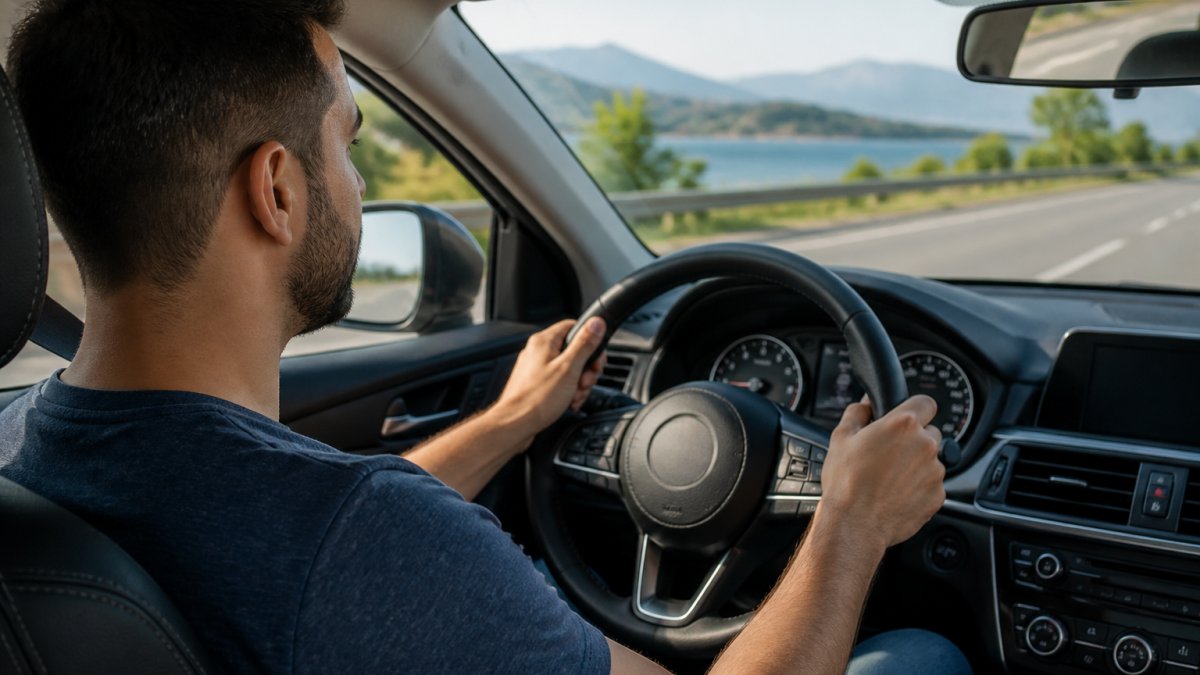
Improving your fuel economy starts with changing specific driving behaviors. These practical adjustments reduce fuel consumption without requiring new equipment or major lifestyle changes.
Plan trips to reduce short journeys
Short trips consume disproportionate fuel because your engine never reaches peak efficiency.
Combining errands into one longer trip reduces cold starts. Instead of three separate 5-mile trips, make one 15-mile trip: your engine warms up once instead of three times, and you use less total fuel.
Plan your route before leaving home. Efficient routing reduces total distance, and knowing where you're going prevents backtracking and wasted miles.
Maintain steady acceleration and smooth deceleration
Smooth driving habits directly reduce fuel consumption. Accelerate gradually instead of pressing the pedal hard.
Coasting to stops (when safe) uses less fuel than accelerating then braking. Look ahead and ease off the accelerator early when you see a red light.
Avoid rapid speed changes. Maintain consistent speeds when possible. On highways, use cruise control to maintain steady speed without fluctuating acceleration.
Monitor vehicle weight and reduce unnecessary cargo
Extra weight increases fuel consumption. Your engine must work harder to move heavier vehicles. Removing unnecessary cargo from your trunk, roof rack, or seats directly improves fuel economy.
Roof racks and cargo carriers create aerodynamic drag, further reducing fuel economy. Remove them when not in use.
Heavy modifications and aftermarket parts can increase vehicle weight, so consider fuel economy when selecting upgrades.
Key Takeaway Vehicle weight directly affects fuel consumption. Every 100 pounds of extra weight reduces fuel economy by approximately 1-2 percent. Remove unnecessary items from your vehicle to improve efficiency.How to Track Gas Mileage Over Time
Tracking your fuel economy reveals patterns in your driving habits. By measuring miles per gallon consistently, you can identify which behaviors improve or worsen efficiency and make informed decisions about your driving style.
Why tracking reveals patterns in your driving
Consistent tracking shows exactly how driving habits affect fuel consumption: you'll notice when highway trips deliver better mileage than city driving, and how aggressive acceleration during certain weeks impacts your overall numbers.
Without tracking, these patterns remain invisible, you might assume your fuel economy is static when it actually fluctuates with your driving behavior. Tracking turns fuel economy into concrete, measurable data.
Tools and methods for accurate MPG measurement
The simplest method is manual tracking at the pump. Fill your tank completely, record the odometer reading and date, then at the next fill-up record the new odometer reading and gallons pumped.
Digital tools automate this process: many vehicles include dashboard fuel economy displays, and smartphone apps can track consumption automatically. CarJourney lets you log fuel fill-ups alongside maintenance records, creating a complete picture of your vehicle's efficiency and service history in one place.
Tracking methods comparison:
| Method | Accuracy | Effort | Best For |
|---|---|---|---|
| Manual pump tracking | High | Medium | Baseline measurements |
| Vehicle dashboard display | Medium | Low | Quick reference |
| Smartphone app | Medium | Low | Ongoing monitoring |
| Dedicated tracking platform | High | Low | Detailed analysis and history |
Track your fuel economy over several months to establish baselines, then look for patterns: do certain routes consistently deliver worse mileage? Does aggressive driving during stressful commutes reduce your numbers?
Vehicle Type and Powertrain Differences
Driving-habit advice is not one-size-fits-all. The same behavior that saves fuel in a gasoline sedan can be neutral or even counterproductive in a hybrid or electric vehicle, and modern feedback tools change how you should monitor results.
Gasoline engines: conventional, turbocharged, and cylinder deactivation
Naturally aspirated engines respond predictably to smooth driving: gentler throttle and lower cruising speeds reduce fuel use. Turbocharged engines are more sensitive to hard acceleration because the turbo spools up and delivers a richer mixture under load, so repeated hard launches cost more. Vehicles with cylinder deactivation or stop-start already capture idle and low-load savings, avoid overriding them with aggressive inputs.
Hybrids: smooth driving pays twice
Hybrids reward the same habits through a different mechanism. Regenerative braking recovers energy during gentle deceleration, so coasting to a stop instead of braking late puts energy back into the battery rather than into brake heat. Hard acceleration forces the gasoline engine to run more often, eroding the advantage. Pulse-and-glide and steady speeds produce larger mpg gains than in a conventional car, but the gains come from energy recovery, not engine tuning.
Electric vehicles: efficiency is measured differently
For EVs, the metric is miles per kWh rather than mpg. Aggressive acceleration and high highway speeds still hurt, and the highway penalty is often larger than in gasoline cars because aerodynamic drag dominates at speed. Cold weather reduces range, and cabin heating draws energy directly from the battery. Smooth acceleration, moderate highway speeds, and pre-conditioning while plugged in are the practical levers; one-pedal driving modes can recover meaningful energy in stop-and-go traffic.
Transmissions: automatic, manual, and CVT
Modern automatic transmissions with 8, 9, or 10 speeds and CVTs generally choose efficient ratios on their own, so the driver's main lever is throttle smoothness. Manual drivers can shift early and skip gears to keep rpm low, but the gain depends on technique. In every case, cruise control on flat highway stretches reduces the small speed fluctuations that waste fuel.
Driver-assistance and feedback tools
Most vehicles now include an eco-driving display, a trip computer, or both. Used deliberately, an instantaneous mpg bar teaches how throttle position maps to consumption, and a trip meter lets you compare routes. Adaptive cruise control can smooth highway speed, though some systems brake and accelerate more aggressively than a careful driver would. Telematics apps and plug-in devices can log trips and idling time, useful for households with multiple drivers.
Key Takeaway Match your habits to your powertrain: smooth throttle and early coasting for gasoline and hybrids, moderate highway speeds and pre-conditioning for EVs, and deliberate use of eco displays and cruise control for everyone. Then verify with pump-based tracking rather than trusting the dashboard alone.Frequently Asked Questions
How much can you improve MPG by changing your driving habits?
The improvement depends on your current driving style, but studies show that adopting fuel-efficient habits can improve fuel economy by 10-30%. Drivers who eliminate aggressive acceleration, reduce speeding, and minimize idling typically see gains at the higher end of that range. The exact improvement varies by vehicle type, engine size, and driving conditions. Tracking your gas mileage over time with tools like CarJourney helps you quantify your personal improvements and identify which habits have the biggest impact on your fuel consumption.
Does speeding reduce fuel economy?
Yes. Fuel consumption increases significantly at highway speeds above 50 mph. For every 5 mph increase in speed, fuel economy drops roughly 7-10%, depending on your vehicle. This happens because the engine works harder to overcome air resistance and maintain momentum at higher speeds. Maintaining a steady, moderate speed is one of the most effective ways to improve fuel efficiency. Even small reductions in cruising speed on the highway can result in measurable savings in both fuel and money.
Does rapid acceleration use more gas?
Absolutely. Rapid acceleration demands a sharp increase in fuel injection to produce the power needed to accelerate quickly. This sudden fuel demand burns through gas much faster than gentle, gradual acceleration. Smooth acceleration over 5-10 seconds instead of 2-3 seconds uses significantly less fuel. This is why gentle driving habits, avoiding jackrabbit starts and building speed gradually, are so effective at improving fuel economy. The difference is especially noticeable in city driving with frequent traffic lights and stop signs.
Why is my MPG dropping all of a sudden?
Sudden drops in fuel economy often stem from changes in driving habits, vehicle condition, or external factors. Common causes include increased aggressive acceleration or speeding, more frequent short trips with cold starts, added vehicle weight (cargo or towing), underinflated tires, or mechanical issues like a faulty oxygen sensor or clogged air filter. Tracking your gas mileage regularly with mileage logs helps you spot these drops early and pinpoint the cause. CarJourney's maintenance logs and gas mileage tracking make it easy to correlate MPG changes with recent driving patterns or service history.
Tracking how driving habits affect fuel economy transforms fuel consumption from a mystery into manageable data. By monitoring your gas mileage alongside maintenance records in CarJourney, you build a complete vehicle history that shows which driving behaviors cost you money and which ones keep your fuel economy strong. Start tracking today, identify your patterns, and adjust your habits to save fuel and money on every drive.
Start free