 carjourney
From the CarJourney journal
Signs of Overinflated Car Tires: 8 Symptoms to Watch
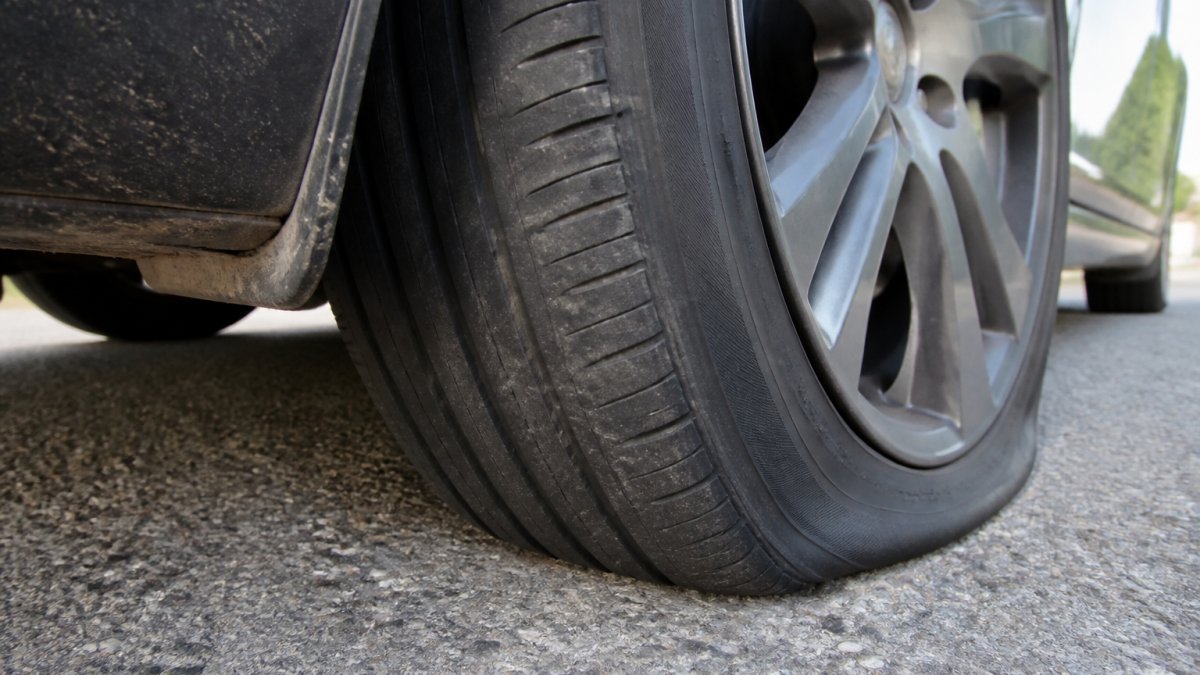
Table of Contents
- What Overinflated Tires Are and Why They Matter
- The 8 Most Common Signs of Overinflated Car Tires
- Recommended Tire Pressure for Cars: Where to Find the Right Number
- How to Check Tire Pressure Correctly
- How to Lower Tire Pressure Safely
- Overinflated Tires and Tread Wear: What the Damage Looks Like
- When to Stop Driving and Get a Professional Inspection
- Preventing Overinflation: Monitoring and Maintenance Habits
- Frequently Asked Questions
Last Updated: October 17, 2026
What Overinflated Tires Are and Why They Matter
Overinflated tires are tires filled above the pressure the vehicle manufacturer recommends.
Here is the key point most drivers miss: the number molded on the tire sidewall is a maximum, not a target.
A tire pumped past its recommended pressure sits rounded in the middle. Less rubber touches the pavement. That sounds efficient, but it means less grip, faster center wear, and a stiffer ride.
Key Takeaway The recommended tire pressure for your car is on the door jamb placard or in the owner's manual, never on the tire sidewall. The sidewall number is the ceiling, not the goal.The 8 Most Common Signs of Overinflated Car Tires
The eight most common signs of overinflated car tires are center tread wear, a harsh ride, vague steering, reduced traction, vibration, visible tire bulges, uneven shoulder wear, and a firm, bouncy feel over bumps.
Watch for these in order of how easy they are to spot:
- Center tread wear - a bald strip running down the middle
- Harsh ride - every bump feels sharper than it used to
- Vague steering - the wheel feels light and disconnected
- Longer braking distances - the car takes more room to stop
- Vibration at speed - a shimmy through the wheel or seat
- Sidewall bulges - a bump or bubble on the tire flank
- Shoulder wear - unusual wear near the tire edges on some setups
- A bouncy feel - the car skips over small bumps instead of absorbing them
A Symptom-by-Symptom Diagnostic Checklist
Most guides stop at the list. The harder question is whether a given symptom actually points to overinflation or to something else entirely. Use this checklist to sort the look-alikes before you touch a valve stem.
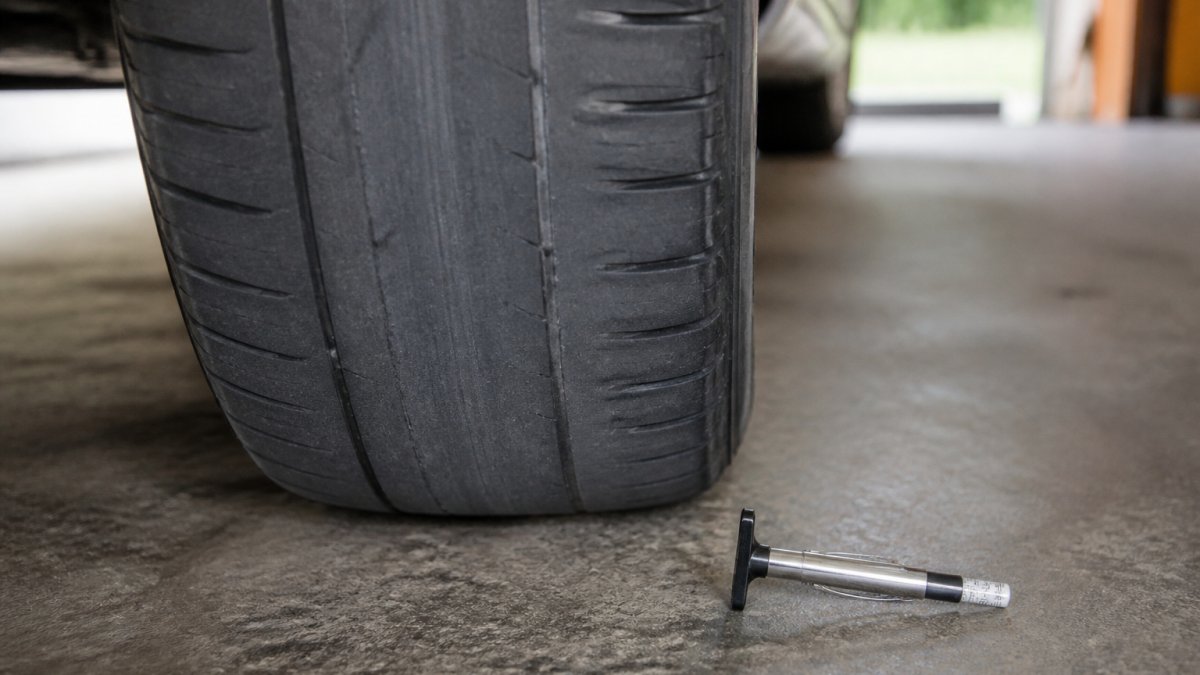
- Center tread wear, edges still deep. Strongly points to overinflation. Confirm with a tread depth gauge at three points across the tread: inner edge, center, outer edge. A center reading noticeably lower than both edges is the signature pattern.
- Both edges worn, center deep. This is underinflation, not overinflation. Do not add air.
- One side worn across the width. Alignment issue, not pressure. A pressure change will not fix it.
- Cupped or scalloped dips around the tire. Usually balance or suspension, not pressure. Overinflation produces a smooth center strip, not scallops.
The practical rule: a pressure gauge plus a tread depth gauge resolves most of these in under five minutes. If both read normal and the symptom persists, the cause is elsewhere.
Key Takeaway Overinflation has a fingerprint: center wear plus a harsh ride plus a light steering feel. If you see edge wear, one-sided wear, or scalloping instead, the problem is underinflation, alignment, balance, or suspension, not excess air.Center Tread Wear and Shoulder Wear
Center tread wear is the signature clue. When a tire is overinflated, the middle of the tread bulges out and carries most of the load.
Run your hand across the tread. If the middle feels noticeably lower than the edges, you have your answer.
Shoulder wear is the opposite pattern, and it usually points to underinflation. That contrast matters. Center wear means too much air.
Harsh Ride, Vibration, and Handling Changes
A harsh ride is often the first thing a driver notices. Overinflated tires act like stiff rubber balls. They transmit road texture straight into the cabin instead of absorbing it.
Handling changes follow. The contact patch shrinks, so steering response feels twitchy and light. Traction drops on wet roads, and braking distances stretch out. Vibration at highway speed can also appear as the tire skips across small imperfections rather than rolling over them.
Watch Out A light, skittish steering feel plus a harsh ride is easy to dismiss as "just the road." If both show up together, check your pressure before you blame the suspension.Tire Bulges, Sidewall Damage, and Blowout Risk
Tire bulges are the sign that should stop you cold. Excess pressure stresses the sidewall, and a bulge or bubble means internal damage has already started. A damaged sidewall can fail without warning.
Heat buildup makes it worse. Overinflated tires run stiffer and generate more internal heat on long drives. Combined with a bulge, that is the recipe for a blowout.
Recommended Tire Pressure for Cars: Where to Find the Right Number
The recommended tire pressure for cars is listed on the vehicle placard inside the driver's door jamb, and it is repeated in the owner's manual.
Overinflated Tires Warning
KENS 5: Your San Antonio News Source
Here is where to look, in order:
- Driver's door jamb placard - the fastest source
- Owner's manual - includes notes for loaded or towing conditions
- Fuel door or glovebox label - on some models
- Tire sidewall - read it only to confirm the maximum, never as a target
Most passenger cars run in a fairly narrow PSI range, but the exact figure varies by model, tire size, and load. The NHTSA tire safety guidance explains why the vehicle-specific number matters more than a generic recommendation.
How to Check Tire Pressure Correctly
Check tire pressure when the tires are cold, meaning the car has sat for at least three hours or been driven under a mile. Cold tires give you the accurate reading that matches the placard.
Follow these steps:
- Buy a quality tire pressure gauge, not the one at the air pump.
- Remove the valve stem cap on each tire.
- Press the gauge onto the valve stem firmly and read the number.
- Compare each reading to the placard figure.
- Note any tire that is high or low.
- Replace the caps when you finish.
Why Cold Versus Warm Readings Matter
Pressure rises as tires warm up, and the change is larger than most drivers expect.
This is why the placard number is a cold specification. If you check a warm tire and it reads a few PSI above the placard, that is not proof of overinflation.
Seasonal swings work the same way in reverse. A tire that was at spec in summer can read low on the first cold morning of fall without any leak, because the ambient temperature dropped.
Pro Tip If you must check a warm tire, note the reading and recheck cold before adjusting. Treat the cold number as the target and the warm number as information, not an instruction.Reading the Gauge and Recording Results
Write down all four readings, not just the ones that look wrong. A single tire that consistently reads higher than the other three can point to a gauge error, a valve issue, or a shop that overfilled one corner.
Check pressure monthly and before any long trip. A slow leak or a seasonal temperature drop can push a tire out of spec without any warning light coming on.
How to Lower Tire Pressure Safely
Lower tire pressure by releasing small bursts of air from the valve stem and rechecking with a gauge after each burst. Go slowly. It is far easier to let air out than to put it back in without a compressor.
Here is the safe procedure:
- Let the tires cool first so your reading is accurate.
- Press the gauge onto the valve stem and note the current PSI.
- Use the tip of the gauge or a small tool to press the valve core briefly.
- Stop, recheck, and repeat until you reach the placard number.
- Aim for the recommended figure, not below it.
- Recheck all four tires and reset your TPMS if needed.
Do not dump air in one long hiss. You will overshoot and end up underinflated, which brings its own wear and handling problems.
Overinflated Tires and Tread Wear: What the Damage Looks Like
Overinflated tires and tread wear go hand in hand, and the pattern is unmistakable once you know it.
The damage is permanent. Once tread is gone, it does not come back. You end up replacing a tire that still had usable rubber on its edges.
Here is how the patterns compare:
| Wear Pattern | Likely Cause | What It Looks Like |
|---|---|---|
| Center tread worn | Overinflation | Bald strip down the middle |
| Both edges worn | Underinflation | Shoulders worn, center deep |
| One side worn | Alignment issue | Uneven across the width |
| Cupped or scalloped | Suspension or balance | Dips and high spots around the tire |
A quick walk around the car with a tread gauge catches most of these before they get expensive.
When to Stop Driving and Get a Professional Inspection
Stop driving and get a professional inspection if you see a tire bulge, a bubble, exposed cords, or a sidewall cut. Those are structural failures, and a pressure adjustment will not fix them.
Get the car looked at promptly if you notice:
- A bulge or bubble anywhere on the sidewall
- Cracks or cuts in the rubber
- Vibration that does not go away after a pressure check
- A tire that keeps losing pressure
- Tread worn to the wear bars
For routine wear, a pressure correction and a tire rotation usually set things right. A failing tire at highway speed is a serious safety risk, and the NHTSA guidance on tire recalls and safety is worth a read if you suspect a defect.
Preventing Overinflation: Monitoring and Maintenance Habits
Preventing overinflation comes down to a simple habit: check cold pressure monthly, and check it again before long trips or big temperature swings.
Build these into your routine:
- Check pressure once a month with your own gauge
- Recheck after any tire service, since shops sometimes overfill
- Watch the TPMS light and act on it rather than ignoring it
- Track pressure readings alongside your other service records
- Check tread depth at the same time as pressure
This is where a maintenance log pays off. At CarJourney, AI-powered logs and mileage-based reminders help keep tire checks, rotations, and pressure readings organized in one digital garage. A VIN-based setup helps build your vehicle profile in minutes, and a shareable build profile can help prove the care history when you sell.
Frequently Asked Questions
What happens if you overinflate car tires by a few PSI?
A few PSI over the recommended pressure usually causes a firmer ride and slightly faster center tread wear, but it is rarely dangerous on its own. Most passenger tires can handle short-term overinflation without failing. The real risk builds when pressure sits well above the vehicle placard number for weeks or months. Check your door-jamb sticker, compare it to a cold reading with a tire pressure gauge, and correct any gap before it turns into uneven wear or a blowout risk.
How many PSI over the recommended tire pressure is too much?
Most tire technicians treat anything more than 5 PSI above the vehicle's recommended pressure as worth correcting. The tire sidewall maximum pressure is a separate, much higher number and is not a target. If your gauge shows 40 PSI when the placard says 32 PSI, that is 8 PSI over and enough to stiffen the ride and load the center tread. Use the recommended pressure for cars from the placard, not the sidewall maximum.
Can overinflated tires cause uneven tread wear?
Yes. Overinflated tires and tread wear go together because an overfilled tire bows outward, so the center tread presses against the road while the outer edges lift slightly. That produces a worn center strip with relatively fresh-looking shoulders. Rotating tires on schedule and checking pressure monthly helps catch this early. If you already see a bald center band, a tire inspection is the next step before the casing is compromised.
How do you lower tire pressure safely?
Park on level ground, remove the valve stem cap, and press the valve core with a small tool or the back of a pressure gauge to release air in short bursts. Check with a tire pressure gauge after every few seconds so you do not overshoot. Cold tires give the most accurate reading, so measure before driving or after the car has sat for a few hours. Once you hit the placard number, replace the cap and recheck all four tires.
Tire pressure is one of the easiest things to ignore and one of the cheapest to fix. The challenge is remembering to check it before wear sets in. CarJourney helps with AI-powered maintenance logs, reminders tied to both time and mileage, and a shareable build profile that documents every service. Start free with CarJourney and keep your tires, and your whole maintenance history, in one organized place.
Start free