 carjourney
From the CarJourney journal
How to Troubleshoot Oil Leaks Under Your Car
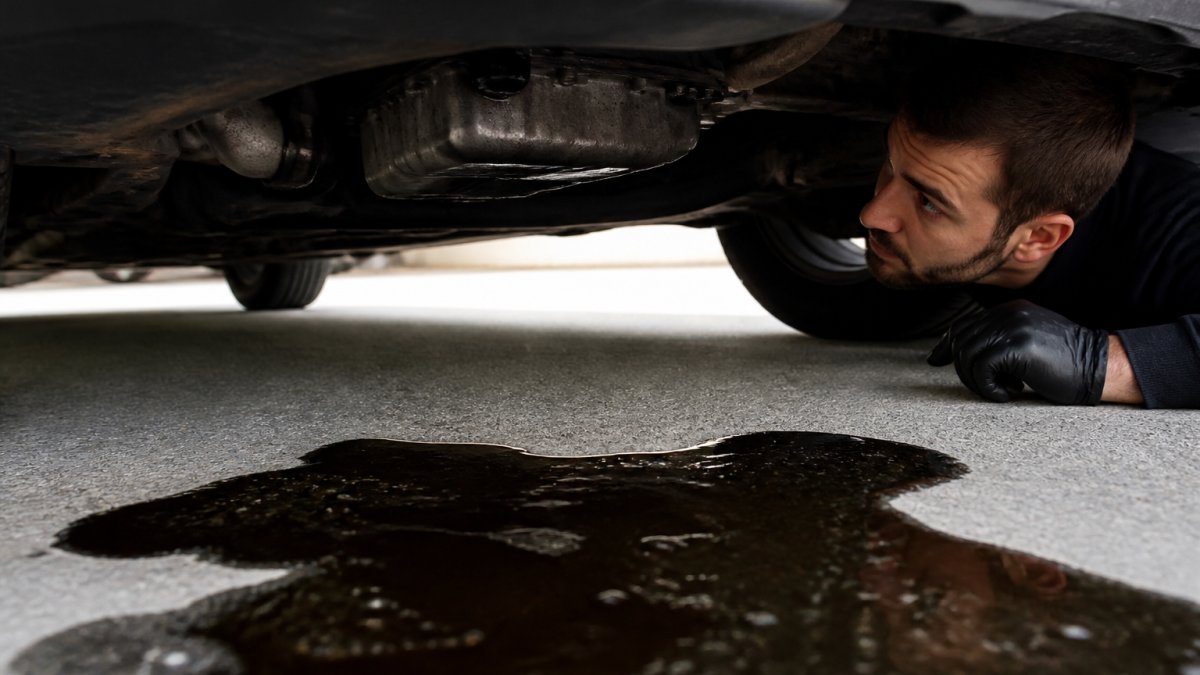
Table of Contents
- Safety Precautions Before Inspecting Underneath Your Vehicle
- How to Identify Fluids Leaking From a Car
- How to Find an Oil Leak on the Bottom of an Engine
- Common Causes of Engine Oil Leaks
- Is It Safe to Drive With an Oil Leak
- Oil Leak Repair Cost and DIY Versus Professional Help
- Confirming the Repair and Monitoring for Recurrence
- Track Your Oil Leak Repair in Your Maintenance Log
- Frequently Asked Questions
Last Updated: October 15, 2026
Safety Precautions Before Inspecting Underneath Your Vehicle
Working under a vehicle without proper support can cause serious injury or death, so take safety seriously.
Always use at least two jack stands rated for your vehicle's weight, never a jack alone. Park on level ground, engage the parking brake, and chock the wheels.
Wear safety glasses, work gloves, and a headlamp or work light so you can see without holding a flashlight.
Let the engine cool at least 30 minutes after driving, hot oil burns.
Never work alone. Have someone nearby who can call for help if something goes wrong. Tell them what you're doing and how long you expect to be under the car.
Clear your workspace of tripping hazards, ensure good lighting, and keep your phone within reach.
How to Identify Fluids Leaking From a Car
Not every puddle under your car means oil leaks under car, transmission fluid, coolant, brake fluid, and power steering fluid all leak too. Confirm what you're looking at first.
Oil Color and Appearance
Engine oil is dark brown or black, slick to the touch, and has a strong petroleum smell.
Other fluids look different:
- Coolant is bright green, pink, or orange and smells sweet
- Transmission fluid is red or dark red and smells like burnt plastic
- Brake fluid is clear to light brown
- Power steering fluid is clear or light amber
Wipe the fluid with a clean white rag. Oil leaves a dark, slick residue; other fluids wipe away more cleanly or leave different colored stains.
Testing Methods to Confirm Engine Oil
The cardboard test is your best friend: place clean cardboard or newspaper under your parked car overnight. The drip pattern tells you what's leaking.
Oil spreads slowly and leaves a dark ring with a halo effect rather than evaporating quickly.
Rub the dried residue between your fingers: real engine oil feels slick and sticky even when dry.
Smell matters too, engine oil has a distinct petroleum odor. Color, texture, and smell together confirm it.
How to Find an Oil Leak on the Bottom of an Engine
Once you've confirmed oil leaks under car, pinpointing the source takes a systematic approach.
Locating the Leak Source Using Cardboard
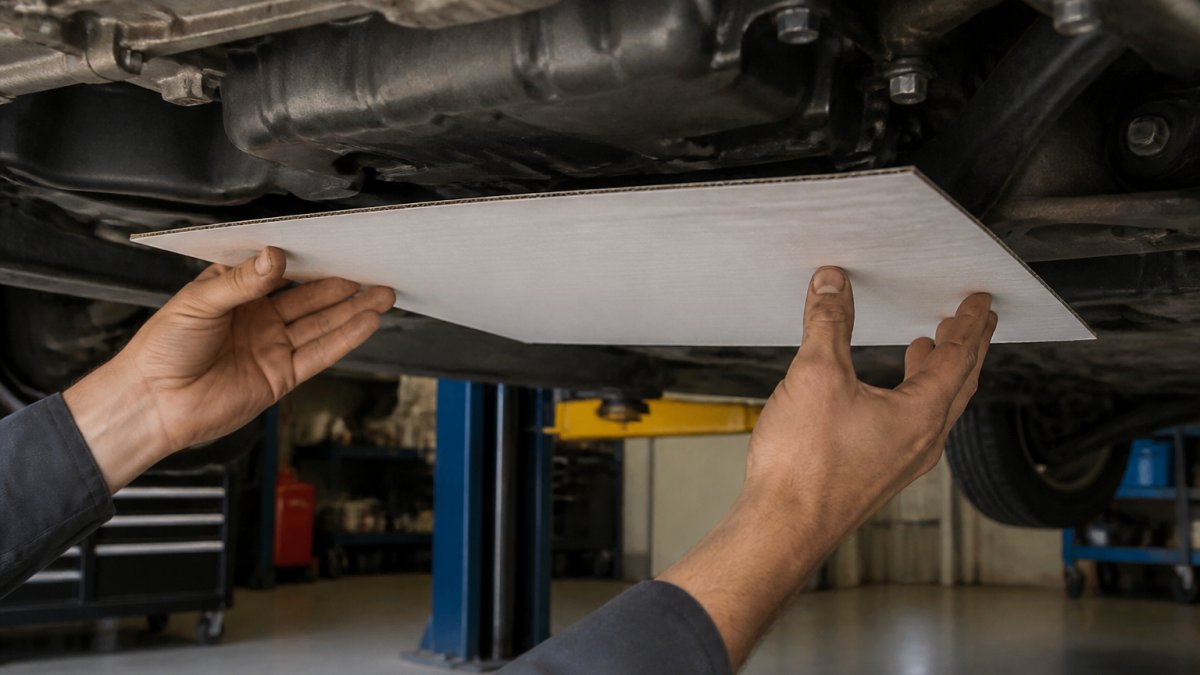
The cardboard method also finds the leak location: place a large, clean piece of white cardboard under your parked car with the engine off and cool.
After several hours or overnight, the stain marks where the leak originates, oil drips straight down, so the stain sits below the source.
Mark the stain location and take a photo for reference, this gives you a clear target for your inspection.
Get under the car safely and look directly above the stain, tracing the oily trail upward along the engine block, pan, and surrounding components.
Use a work light and wipe away dirt or old oil with a clean rag, fresh oil is slicker and darker than grime.
Mapping Drip Location to Engine Components
Where the oil drips from points to different problems. Use this map to narrow the cause.
Oil pan leaks stain directly under the center-bottom of the engine. A loose drain plug or damaged pan gasket causes them.
Valve cover gasket leaks drip from the top sides of the engine, with oil running down the outside of the block.
Oil filter leaks appear near the filter housing, usually on the engine's side, when the filter is loose or its gasket is bad.
Crankshaft seal leaks show up where the crankshaft exits at the front or rear of the engine, harder to spot because the front cover or transmission hides them.
Timing cover leaks stain along the front of the engine, where the cover protecting the timing chain or belt develops gasket leaks.
Use the drip location to guide your inspection: check the component above the stain for loose bolts, damaged gaskets, or cracks.
Common Causes of Engine Oil Leaks
Most oil leaks fall into a few common categories, and knowing them helps you choose the right fix.
How To Find Engine Oil Leaks In Your Car ~ Fast and Easy
HumbleMechanic
Worn or Damaged Gaskets and Seals
Gaskets and seals are rubber or cork materials that harden and crack as the engine ages. When they fail, oil seeps past them.
The valve cover gasket is the most common culprit. It seals the valve cover to the cylinder head, and after 50,000 to 100,000 miles it often hardens and cracks, letting oil weep out.
The oil pan gasket, timing cover gasket, and crankshaft seals also deteriorate with heat and age. Once they start leaking, they rarely stop on their own.
Inspect gaskets visually when you're under the car. Look for cracks, hardening, or oil seeping from the edges, a dry, brittle gasket likely needs replacement.
Loose or Damaged Oil Drain Plug
The oil drain plug sits at the lowest point of the oil pan and is removed during every oil change. If it's not tight enough, oil leaks out.
Sometimes the plug itself gets damaged: threads strip, the sealing washer wears out, or it gets cross-threaded during installation. A loose or stripped drain plug is one of the easiest leaks to fix.
Check the drain plug first. If you see oil actively dripping from the plug area, tighten it gently with a wrench, don't over-tighten or you'll damage the threads further.
If tightening doesn't stop the leak, replace the plug or its washer, a simple, inexpensive fix that takes minutes.
Oil Filter Problems
The oil filter housing can develop leaks too. The filter screws on and seals with a rubber gasket. If the filter isn't tight or the gasket is damaged, oil leaks from that connection.
The filter housing itself can crack or leak at its mounting point, and the gasket between the housing and engine block can harden and fail.
Inspect the oil filter area for oil around the filter's base or the housing mounting bolts. If the filter is loose, tighten it by hand; if it's tight and still leaking, the gasket needs replacement.
Is It Safe to Drive With an Oil Leak
It depends on how bad the leak is. A tiny weep isn't an emergency; a steady drip that empties your oil pan in a few miles is dangerous.
Assessing Leak Severity and Oil Level
Check your oil level first with the dipstick. If it's normal or only slightly low, you have time to plan a repair.
Monitor the leak rate with cardboard under your car. A small wet spot after 24 hours means a slow leak; cardboard soaked after a few hours means it's serious.
Calculate how much oil you're losing per drive. Losing half a quart every 50 miles means roughly a quart every 100 miles, at that rate you'll run out on a long trip.
Keep an extra quart of the correct oil in your car. Check the level every few days. Top it off before it gets too low. This buys you time to schedule a repair without risking engine damage.
Warning Signs to Stop Driving Immediately
Some leak symptoms mean you should stop driving right away.
The oil pressure warning light indicates dangerously low oil pressure. Stop immediately and check your oil level; if it's low, top it off and drive straight to a repair shop.
A burning smell under the hood means oil is hitting hot engine surfaces, a fire risk. Pull over, let the engine cool, and call for help if needed.
Visible smoke or flames mean stop immediately: turn off the engine, get away from the vehicle, and call emergency services if there's fire.
Loud knocking or grinding after your oil level drops means the engine is running dry and damage is starting. Shut it down and get professional help.
Oil Leak Repair Cost and DIY Versus Professional Help
Repair costs vary wildly depending on what's leaking. A loose drain plug costs little to tighten; a failed crankshaft seal can cost more.
Simple DIY repairs include tightening the drain plug, replacing the oil filter, or replacing the valve cover gasket if you're mechanically inclined, an hour or two and a modest cost in parts.
Harder repairs like crankshaft seal replacement require removing the engine's front cover or transmission, many hours of skilled labor that can add up quickly at shop rates.
If you're not comfortable working under a car, take it to a trusted mechanic. A professional diagnosis is worth it: a good mechanic will pinpoint the leak source and give an honest estimate.
Get a second opinion if the estimate seems high, shops charge different labor rates, and some specialize in your vehicle type and work faster.
Confirming the Repair and Monitoring for Recurrence
After you've fixed the leak, verify the repair actually worked. Don't assume it's done until you see proof.
Place clean cardboard under your car again. Drive normally for a few days. Check the cardboard. If it stays clean and dry, the repair succeeded.
Keep checking your oil level weekly for the first few weeks. If it stays stable, you're good; if it starts dropping, the leak wasn't fully fixed or a new one has developed.
A new gasket might weep slightly for the first few drive cycles as it settles. Small weeping is normal; active dripping means something is still wrong.
Document the repair in your maintenance records, date, problem, what was fixed, and cost. This tracks patterns and proves the repair to future buyers.
Track Your Oil Leak Repair in Your Maintenance Log
Detailed maintenance records protect your investment. Whether it's a daily driver or a project car, documenting every repair builds credibility and helps you spot problems early.
At CarJourney, we help automotive enthusiasts track maintenance milestones and build a verifiable service history.
Over time, your maintenance log reveals patterns: a valve cover gasket replaced twice in 50,000 miles or a drain plug that keeps loosening signals something else is wrong. Data from your own car is invaluable.
A complete maintenance history also matters when you sell. Buyers want proof of proper care, and a documented oil leak repair shows you caught the problem early and fixed it right, transparency that builds trust and can increase resale value.
Start logging repairs today: snap photos of receipts and work done, note the mileage and date, and build a digital garage that tells your car's complete story. When it's time to sell or trade, you'll have the proof buyers want.
Frequently Asked Questions
How do I know if the fluid under my car is engine oil?
Engine oil appears dark brown or black and has a slippery feel between your fingers. Use the cardboard test: place clean cardboard under the leak overnight. Oil leaves a dark, greasy stain that spreads gradually. Other fluids behave differently, coolant is bright green or orange and drips quickly, transmission fluid is bright red, and brake fluid is clear to light brown. Wipe the stain with a paper towel; oil smears and leaves residue, while water evaporates cleanly.
Can I drive my car if it is leaking oil?
Minor leaks that lose less than a quart per 1,000 miles may allow short trips to a repair shop, but monitor your oil level constantly. Stop driving immediately if the oil pressure warning light appears on your dashboard, the leak is visible as a steady drip, or you notice smoke from the engine. Driving with severe oil loss risks engine damage, which costs significantly more to repair than addressing the leak early.
What are the most common causes of engine oil leaks?
Worn valve cover gaskets, damaged crankshaft seals, and loose oil drain plugs account for most leaks. Gaskets harden and crack over time, especially in older vehicles. The drain plug gasket can fail if over-tightened during an oil change. Oil filters may leak if installed incorrectly or if the filter housing is damaged. A systematic inspection under the engine identifies which component is leaking based on drip location.
How much does it cost to fix an oil leak?
Repair costs vary depending on the source. A loose drain plug may only require tightening at minimal cost. Gasket replacement typically involves labor plus parts. Crankshaft seal replacement is more involved. DIY repairs for simple fixes like drain plug gaskets cost less in parts. Document all repairs in your maintenance records to track costs and build resale value history.
Start free