 carjourney
From the CarJourney journal
Why Digital Car Logs Matter for Every Owner

Digital car logs are secure, automated records of a vehicle’s maintenance and service history that protect resale value, simplify compliance, and give owners a complete picture of their car’s health. Paper logbooks have dominated vehicle record-keeping for decades, but the industry term “electronic vehicle records” better captures what modern digital logs actually deliver: timestamped, cloud-synced, tamper-proof documentation that paper simply cannot match. Understanding why digital car logs matter starts with one fact: 73% of paper logbooks never reach the office, while digital systems guarantee 100% capture. That gap costs owners money, time, and negotiating power every time they sell or service a vehicle. Carjourney was built specifically to close that gap for car owners and enthusiasts who want more than a glove box full of receipts.
Why digital car logs matter for maintenance tracking
Switching from paper to digital logs cuts inspection administration time by 40–60%, according to fleet operators who track the difference. That is not a marginal improvement. Individual maintenance tasks that take 8–10 minutes on paper drop to 3–5 minutes with a digital system. For a car owner managing oil changes, tire rotations, and brake inspections across one or more vehicles, those minutes add up to hours saved every year.

Digital logs also eliminate the single biggest failure point in paper record-keeping: the record never getting filed. Cloud syncing means every service entry uploads the moment it is created. Real-time alerts notify owners when a service interval approaches, and photo or GPS evidence attached to each entry creates a verifiable chain of custody for every repair.
The accuracy advantage matters beyond convenience. A paper log depends on someone remembering to write something down, writing it legibly, and storing it somewhere it will not be lost. A digital log removes all three failure points at once.
- Automatic cloud sync captures every entry in real time, with no manual filing required.
- Photo and GPS tagging attaches verifiable evidence to each service record.
- Mileage-based alerts notify owners before a service interval is missed, not after.
- Searchable history lets owners pull up any past repair in seconds, by date, mileage, or service type.
Pro Tip: Smartphone familiarity makes digital adoption faster than most owners expect. A 15-minute training session typically results in 85–90% immediate adoption among drivers, which means there is no steep learning curve standing between you and a complete service history.
How digital logs increase resale value and buyer confidence
A full digital service history can increase resale value by up to 10% by reducing the risk a buyer takes on when purchasing a used vehicle. That percentage represents real money. On a $25,000 car, a verified digital history could add $2,500 to the final sale price. Buyers pay more when they trust the car, and trust comes from documentation they can verify.
The concept driving this is what the industry calls a “Certificate of Predictability.” A seller who provides a verified digital maintenance link or QR code gives the buyer a complete, unedited view of the car’s service life. That transparency eliminates lemon anxiety and removes the negotiating leverage a buyer normally holds when records are missing or incomplete.
A verified digital history flips the traditional information gap between buyer and seller. The seller who can prove every oil change, every brake job, and every recall repair holds the stronger position at the negotiating table. Buyers pay a premium for certainty, and digital logs deliver exactly that.
Dealerships recognize this dynamic. Appraisers rely on digital logs to speed up valuations and reduce the back-and-forth that comes with incomplete paper records. For private sellers, the same principle applies. A car with a clean, complete digital history sells faster and for more money than an identical car with a folder of faded receipts.
- Higher asking price: Verified history justifies a premium that buyers accept because the risk is lower.
- Faster sale: Buyers spend less time second-guessing a car with a transparent record.
- Stronger negotiating position: Sellers with complete logs rarely need to discount for uncertainty.
- Dealer confidence: Appraisers trust digital records more than paper, which speeds up the trade-in process.
Carjourney’s AI scans service documents and builds a structured history that owners can share directly with buyers or dealers, making the maintenance history visible and credible at the moment it matters most.
How digital logs beat paper on reliability, security, and compliance
Paper records fail in predictable ways. They get wet, torn, lost in moves, or left in a car that gets sold. 73% of paper logbooks never make it to the office in fleet settings. For individual owners, the loss rate is likely higher because there is no administrative system enforcing record retention.
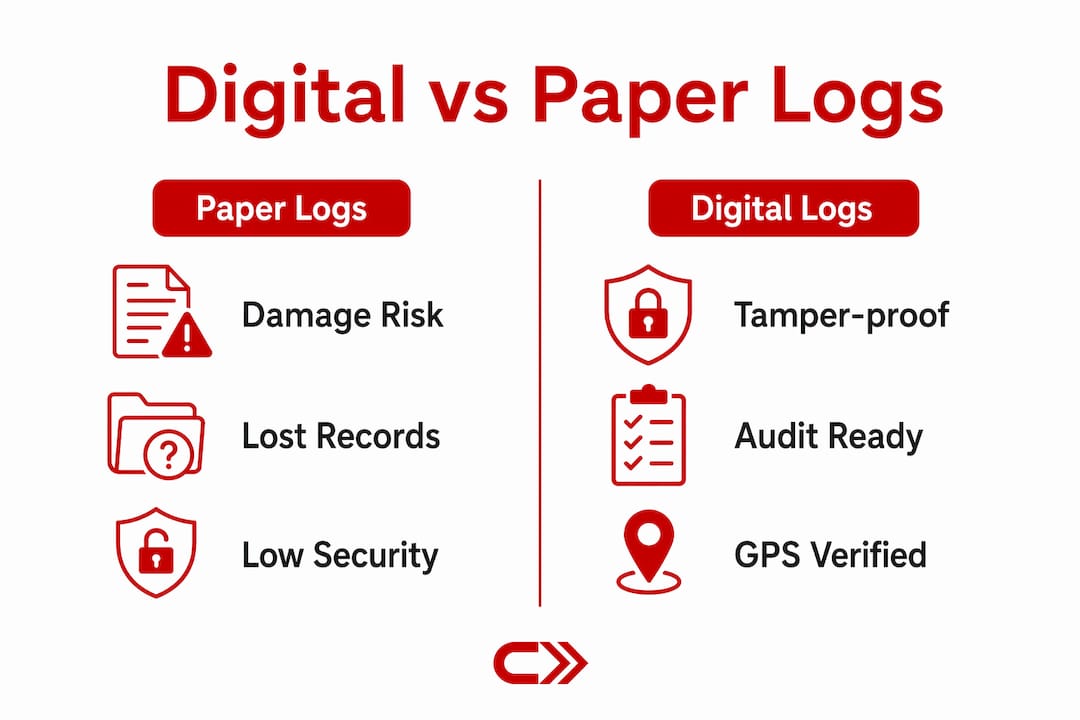
Digital logs solve this with audit-proof evidence. Every entry carries a timestamp, GPS coordinates, and optional photo attachments. That combination makes falsification practically impossible and gives insurers and regulators a record they can trust. Experts consistently note that tamper-resistant digital records carry more weight in insurance claims and liability disputes than paper equivalents.
The compliance picture is equally clear. About 93% of carriers audited in 2025 received at least one violation tied to documentation issues. Digital logs reduce that exposure by keeping records complete, organized, and instantly retrievable during an inspection.
| Record type | Capture rate | Tamper resistance | Audit readiness | Insurance weight |
|---|---|---|---|---|
| Paper logbook | ~27% reach filing | Low | Poor | Limited |
| Digital log | 100% via cloud sync | High | Immediate | Strong |
Pro Tip: Pair your digital log with a GPS vehicle tracker to add location-verified mileage data to every service entry. Insurers and appraisers treat GPS-corroborated records as the most credible form of vehicle documentation available.
Practical uses of digital logs for car owners and enthusiasts
Digital logs do more than store records. They turn historical data into forward-looking maintenance intelligence. The benefits of digital vehicle logs become most visible when owners start using their service history to predict what comes next, not just document what already happened.
-
Track component wear by mileage. Digital logs identify recurring issues at specific mileage intervals, which lets owners anticipate failures before they happen. If your brake pads have worn out at 28,000 miles twice in a row, your log tells you to budget for brakes at 26,000 miles next time.
-
Calculate cost per mile. A complete service history makes it straightforward to divide total maintenance spending by total miles driven. That number tells you whether your current vehicle is worth keeping or whether the math favors selling.
-
Verify service history from anywhere. Mobile access means owners can pull up a full service record from a dealership waiting room, a roadside breakdown, or a private sale negotiation. The record is always current and always with you.
-
Connect OBD-II data for deeper insight. Pairing a digital log with an OBD-II reader adds real-time diagnostic codes to the service history. That combination catches problems earlier and gives mechanics a richer picture before they even open the hood.
-
Monitor recurring issues across multiple vehicles. Enthusiasts managing more than one car benefit from a single platform that tracks each vehicle separately but lets owners compare patterns across their fleet.
The auto maintenance tracker approach that Carjourney takes goes further by using AI to recommend maintenance schedules specific to your exact build, not a generic interval chart that ignores your driving conditions or modifications.
Key Takeaways
Digital car logs are the single most effective tool an owner has for protecting vehicle value, reducing maintenance costs, and building buyer trust at resale.
| Point | Details |
|---|---|
| Efficiency gains are immediate | Digital logs cut maintenance task time from 8–10 minutes to 3–5 minutes per entry. |
| Resale value increases measurably | A full digital service history can add up to 10% to a vehicle’s resale price. |
| Paper records fail at high rates | 73% of paper logbooks are lost before filing; digital logs capture 100% via cloud sync. |
| Compliance risk drops significantly | 93% of audited carriers in 2025 received violations tied to missing documentation. |
| Predictive maintenance becomes possible | Digital logs identify recurring issues by mileage, enabling owners to prevent failures. |
The ownership shift nobody talks about
Most articles about digital logs focus on fleets and commercial drivers. That framing misses the point for the average car owner. The real value is not regulatory compliance. It is ownership transparency, and that changes how you relate to your car.
I have seen owners sell vehicles for thousands less than they were worth simply because they could not prove what had been done to the car. A stack of receipts in a folder is not a service history. It is a pile of paper that a buyer will discount heavily because they cannot verify the order, the mileage, or the authenticity of any individual record. A digital log removes every one of those objections.
The myth I hear most often is that digital logging is complicated or only worth it for high-mileage drivers. Neither is true. The adoption curve is genuinely flat. Most owners are fully operational within 15 minutes of setting up an account. And the value of a complete record compounds over time. Every entry you add today makes the record more credible and more valuable when you sell.
The owners who benefit most from digital logs are the ones who start early. A car with three years of verified digital history is worth more than an identical car with six months of records, even if the maintenance is identical. Buyers pay for the story, and digital logs tell it clearly.
Start logging before you think you need to. The cost of not having records shows up at the worst possible moment.
— Chally
Carjourney makes digital logging simple for real owners
Car owners who want a complete, verified service history without the paperwork have one practical option that combines AI-powered document scanning, community knowledge, and maintenance scheduling in one place.
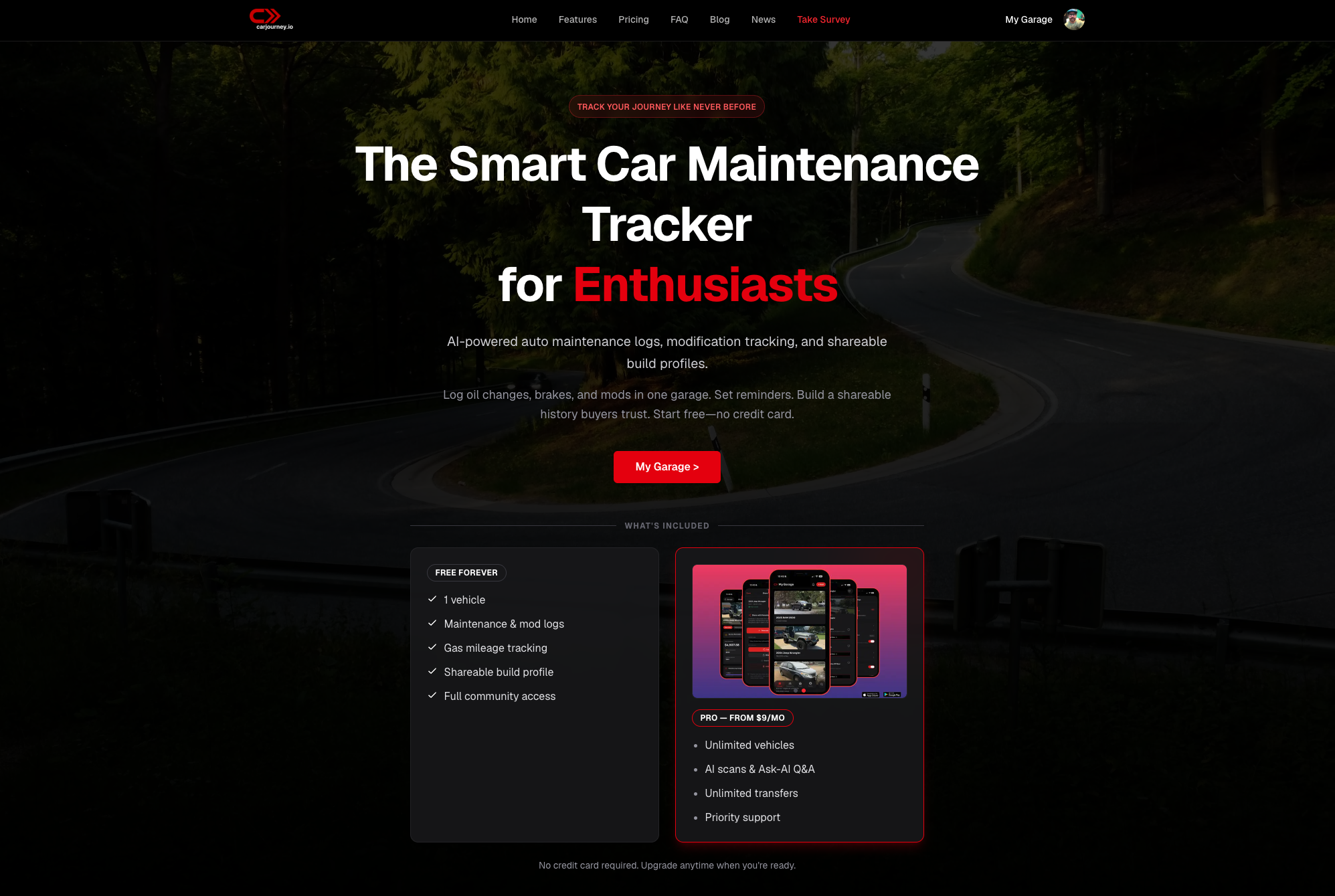
Carjourney was built by a team of gearheads and engineers in Virginia who got tired of scattered receipts and generic maintenance schedules. The platform uses AI to scan your service documents, answer questions about your specific vehicle, and recommend maintenance intervals verified across multiple AI models. Owners get a complete digital log that is shareable, searchable, and credible at resale. Whether you own one daily driver or a full enthusiast garage, Carjourney gives you the kind of vehicle tracking that actually reflects how you use your car.
FAQ
What are digital car logs?
Digital car logs are electronic records of a vehicle’s maintenance, service, and usage history stored in the cloud. They replace paper logbooks with timestamped, searchable, and tamper-resistant entries.
How do digital logs improve resale value?
A full digital service history can increase resale value by up to 10% by giving buyers verified proof of maintenance. Buyers pay more for cars with transparent, complete records because the risk of hidden problems is lower.
Are digital car logs better than paper records for compliance?
Digital logs are significantly more reliable for compliance. Paper logbooks are lost at a rate of 73% before filing, while digital systems capture 100% of entries via cloud sync, making audits and insurance claims far easier to manage.
How hard is it to switch to a digital car log?
Switching is straightforward. Most owners are fully operational within 15 minutes, and smartphone familiarity means there is no significant learning curve for the majority of car owners.
Can digital logs help predict maintenance needs?
Digital logs identify recurring issues at specific mileage intervals, which paper records cannot reliably track. That pattern recognition lets owners schedule repairs before failures occur rather than reacting after the fact.