 carjourney
From the CarJourney journal
Auto Maintenance Tracker: Your Guide to Smart Vehicle Care

Keeping accurate records of your vehicle's maintenance history is one of the smartest investments you can make as a car owner. An auto maintenance tracker transforms the way you manage oil changes, tire rotations, brake inspections, and countless other service tasks that keep your vehicle running smoothly. Rather than relying on faded receipts stuffed in a glove box or vague memories of when you last changed your filters, a comprehensive tracking system provides clarity and control over your vehicle's care. Compare approaches in our car maintenance tracker guide.
Why Track Your Vehicle Maintenance
Vehicle maintenance tracking delivers benefits that extend far beyond simple record-keeping. When you document every service interval, repair, and modification, you're building a complete picture of your vehicle's health over time.
Financial advantages emerge immediately when you track maintenance systematically. Documented service records can increase resale value by thousands of dollars, as prospective buyers pay premium prices for vehicles with verified maintenance histories. You'll also catch small issues before they become expensive repairs, saving significant money on emergency fixes.
The operational benefits are equally compelling:
- Prevent missed services that could void warranties or cause mechanical failures
- Optimize scheduling to align multiple service tasks and reduce shop visits
- Track warranty coverage and ensure you meet manufacturer requirements
- Monitor patterns that might indicate recurring problems or unusual wear
Beyond the practical advantages, proper tracking protects you legally. If a warranty dispute arises or you need to prove maintenance compliance, detailed records provide irrefutable documentation. Finding reliable car maintenance information becomes crucial when you're establishing baseline intervals and best practices for your specific vehicle.

Essential Features to Look For
Not all auto maintenance tracker solutions offer the same capabilities. Understanding which features matter most helps you select a system that matches your needs and usage patterns.
Digital Service Records
The foundation of any effective tracker is comprehensive service documentation. Your system should capture essential details including service date, mileage, service provider, parts used, labor costs, and any warranty information. Photos of receipts add another layer of verification.
Quality tracking platforms allow you to categorize services by type, whether routine maintenance, repairs, modifications, or upgrades. This categorization becomes invaluable when analyzing spending patterns or preparing for annual vehicle maintenance planning.
Automated Reminders and Scheduling
Manual tracking requires discipline that many vehicle owners struggle to maintain. Automated reminder systems eliminate the guesswork by alerting you when services are due based on mileage, time intervals, or both.
| Reminder Type | Best For | Example Use Case |
|---|---|---|
| Mileage-based | High-mileage drivers | Oil change every 5,000 miles |
| Time-based | Occasional drivers | Inspection stickers, annual services |
| Hybrid | Most vehicles | Timing belt replacement (60k miles or 5 years) |
Advanced systems integrate with vehicle data to provide precise recommendations aligned with manufacturer specifications. Some platforms even connect with OBD-II readers to pull actual vehicle data for more accurate scheduling.
Multi-Vehicle Management
Car enthusiasts often maintain multiple vehicles, from daily drivers to project cars and classic restorations. A robust auto maintenance tracker should handle unlimited vehicles without compromising functionality.
Each vehicle deserves its own maintenance schedule, service history, and modification log. The ability to switch between vehicles seamlessly and compare maintenance costs across your fleet provides insights that single-vehicle trackers cannot match.
Digital vs Traditional Tracking Methods
The evolution from paper logbooks to digital platforms represents more than convenience. Each approach offers distinct advantages depending on your circumstances and preferences.
Traditional paper logbooks provide tangible, technology-independent records. Various car maintenance tracking methods have served vehicle owners for decades, with manufacturer-provided books remaining popular. They never require charging, can't be hacked, and survive in harsh environments.
However, paper systems have significant limitations. They're easily lost, damaged, or forgotten. Searching for specific service records means flipping through pages. Calculating total maintenance costs requires manual addition. There's no backup if the logbook disappears.
Digital auto maintenance trackers address these shortcomings while introducing new capabilities:
- Cloud synchronization ensures records are never lost
- Search functions find specific services instantly
- Automatic calculations track spending trends
- Photo storage preserves receipt images
- Export capabilities create reports for buyers or insurance
- Sharing features allow collaboration with mechanics or family members
Modern digital solutions range from simple spreadsheets to sophisticated mobile applications with AI-powered recommendations. Free automotive maintenance tracker tools provide entry points for budget-conscious vehicle owners, while professional platforms offer advanced analytics and integration capabilities.

Building Your Maintenance Baseline
Establishing an effective tracking system starts with understanding your vehicle's specific maintenance requirements. Generic advice rarely serves specialized needs, particularly for modified or performance vehicles.
Manufacturer Recommendations
Your owner's manual contains the manufacturer's recommended maintenance schedule, typically divided into normal and severe driving conditions. Most drivers actually fall into the severe category, which includes frequent short trips, extreme temperatures, dusty conditions, or towing.
Create a master list of all scheduled maintenance items with their intervals. Include:
- Oil and filter changes
- Air filter replacement
- Tire rotation and balancing
- Brake inspections
- Fluid level checks and replacements
- Belt and hose inspections
- Battery testing
- Spark plug replacement
Transfer these intervals into your auto maintenance tracker as recurring reminders. Adjust intervals based on your actual driving patterns and environmental conditions.
Historical Data Entry
If you're starting fresh with a tracking system, don't ignore past maintenance. Gather all available service records, even partial ones, and enter historical data into your tracker.
This historical context reveals patterns you might otherwise miss. Perhaps you've replaced the battery every three years like clockwork, or a particular sensor has failed twice in similar conditions. These insights inform future maintenance decisions and budgeting.
For vehicles with incomplete histories, start from the current date and work backward with what you know. Even approximate dates and mileages provide more value than empty records.
Customization for Modifications
Car enthusiasts who modify their vehicles face unique tracking challenges. Aftermarket parts often have different maintenance requirements than stock components. A performance exhaust might need inspection more frequently, while upgraded brake pads could last longer between replacements.
Your auto maintenance tracker should accommodate custom service intervals for modified components. When you install a cold air intake, create a new maintenance item for filter cleaning or replacement based on the manufacturer's specifications, not the vehicle's original schedule. Understanding recommended maintenance intervals helps establish appropriate baselines before applying modifications.
Maximizing Long-Term Value
An auto maintenance tracker only delivers value when you use it consistently and strategically. Developing habits around documentation and analysis transforms raw data into actionable intelligence.
Consistent Documentation Practices
Immediate entry is the golden rule of maintenance tracking. When you complete a service or repair, log it before you leave the shop or garage. Waiting until later invites forgetfulness and incomplete records.
Photograph every receipt, even for minor purchases like wiper blades or washer fluid. These small expenses accumulate, and complete records provide accurate cost analysis. Many auto maintenance tracker apps include camera integration for instant receipt capture.
Include notes about service quality, mechanic observations, or unusual findings. If your technician mentions slight brake wear that doesn't yet require replacement, document it. This context helps with future decision-making and provides continuity if you switch service providers.
Cost Analysis and Budgeting
Tracking spending patterns reveals where your maintenance dollars actually go. Monthly or annual reports show whether you're spending more on preventive maintenance or reactive repairs, a critical indicator of overall vehicle health.
| Expense Category | Preventive Maintenance | Reactive Repairs |
|---|---|---|
| Cost Predictability | High | Low |
| Planning Value | Excellent | Poor |
| Long-term Cost | Lower | Higher |
| Stress Level | Minimal | Significant |
Smart budgeting based on historical data eliminates surprises. If you know your vehicle averages $1,200 annually in maintenance, you can set aside $100 monthly. This proactive approach prevents the financial stress of unexpected repair bills.
Planning for major services becomes easier with good data. When you know a timing belt replacement costs $800 and occurs every 60,000 miles, you can budget accordingly rather than scrambling for funds when the interval arrives. Resources focused on car maintenance budgeting provide frameworks for financial planning.
Preparing for Vehicle Sales
Complete maintenance records command higher resale prices because buyers value transparency and proof of proper care. When selling your vehicle, your auto maintenance tracker becomes a powerful marketing tool.
Generate a comprehensive service report showing every oil change, tire rotation, and repair with dates, mileages, and costs. This documentation demonstrates responsibility and builds buyer confidence. Some buyers will pay thousands more for vehicles with verified maintenance histories compared to identical vehicles without documentation.
Consider creating a shareable version of your records that protects sensitive information while showcasing service intervals. Digital platforms often include export functions specifically designed for sales situations.
Advanced Tracking Strategies
Once you've mastered basic maintenance tracking, advanced techniques unlock additional benefits for serious car enthusiasts and those managing modified vehicles.
Integration with Vehicle Data
Modern vehicles generate tremendous amounts of diagnostic data through onboard computers. Connecting your auto maintenance tracker to this data stream provides unprecedented insight into vehicle health and performance.
OBD-II readers pull real-time information including:
- Actual fuel economy compared to estimates
- Engine performance metrics
- Error codes before dashboard warnings appear
- Operating temperature patterns
- Sensor health indicators
Some advanced tracking systems integrate directly with OBD-II devices or telematics systems, automatically logging data without manual entry. This automation ensures completeness while reducing the burden of manual documentation.
Professional-grade solutions like those offered in comprehensive platforms go further, using AI to analyze patterns and predict maintenance needs before problems occur. When you combine historical service data with real-time vehicle telemetry, you can spot developing issues that traditional tracking methods miss entirely.

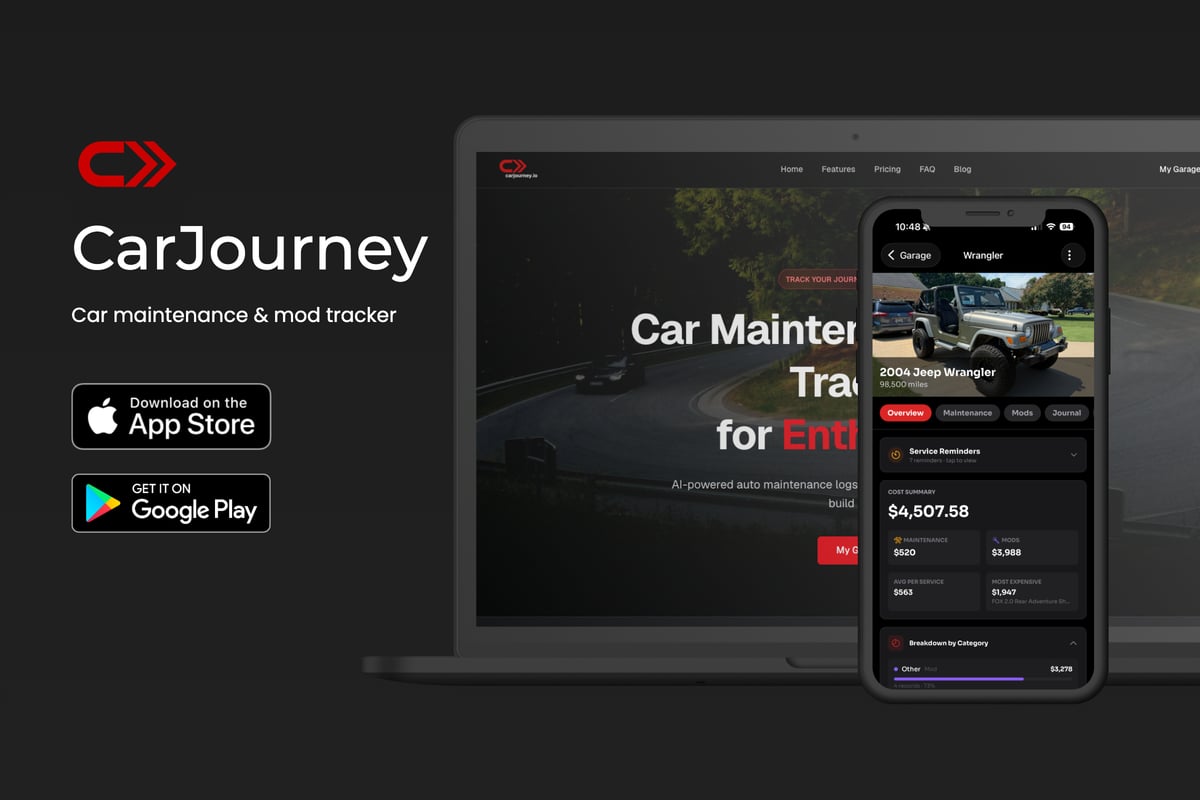
The shift toward connected vehicles and sophisticated tracking platforms represents more than incremental improvement. For car enthusiasts managing builds, modifications, and performance upgrades, having a comprehensive digital record of every change creates a complete vehicle biography. CarJourney Pro - Yearly delivers exactly this capability, combining unlimited vehicle tracking with modification logs and AI-powered features in a single platform.
Modification Documentation
Performance modifications require meticulous tracking beyond standard maintenance. When you upgrade suspension components, install forced induction, or modify engine internals, these changes affect maintenance requirements and resale considerations.
Document each modification with:
- Installation date and mileage
- Parts list with manufacturer and part numbers
- Labor details (DIY or professional)
- Tuning specifications or settings
- Performance before and after measurements
- Photos of installation process
- Warranty information for aftermarket parts
This level of detail serves multiple purposes. It helps you remember specifications when service is needed, provides proof of quality parts to buyers, and creates a portfolio of your build that can be shared with the enthusiast community. Maintaining comprehensive vehicle logs becomes essential when modifications accumulate over time.
Seasonal Maintenance Planning
Vehicles in regions with distinct seasons require different care throughout the year. Your auto maintenance tracker should reflect these seasonal variations with dedicated reminders and checklists.
Spring preparation might include:
- Washing away road salt and inspecting for corrosion
- Switching to summer-weight oil if recommended
- Checking air conditioning performance
- Inspecting and replacing winter-worn wiper blades
Fall preparation typically involves:
- Testing battery strength before cold weather
- Checking antifreeze concentration
- Inspecting heating systems
- Preparing emergency kits
Schedule these seasonal tasks as annual recurring events in your tracker. Over time, you'll refine the timing and specific items based on your climate and vehicle needs.
Community and Knowledge Sharing
Car enthusiasts thrive in communities where knowledge and experiences are shared freely. An auto maintenance tracker that includes social features amplifies this community benefit.
Shareable build profiles let you showcase your vehicle to other enthusiasts, complete with modification history and maintenance records. This transparency builds credibility within communities and can even attract potential buyers when you're ready to sell.
Learning from others' experiences accelerates your own knowledge development. When you see how similar vehicles are maintained, what problems commonly arise, and which modifications deliver the best results, you make better informed decisions about your own vehicle care.
Industry trends continue evolving toward more sophisticated tracking and analysis. Recent studies on automotive maintenance customer loyalty highlight how trust and transparency drive customer satisfaction, reinforcing the value of detailed maintenance documentation.
Selecting the Right Platform
With numerous auto maintenance tracker options available in 2026, choosing the right platform requires evaluating your specific needs against available features.
For casual vehicle owners who drive stock vehicles and primarily need service reminders, simple apps with basic tracking and alerts suffice. Various vehicle maintenance tracker apps provide straightforward solutions without overwhelming complexity.
For multi-vehicle households, platforms that handle multiple vehicles under a single account become necessary. Look for systems that separate records clearly while allowing cost comparison across vehicles.
For car enthusiasts and modifiers, comprehensive platforms with modification tracking, photo galleries, shareable profiles, and community features deliver maximum value. These users need more than maintenance logs - they need complete vehicle biographies that document every change and enhancement.
For professional mechanics or fleet managers, professional maintenance software offers work order management, customer databases, and business-specific features beyond what consumer platforms provide.
Consider these factors during evaluation:
- Data ownership and portability: Can you export your data if you switch platforms?
- Privacy controls: Who can see your vehicle information?
- Offline access: Does the app work without internet connectivity?
- Customer support: What happens if you encounter problems?
- Pricing structure: One-time purchase, subscription, or free with limitations?
Many platforms offer free trials or basic tiers. Test multiple options with actual data before committing to a long-term solution.
Implementation Best Practices
Successfully adopting an auto maintenance tracker requires more than just downloading an app or creating a spreadsheet. Follow these implementation practices to ensure long-term success.
Start small and build gradually. Begin by logging only major services like oil changes and tire rotations. Once this habit solidifies, expand to include minor services, part replacements, and modifications. Trying to document everything immediately often leads to abandonment.
Set a regular review schedule. Monthly reviews of your maintenance records help spot missed services, unusual patterns, or upcoming expenses. This scheduled review becomes part of your vehicle care routine, similar to checking tire pressure or washing your car.
Create reminders before services are due. Don't wait until you've exceeded the interval. Set reminders 500 miles or two weeks before scheduled maintenance, giving you time to schedule appointments and budget for expenses.
Include family members or co-owners in the tracking process if multiple people drive the vehicle. Shared access ensures everyone can log services and stays informed about vehicle status. Understanding how to properly add vehicles to tracking systems streamlines this process.
Back up your data regularly if using local storage solutions. Cloud-based platforms handle this automatically, but spreadsheets or local apps require manual backup to prevent data loss.
Maintain consistency in entry formats. Develop standards for how you record information - date formats, mileage rounding, category names - and stick to them. Consistency makes searching and analysis far more effective.
Managing your vehicle's maintenance history doesn't have to involve scattered receipts and fading memories. A systematic approach to tracking services, repairs, and modifications protects your investment while providing peace of mind and financial benefits. Whether you drive a daily commuter or maintain a collection of modified performance vehicles, comprehensive tracking delivers value that compounds over time. CarJourney brings together everything you need in one AI-powered platform - unlimited vehicle tracking, detailed modification logs, and shareable build profiles that transform how you manage and showcase your automotive passion.