 carjourney
From the CarJourney journal
DIY Car Mods vs Insurer-Backed Builds: Insurance Pros and Cons
Last Updated: November 17, 2026
Quick Summary
DIY car modifications save you labor costs and give you full control, but they put the burden of proof on you at claim time. Insurer-approved builds cost more up front yet settle faster because the paperwork already exists. Declaring mods and documenting workmanship keeps claims clean either way.
- A standard policy assumes a stock vehicle and may limit or exclude aftermarket parts.
- Declare mods that change value, performance, or risk profile to keep claims clean.
- Photograph each part with its receipt before installation and record the install date and torque specs.
- Agreed value pays a figure set at policy inception; actual cash value pays depreciated worth at loss.
- Engine tuning raises premiums more than custom paint or a wrap.
Table of Contents
- DIY Car Modifications vs Insurer-Approved Builds: What Changes on Your Policy
- The Pros of DIY Car Modifications: Cost, Control, and Customization
- The Cons: How DIY Workmanship Affects Claims and Coverage
- Do You Have to Declare Mods to Insurance?
- How to Document Car Modifications for Insurance
- Agreed Value vs Actual Cash Value for Modified Cars
- Modification-by-Modification: Which Upgrades Raise Premiums and Which Don't
- Start Your Build Log Before Your First Wrench Turn
- Frequently Asked Questions
DIY Car Modifications vs Insurer-Approved Builds: What Changes on Your Policy
The pros and cons of DIY car modifications insurance come down to one trade-off: you save on labor, then hand your insurer a reason to question your build's value.
The short version: a DIY car modifications approach gives you control and lower upfront cost, but puts the burden of proof on you at claim time.
Here is where the savings come from, where they disappear, and how to protect yourself either way.
Standard Policy vs Modified-Car Policy at a Glance
A standard auto policy assumes a stock vehicle. A modified-car policy, or a standard policy with a modification endorsement, prices in the parts you added and the risk those parts create.
| Factor | Standard Policy | Modified-Car Policy |
|---|---|---|
| Payout basis | Actual cash value | Often agreed value |
| Aftermarket parts | Limited or excluded | Listed and covered |
| Premium | Lower base rate | Higher, reflects build risk |
| Claim process | Parts disputed at settlement | Parts documented up front |
| Best for | Stock daily drivers | Built or heavily modified cars |
The real issue: a standard policy does not fail you because you modified the car. It fails you when you cannot prove the car's worth or that the work was done properly.
The Pros of DIY Car Modifications: Cost, Control, and Customization
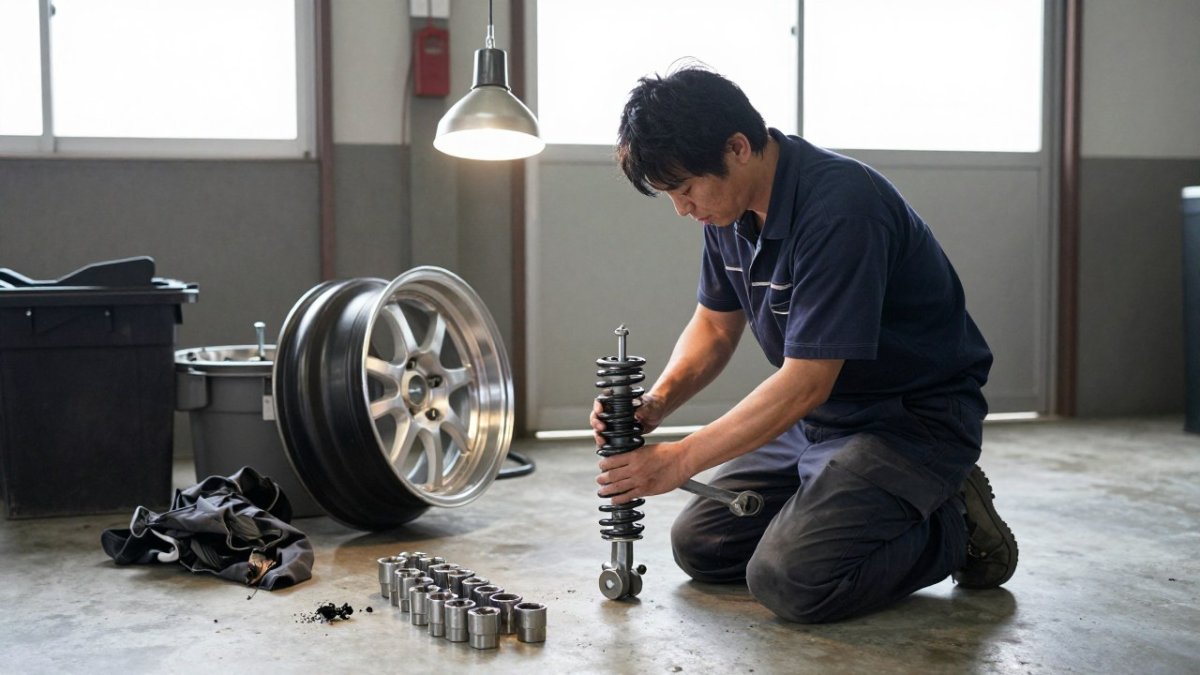
The biggest advantage is simple: you keep the labor money. A shop installs on its schedule at its rate.
Control matters just as much. You decide the torque spec, alignment setting, and wiring route.
Customization is the third leg. One-off brackets, custom paintwork, and parts with no catalog number are hard to source through a shop and easy to fit in your own garage.
Where the Savings Actually Come From
The savings are real but often narrower than people assume. Labor is the obvious line item; diagnostic time, shop supplies, and parts markup add up too.
- Labor: the largest single saving, and the one most often overstated because DIY jobs take longer than a billed shop hour
- Parts markup: buying direct usually beats a shop's retail price
- Repeat work: once you own the tools, the second install costs only your time
Watch out: savings evaporate if a mistake damages a component you then pay a professional to fix. One cross-threaded bolt or mis-torqued suspension mount can wipe out the labor you saved on the whole job.
The Total Cost of DIY Ownership
A fair comparison is not the shop's labor quote against your free Saturday.
On the DIY side, add tools you did not own, consumables, alignment or corner-balancing after a suspension change, and your time.
DIY wins clearly on simple bolt-on work, such as a cat-back exhaust or a set of wheels, and loses its edge on jobs needing specialized tools, calibration, or a warranty you will want later.
DIY vs. Professional Builds: A Side-by-Side
| Factor | DIY Install | Professional Install |
|---|---|---|
| Upfront labor cost | Low, but your time is unpaid | Higher, billed at shop rate |
| Workmanship warranty | None unless the part maker offers one | Usually included by the shop |
| Claim documentation | You must create it | Invoice and work order provided |
| Insurance inspection risk | Higher if records are thin | Lower, because paperwork exists |
| Resale proof | Build log required | Shop records plus your log |
| Best for | Bolt-ons, cosmetic work, repeat jobs | Tuning, safety systems, warranty-sensitive work |
That table is the honest version of the pros and cons. DIY is not automatically cheaper once insurance, inspection, and resale are in the math, and a professional build is not automatically safer if the shop's paperwork never reaches your insurer. The winning move is usually a hybrid: do the simple work yourself, pay for jobs that need calibration or a warranty, and document both the same way.
The Cons: How DIY Workmanship Affects Claims and Coverage
The claim is where DIY work gets expensive. Insurers assess two questions: what was damaged, and was the vehicle maintained in a roadworthy condition. Your own workmanship becomes evidence in that assessment.
A poorly installed part that causes a failure can turn a covered collision claim into a disputed one. To understand how your modification history affects vehicle value and claims, see how modification history affects vehicle value.
National Highway Traffic Safety Administration on vehicle safety also matters here. Some modifications affect safety systems or emissions equipment, and those changes carry legal and insurance consequences beyond the premium.
Installation Quality and the Claim Assessment
An adjuster does not inspect your work like a shop foreman. They look for evidence: receipts, photos, and a clear record of when and how the part went on. Without that record, a DIY install looks identical to an undocumented one, and the insurer has no reason to treat it generously.
Do You Have to Declare Mods to Insurance?
Yes, in most cases you are expected to declare modifications that change the vehicle's value, performance, or risk profile.
The answer depends on your policy wording. Read the disclosure clause, which typically asks you to report anything that alters the vehicle from factory specification.
- Performance modifications: engine tuning, exhaust, suspension, forced induction
- Cosmetic modifications: custom paintwork, wraps, body kits, alloy wheels
- Safety and security changes: alarms, roll bars, brake upgrades
Declaring a mod does not automatically raise your premium, but it keeps the claim process clean.
How to Document Car Modifications for Insurance
Documenting car modifications for insurance is the process of creating dated, organized records of every change so you can prove value and workmanship at claim time or at resale. Dated records of parts, labor, and workmanship can also help you assess disputed repair costs with an insurance claim estimate review service.
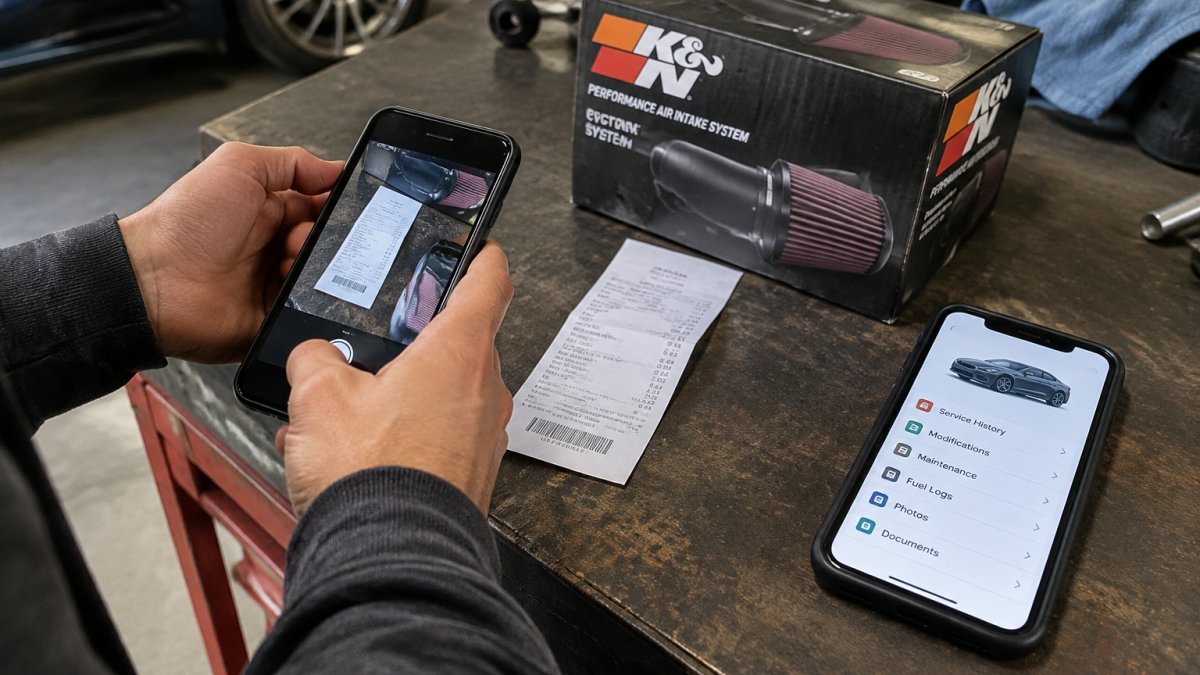
Documentation carries weight because an adjuster assesses a modified car on two questions: what was damaged, and what was the vehicle worth before the loss. Receipts answer the first; a dated record of installation answers the second, showing the part was on the car and installed without creating a hazard. Without that record, a DIY install and an undocumented one look the same to an insurer.
The Documentation Checklist
Here is the checklist we recommend:
- Photograph the part before installation, in its packaging, with the receipt visible
- Record the install date, mileage, and torque specs used
- Keep receipts for parts and any professional alignment or inspection
How DIY Workmanship Shows Up in a Claim
That is why the record should prove workmanship, not just purchase. A photo of the part in the box proves you bought it.
A common mistake is assuming the insurer will "just know" the parts were installed correctly. They will not. The burden of proof sits with you, and it is heavier for DIY work than for a shop invoice.
Proof of Value: What Insurers Actually Want to See
Proof of value is a separate file from proof of workmanship. For an agreed-value policy, the insurer wants to see what the build is worth today: parts receipts, current replacement prices for discontinued items, professional appraisal if you have one, and photos that show condition.
Keep the two files separate but cross-referenced, and update both when you add a part. A build log that only tracks purchases proves you spent money; one that tracks installation and condition proves the car was worth it.
Where DIY Records Differ From Shop Records
A shop invoice and work order are useful, but not a substitute for your own log, because the shop's record stops at the shop door.
For a full walkthrough, see our guide on how to document car upgrades. If you want a complete system for organizing photos and receipts from day one, our article on documenting project car builds covers the whole process.
Agreed Value vs Actual Cash Value for Modified Cars
Agreed value pays a figure set and agreed at policy inception. Actual cash value pays what the vehicle is worth at the time of loss, minus depreciation.
Actual cash value treats your build like a used car with some parts. Agreed value treats it like the car you actually built.
If you are weighing how these structures apply to a heavily modified car, our comparison of agreed value vs stated value insurance for modified cars goes deeper into the trade-offs.
Modification-by-Modification: Which Upgrades Raise Premiums and Which Don't
Not every mod moves your rate the same way. Cosmetic changes usually have a modest effect. Performance and theft-attractive parts tend to cost more to insure.
| Modification | Typical Premium Effect | Why |
|---|---|---|
| Custom paint or wrap | Small increase | Higher repair cost |
| Aftermarket alloy wheels | Moderate increase | Theft and replacement cost |
| Suspension upgrade | Moderate increase | Performance and handling risk |
| Engine tuning | Larger increase | Power, speed, and wear |
| Security system | Possible discount | Lower theft risk |
Aftermarket wheels are a good example of a mod that looks cosmetic but prices like a risk item. If you are curious how a specific set affects your rate, our article on whether aftermarket wheels affect car insurance breaks it down.
Start Your Build Log Before Your First Wrench Turn
The single best insurance decision you can make happens before you touch a bolt: start a record.
That is what CarJourney is built for. Our digital garage uses VIN-based vehicle setup, AI-powered maintenance logs, and Ask-AI Q&A to keep service and modification records together.
Start your log before the first wrench turn. Your future claim, and your future buyer, will thank you.
The gap between a smooth claim and a disputed one is usually paperwork, not workmanship.
Frequently Asked Questions
Will my insurance premiums increase if I perform DIY car modifications?
Often, yes. Insurers price risk on the vehicle as it left the factory, so performance changes like engine tuning or suspension work usually raise premiums because they increase speed, repair costs, and theft appeal. Cosmetic changes such as custom paintwork or alloy wheels can also add cost because replacement parts are pricier. Not every change triggers an increase: some safety upgrades may qualify for discounts. The only reliable answer comes from your own insurer after you disclose the specific DIY car modifications you plan.
Do you have to declare mods to insurance, and what happens if you don't?
You should declare any change that alters the vehicle's appearance, performance, or functionality. Failing to disclose can lead to a denied claim, a partial payout, or a policy cancelled for misrepresentation. If an adjuster finds undeclared aftermarket parts during a claim assessment, the insurer may dispute or limit the claim. Declaring changes takes one phone call; skipping it can cost you the whole repair bill.
Does standard auto insurance cover aftermarket parts installed by the owner?
Standard policies typically cover the car as originally manufactured. Aftermarket parts are often excluded or capped, and some policies only pay for OEM replacement parts, leaving you to cover the difference. If you want your DIY car modifications protected, ask about endorsements or a modified-car policy that lists the parts and their value. Keep receipts and photos so you can prove what was installed and what it cost.
What is agreed value vs actual cash value for modified cars?
Actual cash value pays what the vehicle is worth at the time of loss, including depreciation, which usually shortchanges a build with expensive parts. Agreed value sets a fixed figure upfront based on documented parts and labor, so a total loss pays that amount. Agreed value costs more and requires proof such as receipts, photos, and a build log. For heavily modified cars, the extra premium often beats the gap between a build's cost and its depreciated book value.
How does the $3,000 rule apply to custom car modifications?
Insurers set their own total-loss thresholds, and some policies treat accessory claims differently. Terms vary by insurer, so check your policy wording. If your DIY car modifications are worth thousands, confirm in writing how your policy values them and whether a separate rider is needed to avoid a payout capped at the base vehicle value.
 Add carjourney.io as a preferred source on Google →