 carjourney
From the CarJourney journal
Do Aftermarket Wheels Affect Car Insurance?
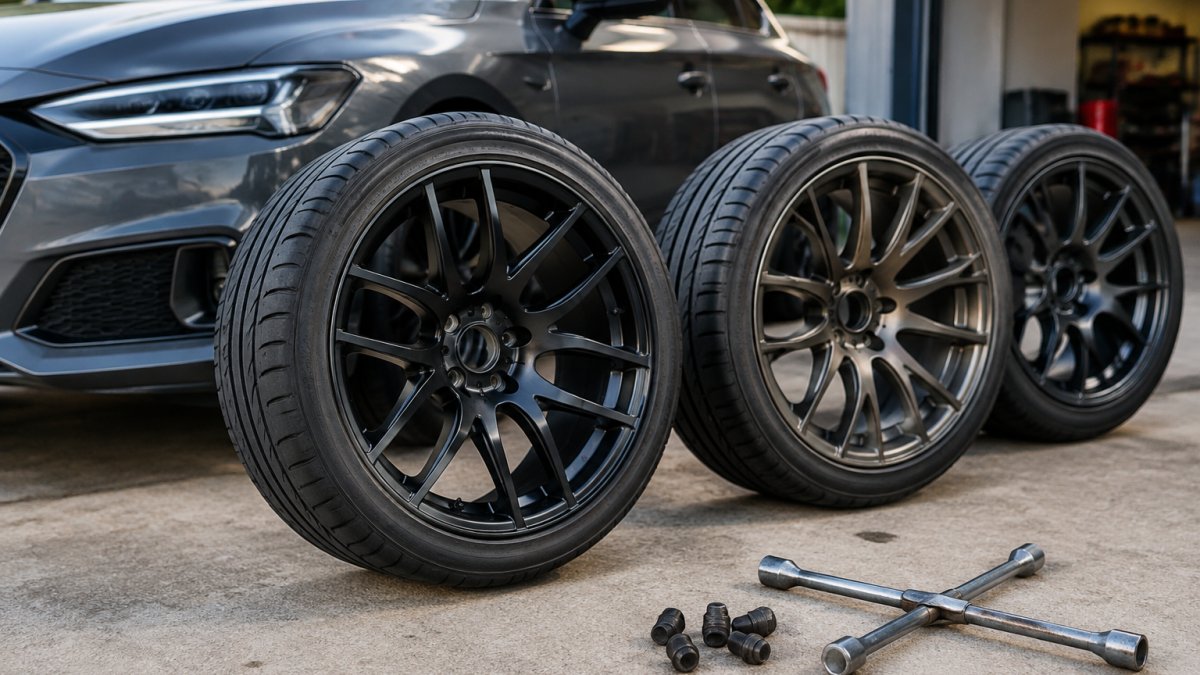
Last Updated: November 12, 2026
Quick Summary
Aftermarket wheels are a vehicle modification that can raise your premium through higher replacement cost and theft risk, and you should declare them to your insurer. If you don't disclose them, the insurer may only pay for stock replacement wheels or deny part of a claim.
- Modest alloy wheels on a daily driver may change little, while expensive custom wheels can push your rate up.
- Call your insurer, state the change plainly, and ask what your custom-parts limit is right now.
- Request written confirmation by email or policy endorsement showing the wheels are on record.
- Without receipts, photos, part numbers, and install dates, the insurer defaults to stock replacement value.
- An endorsement may be available to raise the custom-parts limit above the standard cap.
Table of Contents
- Are Aftermarket Wheels Considered a Vehicle Modification?
- How Aftermarket Wheels Affect Your Insurance Premium
- Do You Have to Declare Alloy Wheels on Insurance?
- Will Insurance Cover Aftermarket Rims After an Accident or Theft?
- Custom Wheels Insurance Claim Documentation: How to Prove Your Wheel Value
- Policy Endorsements and Coverage Limits for Custom Wheels
- Documenting Your Wheel Upgrade Before You Call Your Insurer
- Frequently Asked Questions
Are Aftermarket Wheels Considered a Vehicle Modification?
Yes. Aftermarket wheels are a vehicle modification, and that single fact is where most insurance confusion starts.
Enthusiasts who upgraded their wheels years ago often never think twice about it. That is a common and understandable mistake. A wheel swap feels cosmetic. To an insurer, it is a modification with real financial consequences.
So what counts as a modification? Anything that changes the car from how it left the factory. That includes:
- Wheels and rims
- Suspension and lift kits
- Engine or exhaust work
Wheels are one of the most common modifications, and one of the most overlooked at policy time.
Stock Wheels vs. Aftermarket Wheels: What Insurers See
Stock wheels are the original equipment that came on your car from the factory. They match the manufacturer's standard specification for that model.
Aftermarket wheels are any wheels installed after purchase that did not come from the factory. That includes alloy wheels, custom rims, and larger-diameter setups.
Insurers see these two categories very differently. Stock wheels are already reflected in the vehicle's rating. Aftermarket wheels are an add-on the insurer may not know about, and that gap is where claims can go wrong.
How Aftermarket Wheels Affect Your Insurance Premium
Aftermarket wheels can raise your premium, but the effect is rarely a single line item. In most personal auto policies, the premium is built from rating factors like territory, driving record, vehicle symbol, and coverage selections.
Here is what usually drives the decision:
- Replacement cost. Pricey wheels cost more to replace, so the insurer carries more risk. If the wheels push the vehicle's stated value or replacement cost above the range the insurer priced, the physical damage premium can move.
- Theft risk. High-end wheels are a target. Comprehensive coverage pays for theft and vandalism, and an insurer that sees a theft-prone accessory may adjust the comprehensive rate or apply a surcharge.
- Safety and fitment. Wheels that change the car's handling, clearance, or roadworthiness get closer scrutiny. A setup that fails inspection or alters the speedometer reading can be treated as an underwriting concern rather than a cosmetic upgrade.
Modest alloy wheels on a daily driver may change little, while expensive custom wheels on a modified car can push the rate up or prompt a referral to underwriting.
Factors That Influence an Insurer's Risk Assessment
Insurers weigh several things when they look at a wheel upgrade. Wheel size, width, and fitment matter. So does whether the wheels meet the manufacturer's standard specification for safety.
A common mistake is assuming a bigger wheel is automatically a problem. It is not. The real question is whether the change is safe, legal, and disclosed. A wheel that fits properly and keeps the car roadworthy is a very different risk from one that rubs, alters the speedometer, or fails inspection.
Watch out: a wheel and tire package that changes the overall diameter can throw off the speedometer and odometer, and an insurer may treat that as a misrepresentation issue at claim time if the change was never disclosed. Because diameter changes can affect both accuracy and disclosure, THE SPEED SHOP CANADA connects wheel fitment choices with the practical details that matter when modifying a car.
A Worked Example: Two Drivers, Two Outcomes
Consider two hypothetical drivers, both insuring a mid-size sedan with full coverage.
- Driver A installs a modest set of alloy wheels and adds them to the policy. Whether the premium changes depends on the insurer's rating of the vehicle's value.
- Driver B installs a premium set of wheels on a car that also has suspension work. The insurer may refer the policy to underwriting and may recommend an endorsement to raise the custom-parts limit.
The difference is not the wheel itself. It is the value, the overall build, and whether the insurer knew before the claim. A five-minute call separates the two outcomes.
Do You Have to Declare Alloy Wheels on Insurance?
Yes, you should declare alloy wheels to your insurer. Disclosing modifications that affect the vehicle's value or risk is generally expected by insurers.
This is the question we get most: do you have to declare alloy wheels on insurance? The honest answer is that you are expected to, even when the wheels seem minor.
If you are unsure whether your wheels count, call your insurer and ask. For a practical way to keep every upgrade on record, you can track vehicle upgrades for insurance so nothing slips through.
The Disclosure Process, Step by Step
Telling your insurer is only the first step. Knowing what to say and how to prove it later matters just as much. Here is a general process to consider:
- Gather the details before you call. Have the wheel brand, model, part number, diameter and width, purchase price, install date, and the shop that did the work. If the wheels came with the car, note that too.
- Call the insurer's service line and ask for the modifications desk. Not every carrier has one, but the representative can route you to underwriting if needed.
- State the change plainly. Say you have aftermarket wheels, give the value, and ask whether they need to be added to the policy or noted on the file.
- Ask two specific questions. What is my custom-parts limit right now, and does adding these wheels change my premium or require an endorsement?
- Request written confirmation. Ask for an email or policy endorsement showing the wheels are on record. A phone note is better than nothing, but a written record is what you want at claim time.
- Re-check after any further changes. If you add tires, suspension work, or a second set of wheels, repeat the process.
A common pattern is that the representative notes the wheels but does not change the premium, and the policyholder assumes that means full coverage. It does not.
Watch out: if you disclose the wheels but never confirm the custom-parts limit in writing, you can still face a shortfall at claim time because the standard sublimit may be lower than the wheels are worth.
What Happens If You Don't Disclose Aftermarket Wheels
Skipping disclosure is where policyholders get burned. If you file a claim and the insurer finds undisclosed aftermarket wheels, several things can happen:
- The insurer may only pay for stock replacement wheels.
- A portion of the claim may be denied.
- In serious cases, the policy terms may be called into question.
Watch out: the biggest risk is not a higher premium. It is paying out of pocket after an accident because the wheels were never on the policy. That is a costly surprise you can avoid with one phone call and one confirmation email.
Will Insurance Cover Aftermarket Rims After an Accident or Theft?
Standard policies may cover aftermarket rims up to the policy's limits. Some policies cap custom-parts coverage unless an endorsement is added, so the wheels may be only partly covered.
The outcome depends on the cause of damage and your coverage type. Here is how the common scenarios usually play out:
| Cause of Damage | Coverage That May Apply | What to Expect |
|---|---|---|
| Collision | Collision coverage | Covered after your deductible, often capped for custom parts |
| Theft | Comprehensive coverage | Covered after deductible, subject to custom-parts limits |
| Vandalism | Comprehensive coverage | Same limits as theft |
| At-fault accident | Your collision coverage | Your deductible applies |
| Other driver at fault | Third-party claim | The other insurer may cover your wheel value |
Coverage Scenarios by Cause of Damage
Collision coverage handles damage from hitting something (What is covered by collision and comprehensive auto insurance?). Comprehensive coverage handles theft, vandalism, and similar events. Both usually come with a deductible you pay first.
The catch is the custom-parts cap. A standard policy may only pay a set amount for aftermarket parts, no matter what you spent. If your wheels cost more than that cap, the difference is your out-of-pocket cost.
Custom Wheels Insurance Claim Documentation: How to Prove Your Wheel Value
To prove your wheel value, you need records: receipts, photos, part numbers, and install dates. Without them, the insurer defaults to stock replacement value, and you lose the difference.
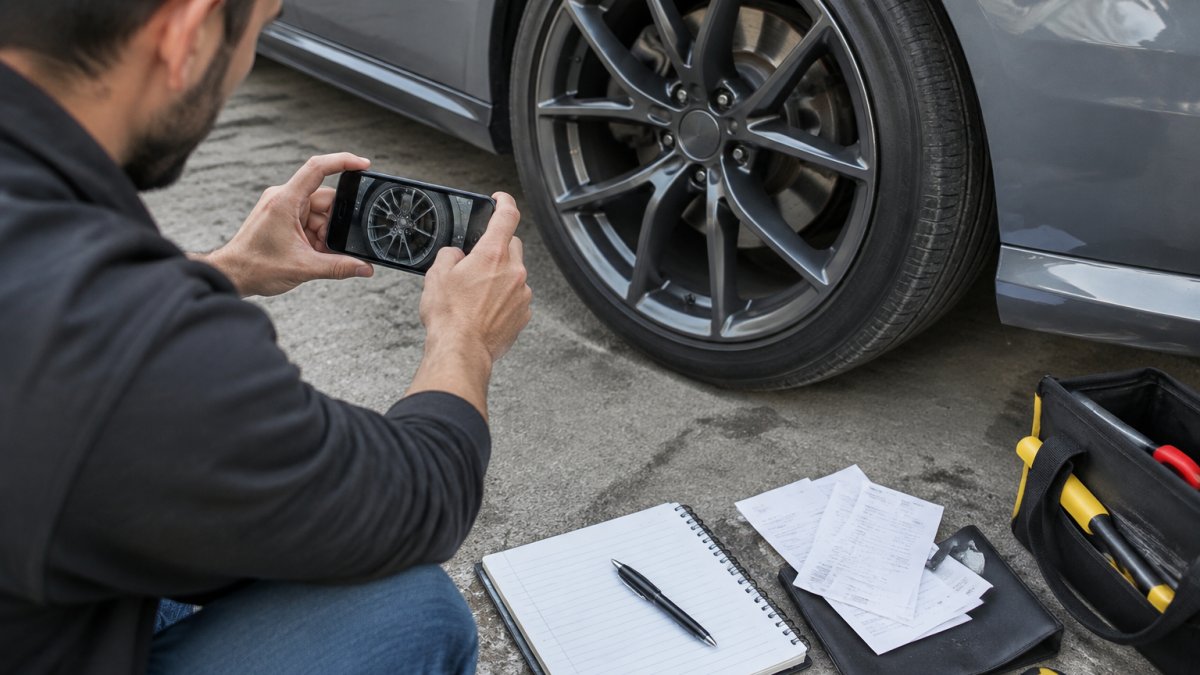
This is the part most guides skip, and it is the part that decides your payout. Custom wheels insurance claim documentation should include:
- Purchase receipts showing what you paid
- Photos of the wheels on the car, plus close-ups of any damage
- Part numbers and manufacturer for each wheel
A focused car modification documentation guide walks through exactly what records to assemble for a wheel claim. If you want the full process, our guide on how to document car upgrades covers receipts, photos, and proof of value from start to finish.
Policy Endorsements and Coverage Limits for Custom Wheels
A policy endorsement is an add-on that changes your coverage. For custom wheels, an endorsement may be available to raise the custom-parts limit. Confirm availability with your insurer.
Without an endorsement, you rely on the standard cap, which is often lower than the cost of premium wheels. Ask your insurer two questions before you buy coverage:
- What is my custom-parts limit right now?
- What would an endorsement cost to cover my wheels at full replacement cost?
Getting those answers in writing protects you later. It also tells you whether the upgrade is worth insuring at all.
Documenting Your Wheel Upgrade Before You Call Your Insurer
Before you call your insurer, gather your records in one place. A clean, organized file makes disclosure simple and claim time painless.
Use a copy-ready mod list format like this:
| Part Name | Manufacturer | Part Number | Install Date | Cost |
|---|---|---|---|---|
| Wheel set | [Brand] | [Number] | [Date] | [Amount] |
Our mod list template gives you the exact format to record part numbers, install dates, and costs. And if you are also wondering whether the upgrade touches your factory coverage, our guide on whether modifications void warranties explains what manufacturers can deny.
CarJourney can help with this.
Disclosure is the whole game here. The enthusiasts who get paid fairly at claim time are the ones who documented their wheels and told their insurer up front. That takes a system, not a memory.
Frequently Asked Questions
Do you have to tell insurance about aftermarket wheels?
Yes. Most auto insurance policies require you to disclose any modification that changes your vehicle's value or risk profile, and aftermarket wheels qualify on both counts. If you install custom wheels and skip disclosure, an insurer can reduce a payout, deny a claim for the wheels, or in serious cases treat the policy as misrepresented. Call your insurer or update your policy online after installation, and keep a dated record of when you notified them so there is no dispute later.
Will insurance cover aftermarket rims if they are damaged in an accident?
Coverage depends on your policy terms. A standard auto policy typically covers the wheels that came on the vehicle from the factory, so an expensive set of replacement wheels may only be reimbursed at original equipment value unless you add custom-parts coverage. If the damage comes from a collision and you carry collision coverage, the claim is handled under that section, minus your deductible. Review your coverage limits before assuming a full replacement is included.
Do aftermarket wheels increase your insurance premium?
They can. Insurers assess replacement cost and theft risk, and a costly set of custom wheels raises both. Some carriers add a small surcharge, others require a custom-parts endorsement with its own premium, and some leave the rate unchanged if the wheels are modest. The increase is usually modest compared with the cost of replacing the wheels out of pocket after a claim, so disclosure is almost always the cheaper path.
What documentation should I keep for custom wheels insurance claim documentation?
Keep the original purchase receipt showing wheel brand, size, and price, plus photos of the wheels installed on the car and of any serial numbers or stamps. Store the wheel specification sheet, alignment or fitment records, and proof that you notified your insurer. A dated digital log of the install, with mileage at the time, makes a claim far easier to process and helps if you later sell the car and want to show buyers the build history.
 Add carjourney.io as a preferred source on Google →