 carjourney
From the CarJourney journal
Automotive Fabrication Tools for a Home Garage Buyers Guide
Last Updated: November 10, 2026
Quick Summary
Fabrication tools are the equipment used to cut, bend, shape, join and finish metal parts. A home garage needs a core kit first: quality hand tools, a sturdy bench with a vise, a MIG welder, and a bead roller or metal brake for body panels.
- Buy hand tools, a bench and quality clamps first, since they improve accuracy at low cost.
- A MIG welder is the most useful first purchase for most home garages.
- A bead roller and planishing hammer give the largest gain per dollar for body panel work.
- Add a plasma or CNC cutter only after you have a clear backlog of parts that need precision cutting.
- Check used bead roller dies, metal brake fingers and welder housings for wear before buying.
Table of Contents
- What Fabrication Tools a Home Garage Actually Needs
- Metal Fabrication Tools List: Hand Tools for Sheet Metal
- Shaping and Forming Tools for Body Panels
- Cutting, Notching and Welding Gear Worth Buying First
- Best Automotive Fabrication Tools for Home Garage Setups
- Buying Used Automotive Fabrication Tools for Home Garage Projects
- Space, Safety and Maintenance Tips Before You Buy Your First Tool
- Choosing Your First Fabrication Tool Kit and Next Steps
- Frequently Asked Questions
Setting up a home garage for automotive fabrication is one of the most rewarding upgrades a car enthusiast can make. Whether you are rebuilding a rusted quarter panel or fabricating a custom bracket, the right tools decide how clean the work turns out. Many DIY builders buy tools in a rush, then regret it. This guide walks through what a home garage actually needs, so your fabrication tool budget goes further.
Fabrication tools are the equipment used to cut, bend, shape, join and finish metal parts. For a home garage, the goal is a small, versatile kit that covers the most common repairs and builds without filling every square foot of floor space.
What Fabrication Tools a Home Garage Actually Needs
Most hobbyist fabricators need a core set before they need any specialty machine. Start with hand tools for layout and shaping, a cutting method that suits your material, a basic welder, and a sturdy workbench. A good bench, a vise and quality clamps do more for accuracy than an expensive tool bought too early.
Many builders make the mistake of buying a plasma cutter or CNC table first. Pick tools by the jobs you do every month. If your projects are mostly body panels and brackets, a metal brake and a bead roller will earn their keep long before a large cutting table does.
Metal Fabrication Tools List: Hand Tools for Sheet Metal
Hand tools form the foundation of any sheet metal fabrication setup. A basic list includes a ball-peen hammer, body hammers, dollies, a tin snips set, a scribe, a combination square and a steel rule. These cost little and handle the majority of small repairs.
Watch out: cheap clamps slip under load and can scratch finished panels, so buy quality clamps even when the rest of the kit is budget-friendly.
Layout tools deserve equal attention. Accurate marking prevents wasted sheet stock, which adds up quickly when you are working with automotive-grade steel or aluminum.
Shaping and Forming Tools for Body Panels
Shaping tools turn flat stock into curved body panels. Shrinkers and stretchers, bead rollers, English wheels and planishing hammers are the classic options. Many suppliers sell shrinkers, stretchers, bead rollers, planishing hammers and metal brakes aimed at body panel work, so compare current listings directly for range and cost.
For most builders, a bead roller and a planishing hammer deliver the largest gain per dollar. English wheels take more practice but give smoother compound curves once you learn the technique.
Cutting, Notching and Welding Gear Worth Buying First
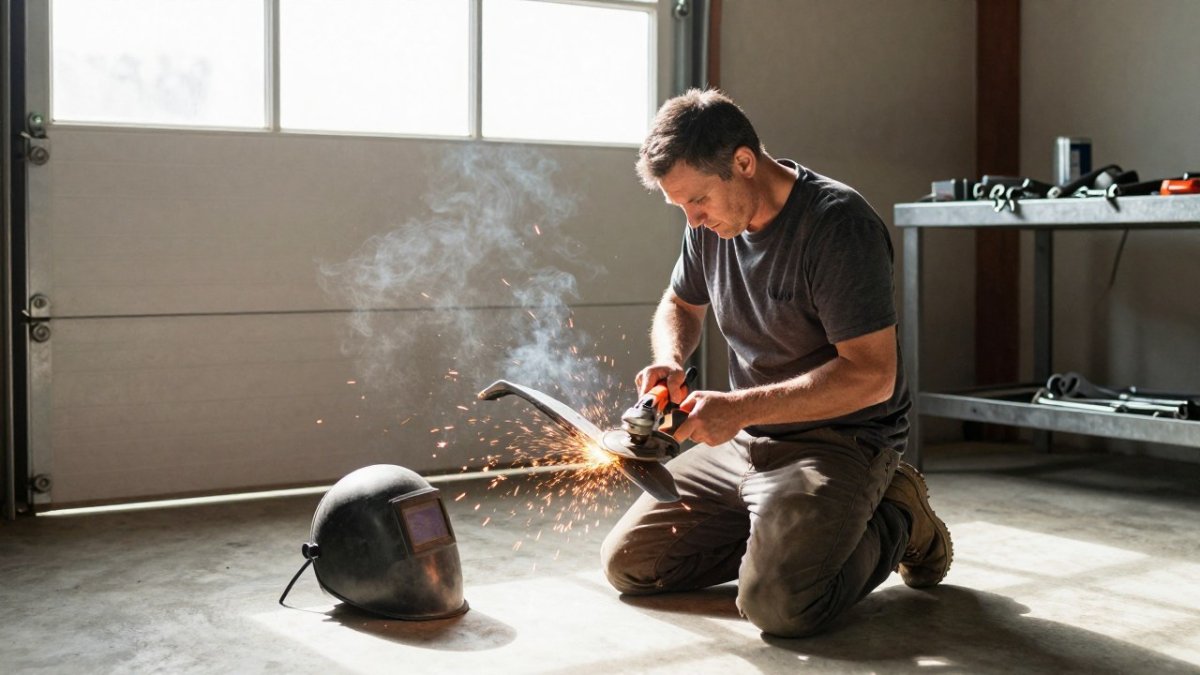
Cutting and joining gear determines how fast a project moves from sketch to finished part. A MIG welder is the most useful first purchase for most home garages because it handles steel and thin body work well. Pair it with an angle grinder and cutoff wheels for quick trimming.
A notcher speeds up tube and sheet work considerably. For tube-heavy builds, a pipe bender earns a spot on the wish list early.
CNC plasma tables are available for garage fabricators, but they are usually a later-stage purchase. Check current pricing, dimensions, included accessories and software before you commit.
Best Automotive Fabrication Tools for Home Garage Setups
The right tool depends on the projects you plan. For brackets and simple repairs, a compact kit of hand tools, a MIG welder and a bench grinder covers most needs. For full body work, add a bead roller, a metal brake and a shrinker/stretcher pair.
Here is a summary of how the main tool groups map to common jobs:
| Tool Group | Common Jobs | Typical Starting Point |
|---|---|---|
| Hand tools (hammers, dollies, snips) | Small dent work, layout, trimming | Low cost, buy first |
| Bead roller and planishing hammer | Stiffening panels, smoothing seams | Mid-range, high value |
| Metal brake | Bending flanges and brackets | Mid-range |
| MIG welder | Joining steel and body panels | Core purchase |
| CNC plasma table | Precision cutting of parts | Higher cost, later stage |
Prices vary by brand and listing, so check current pricing before budgeting.
Buying Used Automotive Fabrication Tools for Home Garage Projects
Used equipment is where a home fabricator can get the most capability for the money, but only if you know which failure points to check. Hand tools and simple mechanical machines age well, while electronic welders and plasma cutters are harder to judge from a listing photo. Focus your search on tools whose wear is visible and mechanical, and be cautious with anything that depends on circuit boards or proprietary consumables.
For bead rollers, inspect the working dies closely. Look for pitting, flat spots or uneven grooves on the roller faces, since these transfer directly to every panel you form. Turn the handle by hand under no load and feel for binding or gritty spots in the bearings. Check that the adjustment screw threads smoothly through its full travel. Worn dies can sometimes be reground, but that adds cost, so factor it into your offer.
Metal brakes should be checked for bent fingers and worn hinge pins. Sight down the bend line and confirm the fingers align, because a bent finger leaves a crooked flange on every part. Play in the hinge pin or a loose clamping bar is usually repairable, but a cracked weld on the frame is a reason to walk away. If the brake comes with a box-and-pan attachment, confirm that the locking mechanism engages cleanly.
For welders, open the housing if the seller allows it and look for dust packed onto the transformer and cooling fan, along with any scorching around terminals. Once the welder and its consumables are accounted for, keeping them accessible without crowding the work area is part of the same practical planning, and garage organization tips can help make room for safe, efficient fabrication.
Hammers, dollies and planishing hammers should show a smooth, unchipped face. Check that the wooden handles, if any, are sound and that the metal heads are tight. Dollies with cracked or deeply pitted surfaces will mark panels, so inspect them as carefully as the larger machines.
Watch out: a tool that runs well in a demonstration can still fail under sustained use, so ask whether you can run it for several minutes before paying.
Before you commit, confirm that replacement parts remain available from the manufacturer or an aftermarket supplier. Discontinued dies, drive rolls or switches can turn a bargain into a dead tool. Ask whether the original manual or wiring diagram is included, and search the model number to see if parts lists are still published.
Space, Safety and Maintenance Tips Before You Buy Your First Tool
Space is the constraint most home garages hit first, and it shapes which tools make sense before budget does. Smarter garage storage ideas can help you fit a working bay into a tight garage. A typical single-car garage has perhaps 150 to 200 square feet of usable floor once you account for a car, a water heater and a chest freezer, so every tool needs to justify its footprint. Measure the wall and ceiling space before you shop.
Vertical storage does most of the work. Wall-mounted French cleat rails hold hammers, dollies, tin snips and clamps in a single strip, and they can be rearranged as your kit grows. Rolling carts with locking casters let you pull a bead roller or welder into the open bay for a session and roll it back against the wall afterward.
For power equipment, plan the layout around the electrical circuit before you buy. Many home garages run one or two 120V circuits, and a MIG welder on a shared circuit with a compressor or shop vac can trip the breaker mid-weld. Check the nameplate amperage on each machine and confirm your panel capacity. Route cords overhead or along the wall so they stay clear of the floor where you walk and where grinding debris collects.
Watch out: welding in a closed garage without ventilation builds up fumes quickly, so open a door or run an exhaust fan before striking an arc.
Safety starts with a fire extinguisher rated for ordinary combustibles, electrical fires and metal fires, mounted near the exit rather than behind the workbench. Plan a dedicated paint booth setup if your builds involve spraying. Wear safety glasses at all times around grinders and cutoff wheels, and use a face shield with a welding helmet that has the correct shade lens for your process.
Maintenance is where a home fabricator's accuracy is won or lost. Clean bead roller dies and shaping stands after each session, since metal filings embedded in the rollers mark soft panels. Lightly oil sliding parts and pivot points on metal brakes and notchers, and check that clamping bolts stay tight, because looseness in a brake die shows up as inconsistent bend angles. Store measuring squares and steel rules flat and away from grinding dust.
Keep a simple maintenance log with the date, the task and any parts replaced. Recording wear intervals for welder liners, contact tips and grinder discs turns guesswork into a predictable replacement schedule, which helps you budget consumables before a project stalls.
Choosing Your First Fabrication Tool Kit and Next Steps
Start with a core kit: quality hand tools, a solid bench with a vise, a MIG welder and a bead roller or metal brake if your projects involve body panels. Add a plasma or CNC cutter only after you have a clear backlog of parts that need precision cutting.
Track every build as you go. Logging tool purchases, project specs and maintenance intervals in one place makes it easier to plan upgrades and show your work later. CarJourney helps organize project records and build history so your garage investments stay visible from one project to the next.
Ready to keep your fabrication projects organized? Get started with CarJourney and turn every build into a documented, shareable history.
Frequently Asked Questions
What tools do you need for automotive fabrication at home?
A basic home fabrication setup starts with a bench vise, clamps, a set of hammers and dollies, aviation snips, a drill with bits, an angle grinder and a set of measuring and layout tools. Those cover cutting, shaping and fitting sheet metal for most body and bracket work. Add a welder once the basics feel comfortable, since welding is where most of the money and the learning curve sit. Prioritize tools that match the first project rather than buying a full shop at once, and expect a modest starter kit to cost a few hundred dollars before any large machines enter the picture.
Which welder is best for automotive sheet metal?
For thin automotive sheet metal, a MIG welder is the most common choice for home garages because it is relatively easy to learn and works well on panels and brackets. Look for a unit with a fine voltage adjustment and the ability to run on standard household power, and plan for a supply of shielding gas and wire. Tack welding is useful for holding panels in position before finish welds. Compare the stated thickness range on each machine against the metal you plan to join, since a welder rated for thicker stock may be hard to dial in for thin panels.
Should you buy new or used automotive fabrication tools?
Used tools can save significant money, especially on hand tools, bead rollers, metal brakes and older English wheels, which are often built for decades of use. Inspect used machines for worn bearings, cracked frames, loose gibs and missing guards before buying. Consumables such as welding tips, cutting discs and drill bits should be replaced rather than reused. New tools make more sense for electronics, plasma cutters and anything with a warranty you would want, since pricing depends on the model, accessories and where you buy, so check current listings and retailer pages before committing.
 Add carjourney.io as a preferred source on Google →