 carjourney
From the CarJourney journal
Routine Service Tips to Keep Your Car Running Strong

Routine service tips are the specific maintenance tasks performed on a schedule to preserve your car’s performance, safety, and resale value. The industry term for this practice is preventive maintenance, and 88% of manufacturers rely on it as their primary strategy because it trades unpredictable repair bills for predictable, manageable costs. Standard intervals include oil changes every 3,000–5,000 miles, air filter replacements every 12,000–15,000 miles, and major inspections starting at 100,000 miles. Following these intervals protects your warranty, satisfies state emissions requirements, and keeps expensive components like engines and transmissions running for the long haul.
1. What are the most important routine service tasks?
Oil and filter changes sit at the top of every maintenance schedule by mileage. Fresh oil lubricates engine parts, carries away heat, and suspends contaminants. Skipping changes lets sludge build up, which accelerates wear on bearings and cylinder walls. Most manufacturers recommend every 3,000–5,000 miles for conventional oil, though full-synthetic formulas can extend that interval further.
Beyond oil, your car depends on several other fluids to function safely:
- Coolant: Prevents overheating in summer and freezing in winter. Check the reservoir level monthly and test concentration before cold weather.
- Brake fluid: Absorbs moisture over time, which lowers its boiling point. Flush it every two years or per your owner’s manual.
- Transmission fluid: Protects gears under load. Low or dirty fluid causes slipping and expensive damage.
- Windshield washer fluid: A safety item, not a luxury. Keep it full year-round.
Tire pressure checks belong on your monthly service checklist. Underinflated tires wear unevenly, reduce fuel economy, and increase blowout risk. Rotate tires every 5,000–7,500 miles to even out tread wear across all four corners. Air filters trap dust and debris before they reach the engine. Replace them every 12,000–15,000 miles, or sooner if you drive on unpaved roads regularly.
Brake pad and rotor inspections catch wear before it becomes a safety problem. Most pads include a wear indicator that squeals when the pad reaches minimum thickness. Inspect brakes at every tire rotation. Belts and hoses deserve an annual visual check for cracking, fraying, or swelling. A snapped serpentine belt leaves you stranded; a burst coolant hose can destroy an engine in minutes.
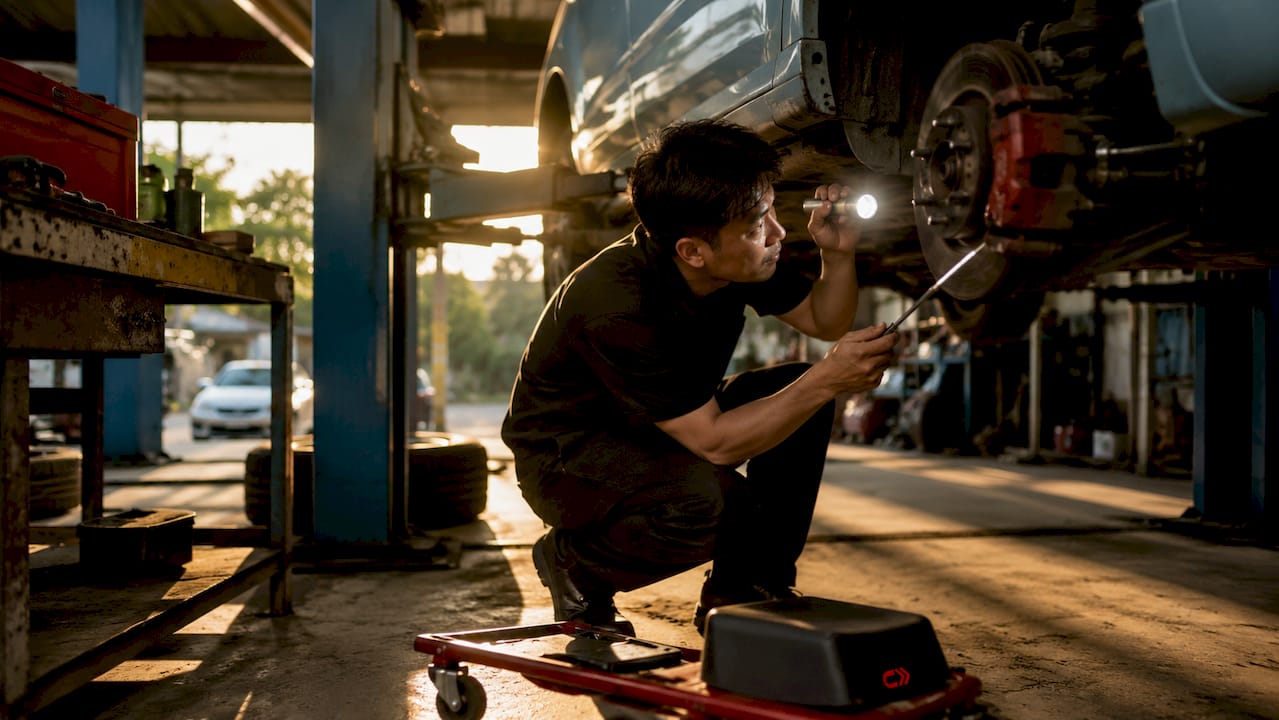
Pro Tip: Battery voltage drops sharply below 32°F. Test your battery every fall with an inexpensive load tester before cold weather arrives. A battery that reads weak in October will almost certainly fail in January.
2. How to track and schedule your routine maintenance
Consistent logging is one of the most effective habits for extending vehicle life. Owners who keep detailed service logs have more reliable vehicles and stronger resale cases because every buyer can verify the car was cared for. A simple notebook in the glove box works, but a digital log is harder to lose and easier to search.
Your owner’s manual is the authoritative source for service intervals. Dealers sometimes recommend shorter intervals or additional services to generate revenue. The manual reflects what the manufacturer actually tested and requires. Follow it, not the sticker on your windshield.
Practical ways to stay on schedule:
- Set a recurring calendar reminder tied to your odometer reading, not just the calendar date.
- Use a car mileage tracker to log trips and flag when you approach a service interval.
- Keep digital photos of receipts so they never fade or get lost.
- Record the date, mileage, shop name, and parts used for every service visit.
Failing to follow the manufacturer’s schedule can void your warranty or lease agreement. That makes documentation more than a good habit. It is a financial protection.
Pro Tip: Schedule services evenly across the year rather than bunching them together. Spreading tasks out improves completion rates and prevents the mental overload that causes owners to skip intervals entirely.
3. What you can do yourself vs. what needs a pro
DIY maintenance saves money and builds familiarity with your vehicle. Basic tasks like oil changes, wiper replacements, and fluid top-offs are well within reach for most owners with basic tools. Catching a low fluid level yourself costs nothing. Ignoring it until a warning light appears can cost thousands.
Here are the tasks most owners can handle at home:
- Oil and filter change: Requires a drain pan, the correct filter, and the oil grade specified in your manual. A DIY oil change typically takes 30 minutes and costs a fraction of shop rates.
- Wiper blade replacement: Snap-on installation, no tools needed. Replace blades every six to twelve months or when streaking starts.
- Air filter swap: Usually held by clips or screws. Takes five minutes and costs under $20.
- Tire pressure check: A quality gauge costs less than $15. Check cold pressure monthly and before long trips.
- Fluid top-offs: Coolant, washer fluid, and power steering fluid are straightforward to add. Always use the type specified in your manual.
Some jobs require specialized tools, training, or safety equipment that most owners do not have at home. Leave these to a qualified technician:
- Timing belt or timing chain replacement
- Transmission fluid flush with a pressure machine
- Brake caliper replacement or brake line bleeding
- Complex electrical diagnostics
Independent mechanics can perform routine maintenance without voiding your warranty, as long as you keep clear service records. You do not need to pay dealer rates for basic upkeep.
Pro Tip: When a shop recommends a service not listed in your owner’s manual, ask them to show you the manufacturer’s specification. Synthetic oils and premium fluid flushes are frequently upsold but unnecessary unless your manual calls for them.
4. How seasonal changes affect your maintenance routine
Seasons change what your car needs and how often it needs it. Ignoring seasonal shifts is one of the most common reasons cars fail at the worst possible time. A battery that barely starts the car on a warm October morning will not start it at all in a January freeze.
Winter preparation checklist:
- Test battery load capacity before temperatures drop below freezing.
- Check antifreeze concentration with an inexpensive tester. Most coolant should protect to at least minus 34°F.
- Inspect wiper blades and replace with winter-rated blades if you live in a snow region.
- Check tire tread depth. The penny test works: if you can see the top of Lincoln’s head, the tires need replacing.
- Verify that four-wheel or all-wheel drive systems engage properly before the first snowfall.
Spring recovery checklist:
- Wash the undercarriage thoroughly to remove road salt, which accelerates rust on brake lines and suspension components.
- Inspect brake rotors and pads for corrosion caused by sitting in wet, salty conditions.
- Check tire pressure after winter. Cold air contracts, so tires often lose pressure during cold months.
- Look for cracked hoses or belts that contracted and stressed in the cold.
Severe duty driving, which includes frequent short trips, towing, off-road use, or stop-and-go city driving, shortens most service intervals. If your driving fits that description, follow the severe-duty schedule in your owner’s manual rather than the standard one. The common maintenance schedules most owners reference are built for average conditions, not hard use.
Key takeaways
Preventive maintenance, performed consistently and documented carefully, is the single most cost-effective strategy for keeping a car reliable, safe, and valuable over time.
| Point | Details |
|---|---|
| Follow manufacturer intervals | Use your owner’s manual, not dealer stickers, to set oil, filter, and fluid schedules. |
| Document every service | Detailed records protect your warranty and strengthen resale value. |
| DIY where it makes sense | Oil changes, air filters, and fluid top-offs save money without requiring professional tools. |
| Prepare for each season | Battery, coolant, tires, and brakes need attention before winter and after spring thaw. |
| Adjust for your driving style | Severe duty conditions require shorter intervals than the standard schedule. |
What I’ve learned from years of watching cars age well and badly
The cars I’ve seen hold up the longest share one trait: their owners treated maintenance as a non-negotiable habit, not a reaction to a warning light. The owners who wait for something to feel wrong almost always pay more in the end. A timing belt that fails on schedule costs a few hundred dollars to replace. One that snaps while driving can destroy an engine worth several thousand.
The advice that gets overlooked most often is this: trust your owner’s manual over everyone else’s opinion. Dealers, quick-lube shops, and well-meaning friends all have their own ideas about what your car needs. The engineers who designed your engine tested it and wrote down exactly what it requires. That document is free, it is already in your car, and it is almost always more conservative than what shops recommend.
Building a relationship with one trusted independent mechanic also pays off in ways that are hard to quantify. A mechanic who knows your car’s history will catch patterns that a stranger cannot. They will notice that your brake pads always wear faster on the front left, or that your coolant level drops slightly between visits. That kind of continuity is worth more than any discount coupon.
Routine care is not just about avoiding breakdowns. It is about driving with confidence. When you know your tires are properly inflated, your brakes are solid, and your fluids are fresh, the car feels different. That confidence is real, and it is earned one service interval at a time.
— Chally
Carjourney makes your maintenance routine easier to manage
Keeping up with preventive maintenance tips is straightforward when you have a system. Carjourney is built by a team of gearheads and engineers in Virginia who wanted one place to track every service, set reminders, and store records for any vehicle they own.
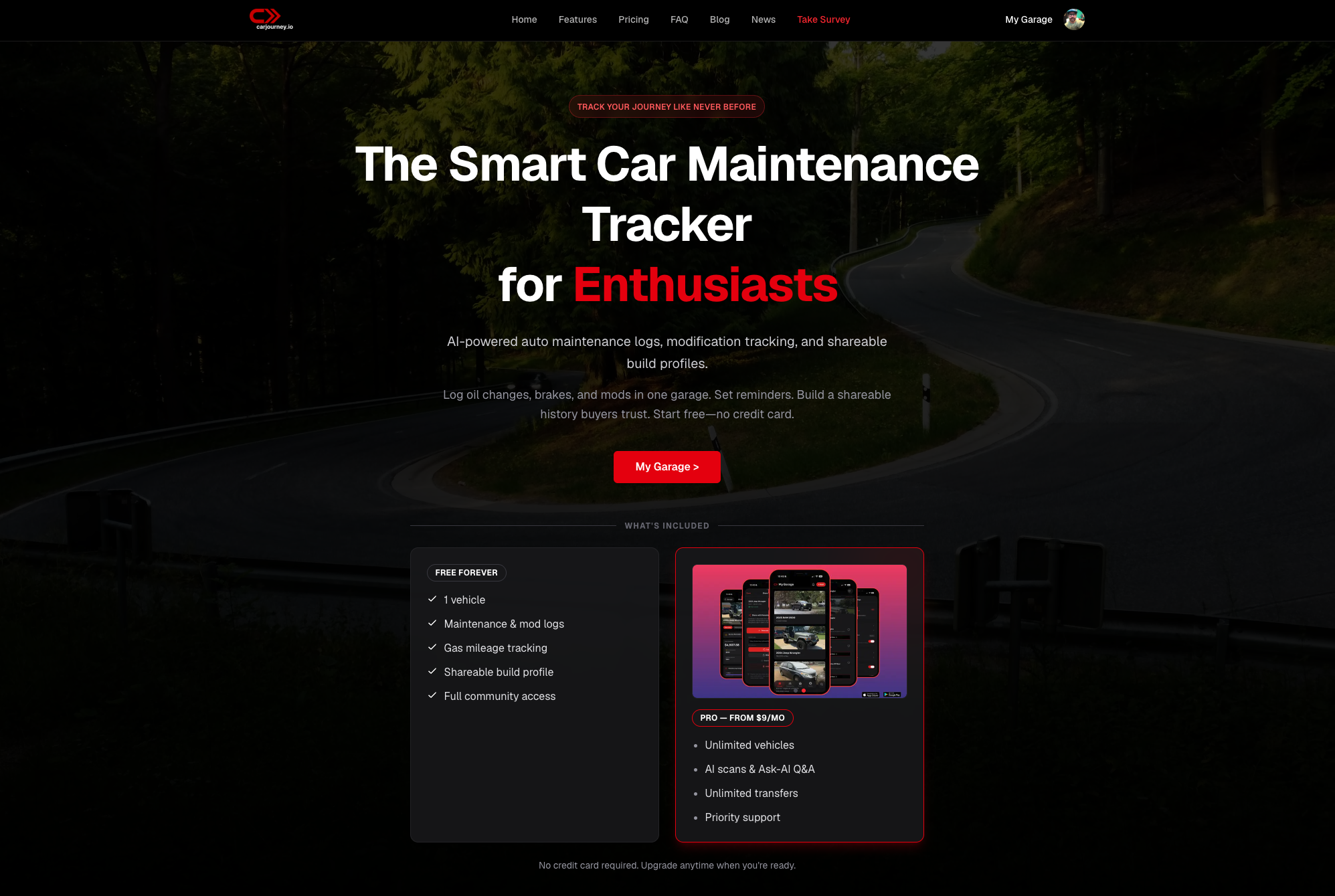
Carjourney uses AI to scan your service documents, answer questions about your specific build, and recommend maintenance schedules verified across multiple AI models. Whether you handle oil changes yourself or rely on a trusted shop, Carjourney keeps your full service history organized and accessible. No more scattered receipts or forgotten intervals. Your car’s entire maintenance record lives in one place, ready when you need it.
FAQ
What is the most important routine maintenance task?
Oil and filter changes are the single most critical routine task. Fresh oil prevents engine wear, removes heat, and suspends contaminants that would otherwise damage internal components.
How often should I check my tire pressure?
Check tire pressure at least once a month and before any long trip. Tires lose roughly 1 PSI per month under normal conditions, and pressure drops further in cold weather.
Can I use an independent mechanic without voiding my warranty?
Yes. Independent mechanics can perform routine maintenance without voiding your warranty as long as you keep clear service records documenting the date, mileage, and work performed.
How do I know if I need the severe-duty maintenance schedule?
You qualify for the severe-duty schedule if you regularly tow, drive in stop-and-go traffic, take frequent short trips under five miles, or operate in extreme heat or cold. Check your owner’s manual for the specific criteria.
What is the best way to track my car’s service history?
A digital log, updated after every service visit with the date, mileage, shop, and parts used, is the most reliable method. Tools like Carjourney automate reminders and store records so nothing gets missed.