 carjourney
From the CarJourney journal
Common Maintenance Schedules for Your Car in 2026

Common maintenance schedules are structured plans that define when specific vehicle service tasks must be performed to keep your car safe, reliable, and running at full capacity. Most owners treat these schedules as optional suggestions. They are not. Following your vehicle’s recommended intervals is the single most effective way to prevent breakdowns, extend engine life, and avoid the kind of repair bills that turn a good week into a bad month. This guide breaks down the core tasks, explains how your driving habits change the math, and shows you how to build a plan that actually fits your car.
1. Common maintenance schedules: the baseline tasks every owner needs
Your owner’s manual is the authoritative source for service intervals, and general checklists only provide a starting point. That said, most passenger vehicles share a recognizable set of baseline tasks that apply across makes and models. Understanding these gives you a foundation to work from before you personalize anything.
Here are the core tasks and their typical intervals:
- Oil and filter change: Every 5,000 to 10,000 miles depending on whether you use conventional or synthetic oil. Modern full-synthetic oils in newer engines can stretch toward the higher end of that range.
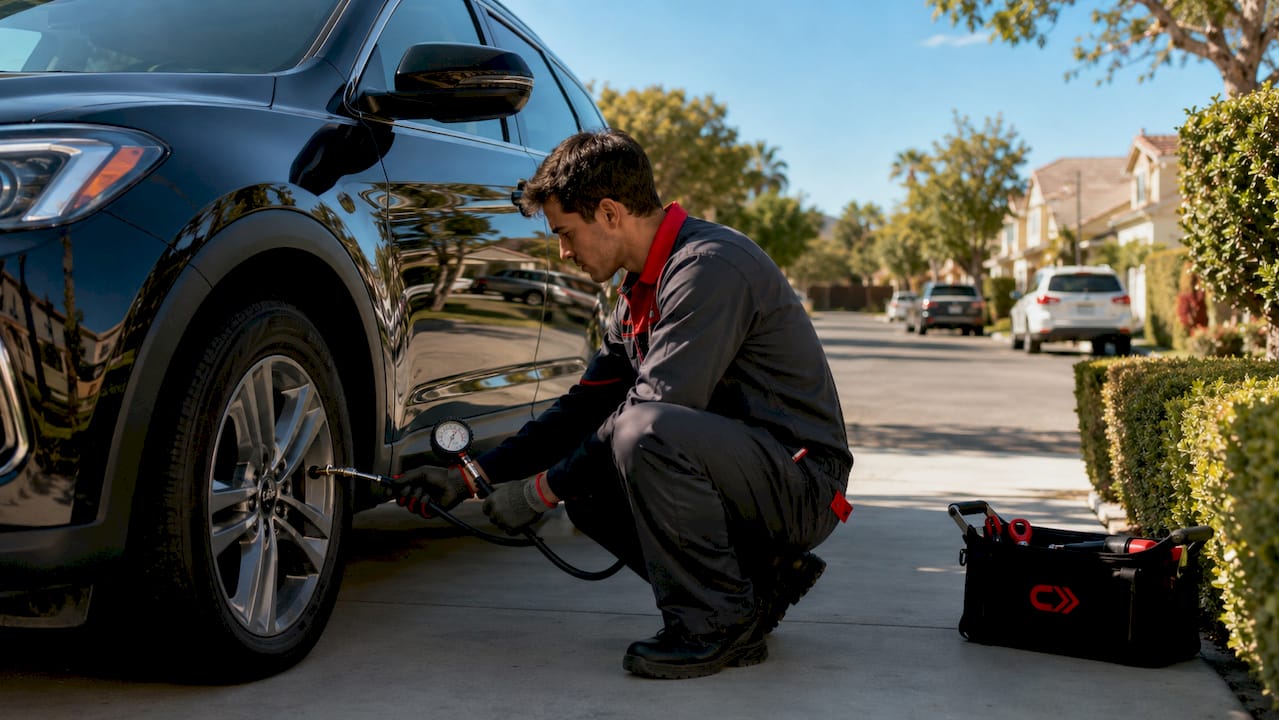
- Tire rotation: Every 5,000 to 7,500 miles. Rotating tires evenly distributes wear across all four corners, which extends tire life significantly.
- Brake pad inspection: At every oil change, with replacement typically needed every 25,000 to 50,000 miles. Brake wear rates vary widely based on driving style and terrain.
- Coolant flush: Around 100,000 miles for most vehicles, though some manufacturers specify earlier intervals. Old coolant becomes acidic and corrodes internal components.
- Air filter replacement: Every 15,000 to 30,000 miles. Dusty environments accelerate this considerably.
- Cabin air filter: Every 15,000 to 25,000 miles. Often overlooked, but it directly affects HVAC performance and air quality inside the car.
- Spark plugs: Standard plugs need replacement around 30,000 miles. Iridium or platinum plugs in newer vehicles can last 60,000 to 100,000 miles.
- Transmission fluid: Every 30,000 to 60,000 miles for manual transmissions. Automatic transmissions vary widely. Some manufacturers claim “lifetime” fluid, which Consumer Reports and most independent mechanics dispute.
- Battery check: Annually after the third year of ownership. Most car batteries last 3 to 5 years, and failure rarely gives much warning.
- Lightbulb and electrical inspection: As needed, but a quick visual check at every oil change catches most issues before they become safety problems.
| Task | Typical interval |
|---|---|
| Oil change | 5,000 to 10,000 miles |
| Tire rotation | 5,000 to 7,500 miles |
| Brake inspection | Every oil change |
| Coolant flush | ~100,000 miles |
| Spark plugs (iridium) | 60,000 to 100,000 miles |
Pro Tip: Cross-reference the intervals above with your owner’s manual before scheduling anything. A 2022 Toyota Camry and a 2022 Ford F-150 share almost none of the same service intervals despite being common vehicles.
2. How severe driving conditions change your schedule
Most vehicles come with two maintenance schedules: normal and severe. Severe service conditions include frequent short trips under 5 miles, stop-and-go traffic, towing heavy loads, operating in extreme heat or cold, and dusty or off-road driving. These conditions can cut your normal service intervals by as much as 50%.
Here is what that looks like in practice:
- Oil changes: Under normal conditions, synthetic oil in a modern engine lasts up to 10,000 miles. Under severe conditions, that interval drops to 5,000 miles or fewer.
- Transmission fluid: Normal schedule might call for a change at 60,000 miles. Severe towing use can push that to 30,000 miles.
- Air filter: A car driven on dusty unpaved roads may need a new filter every 10,000 miles instead of 20,000.
- Coolant: Extreme temperature cycling in desert or mountain climates degrades coolant chemistry faster than moderate climates.
- Brake pads: City driving with constant stop-and-go traffic wears pads at roughly twice the rate of highway driving.
Many car owners unknowingly skip applying the severe-duty schedule when conditions apply, causing accelerated wear due to deferred maintenance.
Consumer Reports advises against accepting mechanic suggestions for shorter service intervals unless your driving genuinely qualifies as severe service. That is a two-way protection. It prevents upselling, but it also means you need to honestly assess your own driving patterns before assuming you qualify for the longer normal-schedule intervals.
Pro Tip: Open your owner’s manual to the maintenance section and read the definition of “severe service” your manufacturer uses. Most owners are surprised to find they qualify for it.
3. How to customize your schedule based on usage and repair history
Generic routine maintenance plans are a starting point, not a final answer. Maintenance intervals refined by failure history provide better reliability than generic intervals alone. Your car’s actual repair record tells you things no manufacturer table can predict.
Start with your OEM specs as the baseline. Then layer in the following:
- Review your repair receipts. If you replaced a water pump at 85,000 miles, note that. If your brake pads wore out at 22,000 miles instead of the expected 35,000, that is data. Use it to tighten your next inspection interval.
- Track mileage accumulation patterns. A car that sits for weeks at a time ages differently than one driven 50 miles a day. Meter-based triggers are more accurate than calendar-only schedules for variable-use vehicles. Calendar checks remain best for items that degrade over time regardless of miles driven, like rubber belts and coolant chemistry.
- Log measurable indicators. Record oil level and color at each check. Measure brake pad thickness in millimeters rather than just noting “checked.” Tire tread depth in 32nds of an inch gives you a trend line over time.
- Rebaseline every 12 to 18 months. After a year of actual service data, recalibrate your intervals based on what you have observed. This is how professional fleet managers operate, and it works just as well for a single-car household.
| Approach | What it tells you |
|---|---|
| OEM manual intervals | Manufacturer baseline for your specific model |
| Repair history review | Actual wear rates under your driving conditions |
| Measurable logging | Trend data to predict next failure or service need |
| 12 to 18 month rebaseline | Optimized intervals built from real usage data |
This kind of personalized approach is exactly what separates owners who get 200,000 miles out of a vehicle from those who face a major repair at 90,000.
4. What makes a preventive maintenance checklist actually work
A maintenance schedule tells you when to perform a task. A preventive maintenance checklist tells you what to measure and record when you perform it. These are different tools, and you need both.
The problem with vague instructions like “check oil” is that they produce vague results. A well-built checklist replaces that with: “Measure oil level on dipstick. Acceptable range: between MIN and MAX marks. Note color: amber is acceptable, black indicates overdue change.” That is a pass/fail criterion. It is documentable, repeatable, and useful.
Here is what a solid checklist includes for common tasks:
- Oil check: Level on dipstick (MIN to MAX), color assessment, smell check for fuel contamination
- Tire pressure: PSI reading for each tire against the door placard spec, not the tire sidewall maximum
- Brake pads: Thickness in millimeters. Most manufacturers recommend replacement below 3mm. Record the measurement, not just “OK”
- Battery terminals: Visual check for corrosion, voltage reading if you have a multimeter
- Lights: Walk-around check of headlights, brake lights, turn signals, and reverse lights
Periodic checks of lighting, battery, and belts prevent unexpected failures and improve overall vehicle safety. The key is that each item on your checklist produces a number or a clear pass/fail result, not a vague impression.
Pro Tip: Download or print a structured checklist from a professional auto service resource and keep it in your glove box. Filling it out at each service appointment takes five minutes and builds a paper trail that is genuinely useful when you sell the car.
You can also find a detailed breakdown of mileage-based service tasks to pair with your checklist for a complete picture of what needs attention and when.
Key takeaways
A vehicle’s best maintenance schedule combines OEM intervals, real driving conditions, and measurable inspection data reviewed and adjusted every 12 to 18 months.
| Point | Details |
|---|---|
| Start with your owner’s manual | OEM intervals are the only accurate baseline for your specific vehicle model. |
| Severe conditions cut intervals in half | Towing, short trips, and extreme climates require service up to 50% more frequently. |
| Use measurable checklist criteria | Record actual numbers like PSI and pad thickness instead of vague “checked” notes. |
| Rebaseline every 12 to 18 months | Adjust intervals using your own repair history for better reliability and cost control. |
| Combine mileage and calendar triggers | Use mileage for usage-sensitive tasks and calendar dates for time-degrading components. |
Why I stopped trusting generic schedules
I have seen too many owners hand a mechanic a generic maintenance checklist printed off the internet and assume the job is done. It is not. Generic schedules are built for an average vehicle driven by an average person in average conditions. That description fits almost no one.
What actually works is treating your car like a piece of equipment with a service history, not a consumer product with a warranty card. The owners who get the most out of their vehicles are the ones who know their brake pad thickness at the last three oil changes, who can tell you exactly when their coolant was last flushed, and who have questioned a mechanic at least once when the recommended interval did not match the owner’s manual.
The severe versus normal schedule distinction surprises most people when they first read it carefully. I have talked to drivers who commute five miles each way in stop-and-go traffic every day and have never once considered that they are operating under severe service conditions. Their oil is changing chemistry faster than they think. Their brake pads are wearing faster than the sticker on the windshield suggests.
Digital tools that let you optimize your maintenance schedule based on your actual driving patterns are genuinely useful here. Not because they replace your judgment, but because they give you a structured place to store and review the data that makes your judgment accurate. The long-term cost savings from catching a $40 coolant flush before it becomes a $1,200 head gasket repair are not theoretical. They are real, and they compound over the life of the vehicle.
— Chally
Track your maintenance schedule with CarJourney
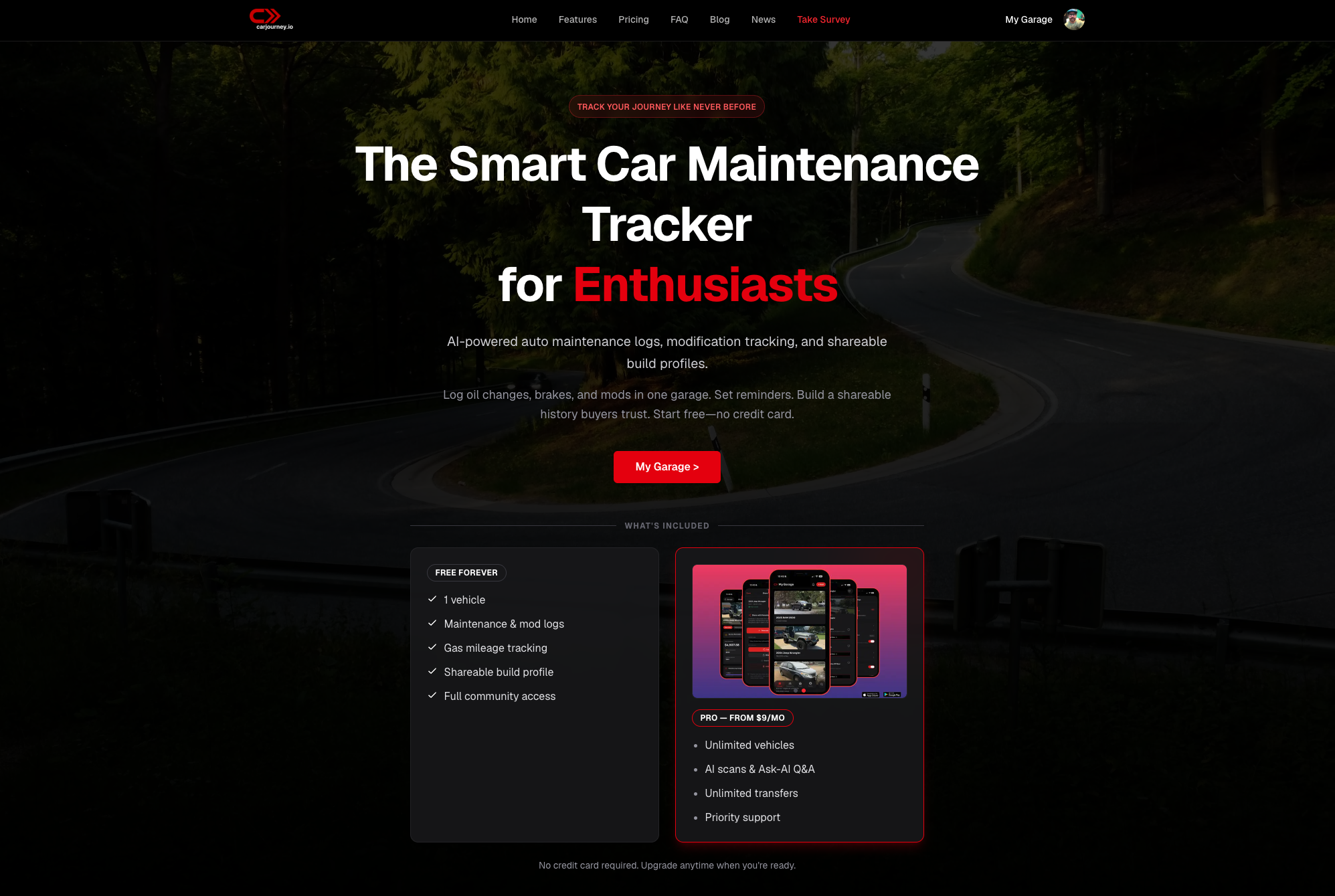
CarJourney is built for vehicle owners who want more than a sticky note on the dashboard. The platform combines your OEM service intervals with your actual mileage patterns, service records, and driving habits to give you a maintenance plan that reflects your specific car, not a generic template. You can log every service, store receipts, set mileage and calendar reminders, and use AI-powered insights to answer detailed questions about your exact build. CarJourney was built by a team of gearheads and engineers in Virginia who were tired of scattered receipts and one-size-fits-all advice. Start tracking your vehicle the right way at CarJourney.
FAQ
What are the most common vehicle maintenance intervals?
Oil changes every 5,000 to 10,000 miles, tire rotations every 5,000 to 7,500 miles, and brake inspections at every oil change are the most universal intervals across passenger vehicles. Always verify against your owner’s manual since intervals vary by make, model, and engine type.
How do I know if I need a severe service schedule?
You qualify for a severe service schedule if you regularly tow heavy loads, take frequent short trips under 5 miles, drive in stop-and-go traffic, or operate in extreme heat, cold, or dusty conditions. Severe conditions can require service intervals up to 50% shorter than the standard schedule.
What is the difference between a maintenance schedule and a maintenance checklist?
A maintenance schedule defines when to perform tasks based on mileage or time. A preventive maintenance checklist defines what to measure and record during each task, using specific pass/fail criteria like brake pad thickness in millimeters or tire pressure in PSI.
How often should I update my personal maintenance plan?
Rebaseline your intervals every 12 to 18 months using your actual repair and service history. This approach, used by professional fleet managers, produces more reliable and cost-efficient schedules than sticking with generic OEM intervals indefinitely.
Can I use a general maintenance checklist for any car?
General checklists provide a useful starting point, but they do not replace your owner’s manual. Manufacturer-specific intervals for transmission fluid, spark plugs, and coolant vary significantly across vehicles, and using the wrong interval can accelerate wear or result in unnecessary service costs.