 carjourney
From the CarJourney journal
How to Optimize Your Vehicle Maintenance Schedule
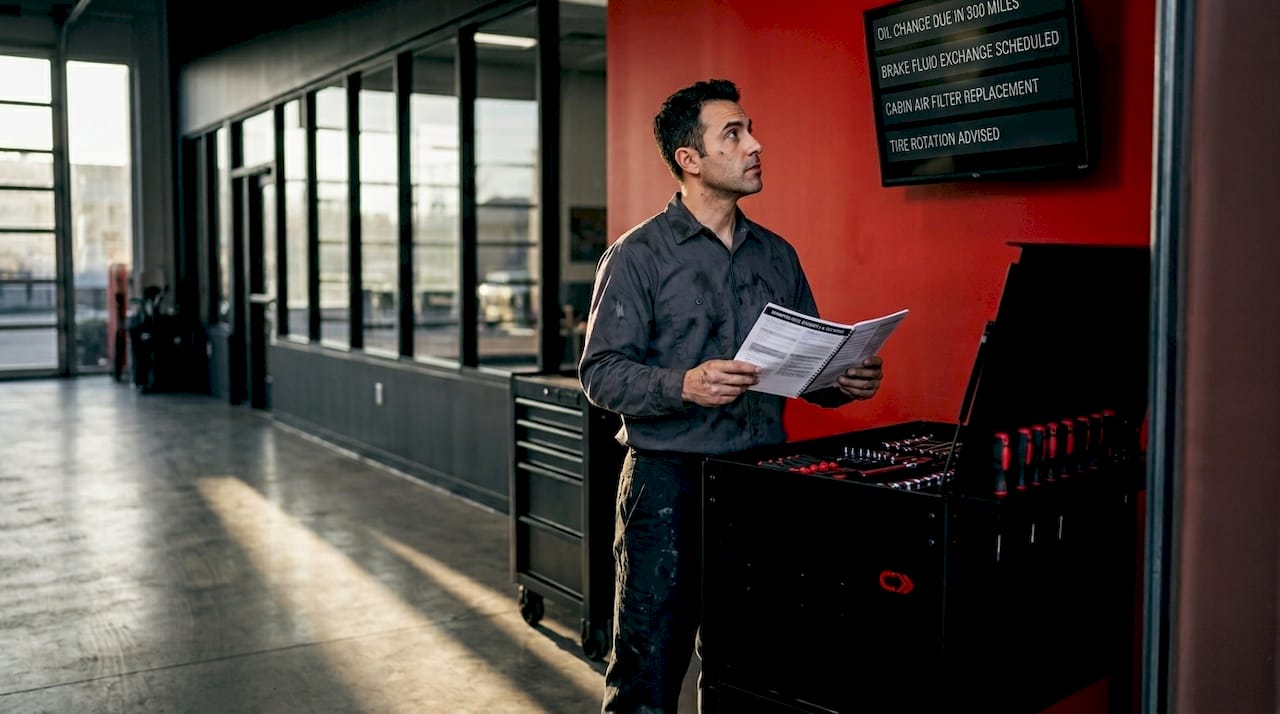
Most car owners follow the maintenance schedule that came in the glove box and never question it. That approach quietly costs them. Generic schedules are written for average driving conditions that most people never actually experience, and following them blindly means you are either over-servicing components that don’t need attention yet or under-serving systems that are wearing out faster than the calendar suggests. Knowing how to optimize maintenance schedule practices for your specific vehicle, driving style, and environment is the difference between a car that surprises you with a breakdown and one that runs reliably for 200,000 miles.
Table of Contents
- Key takeaways
- How to optimize maintenance schedule: start with triggers
- Normal vs. severe service: which one actually fits your driving?
- Building a data-driven, personalized maintenance plan
- Best practices for scheduling and verifying execution
- My take on building a schedule that actually works
- Take your schedule from guesswork to precision with Carjourney
- FAQ
Key takeaways
| Point | Details |
|---|---|
| Use first-to-occur trigger logic | Set mileage, time, and condition triggers together; service when any one threshold hits first. |
| Know your service classification | If two or more severe-duty conditions apply to your driving, follow the shorter severe service intervals. |
| Build a dual schedule | Maintain separate normal and severe service interval lists and switch between them by season or usage. |
| Add condition-based data | Oil analysis and sensor monitoring let you extend or shorten intervals with real evidence, not guesswork. |
| Review quarterly, not annually | Formal quarterly checks on compliance and failure patterns keep your schedule accurate and current. |
How to optimize maintenance schedule: start with triggers
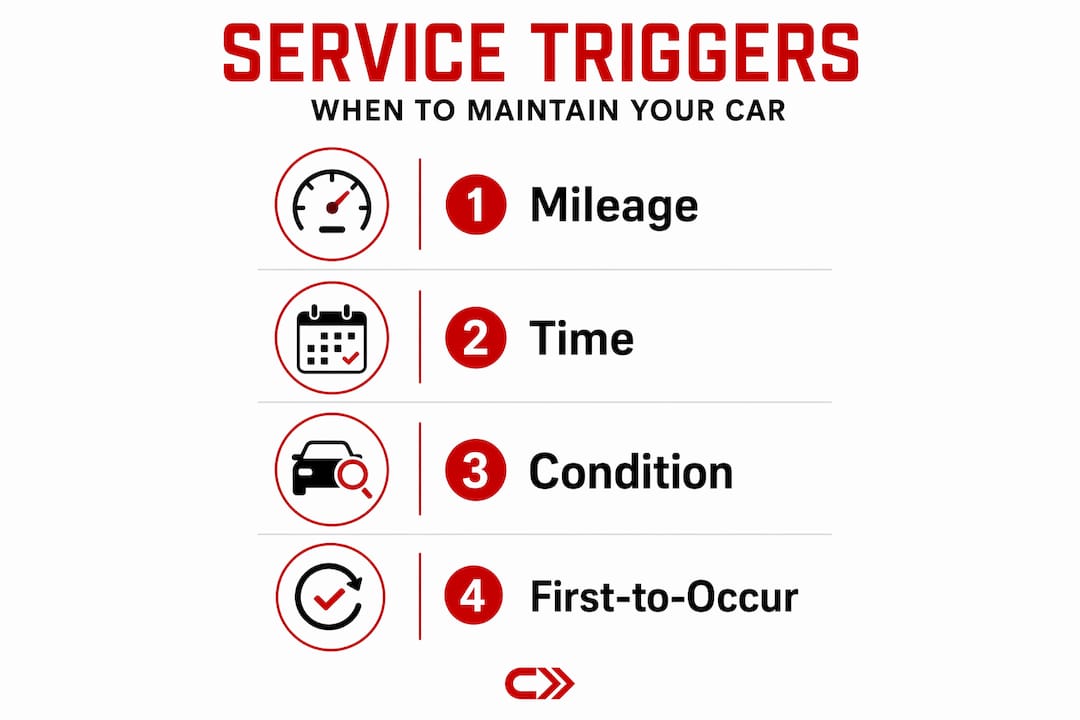
The foundation of any well-tuned maintenance plan is understanding what actually triggers a service interval. Industry professionals call this preventive maintenance scheduling, and it relies on three distinct trigger types: time, mileage, and condition.
Time-based triggers fire after a set number of days or months regardless of how much the vehicle was used. Mileage-based triggers fire after a set number of miles regardless of how much time has passed. Condition-based triggers fire when a physical parameter, such as oil degradation or brake pad thickness, reaches a defined threshold.
Each trigger type fits certain failure modes better than others. Here is how to match them:
- Oil changes: Use mileage or condition monitoring as the primary trigger, not calendar time alone. An engine that sat for 6 months but drove 500 miles still needs fresh oil on schedule, but the 6-month mark alone does not guarantee the oil is degraded.
- Brake pads: Mileage gives a rough estimate, but real-world feel and pad thickness measurement are far more reliable triggers. Aggressive drivers can go through pads in 20,000 miles; highway commuters might get 60,000.
- Timing belt: This is one of the few cases where both time and mileage matter independently. Most manufacturers set limits like 60,000 miles or 5 years, and the calendar limit exists because rubber degrades even when the car sits.
- Coolant and transmission fluid: Condition and mileage combined work best. Color, smell, and pH testing tell you more than an odometer alone.
The key principle is first-to-occur logic: set all relevant triggers simultaneously and perform the service when any single threshold is reached first. This approach eliminates the most common mistake in maintenance planning, which is relying on just one trigger and ignoring others until something fails.
Pro Tip: If your vehicle has an oil life monitoring system, use it as your condition-based trigger but always cross-check it against mileage. Some monitors are conservative; others reset without confirming the actual oil state.
Normal vs. severe service: which one actually fits your driving?
OEM maintenance schedules typically include two tracks. “Normal” service applies to moderate highway driving in mild climates. “Severe” service covers everything else, and the gap between the two is significant. Synthetic oil intervals, for example, drop from 7,500 to 10,000 miles under normal conditions to 3,000 to 5,000 miles under severe service.
The severe service classification is broader than most people realize. You qualify if your driving regularly includes any of the following conditions:
- Frequent trips shorter than 5 miles, especially in cold weather
- Towing, hauling, or carrying heavy loads
- Stop-and-go city traffic for the majority of your commute
- Dusty, unpaved, or off-road driving
- Extreme heat or extreme cold climates
- Extended idling (delivery drivers, rural fire apparatus, etc.)
If two or more of these conditions apply to your regular driving, you should be following severe service intervals across the board. Many car owners in urban areas who do mostly short city trips with occasional highway runs fall squarely into severe service territory without realizing it.
The practical solution is maintaining two parallel interval lists: one for normal and one for severe. A real-world example makes this clear. The Nissan Versa maintenance schedule calls for brake inspections every 6 months under severe conditions but stretches that interval significantly under normal use. Managing these two tracks by season or usage pattern (highway road trip months vs. winter city commuting) is more reliable than a single fixed list applied year-round.

| Service item | Normal interval | Severe service interval |
|---|---|---|
| Full synthetic oil change | 7,500–10,000 miles | 3,000–5,000 miles |
| Air filter replacement | 15,000–30,000 miles | 10,000–15,000 miles |
| Brake inspection | Annually or every 20,000 miles | Every 6 months |
| Transmission fluid | 30,000–60,000 miles | 15,000–30,000 miles |
| Coolant flush | Every 5 years or 60,000 miles | Every 3 years or 30,000 miles |
Pro Tip: Audit your driving conditions at the start of each season. Winter in a northern state often means short cold trips and road-salt exposure. That alone can push you into severe service for oil, undercarriage inspections, and brake fluid.
Reviewing manufacturer maintenance recommendations for your specific model is the right starting point before building your custom dual-track plan.
Building a data-driven, personalized maintenance plan
Once you understand your triggers and service classification, the next step is building the actual plan. This is where effective maintenance planning moves from theory to execution. Here is how to do it step by step:
-
Pull your OEM baseline. Start with your owner’s manual. Write out every service item with its normal and severe intervals. This is your starting framework, not your final answer.
-
Classify your driving conditions honestly. Using the severe service criteria above, decide which track applies to each season or usage period. Document your decision and the reasons behind it.
-
Layer in condition-based data where possible. For oil specifically, baseline oil sampling shortly after a fresh oil change and then trending samples monthly to quarterly gives you real data on whether your current interval is too short, too long, or just right. This is how performance enthusiasts and commercial fleets extend drain intervals safely.
-
Verify your condition monitoring is working. This step gets skipped constantly. Cross-check sensors and monitors against manual inspections periodically. An oil life monitor that has not updated correctly after a reset, or a tire pressure sensor with a dead battery, will give you false confidence. Condition-based maintenance only works when the data feeding it is accurate.
-
Document every service with date, mileage, and findings. OEM schedule deviations must be backed by records, especially if you have an active warranty. Detailed logs protect you legally and give you the trend data to make smarter decisions next time.
-
Build your interval adjustment table. After 12 months of consistent tracking, you will have enough data to know whether your air filter actually needs replacement at 15,000 miles or whether your driving keeps it clean enough for 20,000. Adjust intervals based on what you find, not what the manual assumes.
The following table shows how a condition-informed schedule might differ from the OEM baseline for a vehicle used primarily in severe city conditions:
| Service item | OEM baseline | Condition-adjusted interval |
|---|---|---|
| Synthetic oil and filter | 7,500 miles | 4,500 miles (city, short trips) |
| Cabin air filter | 15,000 miles | 10,000 miles (urban pollution) |
| Brake fluid flush | 2 years | 1 year (moisture from frequent wet braking) |
| Spark plugs (iridium) | 60,000 miles | 60,000 miles (no change indicated) |
This approach connects directly to maintenance scheduling by mileage principles, where the goal is matching interval length to actual wear rate rather than a generic assumption.
Best practices for scheduling and verifying execution
Having a great plan on paper means nothing if execution falls apart. The best practices for maintenance scheduling come down to timing, coordination, and consistent review.
- Schedule around your downtime. Planned downtime windows are when maintenance happens without disruption. For a daily driver, this means scheduling service on a weekend, during vacation, or anytime you have access to a loaner or second vehicle. Do not wait until the service is overdue to think about timing.
- Balance your service calendar. Avoid clustering multiple major services in the same month. Spread brake work, fluid changes, and tire rotations across the quarter so you are not hit with a large bill or a long shop day all at once.
- Run a formal quarterly review. A quarterly review cadence is the industry standard for keeping maintenance plans current. Look at what services were completed on time, what was deferred, and whether any unexpected failures occurred. Adjust intervals based on what you find.
- Never set and forget. A schedule that was accurate two years ago may not reflect your current driving patterns, a new modification, or a change in climate. The review cycle is what keeps the plan alive and useful.
- Use tools that automate reminders. Whether you use a spreadsheet with calendar alerts or a dedicated app, the goal is removing the cognitive load of tracking multiple service items manually. Carjourney’s maintenance reminder tools are built specifically for this, combining mileage tracking and condition alerts in one place.
The insight that separates effective maintenance planning from passive ownership is this: closed-loop feedback from failure history and service compliance data is what makes schedules improve over time. Every oil change, brake inspection, and filter replacement is a data point. Treat it like one.
My take on building a schedule that actually works
I’ve been around enough engines, spreadsheets, and shop floors to say this clearly: the biggest mistake car owners make is treating the OEM maintenance schedule as a finished product. It is not. It is a starting point written for a hypothetical average driver in a hypothetical average climate.
What I’ve learned from years of tracking real service histories is that condition-based thinking changes everything. I stopped changing oil on a fixed mileage interval years ago. Instead, I take a quick look at the oil on the dipstick, check the life monitor, and consider what the past 3,000 miles actually looked like. Track days? Change it early. Highway miles in mild weather? It can go longer.
I’ve also seen how honest self-assessment of driving conditions is the step most people skip. People tell themselves they are “mostly highway” drivers when 60% of their weekly miles are school drop-offs and grocery runs in cold weather. That gap between perception and reality is exactly where premature wear hides.
My practical advice: sit down twice a year, spring and fall, and honestly audit how you drove the past six months. Adjust your service track accordingly. Keep a simple log, even a notes app entry per service, because that log becomes your best diagnostic tool when something goes wrong. The owners I know with the highest-mileage, best-running vehicles are not the ones who spent the most money. They are the ones who paid attention.
— Chally
Take your schedule from guesswork to precision with Carjourney
Building an optimized maintenance plan by hand is doable, but it takes discipline and a system that actually keeps up with your vehicle’s history. That is exactly what Carjourney was built for.
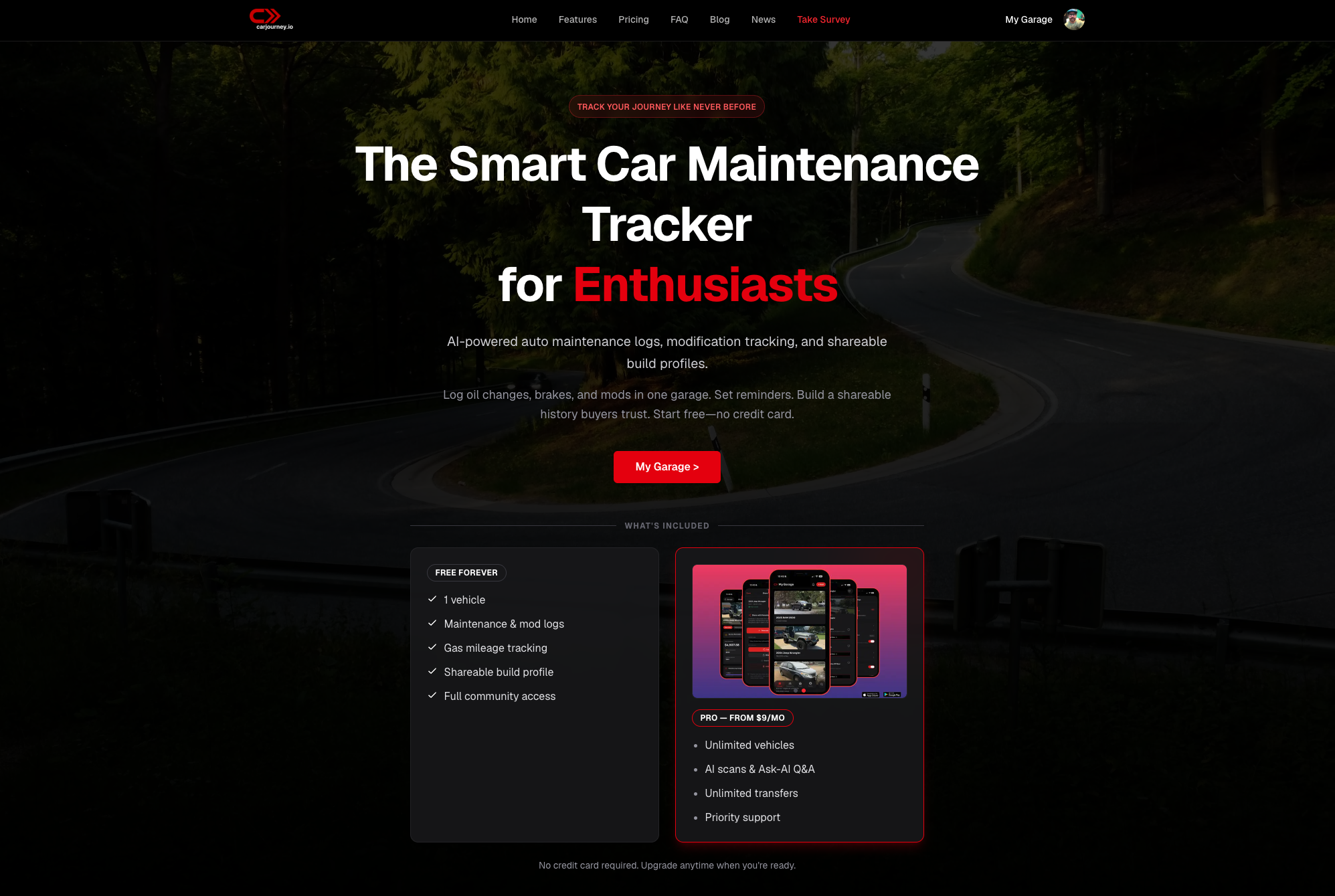
Carjourney uses AI to read your service documents, track mileage and condition-based triggers, and recommend personalized maintenance intervals for your specific build, not a generic model average. You get alerts before services are due, a full service history in one place, and access to a community of enthusiasts sharing real-world interval data from similar vehicles. Whether you are managing a daily driver or a dedicated track build, Carjourney’s maintenance tracker removes the guesswork and replaces it with a system that learns as your vehicle ages. Stop relying on a schedule written for someone else’s car.
FAQ
What are the main triggers for a maintenance schedule?
The three core triggers are time (calendar intervals), mileage, and condition (physical measurements or sensor data). Using first-to-occur logic means you perform the service as soon as any single trigger threshold is reached.
How do I know if I qualify for severe service intervals?
If your regular driving includes frequent short trips under 5 miles, towing, heavy stop-and-go traffic, extreme temperatures, or dusty conditions, you likely qualify. Matching two or more of those conditions means you should follow the shorter severe service intervals from your owner’s manual.
How often should I review and update my maintenance schedule?
A quarterly review is the standard recommended cadence. Check which services were completed on time, whether any unexpected failures occurred, and adjust your intervals based on real findings rather than leaving your original plan unchanged year after year.
Can I extend my oil change interval safely?
Yes, with the right data. Condition-based oil analysis, combined with an oil life monitor and honest assessment of your driving conditions, can justify extended intervals. Establish a baseline sample after a fresh oil change and trend subsequent samples to validate that your oil is actually holding up within your target interval.
Does optimizing my maintenance schedule affect my warranty?
Deviating from OEM intervals can affect your warranty if you cannot document the reasoning and results. Keep detailed records of every service, including the date, mileage, what was done, and why any interval adjustment was made. Clear documentation protects you if a warranty dispute arises.