 carjourney
From the CarJourney journal
Why Market Your Car Online: Maximize Your Sale Price

Marketing your car online is the process of using digital platforms to promote your vehicle to the widest possible pool of buyers and secure the best sale price. The reason to market your car online is simple: 95% to 97% of car buyers research online before purchasing. That number means a buyer who never sees your listing online will almost certainly never see your car at all. Sellers who skip digital channels leave money on the table and extend their time to sale. Online car marketing, sometimes called digital vehicle merchandising, is now the standard approach for private sellers who want real results.
Why market your car online instead of selling locally?
Selling a car through a local classified ad or word of mouth limits you to a small geographic pool of buyers. Online marketing removes that ceiling entirely. A listing on a major marketplace reaches buyers across your city, your state, and sometimes the country, all at once.
The financial case is strong. Private sales yield 15% to 25% more than dealer trade-ins. That gap represents real money. On a $20,000 vehicle, the difference between a trade-in and a well-marketed private sale can exceed $3,000 to $5,000.
The benefits of selling a car online go beyond price. You control the listing, the photos, the description, and the asking price. You choose when to respond to inquiries and when to schedule viewings. No dealer is pressuring you to accept a low offer before the end of the month.
- Wider buyer reach: Your listing is visible to anyone searching in your area or beyond, not just neighbors.
- Higher sale prices: Private online sales consistently outperform trade-in offers.
- Buyer intent: 61% of car buyers start on third-party marketplaces, meaning they arrive ready to buy.
- Visual selling power: 45% of American consumers are willing to buy a vehicle through social media, showing how much visual content drives decisions.
- Flexibility: You set your own schedule and terms.
The buyer intent point deserves emphasis. When someone opens a car marketplace app, they are not browsing casually. They are actively searching for a vehicle. That is the audience you want to reach.
Which platforms should you use to sell your car?
Third-party marketplaces are the foundation of any online car sale strategy. Marketplaces function as essential distribution infrastructure, not optional extras. Buyers begin their search there, not on Google or dealer websites. If your car is not listed on at least one major marketplace, you are invisible to the majority of active buyers.
Social media platforms add a visual layer that marketplaces cannot fully replicate. Short video walkarounds, photos in good lighting, and posts in local buy-sell-trade groups all reach buyers who may not be actively searching but are open to the right offer. Given that nearly half of American consumers are open to social media vehicle purchases, ignoring these channels is a missed opportunity.
Auction-style platforms work well for specialty vehicles, classic cars, and modified builds. If your car has a niche appeal, a targeted auction audience will often pay more than a general marketplace buyer. For guidance on marketing a modified vehicle specifically, the Carjourney guide on selling modified cars covers the nuances in detail.
Multi-platform presence matters. A listing on one platform reaches one audience. The same listing on three platforms triples your exposure with minimal extra effort. Most platforms allow you to copy and paste your description, so the incremental time cost is low.
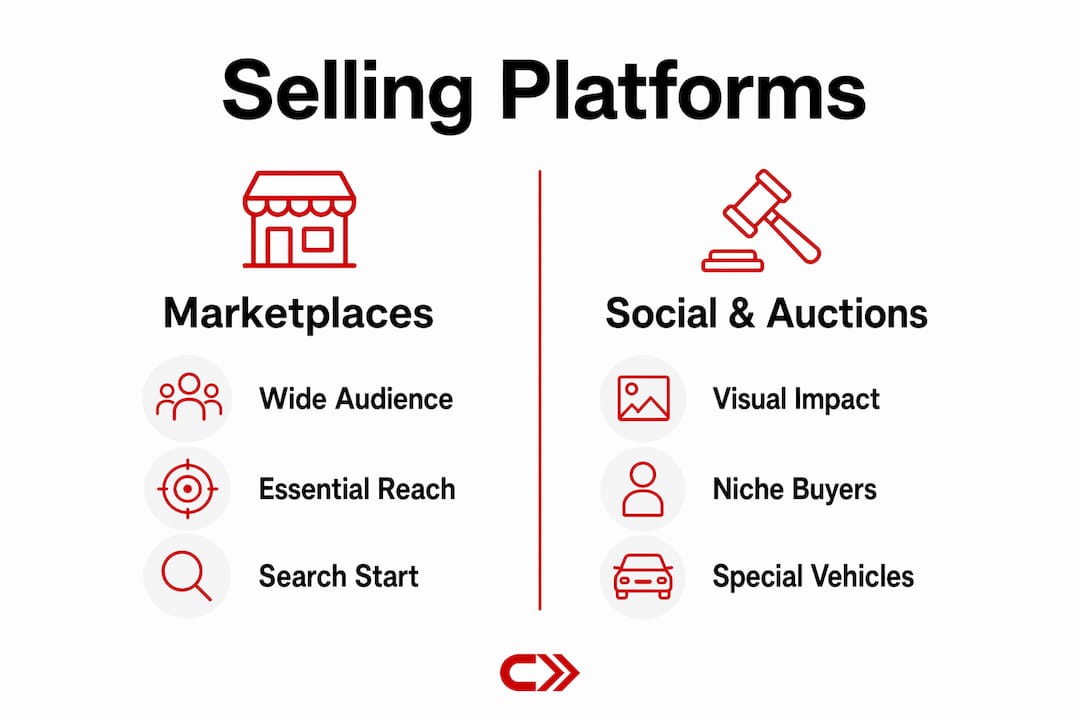
The practical approach is to prioritize platforms by audience size and vehicle type, then add social media as a secondary channel. For most sellers, two to three platforms plus one or two local social media groups covers the majority of active buyers in any market.
How to create a listing that attracts serious buyers
A high-quality listing is the single biggest variable in how fast your car sells and at what price. Listings with 8 or more quality photos sell 2–3 times faster than those with fewer or poor images. Buyers make snap judgments based on photos before they read a single word of your description.
Photos that do the selling for you
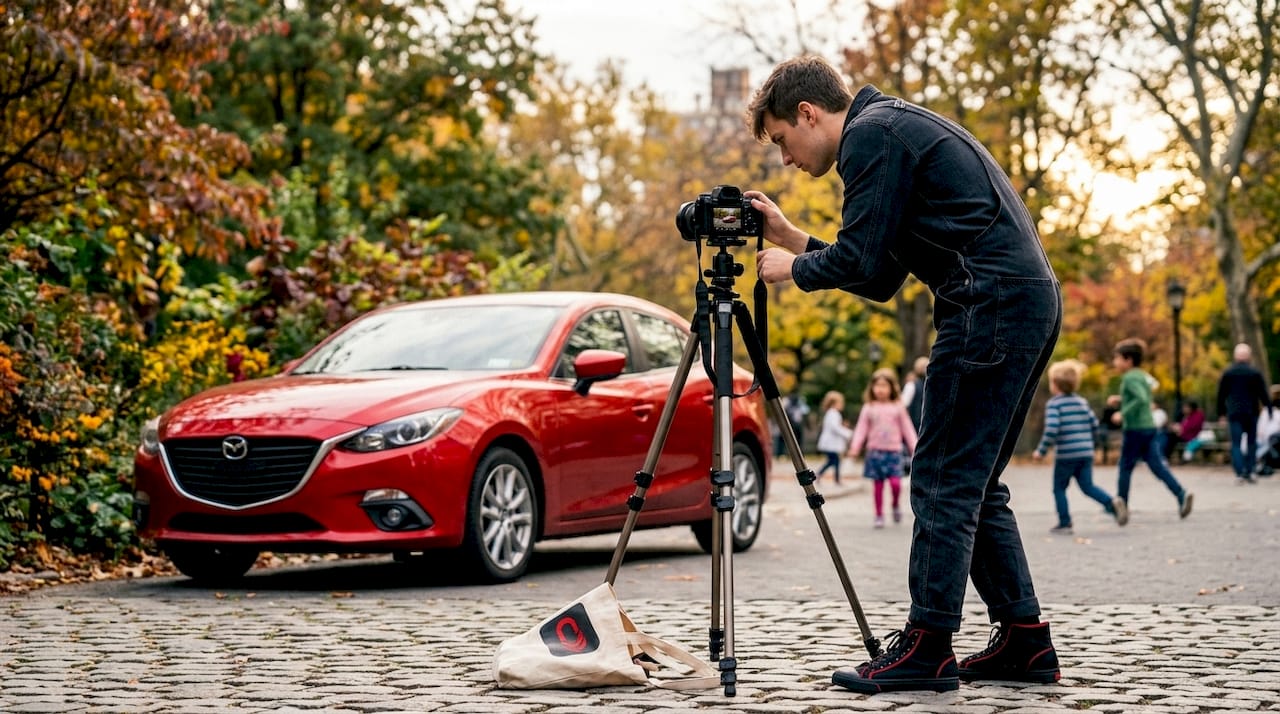
Shoot your car in natural daylight, away from shadows. Cover all four exterior angles, both front and rear, the interior from both front and rear seats, the dashboard, the engine bay, the trunk, and any notable features or flaws. Flaws matter. A photo of a small scratch builds more trust than a description that omits it entirely.
Writing a title and description that convert
Your title should include the year, make, model, trim level, and one key selling point. “2019 Honda Civic EX, 38K Miles, One Owner” tells a buyer exactly what they need to know before clicking. Generic titles like “Nice Car for Sale” get skipped.
Your description should be factual and specific. Include mileage, service history, recent repairs, tire condition, and any known issues. Honest listings with concrete data attract more serious contacts and reduce wasted time on inquiries from buyers who would have walked away anyway. Vague descriptions attract vague buyers.
Pricing for negotiation, not rejection
Price your car 5% to 10% above your true minimum to leave room for negotiation. Writing “price is firm” in your listing discourages serious inquiries. Buyers expect to negotiate. Give them the space to do it, and you both walk away satisfied.
Pro Tip: Research three to five comparable listings in your area before setting your price. Match your asking price to the market, not to what you paid or what you owe.
What challenges come with selling your car online?
Online car sales require real effort. The average private sale takes 10 to 30 hours of active work, from listing creation to final paperwork. That time commitment is why 60% to 85% of private sellers eventually give up and sell to a dealer at a lower price. Knowing what to expect upfront keeps you from making that same mistake.
The most common challenges are:
- Lowball offers: Expect them. Decide your floor price before you list and hold to it calmly.
- No-show buyers: Confirm appointments the day before and ask for a name and phone number before scheduling.
- Safety concerns: Meet in public places, bring a friend, and never hand over keys without payment cleared.
- Algorithm suppression: Avoid putting phone numbers or external links in your listing description on platforms like Facebook Marketplace. Doing so can reduce your listing’s visibility significantly.
- Listing fatigue: Listings lose visibility over time. Refreshing your listing regularly keeps it near the top of search results.
Pro Tip: Set a calendar reminder to renew or relist your posting every five to seven days. Fresh listings rank higher and attract more views on most platforms.
The choice between a private sale and an instant offer comes down to one trade-off: time versus money. Private sales pay more. Instant offers pay faster. Neither is wrong. The right answer depends on your situation.
What practical steps get your car sold online faster?
A structured approach cuts wasted time and increases your sale price. Follow these steps before you post a single photo.
-
Detail your car. A clean car photographs better and signals to buyers that it has been cared for. Professional detailing before listing is one of the highest-return investments a seller can make. The Carjourney article on detailing before selling breaks down exactly what to prioritize.
-
Update your service records. Buyers pay more for cars with documented maintenance histories. Gather every receipt, oil change record, and inspection report you have. Carjourney’s guide on updating service records explains how to organize this before listing.
-
Research your market value. Check comparable listings in your area for the same year, make, model, and mileage. Price with data, not emotion.
-
Write your listing with specifics. Use the title and description framework above. Be honest about condition. Include every relevant detail a buyer would ask about.
-
Choose your platforms. Pick two to three marketplaces based on your vehicle type and local market. Add one or two social media groups for additional reach. For a step-by-step walkthrough on the full process, the guide at Tri State Cash For Cars covers the mechanics of a fast private sale clearly.
-
Respond quickly and filter early. Reply to inquiries within a few hours. Ask buyers upfront whether they are paying cash or financing, and whether they have a trade-in. These questions filter out time-wasters fast.
“The sellers who get the best prices are not the ones who list and wait. They are the ones who treat the sale like a short-term project: prepared, responsive, and willing to put in the hours upfront to avoid weeks of frustration later.”
Key Takeaways
Online car marketing succeeds when sellers combine multi-platform visibility, quality photos, honest descriptions, and a pricing strategy that leaves room for negotiation.
| Point | Details |
|---|---|
| Online reach is non-negotiable | 95% to 97% of buyers research online, so a digital listing is the minimum entry point for any sale. |
| Private sales pay more | Online private sales yield 15% to 25% more than dealer trade-ins, making the effort worthwhile for most sellers. |
| Photos drive clicks | Listings with 8 or more quality photos sell 2–3 times faster than those with fewer images. |
| Platform choice matters | 61% of buyers start on third-party marketplaces, so listing there is the highest-priority step. |
| Price with negotiation in mind | Setting your price 5% to 10% above your floor gives buyers room to negotiate and keeps serious inquiries coming. |
What I have learned from watching sellers get this wrong
Most sellers underestimate how much the listing itself determines the outcome. They spend weeks preparing the car mechanically, then post three blurry photos and a one-sentence description. The car sits. They drop the price. They eventually take a dealer offer that is $2,000 below what a good listing would have earned them.
The sellers who do well treat the listing like a product page. They think about what a buyer needs to feel confident before reaching out. They answer every likely question in the description before it gets asked. They price based on market data, not on what they paid five years ago.
The multi-platform piece also trips people up. Listing on one site and waiting is not a strategy. It is hope. Spreading your listing across two or three platforms, plus a local social media group, takes an extra 30 minutes and can cut your time to sale in half.
The time commitment is real, and I will not pretend otherwise. But the sellers who go in with a plan, who refresh their listings regularly and respond to inquiries fast, consistently outperform those who list and disappear. The effort is front-loaded. Once the right buyer finds you, the rest moves quickly.
— Chally
How Carjourney helps you sell with confidence
Buyers pay more for cars with a clear, documented history. Carjourney gives you the tools to build that record before you list.
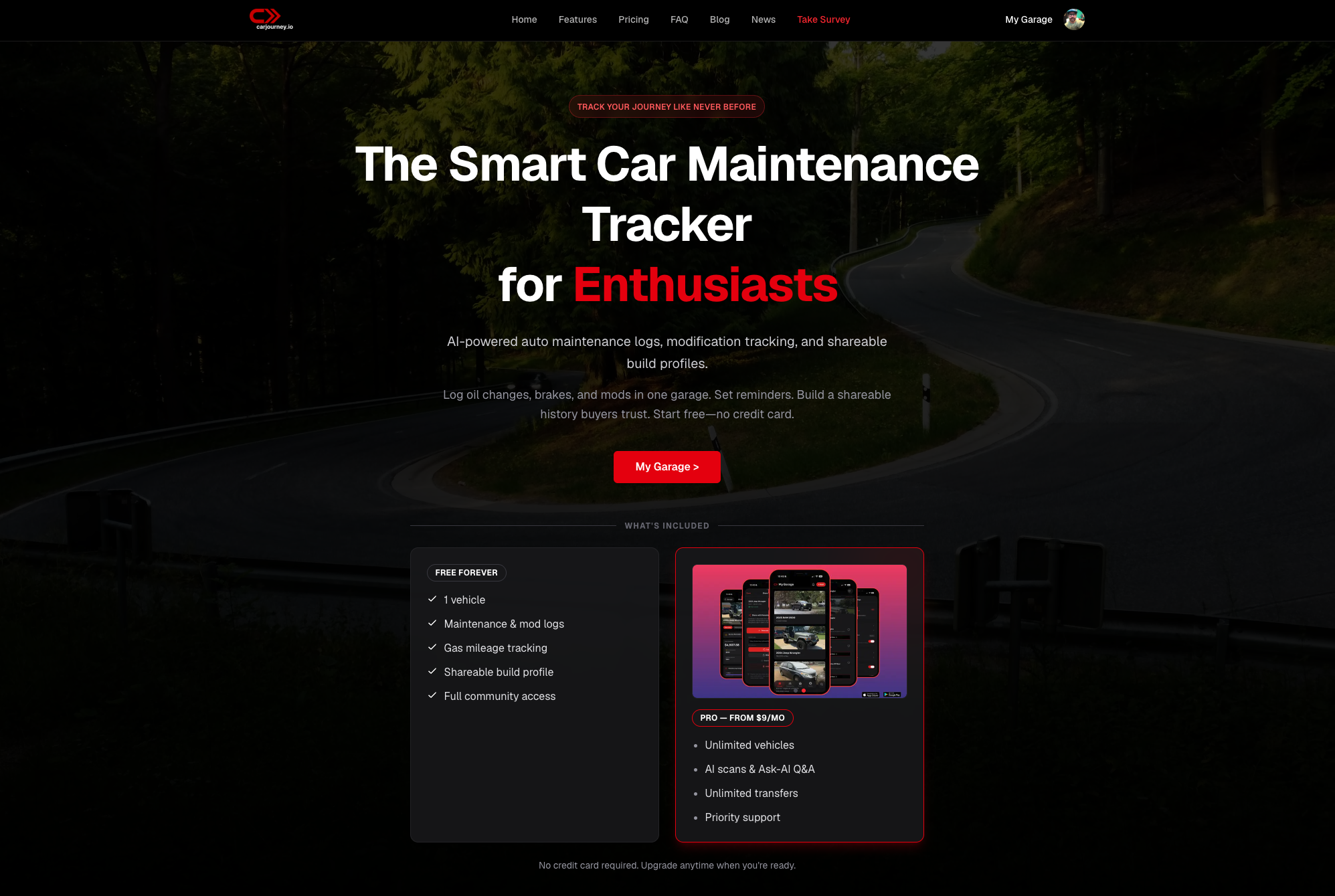
Carjourney’s AI-powered maintenance tracking scans your service documents, organizes your vehicle history, and gives you a clean record to share with buyers. A well-documented car signals care and reduces buyer hesitation. That confidence translates directly into faster offers and stronger prices. Whether you are selling a daily driver or a modified build, Carjourney helps you walk into the sale with proof that your car has been looked after. Start building your vehicle’s record at Carjourney before you post your first listing.
FAQ
Why should I market my car online instead of trading it in?
Online private sales yield 15% to 25% more than dealer trade-ins. The extra effort of an online listing typically returns thousands of dollars more than a quick trade-in offer.
Which platform is best for selling a car online?
Third-party marketplaces are the highest-priority channel because 61% of buyers start their search there. Listing on two to three platforms, plus local social media groups, gives you the broadest reach.
How many photos should my car listing have?
Listings with 8 or more quality photos sell 2–3 times faster than those with fewer images. Cover all exterior angles, the interior, the dashboard, the engine bay, and any known flaws.
How do I price my car for an online listing?
Set your asking price 5% to 10% above your true minimum to leave negotiation room. Research comparable listings in your area first and price based on market data, not personal attachment.
Is selling a car online worth the time and effort?
The average private online sale takes 10 to 30 hours of work. For most sellers, the 15% to 25% price premium over a trade-in makes that time investment worthwhile, especially on higher-value vehicles.