 carjourney
From the CarJourney journal
Why Detail Your Car Before Selling: Get More Money
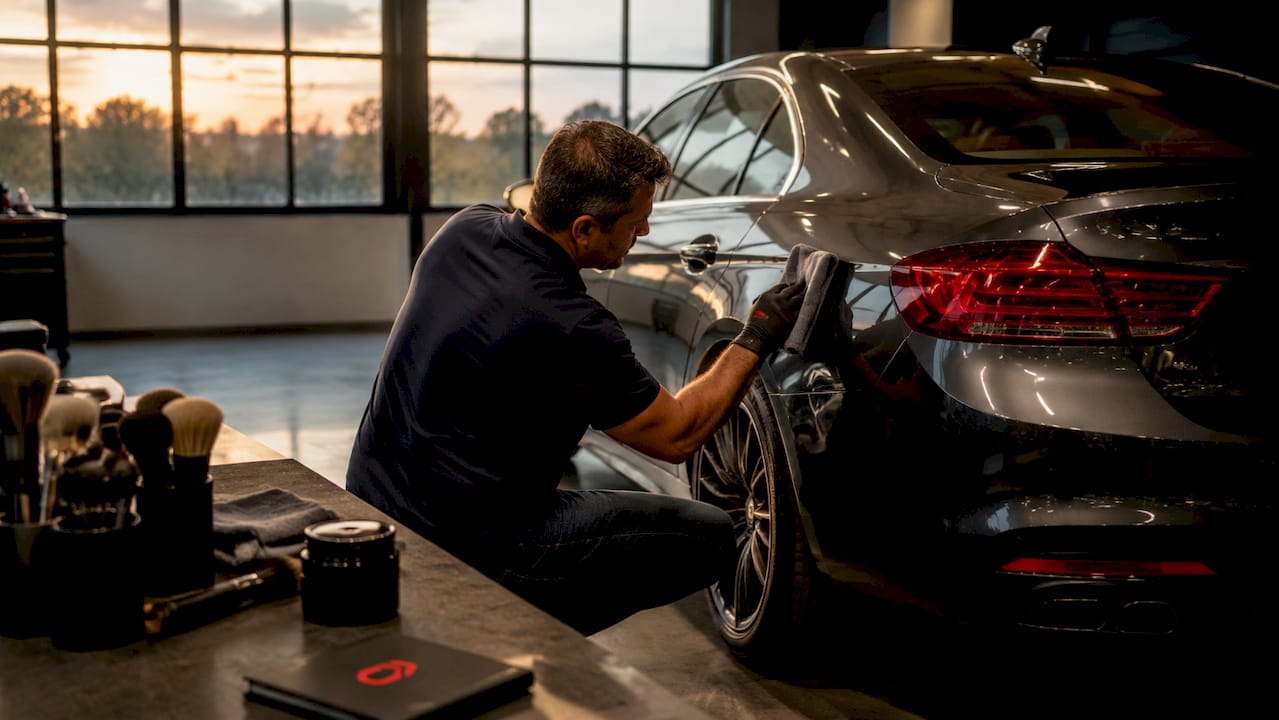
Detailing your car before selling is the single most effective preparation step to increase your resale price and attract serious buyers faster. Auto detailing, the industry term for a thorough interior and exterior cleaning and restoration process, goes far beyond a standard car wash. Sellers who detail before listing can see a 10%–15% price increase, generating $2–$5 back for every $1 spent. Professional detailing runs $75–$1,200 depending on service level, while a solid DIY approach costs a fraction of that. Either way, the return is hard to argue with.
Why detail your car before selling: the financial case
Detailing directly affects what buyers are willing to pay. A clean, polished car signals that the previous owner cared about it, and that perception translates into real dollars at negotiation time.
The numbers back this up. Pre-sale detailing generates $500–$2,000 or more in additional profit for well-prepared vehicles, with ROI estimates of 200%–500% common in 2026. That means a $300 professional detail on a $12,000 used sedan could realistically net you an extra $1,200 at closing.
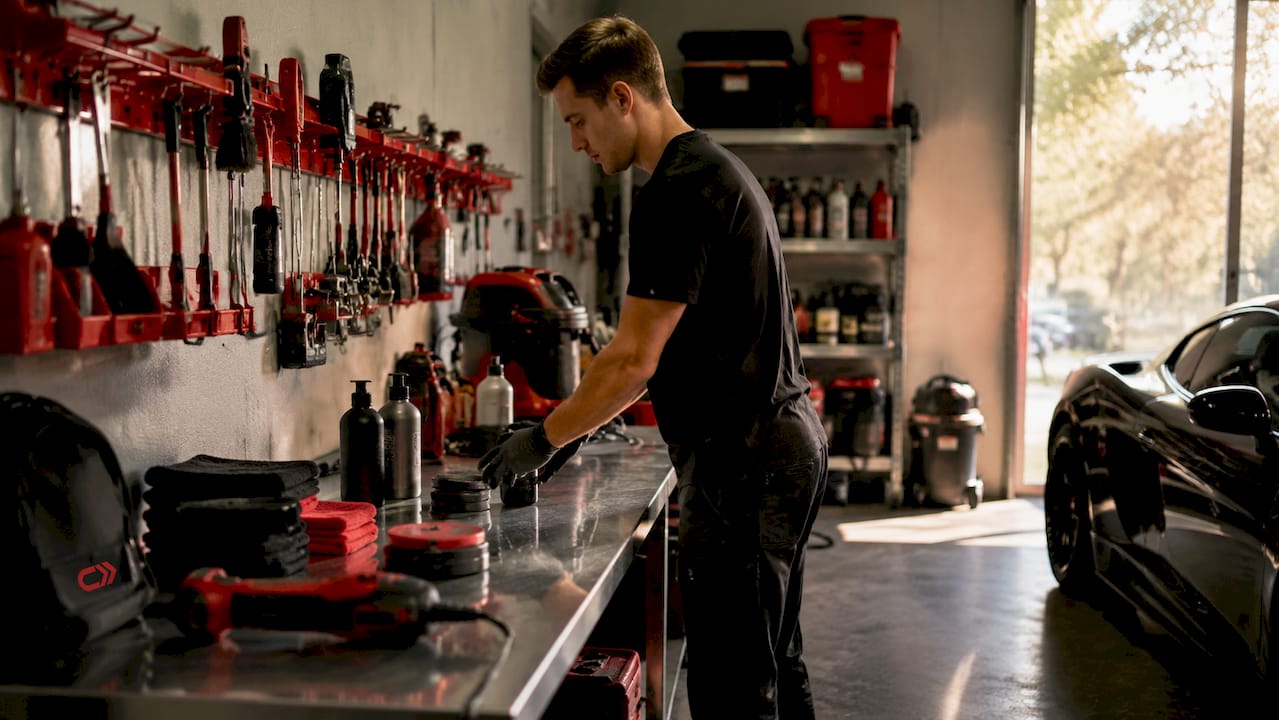
The psychological effect is just as powerful as the financial one. Buyers equate a detailed car with pride of ownership and responsible maintenance, which reduces their instinct to negotiate aggressively. A dirty car hands the buyer every reason to lowball you. A spotless one gives them fewer objections and more confidence.
Here is what detailing specifically improves in a buyer’s eyes:
- Paint condition: A glossy, swirl-free finish suggests the car was garaged and cared for, not beaten on daily roads.
- Interior cleanliness: Spotless seats and a fresh scent signal that the car was never smoked in and was kept clean.
- Wheel and tire appearance: Clean wheels and dressed tires make the car look newer than its mileage suggests.
- Odor elimination: Lingering pet or food smells are among the top reasons buyers walk away from an otherwise solid vehicle.
One important limitation: detailing is not a substitute for mechanical integrity. Buyers look past the shine to identify repair costs and negotiate accordingly. A detailed car with a check engine light still loses value. Detailing works best when the mechanical condition is already sound.
Professional detailing vs. DIY: which one pays off?
The right choice depends on your car’s market value, your available time, and the condition of the vehicle. Both approaches can deliver strong returns when matched correctly to the situation.
Professional detailing costs $75–$500 for entry-level packages and $600–$1,200 or more for premium services that include paint correction, ceramic coating, and full interior restoration. A $400 professional detail on a $20,000 SUV is an easy call. That same $400 spent on a $5,000 economy car is harder to justify unless the vehicle is in rough shape and needs professional-grade odor removal or stain treatment.
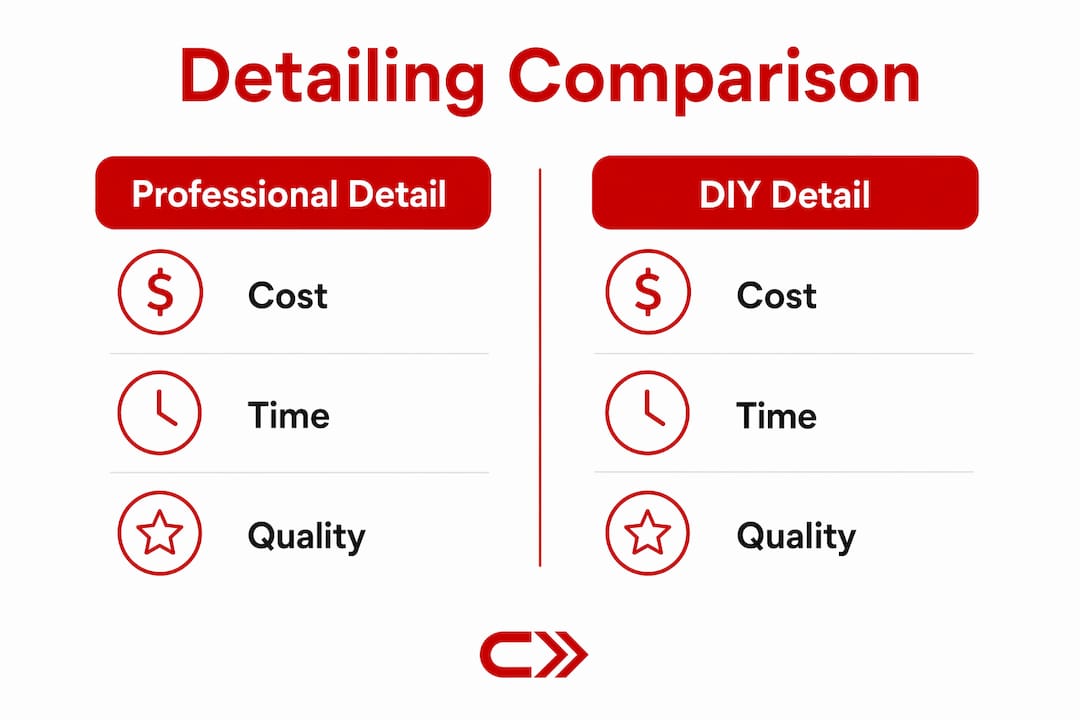
DIY detailing requires a vacuum, microfiber cloths, an all-purpose interior cleaner, a clay bar kit, car wash soap, and a quality wax or sealant. Products from brands like Chemical Guys, Meguiar’s, and Griot’s Garage cover every step of the process at accessible price points. A complete DIY kit typically runs $60–$120, and the labor is yours.
| Factor | Professional Detail | DIY Detail |
|---|---|---|
| Cost | $75–$1,200+ | $60–$120 in supplies |
| Time required | 2–8 hours (drop off) | 4–8 hours of your time |
| Best for | High-value vehicles, severe stains | Budget cars, light cleaning |
| Paint correction | Available at premium tier | Limited without machine polisher |
| Odor removal | Professional-grade treatments | Effective for mild odors |
Avoid over-investing in expensive paint correction on vehicles with low market value. A $600 paint correction job on a car worth $4,000 will not return that investment at sale. Match the detailing level to the car’s realistic selling price.
Pro Tip: If you go the DIY route, use a clay bar before waxing. Clay bars remove embedded contaminants that washing alone cannot touch, and the result is a noticeably smoother, glossier finish that photographs beautifully.
When should you schedule detailing before the sale?
Timing your detail correctly is as important as doing it at all. A car detailed three weeks before listing and driven daily will look ordinary by the time buyers show up.
The best practice is to book detailing 1–2 weeks before your target sale date. This gives you time to address any issues the detailer flags, gather your service records, and prepare your listing without rushing.
For listing photos specifically, follow this sequence:
- Schedule the detail 24–72 hours before your photo session. The car will still look fresh, and you avoid the risk of dust or water spots from daily driving.
- Avoid driving the car after detailing if possible. Driving post-detail reduces visual ROI drastically. Even a short trip kicks up road grime and dulls the finish.
- Take photos on a cloudy day or in open shade. Direct sunlight creates harsh reflections that hide the car’s best features.
- List within 48 hours of the photo session. Buyer interest peaks in the first 72 hours after a listing goes live, so you want the car looking its absolute best during that window.
Strong listing photos are where your detailing investment pays its first dividend. Check out dealership photo best practices for tips on angles, lighting, and composition that make a detailed car look even better online.
How to detail your car for selling: step-by-step
A thorough pre-sale detail covers both the interior and exterior in a specific order. Start inside, finish outside, and work from top to bottom throughout.
Interior steps:
- Vacuum everything first. Remove floor mats, vacuum under seats, and get into every crevice. Use a crevice tool for door pockets and the gap between seats.
- Wipe all hard surfaces. Use a microfiber cloth with an interior detailer spray on the dashboard, center console, door panels, and steering wheel. Avoid silicone-based products that leave a greasy film.
- Treat upholstery. For fabric seats, use an upholstery cleaner like Chemical Guys Fabric Clean. For leather, use a leather cleaner followed by a conditioner to prevent cracking.
- Eliminate odors at the source. Baking soda left overnight on fabric absorbs odors. For stronger smells, an ozone generator rental from a local auto parts store is the most effective solution.
- Clean all glass from the inside. Use an ammonia-free glass cleaner and a clean microfiber cloth. Streaky windows are one of the first things buyers notice.
Exterior steps:
- Wash with a two-bucket method. One bucket for soapy water, one for rinsing your mitt. This prevents swirl marks from dragging dirt across the paint.
- Clay bar the paint. After washing, run a clay bar across every painted panel. You will feel the difference immediately as the surface becomes smooth.
- Apply wax or paint sealant. Meguiar’s Ultimate Liquid Wax is a reliable choice for DIY sellers. Apply in thin coats and buff off with a clean microfiber.
- Dress the tires. A water-based tire dressing like Meguiar’s Endurance gives tires a clean, satin finish without the greasy look that attracts dirt.
- Clean the wheels. Brake dust is corrosive and highly visible. Use a dedicated wheel cleaner and a soft brush to get into the spokes.
Pro Tip: Skip the engine bay cleaning unless you have service records to pair with it. A clean engine bay can raise buyer suspicion if it looks too perfect, since buyers may assume you are hiding a leak or recent repair. Transparency matters more than a spotless engine.
Detailing preserves paint by protecting against contaminants that cause oxidation and corrosion. Even if you are not selling immediately, a regular detail schedule protects your car’s long-term value. Pairing your detail with organized service history documentation gives buyers a complete picture of a well-maintained vehicle.
Key takeaways
Detailing your car before selling delivers a measurable financial return, speeds up the sale, and reduces buyer negotiation leverage when done at the right time and investment level.
| Point | Details |
|---|---|
| Financial return | Pre-sale detailing generates $500–$2,000+ in added profit, with 200%–500% ROI common. |
| Buyer perception | A detailed car signals pride of ownership and cuts aggressive negotiation from buyers. |
| Timing matters | Detail 1–2 weeks before sale and 24–72 hours before listing photos for maximum impact. |
| Match investment to value | Avoid expensive paint correction on low-value cars; tailor detailing spend to realistic sale price. |
| Pair with documentation | Combine detailing with organized service records to build full buyer trust and speed the sale. |
The detail that tells the story
I have seen sellers spend weeks negotiating over $300 on a car that needed a $150 detail to close at full asking price. That is the mistake most people make. They treat detailing as optional, something to do if there is time, rather than the first thing they should schedule.
A detailed car does not just look better. It tells a story. It says the owner paid attention, kept up with maintenance, and respected the vehicle. Well-maintained vehicles sell 25% faster on average, and that speed advantage matters whether you are selling privately or to a dealer. Every day a car sits unsold is a day of depreciation and carrying cost.
The sellers who get full asking price are almost never the ones with the newest car. They are the ones who show up prepared. A clean car, a folder of service records, and a fair price based on real market data is a combination that closes deals fast. Pairing detailing with transparent maintenance records builds the kind of buyer trust that makes negotiation short and painless.
My honest advice: do not skip detailing on older or high-mileage cars either. Those vehicles need it most. A 2015 truck with 120,000 miles and a spotless interior sells for more than the same truck with stained seats and a musty smell. The detail closes the gap between what buyers expect and what they actually see.
— Chally
Prepare your car for sale with Carjourney
Detailing gets your car looking its best. Carjourney helps you back that up with everything else buyers want to see.
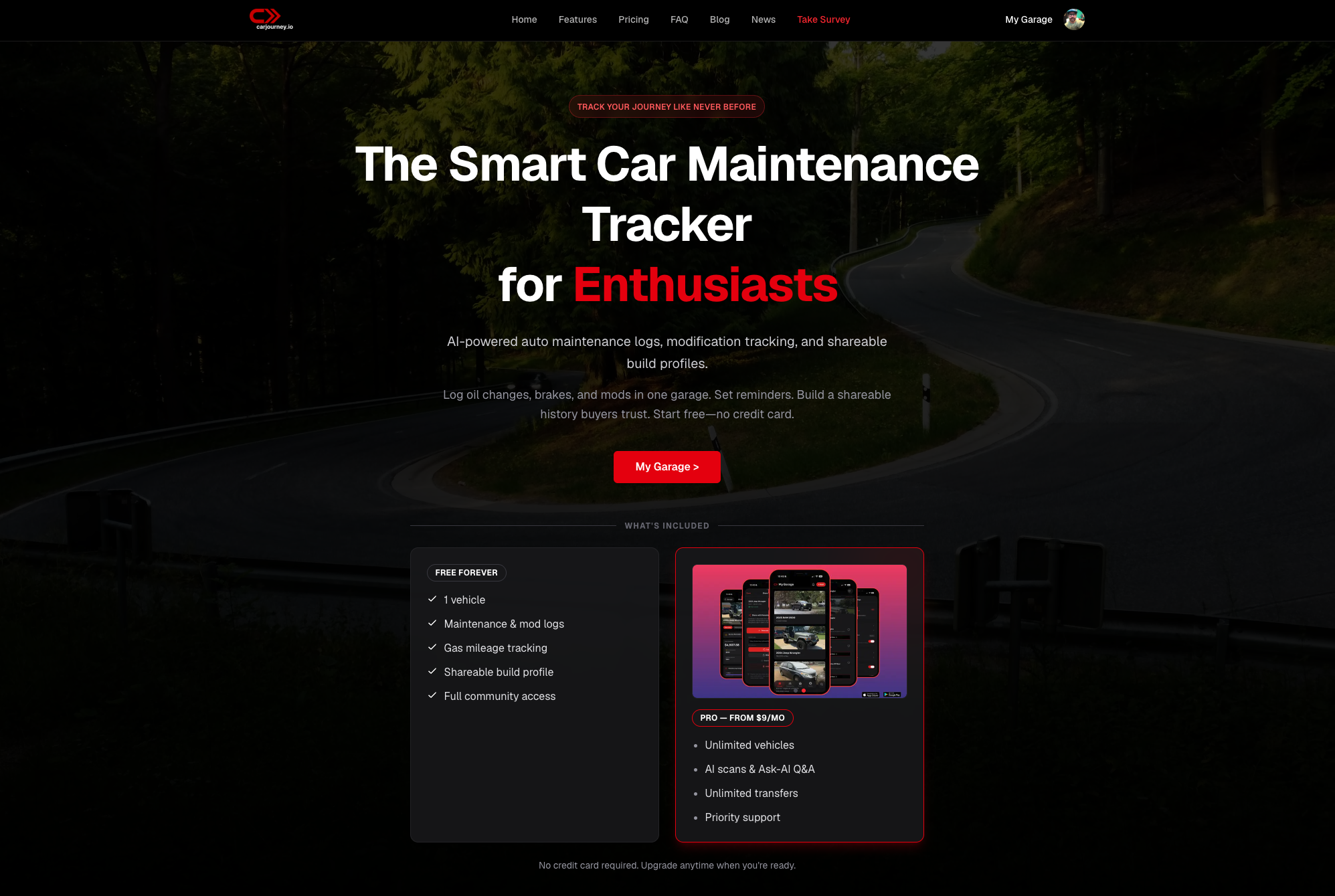
Carjourney is built for car owners who want to sell smarter. The platform lets you track your full service and maintenance history in one place, so you can hand buyers a complete record alongside a freshly detailed vehicle. You can also explore the Carjourney blog for guidance on pre-sale car preparation, interior care, and resale strategy built for real owners, not dealerships. When you are ready to sell, Carjourney gives you the tools to do it with confidence.
FAQ
Does detailing a car actually increase its sale price?
Yes. Pre-sale detailing increases resale price by 10%–15% on average, with sellers commonly netting $500–$2,000 in additional profit depending on the vehicle’s value and condition.
How long before selling should i get my car detailed?
Book detailing 1–2 weeks before your sale date, and schedule the final cleaning 24–72 hours before your listing photos to keep the car looking its best during the high-interest window.
Is DIY detailing good enough, or do i need a professional?
DIY detailing with products from brands like Meguiar’s or Chemical Guys is effective for vehicles in good condition. Professional detailing is worth the cost for high-value cars, severe stains, or odor problems that require industrial-grade treatment.
Should i clean the engine bay before selling?
Only if you have service records to pair with it. A spotless engine bay can raise suspicion without documentation, as buyers may assume you are concealing a mechanical issue. Transparency always outweighs appearance alone.
How do i keep my car clean between detailing and the sale?
Avoid driving the car after detailing whenever possible. Park it in a garage or covered area, and do a quick wipe-down with a detailer spray and microfiber cloth before each showing to maintain that fresh-detail appearance.