 carjourney
From the CarJourney journal
Why Refresh Vehicle Listing: Sell Your Car Faster

Refreshing a vehicle listing is defined as updating its price, photos, description, or presentation on a regular schedule to keep it visible and relevant to active buyers. This practice directly affects how platform algorithms rank your ad and how buyers perceive your car. Sellers who understand why refresh vehicle listing strategies work gain a measurable edge over those who post once and wait. Carjourney tracks the full picture of your vehicle’s history and condition, which makes building a compelling, trustworthy listing far easier.
Why refresh your vehicle listing and how often?
Listing freshness is the single biggest factor controlling your ad’s position in search results on any major marketplace. Platforms reward new engagement signals. A listing that sits untouched for two weeks drops steadily in rank, regardless of how good the car actually is.
The standard refresh interval is every 5–7 days if no serious inquiry has arrived. Dropping the price by $250–$500 in that same window signals urgency to both the algorithm and the buyer. That combination of content change and price movement is what triggers a re-ranking event on most platforms.

After 30 days without a sale, the situation becomes more serious. Visibility on AutoTrader decreases and price barriers become the primary obstacle. Waiting longer without action compounds both problems at once.
These are the clearest triggers that tell you a refresh is overdue:
- No messages or inquiries in 5–7 days
- A price drop from a comparable listing nearby
- More than two weeks since your last photo update
- A new service record, detailing job, or repair completed
- A seasonal shift in buyer demand (spring and fall move cars faster)
Pro Tip: Time your refresh for Thursday evening or Saturday morning. Buyer browsing activity peaks on weekends, and a freshly updated listing captures that traffic at the top of the feed.
What elements should you update during a refresh?
Photo quality is the highest-leverage update you can make. Listings with fewer than 8 photos underperform, while the optimal gallery contains 15–25 high-quality images covering the exterior, interior, engine bay, and service history documents. More photos correlate directly with faster sales and stronger engagement. Buyers who can see everything ask fewer questions and commit more quickly.
Beyond photos, the following elements deserve attention on every refresh cycle:
- Lead photo: Rotate to a new angle or a recently cleaned exterior shot
- Headline: Rewrite to highlight a different feature, such as fuel economy, recent tires, or a warranty
- Description: Update the opening paragraph to reflect any new details or completed work
- Price: Adjust by at least a small amount to trigger algorithm re-ranking
- Service records: Add photos of recent receipts or a maintenance history summary
- Condition notes: Mention any detailing, new inspection sticker, or seasonal preparation
Each of these changes tells the platform that your listing is active and tells the buyer that the seller is engaged. Both signals improve your conversion rate.
Pro Tip: Never delete and repost an identical listing. Reposting identical content risks triggering spam filters that reduce your reach without warning. Rotate the lead photo, adjust the description, and shift the price slightly instead.
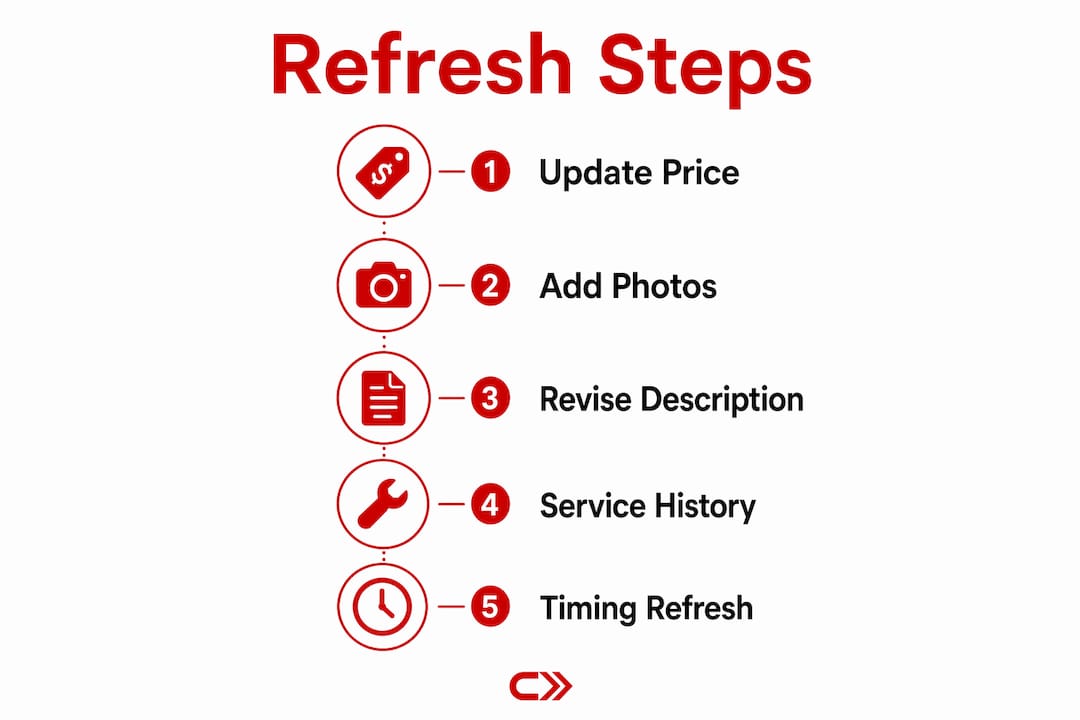
Updating your service history disclosure is one of the most underused refresh tactics. Buyers treat a documented maintenance record as proof the car was cared for, which justifies your asking price and reduces negotiation friction.
How does refreshing your listing influence buyer perception?
A stale listing sends a specific message to buyers, and it is not a good one. A listing that sits unsold for weeks signals potential defects, hidden problems, or a seller who is not serious. Buyers use listing age as a proxy for car quality, even when the car itself is in excellent condition.
Refreshing resets that narrative. New photos, an updated description, and a modest price adjustment tell buyers the seller is active and the car is worth a second look. That perception shift alone can move a listing from ignored to inquired-upon within 24 hours.
Platform algorithms boost listings that show new engagement signals and fresh creative content. Audience fatigue is a real phenomenon. A buyer who scrolled past your listing last week may respond to a new lead photo this week, even if the car has not changed.
The table below shows how fresh listings compare to stale ones across key engagement metrics:
| Metric | Fresh listing (updated within 7 days) | Stale listing (30+ days unchanged) |
|---|---|---|
| Search rank position | High, algorithm-boosted | Declining, deprioritized |
| Buyer inquiry rate | Elevated | Significantly reduced |
| Perceived seller credibility | Strong | Questioned |
| Price negotiation pressure | Lower | Higher |
| Days to sale | Shorter | Extended |
The pattern is consistent. Buyers negotiate harder against stale listings because they assume the seller is desperate or the car has a problem. A refreshed listing removes that assumption and puts you back in control of the conversation.
Practical steps to refresh your vehicle listing effectively
Treating your listing like a perishable asset is the right mental model. Successful sellers capitalize on short, high-impact listing windows and use timed refreshes to recreate that energy. The first 72 hours after any post or update are the highest-performing period. Every refresh is a chance to recapture that launch momentum.
Follow these steps to execute a refresh that actually moves the needle:
- Set a calendar reminder for every 5–7 days from your original post date. Treat it as a non-negotiable task, not an optional check-in.
- Rotate your lead photo to a different angle, a cleaner shot, or a recently taken image. The thumbnail is what stops a buyer mid-scroll.
- Rewrite the first two sentences of your description. Buyers read the opening line and decide whether to keep reading. Change it every cycle.
- Adjust the price by at least a small increment. Even a $200 drop registers as a new data point to the algorithm and signals movement to buyers.
- Add any new documentation. A fresh oil change receipt, a new inspection sticker, or a detailing photo all count as meaningful updates.
- Time the refresh strategically. Peak buyer activity aligns with evenings and payday weekends. Post your update Thursday through Saturday for maximum exposure.
- Track your metrics. Note how many views and messages each version of your listing generates. That data tells you which photos and headlines perform best.
Avoid the common mistake of refreshing too frequently with no real changes. Platforms detect repetitive behavior. Spacing refreshes at least five days apart and making genuine content updates each time protects your listing’s reach and keeps it out of spam filters. Understanding marketplace visibility factors helps sellers apply the same principles that professional dealers use to keep inventory moving.
Key Takeaways
Refreshing a vehicle listing every 5–7 days with genuine content updates, including new photos, revised descriptions, and price adjustments, is the most reliable way to maintain algorithm favor and buyer interest.
| Point | Details |
|---|---|
| Refresh every 5–7 days | No serious inquiry in that window means it is time to update price, photos, or description. |
| Photo count matters | Galleries with 15–25 images sell faster than listings with fewer than 8 photos. |
| Stale listings hurt perception | Buyers read listing age as a signal of hidden problems, even when the car is in great shape. |
| Avoid identical reposts | Minor authentic changes protect your reach; duplicate content triggers spam filters. |
| Time refreshes to peak traffic | Thursday evenings and Saturday mornings align with the highest buyer browsing activity. |
The listing is a living document, not a one-time post
I have watched sellers spend weeks wondering why their car is not moving, only to discover the listing has not been touched since day one. The car is fine. The listing is the problem.
The first 72 hours after posting are genuinely the most powerful window you have. The algorithm treats a new listing like a new product launch. Buyers who are actively searching see it at the top. That energy fades fast, and most sellers never try to recreate it. A well-timed refresh does exactly that.
What I find most sellers overlook is the psychological side. A buyer who sees the same listing twice with no changes assumes the car is either overpriced or has a problem. A buyer who sees an updated listing with new photos and a slightly adjusted price thinks, “Someone else must be looking at this.” That urgency is real and it moves people to act.
The sellers who close deals quickly treat their listing like a product page that needs active management. They track views, note when inquiries drop off, and respond by changing something real. They do not just drop the price and hope. They rotate photos, add service records, and rewrite the headline. That combination of content quality and timing is what separates a 10-day sale from a 90-day headache.
View your listing as a perishable asset with a short shelf life. Refresh it with intention, and it will keep working for you.
— Chally
How Carjourney supports your listing refresh strategy
Keeping a vehicle listing current requires knowing your car’s full story, and that is exactly what Carjourney is built to help with.
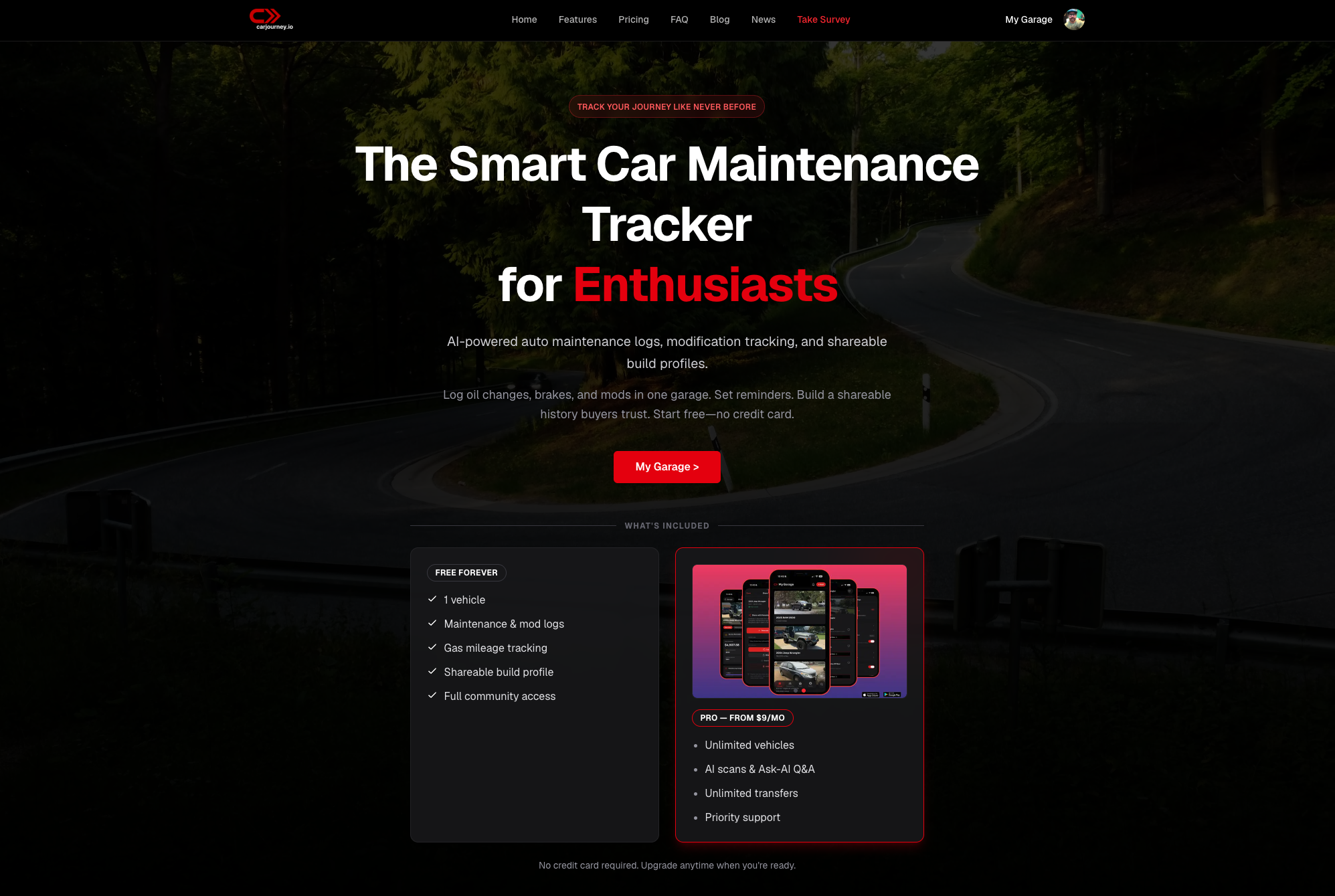
Carjourney uses AI to scan your service documents, track your maintenance history, and give you a clear picture of your vehicle’s condition at any point in time. When it is time to refresh your listing, that organized history becomes your strongest selling tool. Updated oil change records, recent repair receipts, and a clean service log all belong in your refreshed listing, and Carjourney keeps them ready. Visit Carjourney to start building the vehicle profile that makes every listing update faster and more credible.
FAQ
How often should I refresh my vehicle listing?
Refresh your listing every 5–7 days if no serious inquiries have arrived. Pair the refresh with a price adjustment of $250–$500 to signal activity to both buyers and the platform algorithm.
What is the best time to update a car listing?
Thursday evenings and Saturday mornings produce the highest buyer engagement. Timing your refresh to align with peak browsing windows gives the updated listing the best chance of appearing at the top of search results.
Will deleting and reposting my listing help?
Reposting an identical listing risks triggering spam filters that reduce your reach. Make genuine content changes, such as rotating the lead photo, adjusting the price, or rewriting the description, instead of starting over with the same content.
How many photos should a vehicle listing include?
The optimal gallery contains 15–25 high-quality images. Listings with fewer than 8 photos consistently underperform in both engagement and time to sale.
Does a stale listing actually hurt my sale price?
A listing that sits unchanged for weeks signals potential defects to buyers, even when the car is in excellent condition. Buyers use listing age as a negotiating tool, which increases price pressure on the seller.