 carjourney
From the CarJourney journal
Real Benefits of Maintenance Records for Vehicle Owners

Most vehicle owners treat maintenance records as an afterthought. A crumpled receipt tossed in the glove box, a vague memory of the last oil change. The benefits of maintenance records go far beyond simple organization. They directly affect how much your car is worth, whether your warranty claim gets approved, and how fast you can sell when the time comes. If you’ve been coasting without a real system, the information ahead is going to change how you think about every service visit.
Table of Contents
- Key takeaways
- 1. Benefits of maintenance records for your vehicle’s resale value
- 2. Warranty and legal protection you can’t afford to lose
- 3. Vehicle performance monitoring and smarter maintenance scheduling
- 4. How maintenance records build buyer trust during a sale
- 5. Common mistakes and best practices for maintenance record management
- My honest take on why most owners get this wrong
- Keep your vehicle’s full story in one place with CarJourney
- FAQ
Key takeaways
| Point | Details |
|---|---|
| Resale value boost | Complete service history can raise your vehicle’s sale price by 5% to 30% depending on type. |
| Warranty protection | Missing or vague records are the top reason warranty and lemon law claims get denied. |
| Faster sales | Documented vehicles sell in roughly 14 days versus up to 49 days without records. |
| Trust currency | Organized records reduce buyer anxiety and cut negotiation time at the point of sale. |
| Best practice wins | Digital backups, specific repair details, and consistent logging prevent costly gaps. |
1. Benefits of maintenance records for your vehicle’s resale value
Nothing hurts a private sale faster than a buyer asking for service history and getting a shrug. Vehicles with complete, documented service history command 5 to 20% higher resale prices than comparable cars without records. For luxury or high-performance vehicles, that premium can reach 30%. On a $40,000 car, that’s potentially $12,000 left on the table.
The financial advantage is compounded by time. Cars with complete records sell within 14 days on average, while those with incomplete histories can sit for up to 49 days, often at prices 5 to 15% lower. That’s a double penalty: less money AND more waiting.
Buyers aren’t just looking for proof that the oil was changed. They’re buying peace of mind about future reliability. When you can show documented oil changes, brake replacements, timing belt service, and tire rotations in order, you remove their biggest fear: hidden problems.
Pro Tip: When preparing for a sale, pull together records for oil changes, brake jobs, timing belt or chain service, major fluid flushes, and any suspension work. These are the items buyers ask about most and the ones that carry the most psychological weight during a transaction.
Digital logs add another layer of credibility. A printed paper trail from a dealer is good. A timestamped digital log with photos attached is better. The advantages of keeping maintenance records in a digital format extend to perceived care and attention to detail, which buyers interpret as a proxy for how the vehicle was treated overall.
2. Warranty and legal protection you can’t afford to lose
A 500-mile discrepancy in your service records can be enough to void an engine warranty claim. That’s not a technicality buried in fine print. It’s a practical reality that thousands of owners encounter every year, and 2026 data confirms that missing maintenance documentation is among the top reasons warranty claims get delayed or rejected outright.
The problem gets worse when extended warranties are involved. Extended warranty providers have become increasingly aggressive about denying claims tied to documentation gaps. Documenting your VIN, exact mileage at each service, oil weights used, and digitizing all receipts are specific steps that reduce claim denials significantly.
For lemon law cases, records are the foundation. Legal professionals who handle these cases are clear on this point:
“Service history audits allow attorneys to reconstruct a vehicle’s history before filing, making records the primary evidence used to prove recurring defects.” Service History Audits for Lemon Law Cases
The quality of those records matters just as much as having them. Vague entries like “checked OK” on a repair order are nearly useless in a legal dispute. What strengthens a claim is explicit documentation: what the problem was, what was found, exactly what repair was performed, and the technician’s name.
Pro Tip: After every shop visit, review the repair order before you leave. If it says something vague like “inspected and adjusted,” ask the service writer to add specific details. It takes 60 seconds and can make the difference between an approved warranty claim and a denied one.
Here’s what a strong repair order should include:
- The specific complaint you brought in (your words, not paraphrased)
- The diagnostic finding and root cause identified
- Exact parts replaced with part numbers when possible
- Labor performed with technician identification
- Mileage at time of service
- Any related communications like emails or texts if an issue was ongoing
3. Vehicle performance monitoring and smarter maintenance scheduling
The importance of maintenance logs isn’t only about money or legal standing. It’s also about keeping your vehicle running well for longer. When you track what’s been done and when, you can see at a glance what’s coming due. That prevents the kind of missed service that quietly degrades performance over thousands of miles.
Tracking service intervals accurately helps you avoid breaching manufacturer-recommended schedules, which is one of the fastest ways to void a warranty or accelerate component wear. Most owners forget when they last changed their transmission fluid or coolant. Those intervals aren’t obvious, and missing them costs real money.
Here’s a practical look at the difference between tracking methods:
| Tracking method | Strengths | Weaknesses |
|---|---|---|
| Paper logbook | Simple, no tech required | Easy to lose, hard to search |
| Spreadsheet | Customizable, searchable | Manual entry, no reminders |
| Digital app | Reminders, photo storage, shareable | Requires consistent data entry |
| AI-powered platform | Auto-scans docs, flags intervals, builds history | Requires initial setup |
The pattern is clear. The more structured your system, the less you have to rely on memory. A digital app with reminder capability is already a massive improvement over the glove box method. An AI-powered platform that scans your service documents and flags upcoming intervals is in a category of its own for owners who want to stay ahead of problems rather than react to them.

Pro Tip: Set a recurring calendar reminder every 1,000 miles or monthly, whichever comes first, to update your maintenance log. Logging right after service takes two minutes and eliminates the most common gap in records: forgetting to document what was done.
4. How maintenance records build buyer trust during a sale
The psychology of a vehicle sale is mostly about risk. A buyer who doesn’t know the car’s history is making a bet. Your job is to remove as many unknowns as possible, and records are how you do that. Maintenance records act as the currency of trust between seller and buyer, reducing perceived risk and accelerating the decision.
When a buyer can read through a clean, organized service history, their due diligence process shortens. They spend less time researching the car’s potential problems and more time deciding whether they want it. That shift removes one of the buyer’s main negotiation levers: uncertainty.
Think of it as putting together a vehicle resume. The buyer equivalent of checking references. When the record is thorough, it answers questions before they’re asked, which makes the entire transaction smoother and faster.
Here’s what to compile before listing your vehicle for sale:
- All service receipts, organized by date and mileage
- Inspection reports from shops or dealers
- Photos of the vehicle at key service milestones
- Any recall completion notices
- A one-page summary of major maintenance events (think of it as the cover letter for your vehicle resume)
- Documentation of any cosmetic repairs or upgrades
Organizing repair documents with a summary sheet has been shown to improve buyer confidence and reduce time on market. The one-page summary is an underused tactic that puts everything a buyer needs to feel confident right at the front of the folder.
Pro Tip: Create a “vehicle resume” in a simple PDF: one page with the car’s key specs, a timeline of major services, and notes on any work done above standard maintenance. Buyers who receive this during initial contact respond faster and negotiate less aggressively.
5. Common mistakes and best practices for maintenance record management
Knowing the value of records and actually keeping good ones are two different things. Most owners fall into the same traps, and avoiding them is easier than it sounds once you know what to watch for.
The biggest mistake is accepting vague documentation. As noted in the warranty section, repair orders that say “inspected” or “no issues found” without specifics are nearly worthless when you need to prove something. Insisting on explicit repair details every time you visit a shop is the single highest-leverage habit you can develop.
The second most common mistake is waiting to digitize. Physical receipts fade, get lost in moves, or end up destroyed. Digitizing and backing up records promptly after each service eliminates this risk entirely. A photo taken in the parking lot right after pickup is good enough. A dedicated app is better.
Here are the best practices that separate organized owners from everyone else:
- Photograph receipts and repair orders immediately after every service visit
- Include odometer readings in every log entry, not just the service type
- Note the name of the shop and the technician when possible
- Track communications about ongoing issues through email or text threads
- Set service interval reminders before you actually need the service, not after
- Keep a backup of your records in at least two places, one local and one cloud-based
Pro Tip: Once a year, spend 15 minutes reviewing your log and writing a one-paragraph summary of the year’s maintenance. This becomes invaluable when preparing for sale or a warranty dispute because you can quickly identify gaps and patterns without scrolling through every entry.
For deeper guidance on building a system that actually sticks, the CarJourney vehicle maintenance guide covers how to structure your log for maximum usefulness at resale.
My honest take on why most owners get this wrong
I’ve seen this play out enough times to say with confidence: most vehicle owners don’t undervalue maintenance records because they’re lazy. They undervalue them because the consequences aren’t visible until it’s too late.
You sell your car and accept $3,000 less than you should have gotten because you couldn’t prove the transmission was serviced. You file a warranty claim and it gets denied because your oil change intervals weren’t documented consistently. You try to build a lemon law case and your attorney tells you the repair orders aren’t strong enough to proceed. None of these moments feel like a record-keeping failure in the moment. But they are.
What I’ve found from watching owners go through these situations is that the pain point is always the same: they thought “I know I maintained this car well” would be enough. It isn’t. The buyer doesn’t know you. The warranty company doesn’t trust you. The court doesn’t care about your memory.
The shift that changes everything is treating every service visit like you’re building a case file. Not because you expect a dispute, but because a well-documented car is objectively more valuable than an identical car without records. That’s true whether you’re selling, claiming, or simply trying to stay on top of your vehicle’s health.
Technology has made this dramatically easier. AI-assisted platforms that scan your documents and build your history automatically remove the biggest barrier, which is remembering to log things consistently. The owners who adopt that kind of system early end up with records that actually reflect the care they put in.
— Chally
Keep your vehicle’s full story in one place with CarJourney
If everything in this article made sense but “keeping records consistently” still feels like the hard part, that’s exactly the problem CarJourney was built to solve.
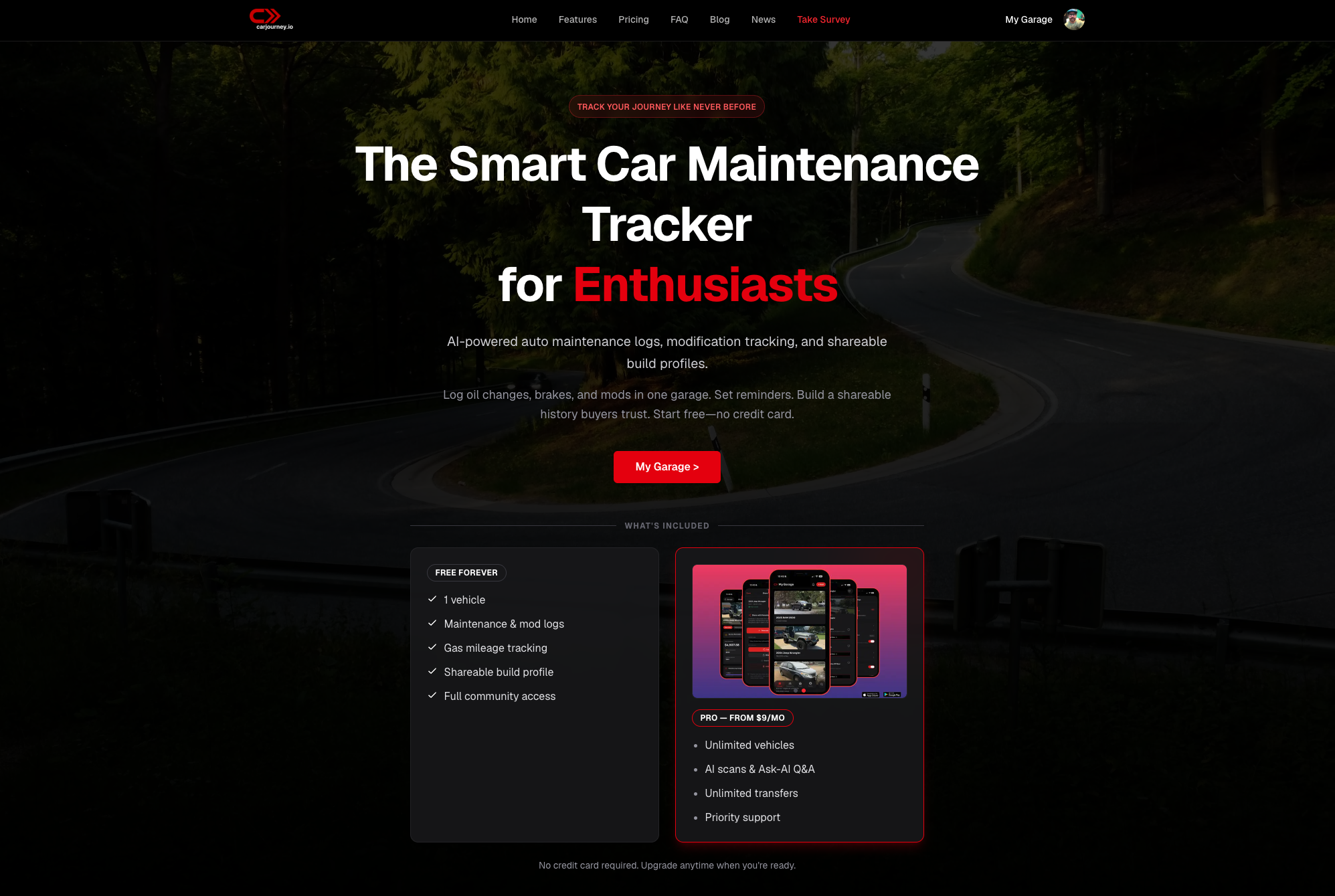
CarJourney uses AI to scan your service documents, automatically build your vehicle’s history, and flag upcoming maintenance intervals before they become missed ones. You can store photos, repair orders, and receipts in one place, then share your full service history with a buyer or mechanic in seconds. For owners who want to protect their vehicle’s resale value and stay warranty-compliant without the manual effort, start tracking with CarJourney and turn every service visit into a documented asset.
FAQ
How much do maintenance records increase resale value?
Vehicles with complete service histories sell for 5 to 20% more than those without, with luxury and performance cars seeing premiums up to 30%.
Can missing records really void a warranty claim?
Yes. Even a 500-mile gap in documented service intervals can be enough to void engine warranty coverage, and extended warranty providers have been denying more claims for this reason in 2026.
What records matter most when selling a car?
Oil change history, brake service, timing belt or chain replacement, and major fluid services are what buyers ask about most. A one-page summary with all service milestones included reduces negotiation and shortens time on market.
How do maintenance records help in a lemon law case?
Records serve as the primary evidence to prove recurring defects in a lemon law claim. Repair orders with vague language weaken these cases, while detailed documentation of each repair attempt strengthens them significantly.
What is the best way to store maintenance records?
Digitizing records immediately after each service and keeping backups in both a local folder and cloud storage gives you the most protection. An app or AI-powered platform that organizes records automatically removes the human error factor entirely.