 carjourney
From the CarJourney journal
How to Prepare a Car for Sale and Get Top Dollar
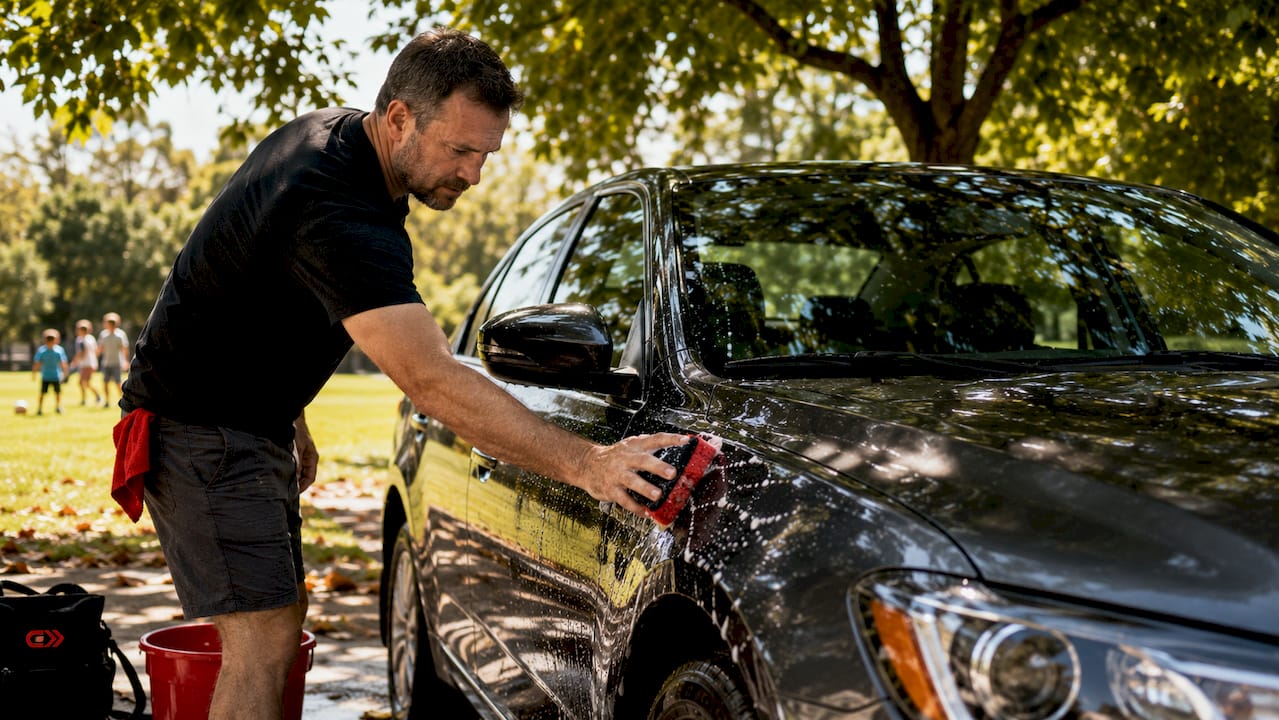
Preparing a car for sale is the process of readying your vehicle through cleaning, mechanical inspection, documentation, and presentation to maximize its market value and attract serious buyers. The industry term for this process is “pre-sale vehicle preparation,” and it covers everything from a thorough interior detail to signing the title correctly on closing day. Sellers who skip these steps leave money on the table. Verified service records correlate with a 10–15% increase in resale value. That gap is real money, and it comes from preparation, not luck.
What documents and records do you need before selling?
Gathering your paperwork before you list the car is the single fastest way to build buyer trust. Buyers who see a complete file walk away less often and negotiate less aggressively. A disorganized seller signals a disorganized owner, and buyers price that risk into their offers.
Your car ownership documents should include the following before you speak to a single buyer:
- Title (certificate of ownership): The title must be in your name and free of liens. If a lender holds the title, get a payoff quote and arrange a simultaneous payoff at closing.
- Registration: Current registration confirms the car is legally on the road and helps buyers verify the VIN.
- Loan payoff information: If you still owe money, know the exact payoff amount and the lender’s process for releasing the title.
- Maintenance and service records: Oil changes, tire rotations, brake jobs, and major repairs. Organize these chronologically in a folder or binder.
- Bill of sale: A written record of the transaction that protects both parties. Many states provide a standard form.
- Odometer disclosure statement: Federally required for most vehicles under ten years old.
- Release of liability: Filed with your state’s DMV after the sale to confirm you no longer own the vehicle.
A complete selling checklist covers 30–40 steps across research, preparation, and legal duties. Most private sellers skip the legal steps entirely. That oversight creates real exposure after the car changes hands.
Pro Tip: Scan every service receipt and save digital copies. If the originals are lost, contact your dealership or mechanic. Many shops keep records for five to seven years and will print copies on request.
How to clean and detail your car to improve buyer appeal
Pre-sale detailing is not about achieving showroom perfection. The goal is to remove neglect signals that give buyers a reason to lowball you. Dirty door jambs, stained seats, and a musty smell all tell the same story: this car was not cared for. Buyers use those signals to justify cutting $500 or more off your asking price.
Follow these steps in order for the best result:
- Vacuum the entire interior. Pull out the floor mats and vacuum under them. Use a crevice tool on the seat rails and between the cushions.
- Treat stains on fabric or leather. Use an upholstery cleaner on fabric seats and a leather conditioner on leather. Let each product dry fully before moving on.
- Clean all hard surfaces. Wipe down the dashboard, door panels, center console, and cup holders with an interior detailing spray. Do not skip the vents.
- Deodorize the cabin. An ozone treatment or an enzyme-based odor eliminator works better than air fresheners, which buyers recognize as a cover-up.
- Wash and dry the exterior. Use a two-bucket wash method to avoid scratching the paint. Dry with a microfiber towel.
- Apply a coat of wax or paint sealant. This adds gloss and protects the paint during showings.
- Clean the wheels and wheel wells. Brake dust and road grime on wheels are a visible neglect signal. A dedicated wheel cleaner removes buildup that regular washing misses.
- Restore hazy headlights. A headlight restoration kit costs under $20 and takes 30 minutes. Hazy headlights make a car look older than it is.
- Clean the door jambs. Buyers open every door. Dirty jambs are one of the most common neglect signals detailers flag.
- Wipe down the engine bay. A clean engine bay signals careful ownership. Use a degreaser and a low-pressure rinse, then dry thoroughly.
Professional detailing is one of the highest-return investments before a sale. A full detail from a professional service typically runs $150–$300. If your car has significant staining, pet hair, or paint swirls, the professional result will exceed what most sellers can achieve at home. For a car priced at $15,000, recovering even $500 in negotiation leverage more than pays for the service.
Pro Tip: Take before-and-after photos of your detailing work. Sharing these with buyers through documented care photos reduces negotiation pressure by showing the effort you put into the car.
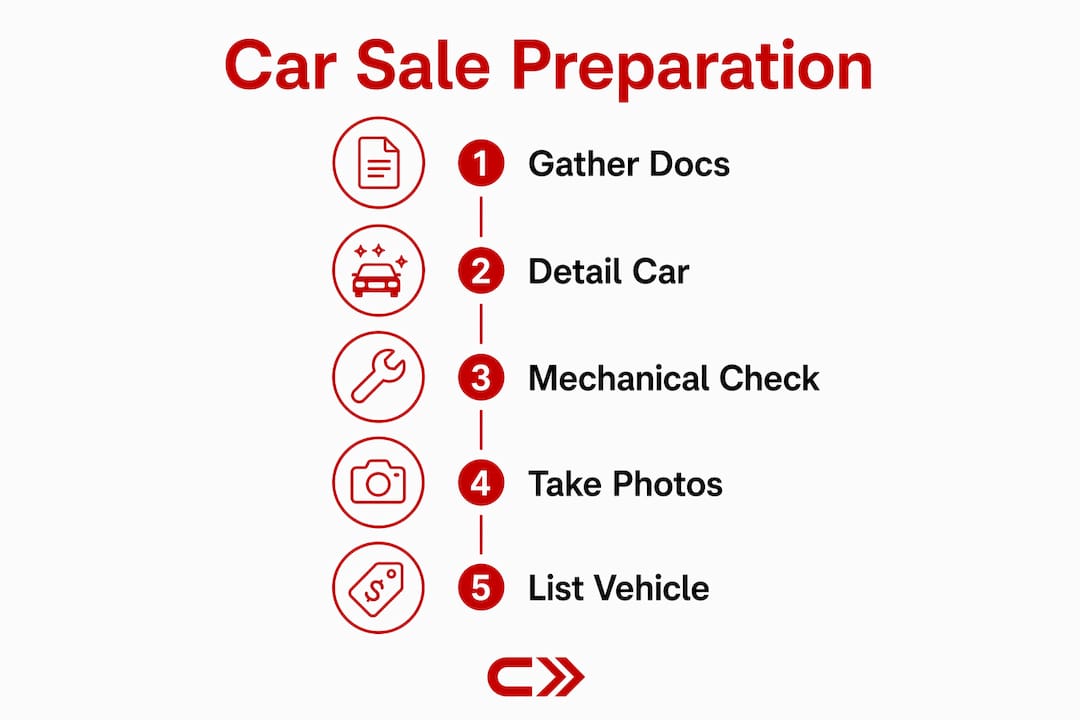
If you want to understand the full financial case for detailing before you list, the Carjourney blog covers why detailing pays off with specific examples.
Should you get a mechanical inspection before selling?
A pre-sale mechanical inspection is one of the most underused tools in private car sales. A trusted mechanic will put the car on a lift, check the brakes, tires, lights, fluids, and belts, and give you a written report. That report does two things: it tells you what to fix, and it gives you a document to show buyers.
Pre-sale inspections that catch faults and present a positive report can speed a sale by approximately 30%. Buyers who see a clean inspection report negotiate less because they have less ammunition. Buyers who do not see one assume the worst and price that uncertainty into their offer.
Focus your repair budget on these high-impact, low-cost items:
- Tires: Uneven wear or low tread depth is one of the first things buyers check. Replacing a worn tire costs far less than the discount a buyer will demand.
- Brakes: Squealing or grinding brakes are an immediate red flag. Replacing brake pads is a straightforward repair that removes a major objection.
- Lights: Walk around the car and confirm every bulb works. A burned-out brake light or turn signal costs a few dollars to fix and signals neglect if left alone.
- Fluid levels: Top off the oil, coolant, brake fluid, and windshield washer fluid. A dipstick showing low oil tells a buyer the car was not maintained.
- Check engine light: A lit check engine light will kill a deal or cost you hundreds in negotiation. Pull the code with an OBD-II scanner before the buyer does.
Skip repairs that cost more than they return. A transmission rebuild on a $10,000 car rarely makes financial sense. Disclose known issues honestly instead. Buyers respect transparency, and hiding problems creates legal exposure in most states.
How to take photos and write a listing that attracts buyers
Your listing photos are the first impression every buyer gets. Effective listings include 10–20 high-resolution photos covering all key areas of the vehicle. Blurry or dark photos signal that the seller has something to hide.
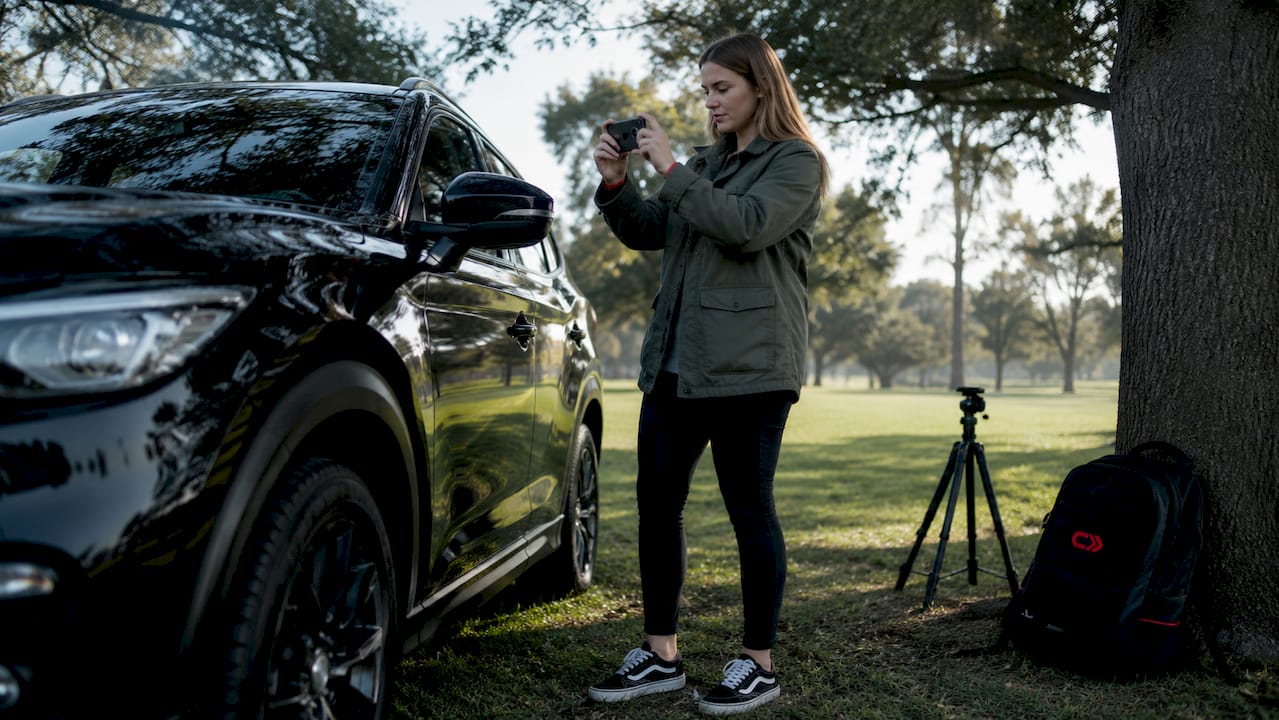
Shoot your photos in natural daylight, ideally in the morning or late afternoon when the sun is low. Avoid direct midday sun, which creates harsh shadows and washed-out paint. Use a clean, neutral background like an empty parking lot or a quiet street.
Cover these angles and areas:
- Exterior: Front, rear, driver’s side, passenger’s side, and all four corners at a 45-degree angle.
- Interior: Driver’s seat, rear seats, dashboard, and center console.
- Odometer: A clear shot of the current mileage.
- VIN plate: Located on the dashboard near the windshield on the driver’s side.
- Engine bay: Shows the clean, well-maintained engine you detailed.
- Any damage: Photograph every scratch, dent, or scuff honestly. Buyers who find surprises in person lose trust immediately.
For your written description, honest and conversational ad copy builds buyer trust and justifies your price. Lead with the year, make, model, trim, and mileage. Follow with the most recent major services. Mention any upgrades or new parts. Close with your asking price and preferred contact method.
Pro Tip: Record a short two-minute walkaround video and include the link in your listing. Most sellers skip this step. A video gives remote buyers enough confidence to make the drive, which expands your buyer pool significantly.
What are the final legal steps to complete the sale?
The legal steps at closing protect you from liability after the car leaves your driveway. Failing to complete these steps can leave you responsible for tickets, tolls, or worse, if the new owner does not register the vehicle promptly.
Complete these steps in order on the day of sale:
- Sign and transfer the title. Both parties sign the title. Print clearly, use a ballpoint pen, and do not use correction fluid. Errors on a title can void the transfer.
- Complete the odometer disclosure. Fill in the exact mileage at the time of sale. This is a federal requirement for most vehicles.
- Write a bill of sale. Include the sale price, date, both parties’ names and addresses, the VIN, and the odometer reading. Both parties keep a signed copy.
- File a release of liability with your DMV. Most states allow you to do this online within 24 hours of the sale. This is the step that protects you from post-sale liability.
- Remove your license plates. In most states, plates stay with the seller, not the car. Check your state’s rules before the buyer drives away.
- Cancel or transfer your insurance. Call your insurer the same day. Do not cancel before the sale is complete.
Failing to notify your state’s DMV of a vehicle sale can result in ongoing liability for the seller. If the buyer receives a parking ticket or is involved in an incident before registering the car, that liability can follow the previous owner. Filing a release of liability the same day as the sale is the only reliable protection.
Key Takeaways
Thorough pre-sale preparation, covering documentation, detailing, mechanical inspection, photography, and legal compliance, is the most reliable way to sell faster and at a higher price.
| Point | Details |
|---|---|
| Gather documents first | Collect the title, service records, and legal forms before listing to build buyer trust. |
| Detail to remove neglect signals | Clean door jambs, restore headlights, and deodorize the cabin to reduce lowball offers. |
| Get a pre-sale inspection | A written mechanic’s report speeds the sale and reduces buyer negotiation leverage. |
| Shoot 10–20 quality photos | Cover all exterior angles, interior, odometer, and any damage honestly. |
| File a release of liability | Notify your DMV on the day of sale to protect yourself from post-sale legal exposure. |
What I’ve learned from watching sellers leave money behind
Most sellers focus on the big things: the asking price, the platform they list on, whether to take a trade-in offer. What actually costs them money is the small stuff they overlook.
I’ve seen clean, well-maintained cars sell for less than they deserved because the seller showed up with a crumpled title, no service records, and a car that smelled like old coffee. The buyer walked in ready to pay the asking price and walked out offering $1,200 less. The seller took it because they had no documentation to push back with.
The cars that sell fast and at full price share a pattern. The seller has a folder with every service receipt. The car smells neutral and looks cared for. The mechanic’s report is sitting on the passenger seat. The photos in the listing are sharp and honest. None of that is expensive. All of it is intentional.
Transparency is your strongest negotiation tool. Buyers discount uncertainty. When you remove uncertainty with documentation and a clean presentation, you remove their justification for cutting the price. The goal is not to hide the car’s flaws. The goal is to show that you know the car better than they do, and that you maintained it accordingly.
Timing matters too. Convertibles sell better in spring. Trucks and SUVs move faster in fall and winter. If you can wait for the right season, do it. A few weeks of patience can be worth several hundred dollars.
— Chally
Carjourney Pro Yearly keeps your service history sale-ready
Sellers who walk into a negotiation with a complete, organized service history close faster and at better prices. The problem is that most people do not track their maintenance consistently until they decide to sell, and by then, the records are scattered or missing.
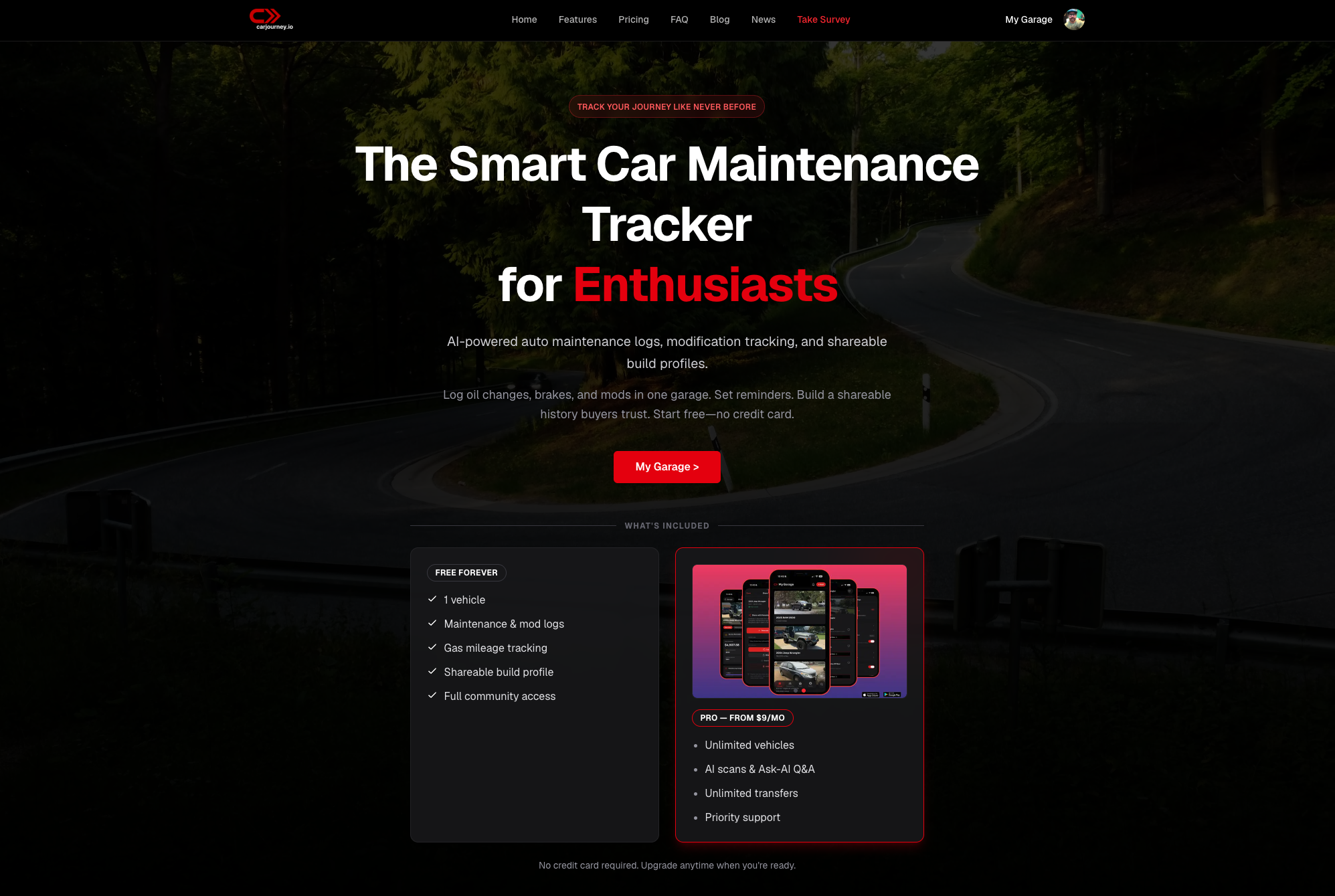
Carjourney Pro Yearly solves that problem before it starts. The platform uses AI to scan your service documents, build a verified maintenance timeline, and answer detailed questions about your specific vehicle’s history. When it is time to sell, your complete service record is organized, searchable, and ready to share with buyers. That kind of documentation does not just build trust. It justifies your asking price with evidence. Start tracking your maintenance history now so your next sale is your best one.
FAQ
How much can good preparation add to a car’s sale price?
Verified service records alone correlate with a 10–15% increase in resale value. Combined with professional detailing and a clean inspection report, the total gain is often higher.
Is professional detailing worth the cost before selling?
Professional detailing is one of the highest-return pre-sale investments. The cost typically runs $150–$300, and the reduction in buyer negotiation pressure regularly exceeds that amount on cars priced above $8,000.
What happens if I don’t transfer the title correctly?
An error on the title can void the transfer and delay the sale. Use a ballpoint pen, print clearly, and avoid correction fluid. Check your state’s DMV website for the exact signing requirements before closing day.
Do I need a bill of sale in every state?
Most states require or strongly recommend a bill of sale for private vehicle transactions. It protects both the buyer and the seller by documenting the agreed price, condition, and date of transfer.
When should I cancel my car insurance after selling?
Cancel your insurance on the same day the sale closes, but not before. Driving the car to a showing or test drive without active coverage creates liability. Confirm the sale is complete and the buyer has driven away before calling your insurer.