 carjourney
From the CarJourney journal
Document Car Build Upgrades: A 2026 Guide for Owners
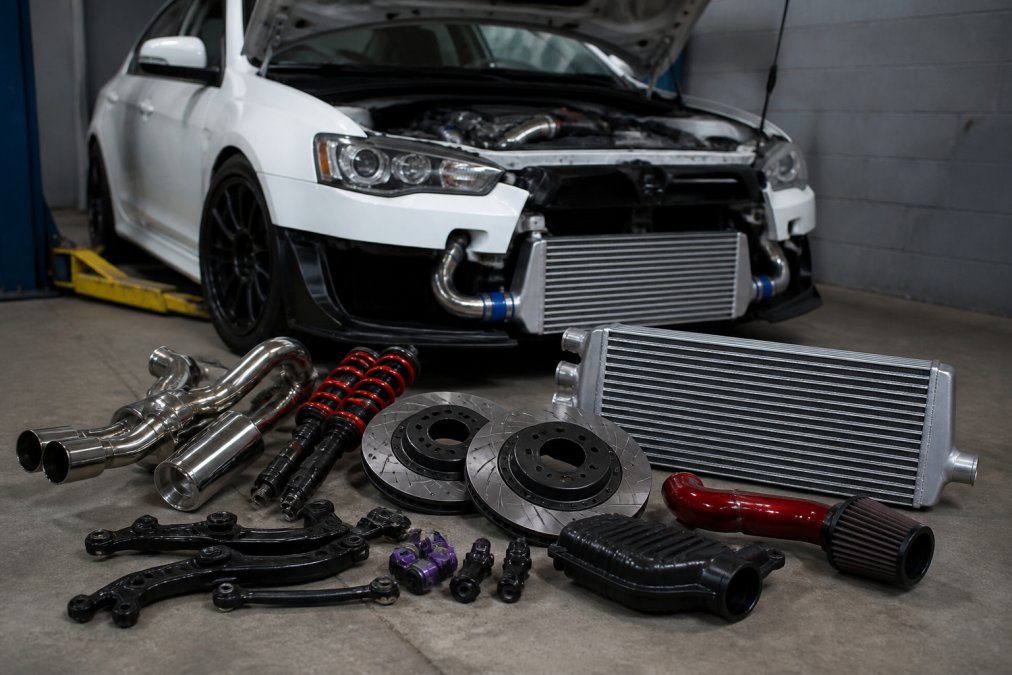
Table of Contents
- Why Your Next Owner Needs a Full Record of Car Build Upgrades
- Start with the Factory Baseline: VIN Decoder and Build Sheet
- The Car Modification Log Template That Covers Everything
- Best Apps for Tracking Vehicle Upgrades and Maintenance
- Categorize Parts by Impact: Performance vs. Cosmetic
- Proving Vehicle Build Quality to Buyers at Sale Time
- Common Documentation Mistakes That Hurt Resale Value
- Build Your Digital Dossier Today
- Frequently Asked Questions
Last Updated: September 6, 2026
Selling a modified car is an exercise in trust. Buyers look at a turbo kit or a coilover setup and wonder whether it was installed with care or slapped on with zip ties. The single best way to answer that question is a complete record of your car build upgrades. A detailed log transforms a private sale from a leap of faith into a documented transaction, and it often justifies a higher asking price. This guide from CarJourney walks through the exact system for capturing every part, service, and spec so the next owner can trust the vehicle as much as you did.
Why Your Next Owner Needs a Full Record of Car Build Upgrades
A car modification log is the difference between selling a "project" and selling a proven, maintained machine. Buyers are naturally skeptical of aftermarket work because they cannot verify the quality of installation or the mileage on specific components. Your documentation removes that doubt. When you hand over a folder or digital profile showing the part number, install date, and source for every upgrade, you are providing verifiable evidence that the work was deliberate and professional.
This matters most at resale. A well-documented build signals that the owner maintained the vehicle meticulously, which extends to the drivetrain and body. Without records, the buyer assumes the worst and prices accordingly. Enthusiast forums frequently highlight this disconnect, where owners who relied on memory or visual inspection left incomplete records that complicated future sales, as noted in discussions on Pro-Touring.com build documentation threads. A systematic log closes that gap entirely.
Start with the Factory Baseline: VIN Decoder and Build Sheet
Before you log a single aftermarket part, you need an accurate picture of the car as it left the assembly line. Your vehicle identification number (VIN) is the key, but the quality of the data you get from it depends entirely on the tool you use.
Free VIN decoders like iSeeCars VIN lookup and Carfax VIN decoder will give you the basics: model year, make, engine code, and transmission. That is enough to establish a rough baseline, but it will not tell you about factory options like the sport package, limited-slip differential, or specific audio system. Those details live on the vehicle's original build sheet, which is a separate document from the window sticker.
For a true factory baseline, you have three paths, each with different costs and success rates:
-
Manufacturer portals: Most automakers offer a build-sheet lookup service. For example, Ford owners can request a build sheet through the Ford Owner portal, and GM offers a similar service for Chevrolet, GMC, and Cadillac vehicles. These are free but often require proof of ownership and can take several business days to process.
-
Monroney sticker services: Companies like MonroneyLabel.com can reproduce the original window sticker from the VIN for a fee, typically between $40 and $60. This is the most complete document you can get because it lists every factory option, package, and standard feature.
-
Dealer parts departments: A dealership can pull the original build configuration from their internal system. This is free if you have a relationship with the parts counter, but expect to be turned away if you are not a customer.
Here is the critical limitation most VIN-decoder guides skip: the VIN alone cannot tell you about dealer-installed options or port-installed accessories. If the original owner added a tow package, a dealer-installed remote start, or aftermarket wheels before the first sale, those items will not appear on any VIN-based report. This is exactly why your personal build log matters more than any factory document. The VIN baseline tells you what the car was; your log tells the next owner what it became.
A common pattern among serious enthusiasts is to print the factory build sheet and keep it in the first page of the physical binder or as the first entry in the digital log. This creates a clear visual separation between OEM equipment and your modifications, which is precisely the distinction buyers and insurance adjusters need to see.
Watch Out Do not rely solely on free VIN decoders for your baseline. They frequently misidentify trim levels on cars with multiple option packages, which will confuse your documentation from the start.The Car Modification Log Template That Covers Everything
A practical build log does not require elaborate software. The most effective systems start with a simple spreadsheet that captures specific fields for every entry. A common approach seen in enthusiast communities is a multi-tab workbook that separates parts, costs, and installation dates, as shared by owners on Pelican Parts maintenance log discussions. That structure works because it forces consistency.
Here is a template that covers every relevant detail:
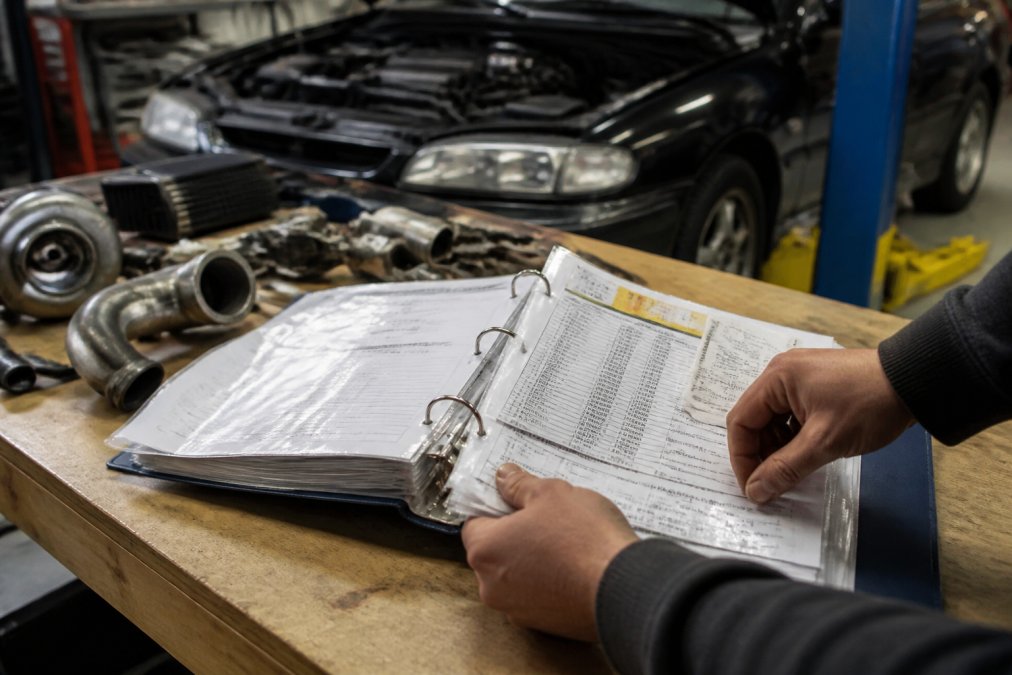
For each modification or service, record these columns:
- Date Installed: Month and year, plus current mileage at installation
- Part Name and Brand: The specific product, not a generic category
- Part Number: Critical for verifying authenticity and future replacements
- New or Used: Condition of the part at installation
- Source: Vendor, forum marketplace, or private seller
- Cost: Parts and labor, itemized
- Installed By: DIY or professional shop, with shop name
- Notes: Torque specs, tuning details, or quirks about the install
Best Apps for Tracking Vehicle Upgrades and Maintenance
Physical binders get lost. Spreadsheets work, but they do not remind you to log an oil change at 5,000 miles. Dedicated tracking platforms solve both problems by centralizing records and automating the capture process. Digital platforms now allow owners to track builds down to the individual bolt and mark parts as installed, a level of granularity that paper logs cannot match, according to Reborn builds tracking platform.
CarJourney is built specifically for this workflow. Its VIN-based setup automatically pulls your vehicle's configuration, so you start from an accurate baseline. The platform handles the full spectrum of records: routine maintenance intervals tied to time and mileage, plus the kind of one-off custom parts that standard maintenance apps ignore. You log the part, attach the receipt, and categorize it. When it is time to sell, CarJourney generates a shareable build profile that presents your entire history in a format buyers can actually read.
Categorize Parts by Impact: Performance vs. Cosmetic
Not all modifications carry the same weight in a buyer's mind, and your log should reflect that distinction. Separating entries into performance and cosmetic categories makes the dossier easier to scan and signals that you understood the purpose of each part.
Performance upgrades are the engine, suspension, brake, and drivetrain components that change how the car drives. These carry the most risk in a buyer's eyes because they affect reliability and safety. Your log needs extra detail here: tuning files, dyno sheets, and boost pressure specifications prove the work was done properly. Cosmetic upgrades, such as wheels, body kits, and interior trim, matter for value but rarely raise mechanical concerns. Group them separately so a buyer scanning for engine work does not wade through wheel photos. verify accessory compatibility.
Proving Vehicle Build Quality to Buyers at Sale Time
The payoff of your documentation effort comes when you list the car. But handing a buyer a folder of receipts is not enough. The competitive advantage is a structured Vehicle Dossier, a single, organized document that tells the car's complete story from factory floor to your driveway. This is a format that most forum threads and VIN-lookup tools never address because they focus on finding factory data, not on packaging your personal build history for a private sale.
Here is the exact structure that works best in private-party transactions, based on how serious buyers actually evaluate modified cars:
Section 1: Vehicle Summary (1 page)
- Year, make, model, trim, VIN, current mileage
- Factory build sheet summary (original engine, transmission, color, options)
- Current configuration overview (what has changed since factory)
Section 2: Modification Ledger (chronological)
- Every part with the fields from the template above: date, part number, source, cost, installer
- Grouped by system: engine, drivetrain, suspension, brakes, wheels/tires, exterior, interior, electronics
Section 3: Supporting Evidence (attachments)
- Installation receipts
- Dyno sheets with date and tuner name
- Tuning file versions and revision notes
- Alignment specs after suspension work
- Oil analysis reports if you track the car
Section 4: Maintenance History
- All routine service, even if unrelated to the build
- This section is what separates a "modified car" from a "modified car that was also maintained"
Section 5: Known Issues and Quirks
- This is the trust builder. Documenting a minor oil weep or a stiff clutch pedal tells the buyer you are not hiding anything. Buyers discount cars with unknown issues far more than cars with disclosed, minor problems.
For the digital version, create a single PDF that combines all five sections. Name it with the year, make, model, and VIN last six (e.g., 2018_Mustang_GT_123456_Build_Dossier.pdf). Upload it to your listing on Bring a Trailer or Facebook Marketplace. A link in the listing description that lets a buyer preview the dossier before they message you filters out lowball offers from buyers who assume all modified cars are poorly maintained.
Common Documentation Mistakes That Hurt Resale Value
Several recurring errors undermine otherwise solid builds. The most common is relying on memory or visual inspection instead of writing things down. Owners who skip formal documentation often cannot recall the exact mileage a supercharger was installed or which revision of the tune is currently loaded, a problem noted across automotive community documentation discussions. That ambiguity forces buyers to discount the car.
Another frequent mistake is losing installation receipts. A part number alone is useful, but a receipt proves purchase date and vendor. Without it, a buyer cannot verify whether a turbo has 5,000 miles or 50,000 miles on it. Finally, many owners fail to record the "why" behind a modification. Noting that you upgraded the radiator because the car ran hot on track days provides context that a bare parts list lacks. This context demonstrates thoughtful ownership, which is precisely what justifies a premium at sale.
Build Your Digital Dossier Today
Documenting car build upgrades is not busywork; it is the process that protects the value of your investment. The system is straightforward: establish the factory baseline, log every modification with detailed fields, categorize by impact, and present the record clearly at sale time. Whether you choose a spreadsheet or a dedicated tracker, consistency matters more than the tool.
The challenge is maintaining that discipline over years of ownership. CarJourney removes the friction by automating the setup and providing a structured home for every record. Start free and build a shareable history that proves your car's story to the next owner.
Frequently Asked Questions
What information should be in a car modification log?
A proper log records the part name, brand, part number, purchase date, installation date, and mileage at install. Add the shop name or 'self-installed' and a photo of the part on the car. Save the receipt digitally or in a folder. This level of detail proves the part is genuine and shows the next owner exactly what was done.
Can a digital maintenance tracker really increase my car's resale value?
A complete history removes the guesswork and doubt that drives lowball offers. Buyers value a car with verifiable records because they know the parts are real and the maintenance was done.
How do I prove the quality of aftermarket parts to a potential buyer?
Show the original receipts and any warranty paperwork for the parts. Cross-reference the part numbers with the manufacturer's website so the buyer can verify they are genuine. Photos of the install process also help demonstrate the workmanship. Organizing these details in a clean, shareable build sheet makes your documentation easy for any buyer to trust.
Start free