 carjourney
From the CarJourney journal
Must-Have Garage Essentials for Homeowners in 2026
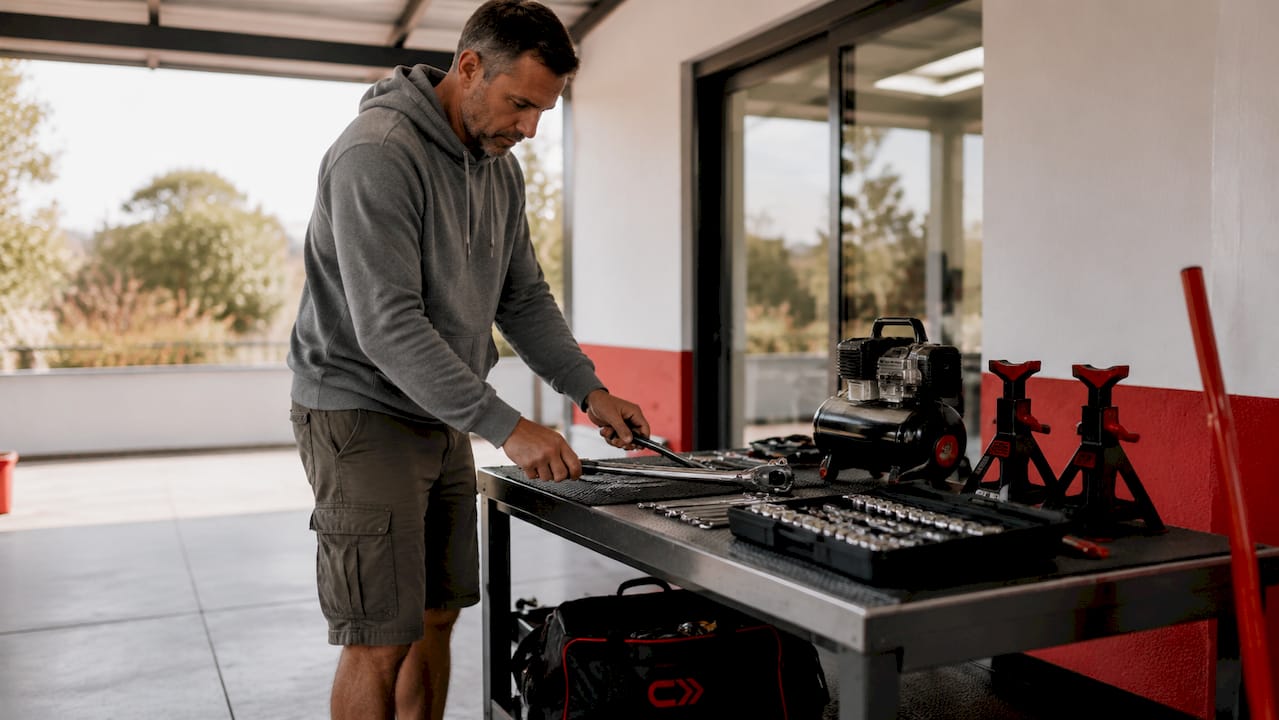
Must-have garage essentials are the core tools and organizational systems that turn a cluttered, underused space into a functional workshop for vehicle maintenance and DIY projects. A well-equipped garage saves time, reduces repair costs, and keeps you safer during routine upkeep. The right setup does not require a professional shop budget. A core automotive toolset covering the five most critical tools costs under $1,000, making this an achievable goal for most homeowners. Carjourney helps owners track every maintenance task and tool investment so nothing falls through the cracks.
1. What are the essential automotive tools every homeowner should have?
The foundation of any practical garage is a set of automotive tools built for routine vehicle maintenance. Without these, even simple jobs like changing a tire or checking brake pads require a trip to a shop and a bill you could have avoided.
The five tools that cover the widest range of jobs are:
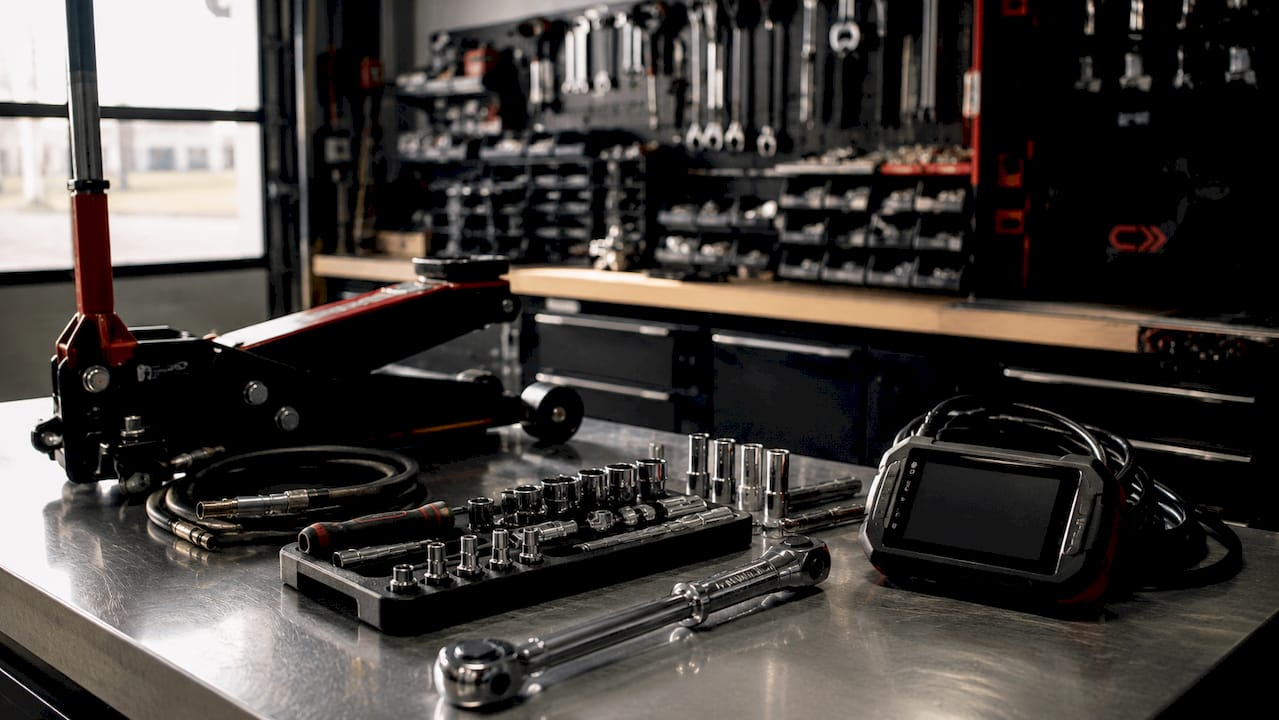
- Floor jack and jack stands. A hydraulic floor jack lifts the vehicle safely. Jack stands hold it there. Never work under a car supported only by a jack.
- Socket set. A metric and SAE socket set with a 3/8-inch and 1/2-inch drive handles the majority of fasteners on any vehicle.
- Torque wrench. Lug nuts, spark plugs, and suspension bolts all require specific torque values. A click-style torque wrench prevents overtightening and thread damage.
- Portable air compressor. Tire pressure directly affects fuel economy and tire wear. A compact compressor handles inflation and powers pneumatic tools.
- OBD-II scanner. Modern vehicles communicate fault codes through the OBD-II port. A basic scanner reads and clears codes, saving a diagnostic fee every time a warning light appears.
These five items, purchased as a starter set, cost under $1,000 and cover the vast majority of routine maintenance tasks. That investment pays for itself after just a few oil changes and tire rotations handled at home.
Pro Tip: Start with the floor jack, socket set, and torque wrench. Add the compressor and scanner once you have completed your first few jobs. Skills and tools grow together.
For a structured approach to what maintenance those tools support, the Carjourney car maintenance checklist outlines every key service interval by vehicle type.
2. How can garage organization and storage solutions optimize your space?
Effective garage storage is built on the zone principle. Zone-based organization groups items by frequency of use and purpose, keeping the floor clear for vehicles and making tools easy to find. The five standard zones are: work zone, vehicle zone, sports and recreation zone, garden and outdoor zone, and seasonal storage zone.
Defining zones before buying any shelving or cabinet is the step most homeowners skip. Mapping the garage floor with painter’s tape before installation allocates space correctly and prevents the costly mistake of bolting cabinets in the wrong place.
Here is how the most common storage systems compare:
| Storage type | Durability | Cost range | Space efficiency |
|---|---|---|---|
| Wall-mounted cabinets | High | $$$ | Excellent |
| Slatwall systems | High | $$ | Very good |
| Pegboards | Medium | $ | Good |
| Overhead storage platforms | High | $$ | Excellent |
| Freestanding wire racks | Low | $ | Fair |
Wall-mounted cabinets and slatwall systems outperform freestanding racks because they distribute weight along wall studs and keep the floor completely open. Open floor space is not a luxury. Vehicle clearance must come first in any storage plan, or the system creates daily frustration rather than solving it.
Pro Tip: Before buying a single shelf, spend one week noting which items you actually reach for. Build your system around those habits, not around what looks organized in a photo.
3. Which safety gear is non-negotiable for a home garage workspace?
Safety equipment is not optional in a garage. ANSI-rated safety glasses, hearing protection, an ABC-rated fire extinguisher, and a first aid kit are the minimum standard for any home workshop. Each item addresses a specific and common hazard.
- ANSI-rated safety glasses. Flying debris from grinding, drilling, or even a snapped zip tie causes eye injuries that are entirely preventable. ANSI Z87.1 is the standard to look for on the lens or frame.
- Hearing protection. Impact wrenches, angle grinders, and compressors all exceed 90 decibels. Foam earplugs work, but earmuffs are faster to put on and take off, which means you will actually use them.
- ABC-rated fire extinguisher. An ABC rating covers ordinary combustibles, flammable liquids, and electrical fires. All three hazard types exist in a garage with fuel, oil, and power tools present.
- First aid kit. Mount it on the wall near the primary work area, not in a cabinet. Accessibility matters when your hands are bleeding.
Shop vacuums and degreasers belong in the safety category too. A clean garage floor reduces slip hazards and prevents oil buildup that can ignite. Cleanliness is maintenance, not just aesthetics.
Pro Tip: Check expiration dates on your fire extinguisher and first aid supplies every spring. A discharged extinguisher or expired antiseptic is worse than no kit at all because it creates false confidence.
4. What additional supplies improve daily workflow and comfort?
The tools that make a garage truly usable go beyond wrenches and jack stands. Lighting, ventilation, and power accessibility are the infrastructure layer that determines whether you actually want to spend time working in the space.
High-CRI LED shop lights are the standard for garage work. CRI stands for Color Rendering Index. A CRI above 90 shows colors accurately, which matters when reading wire colors, checking fluid levels, or matching paint. Overhead fluorescent fixtures common in older garages render color poorly and create shadows that hide exactly what you need to see.
Additional supplies that make a real difference:
- Retractable extension cord reel. A ceiling-mounted reel keeps cords off the floor and prevents tripping hazards while giving you power anywhere in the bay.
- Power strip with surge protection. Protects battery chargers, diagnostic tools, and phone chargers from voltage spikes.
- Air filtration unit. Sanding, grinding, and working with chemicals creates airborne particles. A ceiling-mounted air filtration unit runs quietly and captures fine dust.
- Magnetic parts tray. Small bolts and clips disappear on a concrete floor. A magnetic tray keeps fasteners organized during disassembly.
- Cable ties and hook-and-loop straps. Cord management on a workbench takes ten minutes and prevents hours of untangling.
Climate control deserves a separate mention. An uninsulated garage in a cold climate becomes unusable for several months each year. Adding insulation to the garage door and walls, combined with a portable propane or electric heater, extends your working season significantly. Ventilation fans handle the opposite problem in summer and remove chemical fumes year-round.
Before buying storage products, determine the garage’s primary purpose. A garage used mainly for vehicle maintenance needs different infrastructure than one used primarily for woodworking or seasonal storage. Buying before planning leads to systems that do not fit the actual workflow.
5. How to keep your garage system working long term
Most garage organization systems fail within six months because they are built around an idealized version of how the owner plans to use the space rather than how they actually use it. The fix is simple but requires honesty. Build the system around your real behavior, then adjust it as habits change.
Assigning a specific home to each item within 24 hours of bringing it into the garage prevents the slow accumulation of clutter that defeats every organizational effort. The item either has a place or it does not belong in the garage.
An annual decluttering session, ideally in spring or fall, keeps seasonal storage manageable and surfaces tools you forgot you owned. Sell, donate, or discard anything that has not been used in the past year. Clutter is not a storage problem. It is a decision problem.
Permanent infrastructure like wall cabinets and overhead platforms should only be installed after the workflow layout is clearly defined. Moving a bolted cabinet costs time and leaves holes in drywall. Getting the layout right on paper first costs nothing.
Key takeaways
A functional garage requires a core set of automotive tools, a zone-based storage system, and safety equipment installed before anything else.
| Point | Details |
|---|---|
| Core tools cost under $1,000 | A floor jack, socket set, torque wrench, compressor, and OBD-II scanner cover most routine maintenance. |
| Zone-based storage works best | Group items by purpose and frequency of use; keep floor space clear for vehicle access. |
| Safety gear is non-negotiable | ANSI glasses, hearing protection, an ABC extinguisher, and a first aid kit are the minimum standard. |
| Infrastructure before products | Define zones and workflow before buying shelving or cabinets to avoid costly repositioning. |
| Annual review prevents failure | A yearly purge and system reassessment keeps the garage functional and clutter-free. |
What I have learned from setting up garages the wrong way first
The first garage I ever organized looked great for about eight weeks. I had labeled bins, a pegboard with tool outlines, and a color-coded zone system I was genuinely proud of. By month three, the bins were in the wrong spots, the pegboard hooks were holding random cords, and the floor was covered again.
The problem was not the system. The problem was that I designed it for the garage owner I wanted to be, not the one I actually was. I wanted to be the person who put every tool back immediately after use. I am not that person under deadline pressure or when a repair runs long.
What actually works is designing for your worst day, not your best intentions. If you know you will drop tools on the workbench when you are tired, put a large flat surface right there and deal with it on the weekend. Fighting your own habits is a losing battle.
The painter’s tape floor mapping technique changed how I approach every setup now. Tape out the car, the door swing, the walking path, and the work zone before touching a single shelf bracket. You will immediately see that the cabinet you planned for the left wall blocks the door on a cold morning when you are carrying groceries.
Start with safety and lighting. Get those right first. Everything else is adjustable. A well-lit, safe garage with basic tools and imperfect organization beats a beautifully organized garage where you cannot see what you are doing.
— Chally
Carjourney keeps your garage work connected to your vehicle’s history
A well-stocked garage is only half the equation. Knowing when your vehicle actually needs each service is what makes the tools worth having.

Carjourney is built for exactly this. The platform uses AI to scan your service documents, track maintenance intervals for your specific vehicle, and flag what is coming due before it becomes a problem. Whether you are planning a brake job, budgeting for new tires, or logging an oil change you just completed at home, Carjourney keeps the record straight. The vehicle maintenance tracker connects your garage work to your car’s full service history in one place, so you never repeat a job you already did or miss one that matters.
FAQ
What tools should every homeowner keep in their garage?
A floor jack, jack stands, a socket set, a torque wrench, and a portable air compressor cover the most common vehicle maintenance tasks. Adding an OBD-II scanner rounds out the core set for under $1,000.
How do I start organizing a garage from scratch?
Use the zone principle: group items by purpose and frequency of use, then map zones on the floor with painter’s tape before buying any storage products. Install permanent infrastructure only after the layout is confirmed.
What safety equipment does a home garage need?
ANSI Z87.1-rated safety glasses, hearing protection, an ABC-rated fire extinguisher, and a wall-mounted first aid kit are the baseline. Place all four within easy reach of the primary work area.
How often should I declutter my garage?
An annual session in spring or fall is the standard recommendation. Removing unused items once a year prevents clutter from accumulating and keeps the organizational system functional.
What lighting is best for a garage workshop?
High-CRI LED shop lights with a CRI rating above 90 provide the most accurate color rendering for detailed work. They also consume less energy and last significantly longer than older fluorescent fixtures.