 carjourney
From the CarJourney journal
When Should Brake Fluid Change?
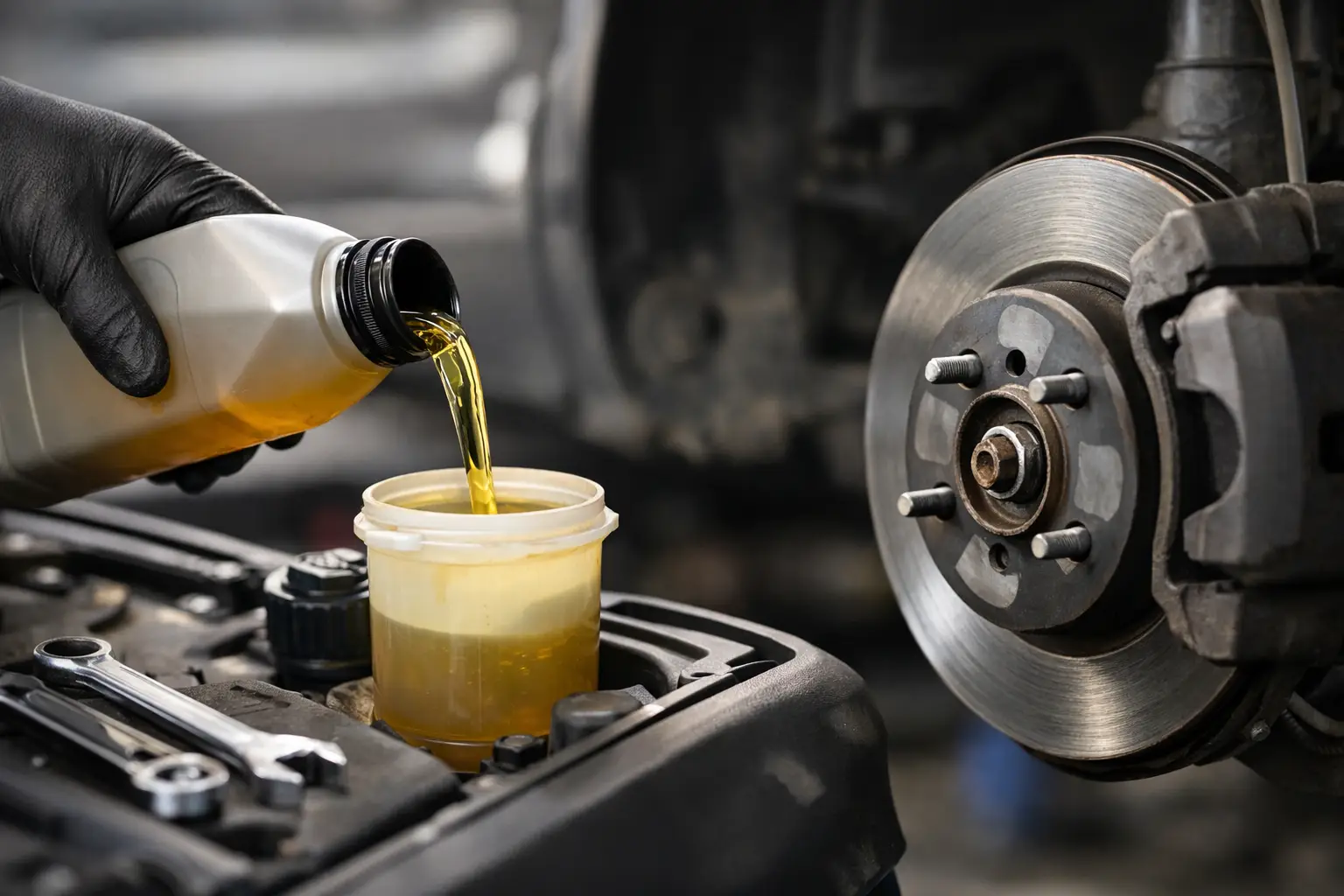
Brake pedal feels normal right up until it doesn’t, and that’s exactly why people ask when should brake fluid change. Unlike pads and rotors, brake fluid doesn’t give you an obvious visual wear indicator. It quietly absorbs moisture over time, and that slow change can reduce braking performance, speed up corrosion inside the system, and turn a routine service into a much more expensive repair.
If you care about keeping your car reliable, keeping service history clean, and avoiding the kind of neglect that hurts resale, brake fluid deserves more attention than it usually gets. The short version is simple: most vehicles should have brake fluid changed every 2 to 3 years, but the right answer depends on the fluid type, the manufacturer schedule, how the car is used, and whether the system has already been opened for brake work.
When should brake fluid change for most cars?
For most street-driven vehicles in the US, a brake fluid flush every 2 years is a safe baseline. Some manufacturers stretch that to 3 years, and a few put the interval in mileage terms, often around 30,000 miles. If your owner’s manual gives a specific interval, that should win.
Why the spread? Because brake fluid life is shaped by more than miles. Time matters just as much, sometimes more. A car that only gets driven 5,000 miles a year can still need fresh brake fluid because moisture contamination happens with age, not just usage.
That’s the part a lot of owners miss. Brake fluid is hygroscopic, which means it absorbs water from the air. Even in a sealed system, small amounts of moisture can get in through hoses, seals, and normal service events. As water content rises, the fluid’s boiling point drops and the risk of internal rust goes up.
So if you want a practical rule, use this: change it every 2 years unless your manual clearly says otherwise.
Why brake fluid needs changing at all
Brake fluid is not a forever fluid. It has one job that leaves very little margin for error: transfer force from your foot to the brakes consistently, under heat, pressure, and repeated use. Once moisture gets into the system, two things start to happen.
First, heat performance drops. Under heavy braking, contaminated fluid can boil more easily than fresh fluid. That creates vapor, and vapor compresses. The result can be a soft pedal or reduced braking response when you need it most.
Second, corrosion becomes a real issue. Moisture inside the braking system can attack calipers, ABS components, steel lines, and the master cylinder from the inside out. That damage is easy to ignore because you can’t see it during a casual walkaround, but it adds up.
This is why brake fluid service is cheap insurance. A fluid flush costs far less than replacing ABS hardware or chasing corrosion-related brake issues later.
Signs your brake fluid may be overdue
You should not rely only on symptoms, because old brake fluid can still feel mostly fine in normal driving. But there are a few clues that suggest it’s time to stop putting it off.
A soft or spongy brake pedal is one of the most common signs. So is brake fade after repeated hard stops, especially on mountain roads, during towing, or at a track day. If the fluid in the reservoir looks dark or dirty, that’s another hint, although color alone is not a perfect test.
If you recently replaced calipers, brake lines, a master cylinder, or other hydraulic parts, fresh fluid usually makes sense at the same time. Once the system has been opened, it’s often smarter to flush the whole thing instead of topping off old fluid and calling it done.
Warning lights can also show up, but by then you may be dealing with a bigger issue than routine maintenance. Brake fluid service is one of those jobs that works best when it happens before the car starts asking for it.
What changes the brake fluid interval?
Not every car lives the same life, and brake fluid intervals should reflect that. If your vehicle sees aggressive use, shorter intervals are smart.
Performance driving is a big one. Spirited backroad runs, autocross, HPDE events, and mountain descents create more brake heat, which pushes fluid harder. In that case, yearly changes are common, and some drivers go even more frequent depending on how often the car sees track time.
Towing also matters. A truck or SUV hauling extra weight puts more heat into the braking system, especially in hilly terrain. The same goes for vehicles in hot climates or places with a lot of stop-and-go traffic.
Storage conditions can play a role too. A collector car that sits for long periods may rack up very few miles, but time and moisture still affect the fluid. Low annual mileage does not automatically mean long fluid life.
Then there’s the type of fluid. DOT 3, DOT 4, and DOT 5.1 are glycol-based and absorb moisture over time. DOT 4 often handles heat better than DOT 3, but it still ages. DOT 5 is silicone-based and a different conversation entirely, since it is not used in most modern street cars and should not be mixed with other types unless the system is specifically designed for it.
Should you follow mileage or time?
If you have to choose one, choose time. Brake fluid ages whether the car is driven hard, driven lightly, or barely driven at all.
Mileage still matters because more use can mean more heat cycles and more opportunities for brake service that opens the system. But time is the more reliable trigger for everyday ownership. That’s why a calendar-based reminder often works better than waiting for an odometer milestone.
A lot of owners are disciplined about oil changes because the interval is easy to remember. Brake fluid gets ignored because it is less frequent and less visible. That’s exactly where a maintenance tracker earns its keep. Having brake fluid logged with a date, mileage, fluid type, and receipt makes it much easier to stay ahead of it and prove the car was cared for.
How to know for sure if your fluid is still good
The best answer is not guessing by color. Brake fluid testing is more reliable.
Shops can use test strips, moisture testers, or boiling point testers to check fluid condition. Moisture percentage gives useful information, and boiling point testing gives an even clearer picture of real-world performance. If water content is elevated or the boiling point has dropped too far, it’s time for a flush.
That said, testing has limits. Results depend on the tool, the sampling method, and the condition of the whole system. A test can help you make a decision, but it should support the maintenance schedule, not replace it entirely. If your manual says every 2 years and you’re already there, you don’t need a lab report to justify the service.
Brake fluid flush vs. top-off
These are not the same thing. Topping off the reservoir only adds fluid to maintain level. It does not remove moisture, contamination, or old fluid trapped in the lines and calipers.
A proper brake fluid service means flushing the system so fresh fluid replaces the old fluid throughout the hydraulic circuit. If your shop says they “added brake fluid” during another service, that does not count as a brake fluid change.
This matters for recordkeeping too. If you’re serious about preserving vehicle history, log a flush only when the system was actually bled and renewed. That kind of detail helps you avoid duplicate work and builds a service record buyers trust.
When should brake fluid change after brake work?
Anytime the hydraulic side of the braking system is opened, brake fluid should be part of the conversation. Replacing pads and rotors alone does not always require a full flush, but replacing calipers, hoses, wheel cylinders, a master cylinder, or ABS-related parts usually means bleeding the system and often justifies changing all the fluid.
There’s a trade-off here. If the fluid was flushed recently and the repair is minor, you may not need a full service again. But if the fluid is already a year or two old, doing it while the system is open is the smart move. Labor overlaps, and you avoid paying twice.
The interval that makes sense for enthusiasts
If you’re building, tracking, restoring, or simply keeping your cars tighter than average, brake fluid should be on a real schedule, not a mental note. For a daily driver, every 2 years is a strong default. For a harder-used car, every year is often the right call. For a garage queen, go by time anyway.
That record matters almost as much as the service itself. One clean entry showing the date, mileage, and fluid spec is better than trying to remember whether it was done “sometime before the last pad swap.” Tools like CarJourney make that easy to track, especially if you manage more than one vehicle or want every service tied to receipts and parts history.
Brake fluid is easy to overlook because the car usually feels fine until it doesn’t. Treat it like the low-cost preventive maintenance item it is, and you’ll save money, protect braking performance, and keep a cleaner ownership story the next time someone asks how well the car was maintained.