 carjourney
From the CarJourney journal
How an Aftermarket Parts Catalog Protects Your Build
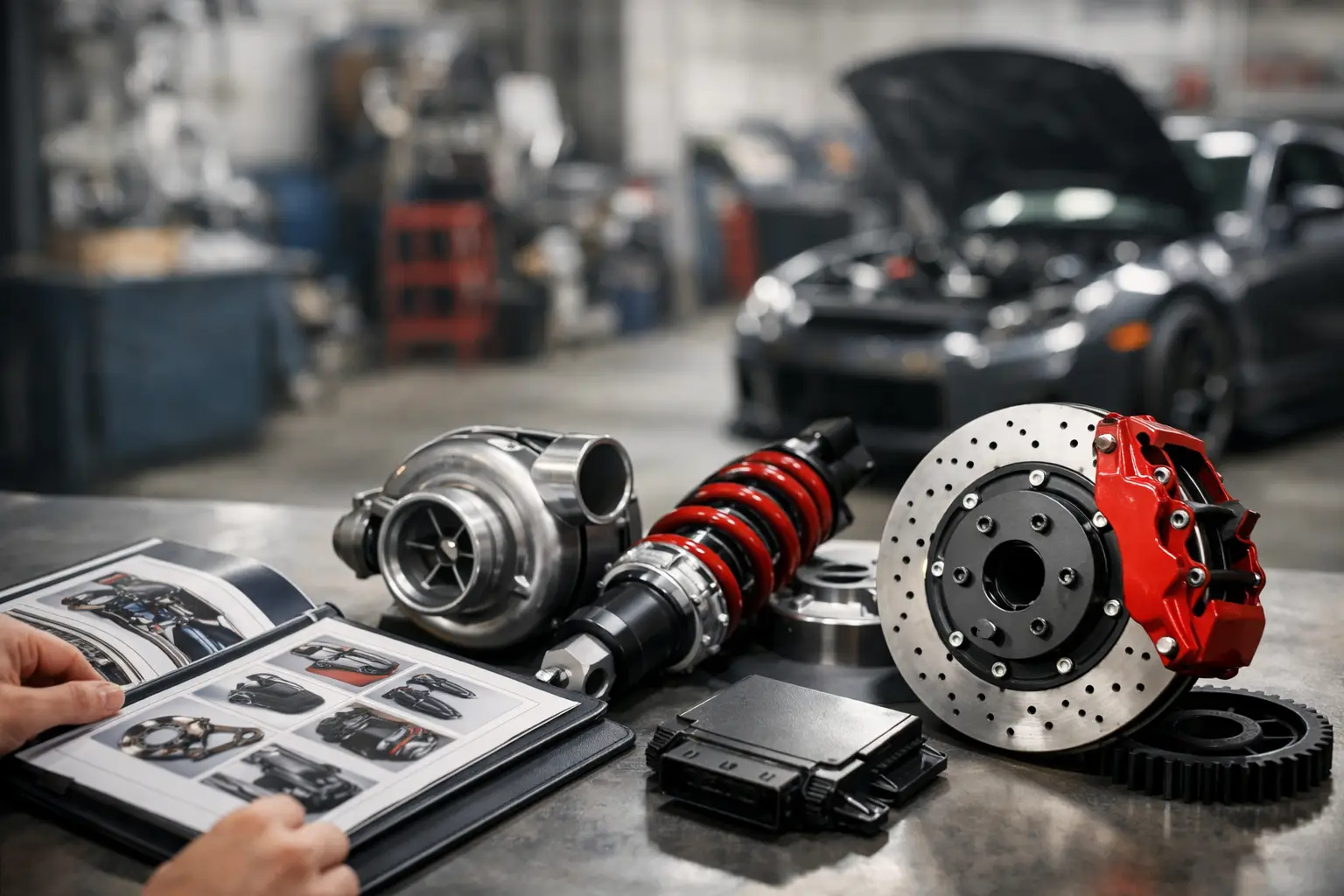
A new set of coilovers, a cat-back exhaust, and a few supporting parts can transform a car. Six months later, though, many owners cannot remember the exact part numbers, install dates, alignment settings, or what is still covered under warranty. An aftermarket parts catalog gives every upgrade a place in your vehicle’s history, so the money and effort behind your build do not disappear into old receipts, browser orders, and camera rolls.
For enthusiasts, this is not busywork. Accurate parts records help you service the car correctly, diagnose problems faster, prove what is on the vehicle, and show future buyers that the build was handled with care. Whether you are maintaining a daily driver with a few upgrades or documenting a long-term project, the right catalog turns scattered information into control.
What an Aftermarket Parts Catalog Should Track
At its simplest, a catalog is a structured record of the non-OEM parts installed on a specific vehicle. But a useful one goes beyond a running list of brands. It connects the part to the car, the installation, the cost, and the maintenance history that follows.
A well-documented entry should capture the manufacturer, product name, part number, vehicle fitment, and installation date. Those basics matter when you need to order a replacement, check whether a revision applies to your setup, or verify that a part was designed for your exact year, trim, drivetrain, and engine.
It should also record the practical details people forget first: who installed the part, current mileage, purchase price, labor cost, warranty information, and a copy of the receipt. Photos are worth adding too. A photo of the installed component, the packaging label, or the odometer can answer questions that a text note cannot.
For upgrades that change how the car drives, include relevant settings. Suspension components may need ride height, spring rate, alignment specs, and damper settings. Engine and tuning parts may need the tune version, supporting modifications, fuel type, or installer notes. The goal is not to create a spec sheet for its own sake. The goal is to leave useful information for the next service, troubleshooting session, or owner.
Why a Parts List Is Not Enough
A basic list tells you what you bought. A true aftermarket parts catalog tells you what happened to the vehicle.
That difference becomes obvious when something goes wrong. Say your car starts pulling after you install adjustable control arms and lower it. If you only have a list that says “control arms,” you still need to search for invoices, installation dates, and the alignment report. If your catalog ties those records together, you can quickly see the sequence of changes and avoid guessing.
The same applies to maintenance. Performance brake pads, aftermarket filters, upgraded clutches, and modified cooling systems can all have different service needs than stock components. Keeping those parts alongside your normal maintenance history makes it easier to create reminders based on the equipment actually installed on the car, not just the factory schedule.
It also helps separate related jobs. An exhaust installation may be a one-time upgrade. A turbo kit, on the other hand, creates an ongoing record of fluid changes, inspections, tune updates, and replacement parts. Treating both as identical entries leaves important context behind.
Build a Catalog Around Each Vehicle
If you own more than one car, avoid one master spreadsheet or a single note full of part names. Every vehicle should have its own record. That sounds obvious, but it prevents common mistakes like ordering the wrong oil filter, mixing up wheel fitment, or assuming a part is still on a car after it has been sold or transferred.
Start with the vehicle details: year, make, model, trim, VIN, mileage, and any major factory options that affect fitment. Then organize modifications by system rather than by the order you bought them. Categories such as engine, intake, exhaust, suspension, wheels and tires, brakes, exterior, interior, audio, lighting, and electronics make the catalog easier to scan when you need an answer fast.
For each part, document these five details:
- The exact brand, product name, and part number
- Fitment notes, including adapters, spacers, or supporting parts
- Purchase and installation costs, plus where the work was completed
- Installation mileage, date, warranty, receipts, and photos
- Maintenance requirements, adjustments, and any issue or follow-up work
Do not force every part into the same level of detail. A shift knob does not need the same record as a supercharger kit. The best system is detailed where it matters and quick enough that you will actually use it after every install.
Track the Cost of the Whole Upgrade, Not Just the Main Part
The listed price of a modification is rarely the full cost. A $1,200 suspension kit may also require mounts, alignment, corner balancing, new hardware, and a follow-up adjustment. New wheels can bring tires, TPMS sensors, lug nuts, hub rings, fender work, and an alignment. If your catalog only records the headline purchase, the investment in the car will always look smaller than it really is.
Record parts, shipping, tax, labor, and supporting work separately when possible. This gives you a more honest view of ownership costs and makes it easier to budget before the next phase of a build. It can also help you decide whether a used part was truly a bargain after you account for missing hardware or reinstallation labor.
Cost tracking is not only about resale. It helps you make better decisions while you still own the vehicle. You can see where money is going, compare the value of different upgrades, and avoid buying duplicate parts because an old order confirmation got buried in your inbox.
Use Fitment Notes to Prevent Expensive Mistakes
Fitment is where generic parts lists fail enthusiasts most often. A product can fit a platform but not your wheel size, brake package, drivetrain, trim level, or current combination of modifications. Even parts marketed as direct-fit can require trimming, coding, a tune, or a different bracket once they meet a real-world build.
Your catalog should document what actually worked on your car. Note the tire size that clears your suspension, the spacer thickness used with a wheel setup, the belt length needed after adding accessories, or the exact revision of a component that solved an installation issue. If something did not fit, record that too. Bad information repeated is expensive.
These notes become even more valuable if you change the car over time. A part that fit with stock brakes may not fit after a big brake kit. A tune that ran well with one intake may need to be revisited after a larger intercooler or fuel-system change. The catalog preserves the sequence instead of leaving you to reconstruct it from memory.
Keep Warranties, Receipts, and Photos With the Part
A warranty email is easy to find until you need it three years later. The same goes for a receipt needed for a return, a manufacturer claim, insurance documentation, or a buyer asking for proof. Store these records with the corresponding part, not in a general folder where they lose their meaning.
Photos add another layer of trust. Take a clear picture at installation, especially for expensive components, fabrication work, wheels, paint protection, and underbody upgrades. Capture labels and serial numbers when available. If the vehicle is damaged, stolen, or listed for sale, those records help establish what was installed and what condition it was in.
A digital system also makes these documents useful away from your desk. CarJourney, for example, lets owners keep modifications, service records, costs, photos, and documents tied to the vehicle they belong to. That means a receipt is available when you are at the shop, at a parts counter, or talking with a serious buyer.
Turn Your Catalog Into a Better Resale Story
Modifications can help or hurt resale depending on the buyer and the quality of the work. What almost always helps is documentation. A buyer may not personally value every upgrade, but they will value evidence that the car was maintained, installed correctly, and not treated as a mystery project.
When it is time to sell, a clean catalog lets you present the build honestly. Show the major parts, installation dates, maintenance performed, supporting upgrades, and transferable warranties. Be clear about parts that have been removed, replaced, or need attention. This builds more trust than claiming the car is “fully built” without proof.
You should also decide whether any high-value parts are better sold separately. Your records make that choice easier because you know what you paid, when it was installed, and what related labor would be involved in returning the car to stock. It depends on the vehicle, the local market, and the buyer, but documented options give you leverage.
Make Documentation Part of the Install
The easiest time to catalog a part is when it goes on the car. Save the receipt, snap a few photos, log the mileage, and write one useful fitment note before you throw away the box. Waiting until the end of the season turns a five-minute habit into a weekend of hunting through emails.
Your build deserves more than a vague memory of what went into it. Keep the history as carefully as you choose the parts, and every service visit, troubleshooting job, and future sale becomes easier to handle with confidence.