
Car apps in 2026: Smarter vehicle management starts here
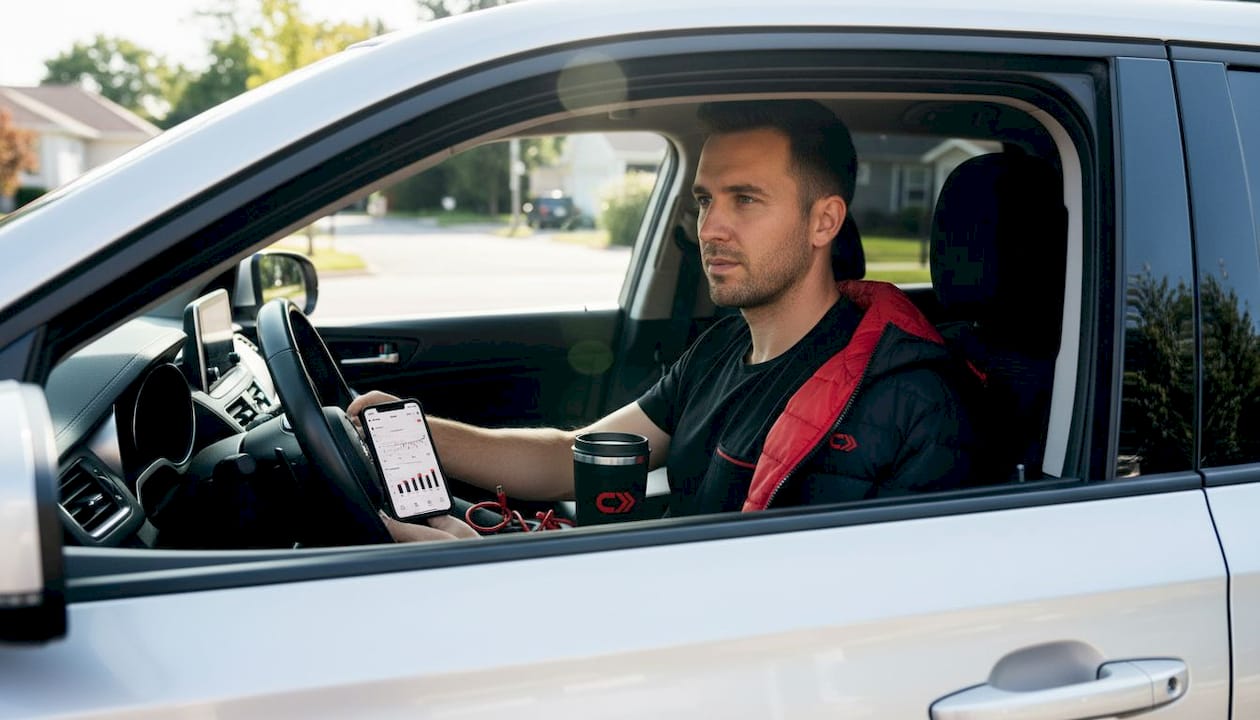
Most car owners still think of their vehicles as mechanical objects you service when something breaks. That mental model is about five years behind reality. In 2026, car apps enable remote control, real-time diagnostics, predictive maintenance, and AI-assisted management that quietly handles problems before you ever feel them. Your car is now a rolling data platform, and the app on your phone is the control tower. Understanding this shift is not optional if you want to get the most out of your vehicle and your money.
Table of Contents
- How car apps are transforming vehicle management in 2026
- Key features of leading car apps in 2026
- Predictive maintenance and diagnostics: AI in action
- Subscriptions vs. ownership: App costs and ROI in 2026
- Our take: Looking beyond convenience — what car apps really mean for enthusiasts
- Leverage car apps for smarter ownership
- Frequently asked questions
Key Takeaways
| Point | Details |
|---|---|
| Car apps redefine ownership | In 2026, car apps enable remote control, diagnostics, and AI-powered management for all types of vehicles. |
| Predictive maintenance saves money | AI features reduce downtime and extend vehicle life, often making subscriptions worth the cost. |
| Choose features wisely | Not all premium upgrades are necessary—focus on what adds real value to your car management. |
| Debate over subscriptions | While subscriptions can erode the sense of ownership, the ROI often outweighs the concerns when used smartly. |
| App security is essential | Keeping apps updated and permissions reviewed helps protect your car’s data and access in a connected world. |
How car apps are transforming vehicle management in 2026
The word “car app” meant something very different just a few years ago. Remote start, door lock, and a low-fuel notification. That was it. Today, the same category covers an entire spectrum of capabilities that would have felt like science fiction to a backyard mechanic in 2018.
The foundation of most third-party diagnostic apps is the OBD2 port, a standardized diagnostic interface built into every vehicle sold in the US after 1996. OBD2 stands for On-Board Diagnostics, second generation. A small Bluetooth or Wi-Fi adapter plugs into this port, usually located under the dashboard, and streams live data to your phone. Engine load, coolant temperature, fuel trim, throttle position, and hundreds of other parameters flow continuously to the app. This is how apps like Carly, Torque Pro, and CarScanner pull diagnostic trouble codes and give you the same read your dealer’s service tech gets, without the $200 diagnostic fee.
Remote control and diagnostics work differently depending on whether you use an OEM app or a third-party one. OEM apps (built by your car’s manufacturer) talk directly to your vehicle’s embedded cellular modem. No adapter needed. GM’s Gemini app, for example, pushed maintenance alerts and remote commands to more than 4 million vehicles in 2025 alone. Third-party apps rely on the OBD2 hardware bridge, which adds a step but opens up vehicles that manufacturers have locked behind paywalls.
Predictive maintenance is where things get genuinely interesting. Traditional maintenance is calendar-based: change the oil every 5,000 miles, replace the cabin filter every 15,000 miles. AI-driven maintenance is condition-based. The system watches real-time data trends over time, identifies subtle anomalies (a fuel injector losing efficiency, a bearing vibration that isn’t a problem yet), and flags them before they become failures. You can manage car maintenance with apps at a level of precision that a paper logbook simply cannot match.
“The biggest shift in 2026 is that the car is no longer a passive machine waiting to break. It’s an active participant in its own upkeep.” — common framing from automotive AI developers
Here’s what most people miss: the real value of app-based vehicle management is not the features themselves. It’s the accumulation of data over time. A single snapshot of your coolant temperature means almost nothing. Three years of coolant temperature readings across every drive cycle? That data trains a model that can tell you, with real confidence, that your thermostat is starting to fail six weeks before it actually does.
Key things modern car apps do well:
- Read and clear OBD2 diagnostic trouble codes in real time
- Push over-the-air software updates (OEM apps on supported vehicles)
- Track fuel economy and driving behavior patterns
- Set custom maintenance reminders based on actual usage, not just mileage
- Monitor battery state of health on EVs and hybrids
- Geofence your vehicle and get alerts when it leaves a defined area
Pro Tip: Connect your OBD2 adapter before your next oil change and take a baseline reading of your freeze frame data. Store it. That baseline becomes invaluable when diagnosing issues six months from now because you will have a true “before” picture of your engine’s operating parameters.
Key features of leading car apps in 2026
Not all car apps are built the same. The best car app features separate genuinely useful tools from ones that pad their feature list to justify a subscription fee.
| App | Platform | AI diagnostics | OTA updates | Free tier | Monthly cost (premium) |
|---|---|---|---|---|---|
| Tesla (native) | OEM | Yes (Grok AI) | Yes | N/A | Included |
| GM Gemini | OEM | Partial | Yes | Yes | $24.99 |
| Toyota/Honda app | OEM | Basic alerts | No | Yes | $8-$12 |
| Carly | Third-party | Yes | No | Limited | $29.99 |
| Torque Pro | Third-party | No | No | Full ($5 one-time) | None |
Tesla’s Spring 2026 update brought “Hey, Grok” voice integration into self-driving stats, Pet Mode, and real-time behavior logging. OEM apps like Tesla’s are tightly integrated because they have access to proprietary CAN bus data that no third-party adapter can reach. That depth is the trade-off: you get more, but only for that one vehicle.
Here is how to activate the advanced diagnostic features on most major apps:
- Download the app and create a vehicle profile using your VIN.
- Connect your OBD2 adapter (third-party) or enable Connected Services (OEM).
- Run an initial full scan to pull all stored and pending trouble codes.
- Enable live data dashboards for the parameters you care about most (RPM, coolant temp, O2 sensor readings).
- Set custom thresholds so the app alerts you when a reading goes outside your defined range.
- Schedule your first AI maintenance recommendation review after 30 days of driving data.
The difference between free and premium tiers matters most in the diagnostic depth you get. Free tiers typically cover basic OBD2 code reading and generic maintenance reminders. Premium unlocks manufacturer-specific codes, bi-directional controls (where the app can send commands to individual modules), advanced live data graphing, and AI-generated repair recommendations.
Pro Tip: Do not pay for premium features on an OEM app if your car is still under a factory maintenance plan. You are likely already getting those alerts through your dealer’s service network. Use that money on a third-party tool that fills the gaps your OEM app leaves, like aftermarket modification tracking or cross-vehicle comparisons.
Predictive maintenance and diagnostics: AI in action
Predictive maintenance is not a marketing phrase anymore. It is a measurable, benchmarked capability that directly affects how long your vehicle lasts and how much you spend on it.
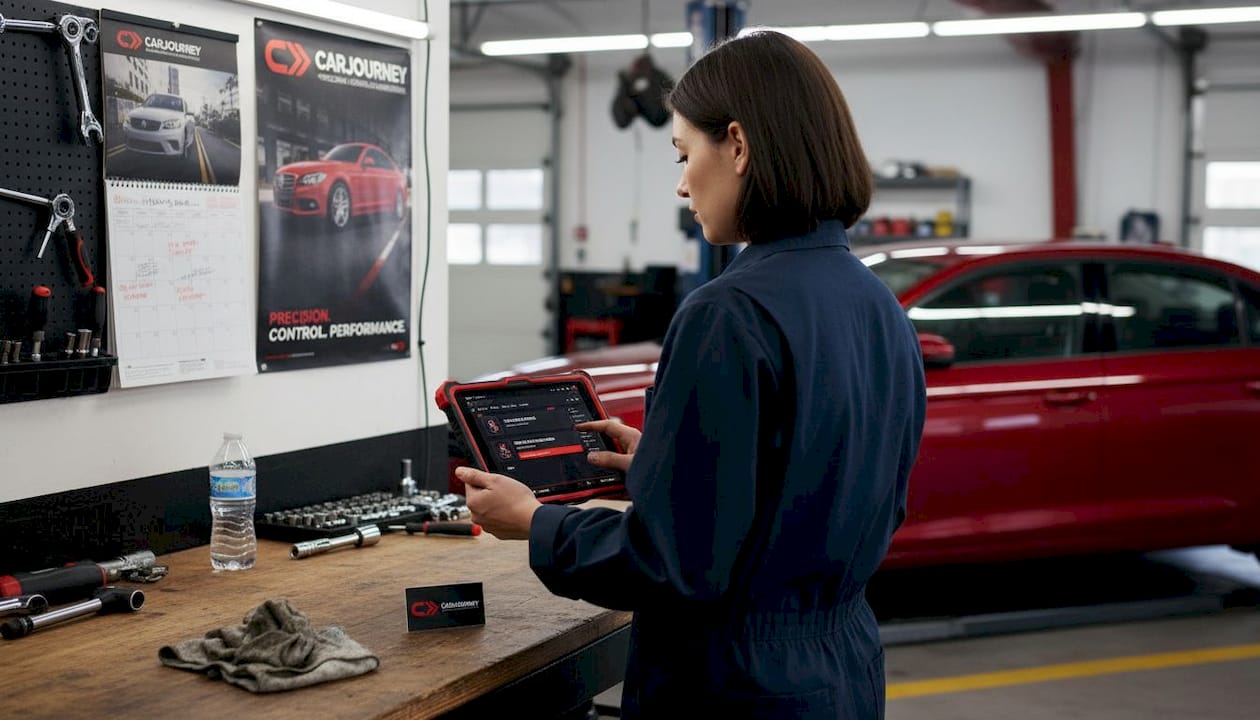
Here is how it works in practice. The app collects live sensor data continuously while you drive. An AI model trained on millions of vehicle data points looks for patterns that precede known failure modes. A slight but consistent increase in oil temperature under the same load conditions, for example, could indicate a developing issue with your oil cooler long before a warning light would appear. The system flags the anomaly, cross-references it against your vehicle’s service history, and gives you a prioritized recommendation.
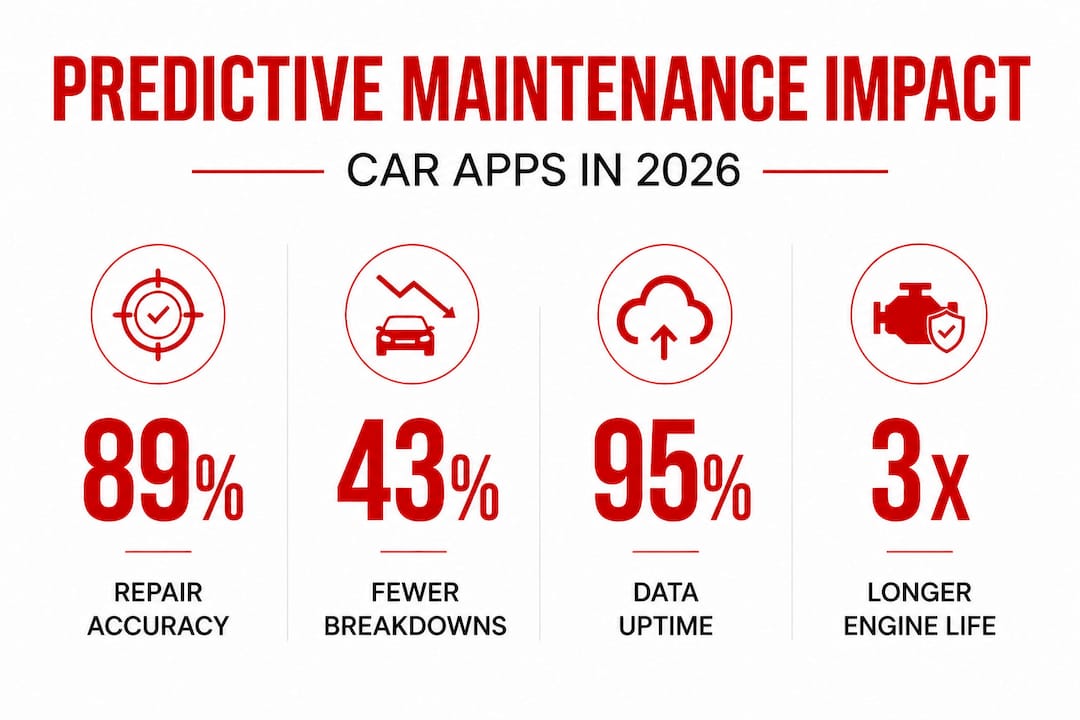
The numbers behind this technology are hard to argue with. Predictive maintenance accuracy reaches 89% for root-cause identification in tools like the Carman app, cutting diagnostic time by 68% and reducing unplanned downtime by 50%. Over a vehicle’s lifespan, predictive maintenance strategies can extend usable life by 20 to 40%. That is not a small thing when you are talking about a vehicle worth $40,000 or more.
| Metric | Traditional maintenance | AI predictive maintenance |
|---|---|---|
| Root-cause accuracy | ~40-60% | Up to 89% |
| Diagnostic time | 1-3 hours | Under 1 hour (68% reduction) |
| Unplanned downtime | Baseline | Reduced by 50% |
| Vehicle lifespan extension | Standard | 20-40% longer |
For EV and hybrid owners specifically, AI diagnostics add layers that combustion-only tools simply cannot address:
- Battery state of health monitoring, tracking capacity degradation over charge cycles
- Thermal management optimization, flagging when cooling systems are underperforming
- Regenerative braking efficiency analysis, identifying pads or sensors losing effectiveness
- Range prediction calibration based on your real-world driving patterns, not EPA estimates
- Emissions system integrity checks on plug-in hybrids, ensuring compliance and efficiency
The car maintenance tracker approach that AI enables is fundamentally different from what most owners are used to. Instead of reacting to problems, you are working from a prioritized queue of things to address in the next 30, 60, and 90 days. The best car maintenance software in 2026 presents this as a health score, giving you a single number that reflects your vehicle’s overall condition and trending direction.
Real-time data reliability also improved significantly with the wider adoption of the QUIC protocol in connected vehicle systems. QUIC reduces latency in data transmission between your vehicle and the cloud, which matters when you are streaming live sensor data at high frequency. The result is more accurate anomaly detection because the AI is working with fresher, more complete data sets.
Subscriptions vs. ownership: App costs and ROI in 2026
The OBD diagnostic market crossed $33 billion in 2025, growing at a 14% compound annual rate, and subscription models are a big reason why. Every major OEM has shifted toward connected services revenue, meaning features that once came standard now sit behind a monthly paywall.
| Feature tier | What you get | Typical cost |
|---|---|---|
| Free (OEM/third-party) | Basic codes, generic reminders, remote start | $0 |
| Mid-tier premium | Manufacturer-specific codes, live data, driving reports | $8-$15/month |
| Full premium | Bi-directional controls, AI diagnostics, repair cost estimates | $24-$35/month |
The ROI question is real and worth asking directly. Carly’s premium tier, for example, claims to save users an average of $2,000 annually through prevented breakdowns and eliminated unnecessary dealer visits. That claim is plausible if you drive an older vehicle that your dealer charges a premium to diagnose, or if you travel frequently and cannot afford unplanned downtime.
Watch out for these warning signs when evaluating a car app subscription:
- Features are locked behind tiers that only apply to newer model years, leaving older vehicle owners paying full price for limited access
- AI recommendations are generic and not calibrated to your specific trim, mileage, or modification history
- Data is not exportable, trapping your service history inside a platform you may not use in three years
- Renewal pricing jumps significantly after the first year without added features
There is a real and growing debate around subscriptions eroding what it means to own a vehicle. When heated seats require a monthly payment to stay on, or when advanced safety features are paywalled after the initial purchase, the question of ownership gets complicated. Understanding the pros and cons of service tracking apps helps you evaluate which costs genuinely return value and which ones are pure margin extraction.
The smartest move is to separate the two use cases: use free or one-time-purchase tools like Torque Pro for raw diagnostics, and invest in premium subscriptions only where AI-driven recommendations are genuinely personalized and your vehicle service history is fully portable.
Our take: Looking beyond convenience — what car apps really mean for enthusiasts
Here is the take that most tech coverage skips. Car apps are not just convenient. They are quietly changing your relationship with your vehicle in ways that are worth thinking carefully about.
The double-edged reality is this: more data access means less mechanical mystery, and for some enthusiasts, that mystery was half the point. There is a certain satisfaction in diagnosing a hesitation under load through feel, sound, and experience. When an app tells you the answer before you have even gotten your hands dirty, you gain efficiency and lose something harder to name.
We are not arguing against the technology. The car repair tracking benefits are real and measurable. But we do think the best enthusiasts use these tools as a starting point, not an endpoint. Let the AI flag the anomaly. Then go verify it yourself. Open the hood. Feel the part. Cross-reference the app’s recommendation with your own knowledge and community input before you hand over your credit card.
The deeper concern is autonomy. When your car’s best features require a monthly subscription and the manufacturer controls the software layer, the relationship between you and your vehicle shifts. You become a user of your car, not fully the owner. That is a legitimate trade-off that each person needs to evaluate for their own situation and values.
What we believe is that the solution is not to reject app-based management. It is to demand portability, transparency, and genuine personalization from the tools you use. The future for real enthusiasts is not choosing between analog instinct and digital intelligence. It is combining both with full ownership of your data.
Leverage car apps for smarter ownership
The technology is only as useful as the platform pulling it together for you.
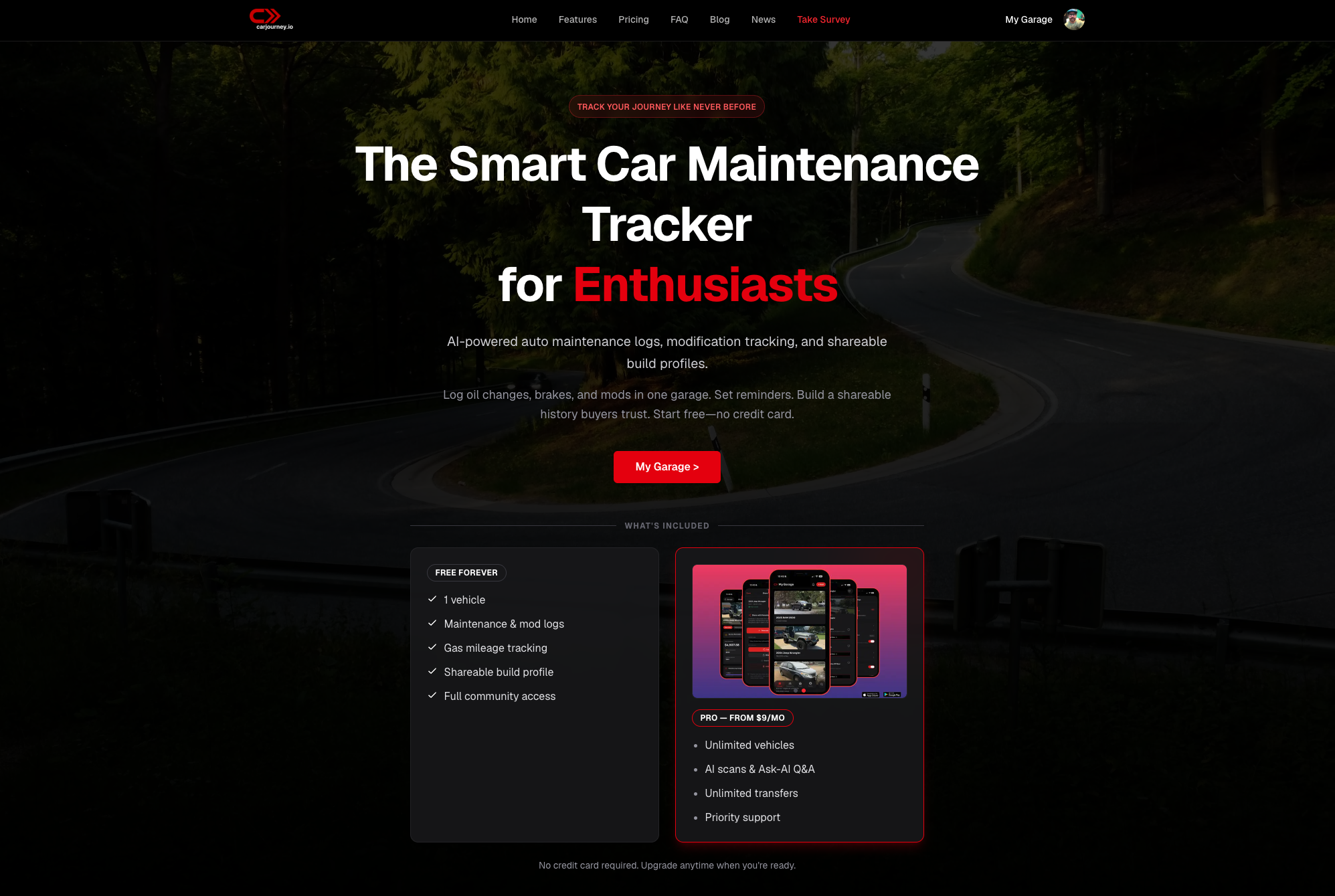
CarJourney was built specifically for owners who want more than generic alerts and locked-down service records. We use AI to scan your service documents, answer questions about your exact vehicle and build, and surface maintenance recommendations that are verified across multiple AI models. Our community of enthusiasts adds real-world product data and modification knowledge that no OEM app will ever offer. Whether you are managing a daily driver or a carefully built project car, the CarJourney maintenance tracker gives you a single, intelligent home for your vehicle’s entire life. Learn more about who we are and why we built it the way we did.
Frequently asked questions
How do car apps access and control my vehicle in 2026?
Modern car apps connect via Bluetooth or cellular networks to your car’s onboard systems, enabling remote diagnostics, alerts, and control. In 2026, apps primarily enable remote control, OBD2 diagnostics, and AI-assisted management across both OEM and third-party platforms.
Are subscription-based car app features worth it?
Many find that premium features pay off through prevented breakdowns and reduced dealer visits, but the value depends heavily on your vehicle’s age and how personalized the AI recommendations actually are. Watch for aggressive upselling tactics that lock basic features behind tiers that should be free.
What security risks should I consider with car apps?
Most major car apps use encrypted data protocols, but you should review app permissions regularly and keep software updated to close vulnerabilities. Avoid granting location or control access to apps that do not have a clear, published privacy policy.
Which car brands have the most advanced apps in 2026?
Tesla, GM Gemini, Toyota, and Honda lead the field, with Tesla and GM Gemini offering the deepest AI integration, OTA updates, and real-time vehicle communication across millions of vehicles.
How does AI improve car app maintenance recommendations?
AI analyzes live sensor data trends over time and predicts failures with 89% accuracy, cutting diagnostic time by 68% and reducing unplanned downtime by 50% compared to traditional calendar-based maintenance approaches.
Recommended
- Maximize Your Vehicle’s Lifespan with a Vehicle Maintenance App: Track, Analyze, and Protect Your Car – CarJourney Blog
- Manage Car Maintenance Easily in 2026 – CarJourney Blog
- Why a Car Service Tracking App Matters – CarJourney Blog
- Auto Maintenance Tracker: Your Guide to Smart Vehicle Care – CarJourney Blog
- Optimiser la gestion de flotte automobile : performance 2026
- Vehicle Security : The Latest Innovations to Prevent Theft