 carjourney
From the CarJourney journal
Different Oil Types for Your Car: A 2026 Guide
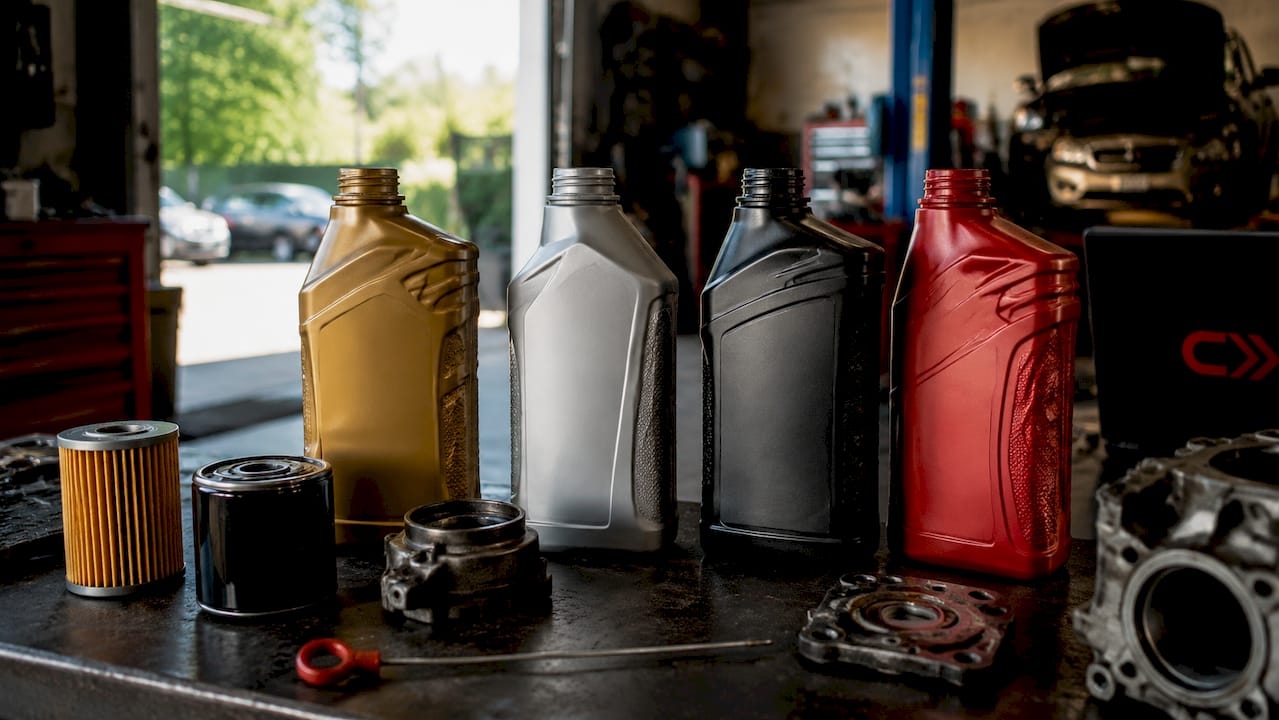
Motor oil type is the single most important variable in engine longevity, yet most car owners pick whatever is on sale. The four main different oil types for vehicles are conventional, synthetic blend, full synthetic, and high-mileage oil. Each one has a distinct chemical makeup, a different change interval, and a specific engine profile it serves best. 70% of vehicles made since 2019 require full synthetic or synthetic blend oil. That number alone tells you the old “just use conventional” rule no longer applies to most drivers.
1. What are the different oil types for your engine?
The four main motor oil classifications are conventional, synthetic blend, full synthetic, and high-mileage. Each one is built from a different base oil group and additive package. Understanding the differences helps you avoid expensive engine wear caused by using the wrong product.
- Conventional (mineral) oil: Refined directly from crude oil. Best suited for older engines with simple designs and low performance demands. Lowest cost per quart, but requires more frequent changes.
- Synthetic blend oil: A mix of conventional base oil and synthetic base stock. Offers better protection than conventional at a lower price than full synthetic. Good for light trucks, SUVs, and drivers who want a middle ground.
- Full synthetic oil: Engineered at the molecular level for uniform structure. Synthetic oil flows faster on cold starts and resists viscosity breakdown better at high temperatures. Best for modern turbocharged engines, performance vehicles, and extreme climates.
- High-mileage oil: Formulated for engines with over 75,000–100,000 miles. Contains seal conditioners that rejuvenate aging gaskets and reduce minor seepage. Not a fix for severely damaged seals, but a proactive choice for aging engines.
Pro Tip: Before switching oil types, check whether your engine has any existing leaks. Full synthetic cleans sludge that may be plugging minor seal gaps, which can reveal leaks that were already there.
2. How does oil viscosity work?

Viscosity is the measure of how easily oil flows at a given temperature. The SAE (Society of Automotive Engineers) viscosity grading system uses a two-part code like 5W-30. The number before the “W” (which stands for winter) rates cold-flow performance. The number after rates thickness at operating temperature.
Lower “W” numbers mean the oil flows faster during cold starts. Cold starts account for 70% of engine wear, so cold-flow performance is not a minor detail. A 0W-20 reaches critical engine surfaces faster than a 10W-40 on a cold morning in January.
Viscosity is conditional, not static. Oil thins as it heats up and thickens as it cools down. Viscosity index improvers in the additive package slow that thinning process. The right grade keeps a protective film between metal surfaces across the full temperature range your engine sees.
| Viscosity Grade | Cold Flow | Operating Temp | Typical Application |
|---|---|---|---|
| 0W-20 | Excellent | Low to medium | Modern fuel-efficient engines, hybrids |
| 5W-30 | Very good | Medium | Most passenger cars, light trucks |
| 5W-40 | Very good | High | European engines, turbocharged vehicles |
| 10W-30 | Good | Medium | Older engines in moderate climates |
| 10W-40 | Good | High | High-mileage engines, warmer climates |
Always use the viscosity grade listed in your owner’s manual. Ignoring manufacturer viscosity specs is the most common DIY mistake and a direct path to accelerated wear and sludge buildup.
3. What role do base oil groups and additives play?
Motor oil is not a single substance. Typical engine oil is 70–90% base oil and 10–30% additives. The base oil determines fundamental performance characteristics. The additives handle specific jobs like cleaning, protecting, and sealing.
The American Petroleum Institute (API) classifies base oils into five groups:
- Group I and II: Conventional mineral oils. Refined from crude oil with varying levels of sulfur and saturates. Group II is cleaner and more stable than Group I.
- Group III: Highly refined mineral oil. Often marketed as synthetic in some regions, though technically still petroleum-based.
- Group IV: True polyalphaolefin (PAO) synthetics. Engineered molecules with uniform structure and excellent thermal stability.
- Group V: Everything else, including esters used in racing and aviation oils.
Additives do the heavy lifting inside your engine. Key categories include:
- Detergents: Keep combustion byproducts from sticking to engine surfaces.
- Dispersants: Hold soot and particles in suspension so they drain out at the oil change.
- Anti-wear agents (ZDDP): Zinc dialkyldithiophosphate forms a protective layer on metal surfaces under pressure. Critical for flat-tappet camshafts in older engines.
- Seal conditioners: Swell and soften aging rubber seals to reduce minor leaks.
Pro Tip: When comparing oil brands, look for API certification symbols and specific additive claims on the label. A bottle that lists ZDDP or phosphorus content is giving you real data. Generic labels with no additive details are a red flag.
4. How to choose the right oil type for your vehicle
Your owner’s manual is the definitive source for oil type and viscosity. No forum post, no shop recommendation, and no marketing claim overrides what the manufacturer engineered your engine to use. Start there every time.
Vehicle age and mileage shape the decision after that. Here is a practical sequence:
- Check the owner’s manual. Find the required viscosity grade and API service category. This is non-negotiable.
- Assess your mileage. Engines past 75,000 miles benefit from high-mileage formulations with seal conditioners.
- Consider your engine type. Turbocharged and direct-injection engines generate more heat and require full synthetic. Older, naturally aspirated engines with simple valve trains can run conventional or synthetic blend.
- Factor in your climate. Extreme cold calls for a lower “W” rating. Extreme heat calls for a higher operating-temperature rating.
- Think about your driving habits. City driving with frequent short trips is harder on oil than highway miles. Short trips prevent oil from fully warming up, which accelerates contamination.
- Choose your change interval. Conventional oil needs changing every 3,000–5,000 miles. Full synthetic extends that to 7,500–10,000 miles. Synthetic blend falls in between.
One persistent myth is that switching to synthetic oil causes leaks in older engines. Synthetic oil does not cause new leaks. It cleans sludge that may have been masking existing seal imperfections, which makes those leaks visible. The leak was already there.
Routine mixing of different oil brands is another habit to avoid. Mixing different oil chemistries can reduce additive effectiveness because proprietary packages interact unpredictably. Topping off with a different brand occasionally is fine. Making it a habit is not. You can find a detailed breakdown of oil change intervals by type to plan your maintenance schedule accurately.
For towing or hauling, step up to a higher viscosity or a full synthetic rated for severe service. For extended highway driving, full synthetic with a longer drain interval saves money over time. Match the oil to the actual demands on your engine, not just the cheapest option on the shelf.
Understanding why proper oil changes matter goes beyond just picking the right type. Sticking to the correct interval is equally critical for protecting your investment.
Key takeaways
Choosing the right motor oil type requires matching your engine’s age, design, and operating conditions to the correct base oil group, viscosity grade, and additive package.
| Point | Details |
|---|---|
| Oil type determines protection level | Full synthetic outperforms conventional in cold starts, heat resistance, and change intervals. |
| Viscosity grade is not optional | Always use the SAE grade specified in your owner’s manual to prevent accelerated wear. |
| High-mileage oil serves aging engines | Engines past 75,000 miles benefit from seal conditioners that reduce minor seepage. |
| Additives define oil quality | ZDDP, detergents, and dispersants do the real protective work inside your engine. |
| Synthetic does not cause leaks | It reveals existing leaks by cleaning sludge, not by damaging seals. |
What I’ve learned from years of picking the wrong oil
Most DIYers, including me early on, treat oil selection like a grocery run. You grab whatever is on the shelf, check that the viscosity roughly matches, and call it done. That approach works until it doesn’t.
The mistake I see most often is ignoring the API service category. A bottle labeled “5W-30” can be a Group II conventional or a Group IV full synthetic. The viscosity is the same. The protection is not. Modern engines with variable valve timing systems are especially sensitive to this. Using a lower-tier oil in a turbocharged engine accelerates sludge deposits around the turbo feed line, and that repair is never cheap.
Synthetic blends are genuinely underrated. If full synthetic feels like overkill for your older daily driver, a quality synthetic blend gives you most of the cold-start and thermal benefits at a lower cost per quart. I ran a synthetic blend in a high-mileage pickup for three years with zero issues and noticeably cleaner oil at each drain.
My strongest advice for DIYers: track your oil changes with the actual product name and mileage logged. Mixing brands every other change because of sales is a real pattern I’ve seen, and routine mixing reduces additive effectiveness in ways you won’t notice until something fails. Pick a product that meets your manufacturer’s spec, buy it in bulk, and stay consistent.
— Chally
Carjourney makes oil change tracking simple
Keeping up with oil type, viscosity grade, and change intervals across one or more vehicles is exactly the kind of detail that slips through the cracks. Carjourney was built to fix that.

Carjourney’s oil change tracker logs your oil type, mileage, and service date in one place. The AI reads your service documents and flags when your next change is due based on the actual oil you used, not a generic schedule. You get reminders tailored to your specific vehicle and driving habits. For DIY maintainers who want to stay ahead of maintenance without digging through glove box receipts, Carjourney is the tool that keeps everything organized and accurate.
FAQ
What are the four main motor oil types?
The four main types are conventional, synthetic blend, full synthetic, and high-mileage oil. Each serves a different engine age, design, and performance requirement.
How often should I change synthetic vs. conventional oil?
Conventional oil requires a change every 3,000–5,000 miles. Full synthetic can go 7,500–10,000 miles between changes, making it more cost-effective over time despite the higher upfront price.
Will switching to synthetic oil damage my older engine?
Synthetic oil does not damage seals or cause new leaks. It cleans existing sludge deposits, which can reveal leaks that were already present but hidden.
What does the “W” mean in oil viscosity grades like 5W-30?
The “W” stands for winter. The number before it rates how well the oil flows in cold temperatures. A lower number means faster flow at cold start, which reduces engine wear during the most damaging phase of operation.
Is high-mileage oil worth it for engines over 100,000 miles?
High-mileage oil contains seal conditioners that help maintain aging gaskets and reduce minor seepage. It is a proactive choice for older engines, though it cannot repair severely damaged seals.