
Why Proper Oil Changes Matter: Save Money and Your Engine

Millions of car owners are still scheduling oil changes based on advice that belongs in the past. The 3,000-mile rule is an outdated myth born from older engine designs and lower-quality oils that simply don’t reflect what modern vehicles need. Following it today doesn’t make you a responsible car owner. It makes you a frequent customer. This guide cuts through decades of bad advice to explain what a proper oil change actually looks like, when you really need one, and how doing it right can protect your engine for the long haul while keeping real money in your pocket.
Table of Contents
- What does a proper oil change really mean?
- Debunking the 3,000-mile rule: Facts vs. fiction
- How proper oil changes extend engine life and prevent costly repairs
- Modern best practices: When, what, and how to change your oil in 2026
- Most owners change oil too soon (and waste money): What actually works
- Track and optimize your oil changes the smart way
- Frequently asked questions
Key Takeaways
| Point | Details |
|---|---|
| Old 3,000-mile rule is outdated | Modern engines and oils often need changing only every 7,500-10,000 miles. |
| Proper oil changes save money long-term | Sticking to the right intervals prevents costly repairs and reduces waste. |
| Use your owner’s manual as your guide | Manufacturer guidelines beat myths and keep your car running its best. |
| Modern tools make timing simple | Oil life monitors and maintenance apps can help you track oil changes accurately. |
What does a proper oil change really mean?
Not all oil changes are equal. You can drain and fill every 3,000 miles and still damage your engine if you’re using the wrong oil or skipping the filter. A proper oil change means getting three things right every single time: the correct oil type and viscosity for your specific engine, a fresh filter that matches your vehicle, and timing that follows your owner’s manual rather than a sticker on your windshield.
Start with viscosity. Your manual specifies something like 5W-30 or 0W-20 for good reason. That number isn’t a suggestion. It defines how the oil flows at startup and how it protects under heat. Using the wrong grade can mean insufficient lubrication during cold starts or oil that thins out too fast under heavy load.
Here’s what too many quick-serve shops rush through or skip entirely:
- Checking the drain plug washer and replacing it when worn, preventing slow leaks that sneak up on you
- Verifying the filter is the correct part number for your make, model, and engine size
- Confirming oil capacity rather than just filling to “full” without checking the dipstick
- Recording the mileage and date so you actually know when the next change is due
- Inspecting for leaks or unusual contamination while the oil is drained, which takes about 60 seconds
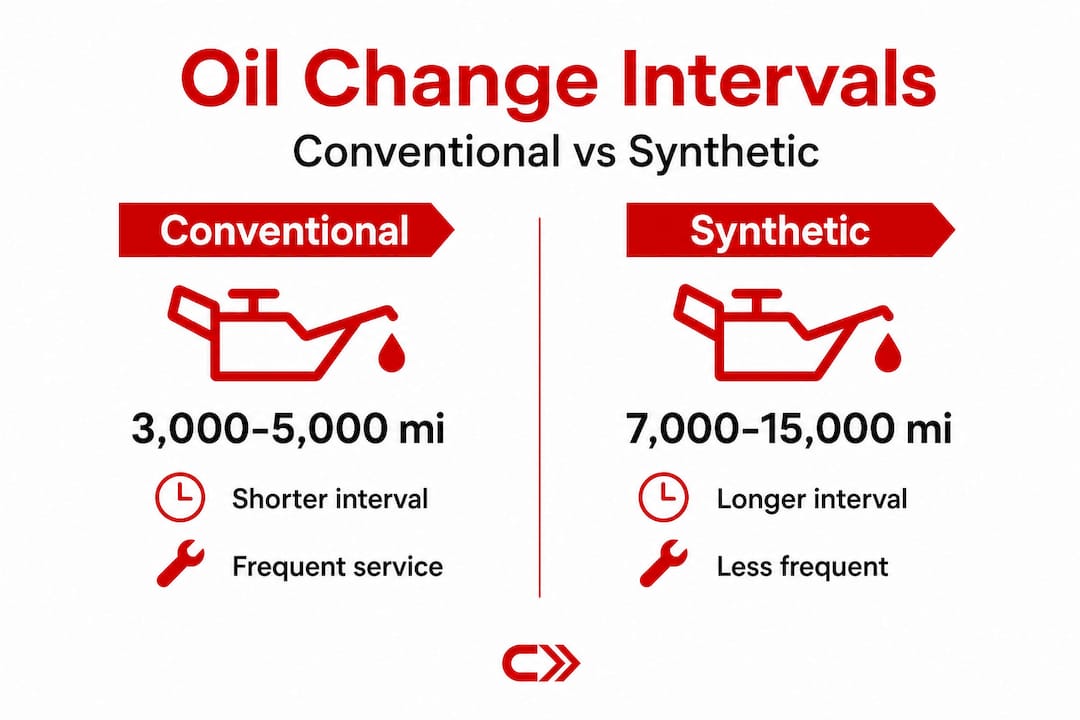
Intervals vary significantly by vehicle and oil type. Conventional oil typically requires changes every 3,000 to 5,000 miles, while full synthetic can safely run 7,500 to 10,000 miles or more. Specific models like the Toyota RAV4 are rated for 10,000-mile intervals, the Ford F-150 runs 7,500 to 10,000 miles depending on use, and most Honda models sit around 7,500 miles. Your owner’s manual is the real authority here, not the shop’s reminder sticker.
Pro Tip: Learn the oil change essentials specific to your vehicle before your next service. Knowing your oil spec and filter part number ahead of time takes two minutes and protects you from being upsold or given the wrong product.
You don’t have to wait for a dashboard warning to suspect something is off. Oil that has turned very dark and gritty, a burning smell from the engine bay, or an engine that sounds noisier than usual can all signal that oil has degraded faster than expected. Severe driving conditions including short daily trips under five miles, lots of stop-and-go traffic, or regular towing can accelerate oil breakdown regardless of mileage.
The cost of oil changes varies depending on oil type and shop, but understanding what you’re paying for matters just as much as what you’re paying.
Debunking the 3,000-mile rule: Facts vs. fiction
Here’s the uncomfortable truth about the 3,000-mile habit: it was never about your engine. It was about selling oil and service. Older engines in the 1970s and 1980s ran crude conventional oil formulations in motors with looser tolerances. Those conditions made frequent changes genuinely necessary. But engines and oil chemistry have both advanced dramatically. The rule just didn’t update with them.
“The 3,000-mile oil change is a relic of older technology. Modern full synthetic oils and tightly engineered engines make intervals of 7,500 to 10,000 miles not just acceptable but recommended by the manufacturers who built the engines themselves.”
Who keeps the myth alive? Quick-lube operations have a direct financial incentive to push shorter intervals. An owner who comes in every 3,000 miles instead of every 7,500 miles is worth roughly 2.5 times more revenue per year. That’s not a conspiracy. It’s just business. And it costs you money you don’t need to spend.
Here’s how the real numbers stack up:
| Oil type | OEM-recommended interval | Quick-lube “recommendation” | Annual services (15k miles) |
|---|---|---|---|
| Conventional | 5,000 miles | 3,000 miles | 3 vs. 5 |
| Full synthetic | 7,500 to 10,000 miles | 3,000 to 5,000 miles | 1.5 to 2 vs. 3 to 5 |
| OEM full synthetic | 10,000 to 15,000 miles | 3,000 to 5,000 miles | 1 vs. 3 to 5 |
The 3,000-mile rule wastes money and resources. It also generates unnecessary used oil disposal. Modern synthetics maintain their protective properties and additive packages far longer than older conventional oils did. High-mileage examples back this up consistently. OEM data shows engines lasting well past 200,000 miles on synthetic schedules, with documented cases like a Ford F-150 reaching 217,000 miles on proper manufacturer-recommended intervals.
What smart owners track instead:
- Actual miles since last change, logged precisely
- Oil type used and whether it matches the manual
- Any warning lights or OLM (oil life monitor) percentage
- Driving conditions during the interval, especially towing or short trips
Staying on top of maintenance by mileage gives you a much clearer picture of where your car stands than any blanket rule ever could.
How proper oil changes extend engine life and prevent costly repairs
Clean oil does several jobs at once inside your engine. It lubricates moving metal surfaces to prevent metal-on-metal contact, carries heat away from the combustion area, suspends microscopic debris and holds it until the filter catches it, and forms a protective film that resists corrosion inside the block. When oil degrades, every one of those functions weakens.
Here’s what actually happens when oil goes too long without a change:
- Oxidation thickens the oil, making it harder to circulate at startup and leaving bearing surfaces temporarily dry
- Additive packages break down, stripping the oil of its anti-wear, anti-corrosion, and detergent properties
- Sludge begins to form, which can clog oil passages and starve the engine of lubrication entirely
- Heat management suffers, causing operating temperatures to climb and accelerating wear on rings, bearings, and camshaft lobes
- Viscosity changes outside spec, causing oil pressure readings to fluctuate and triggering dashboard warnings
The financial gap between preventative maintenance and reactive repair is enormous.
| Maintenance scenario | Estimated cost | Frequency |
|---|---|---|
| Synthetic oil change (DIY) | $40 to $70 | Every 7,500 to 10,000 miles |
| Synthetic oil change (shop) | $75 to $120 | Every 7,500 to 10,000 miles |
| Sludge cleaning service | $150 to $400 | One-time corrective |
| Timing chain replacement | $800 to $1,800 | Often tied to poor lubrication |
| Engine bearing replacement | $1,500 to $3,000 | Caused by oil starvation |
| Short block rebuild | $2,500 to $5,000+ | Worst-case neglect scenario |
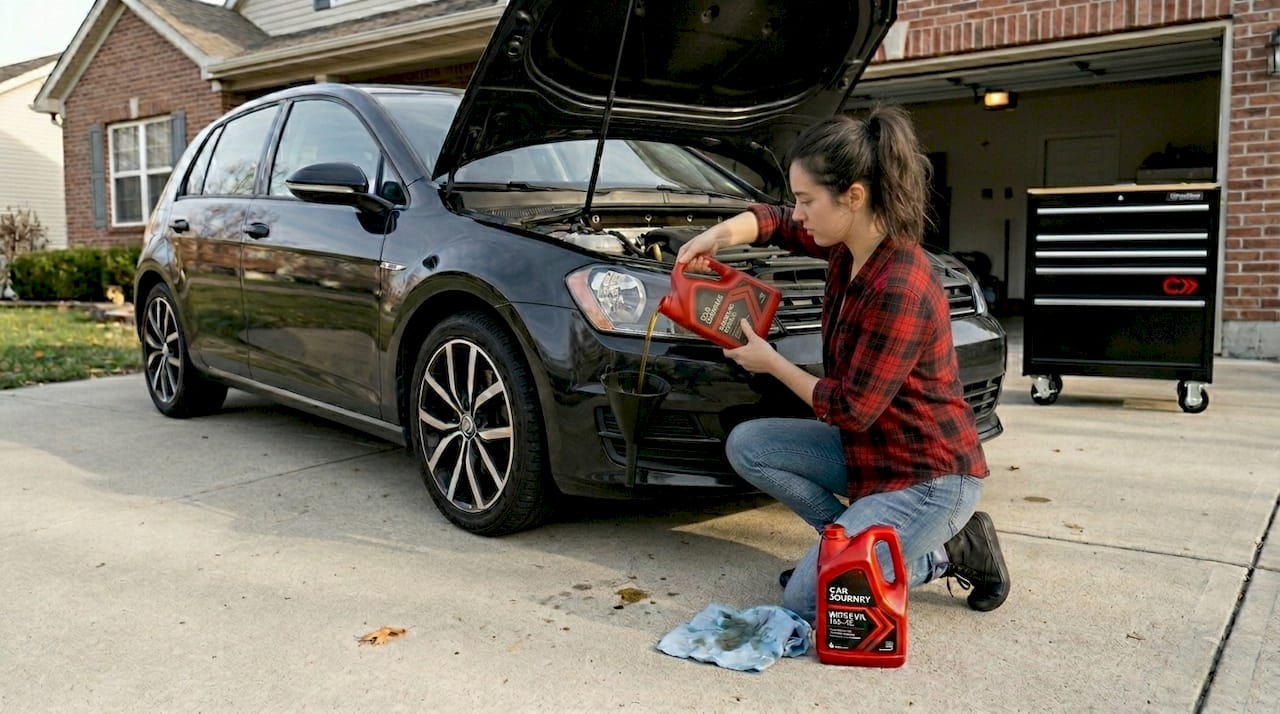
The math is clear. A single engine bearing failure costs more than 25 proper oil changes. Sludge buildup severe enough to require teardown can mean the engine is totaled on an older vehicle.
Pro Tip: Regular vehicle checks at every oil change, including inspecting belts, hoses, and fluid levels, turn a routine service into a full health scan that can catch expensive problems early.
Following a consistent oil change schedule specific to your car eliminates the guesswork and builds the kind of maintenance record that protects your warranty and boosts resale value when you’re ready to sell.
Modern best practices: When, what, and how to change your oil in 2026
Modern vehicles have tools built in to help you stop guessing. Oil life monitors (OLMs) use algorithms that factor in engine temperature cycles, RPM history, and trip length to calculate remaining oil life more accurately than any fixed mileage interval. OLMs adjust for real driving conditions, so if you do a lot of short cold-weather trips, your car will recommend a change sooner than if you mostly drive highway miles. Severe use scenarios like towing or mountain driving can cut the recommended interval roughly in half.
Here’s how to approach every oil change correctly in 2026:
- Check your OLM and note the percentage before you schedule anything. Most modern vehicles alert you around 15 to 20% remaining life, which is a good time to schedule, not an emergency.
- Open your owner’s manual and confirm the required oil viscosity and specification (such as API SP or dexos1 Gen3 for many GM vehicles). These spec requirements matter as much as viscosity.
- Buy the correct filter using your VIN or exact model year. Generic filters that don’t match your anti-drain-back valve spec can cause dry starts.
- Drain the old oil fully and inspect it. Very dark oil is normal. Milky or gritty oil suggests a more serious problem worth investigating.
- Install the new filter hand-tight plus a quarter turn. Over-tightening crushes the gasket and creates leak points.
- Fill to the correct capacity, not just “full.” Check your dipstick after a brief idle to confirm the level.
- Reset the OLM according to your manual’s procedure. Skipping this step means your car will continue giving inaccurate life estimates.
Choosing between synthetic and conventional comes down to your vehicle’s requirement and your priorities. Most cars manufactured after 2010 are engineered to run on full synthetic, and many require it. Conventional oil is still appropriate for older, high-mileage vehicles running in moderate climates with relaxed performance demands.
For DIY oil change steps broken down in detail, we’ve covered the complete process from tools to torque specs. Doing it yourself on a synthetic schedule costs around $45 to $70 per change and gives you direct visibility into your engine’s condition each time.
Pro Tip: Use an oil change tracker app to log each service with mileage, oil brand, and filter used. Over time, that log becomes a maintenance history that proves proper care and can add real value at trade-in or private sale.
Most owners change oil too soon (and waste money): What actually works
We’ve been around enough engines and enough enthusiast communities to say this plainly: the single most common maintenance mistake isn’t neglecting oil changes. It’s doing them too often out of anxiety. Owners who follow the 3,000-mile habit are not protecting their engines more. They’re just spending more money and generating more waste without any measurable benefit.
The 3,000-mile oil change myth isn’t a harmless tradition. If you’re driving 15,000 miles per year and changing oil every 3,000 miles, you’re doing five services per year instead of one or two. At $100 per service, that’s $500 versus $150 to $200 annually. Over ten years of ownership, that’s potentially $3,000 to $3,500 in unnecessary spending, and that’s before accounting for the time and environmental footprint.
What we’ve seen from owners who track their maintenance seriously is consistent: engines maintained on manufacturer-recommended synthetic intervals with documented service histories run well past 200,000 miles with no unusual wear. The secret isn’t changing oil more often. It’s changing it correctly and on schedule.
Learning to track oil changes effectively is where most of the actual value lives. You stop second-guessing. You stop letting quick-lube shops tell you what your car needs based on a generic rule designed for their revenue, not your engine. You trust the engineering that went into your specific vehicle, and you use the data to stay ahead of problems instead of reacting to them.
The most experienced enthusiasts we know don’t obsess over short intervals. They obsess over precision: right oil, right filter, right mileage, documented every time.
Track and optimize your oil changes the smart way
Knowing the right interval is half the equation. Actually remembering it, logging it, and staying consistent across multiple vehicles or a changing routine is where most owners drop the ball.
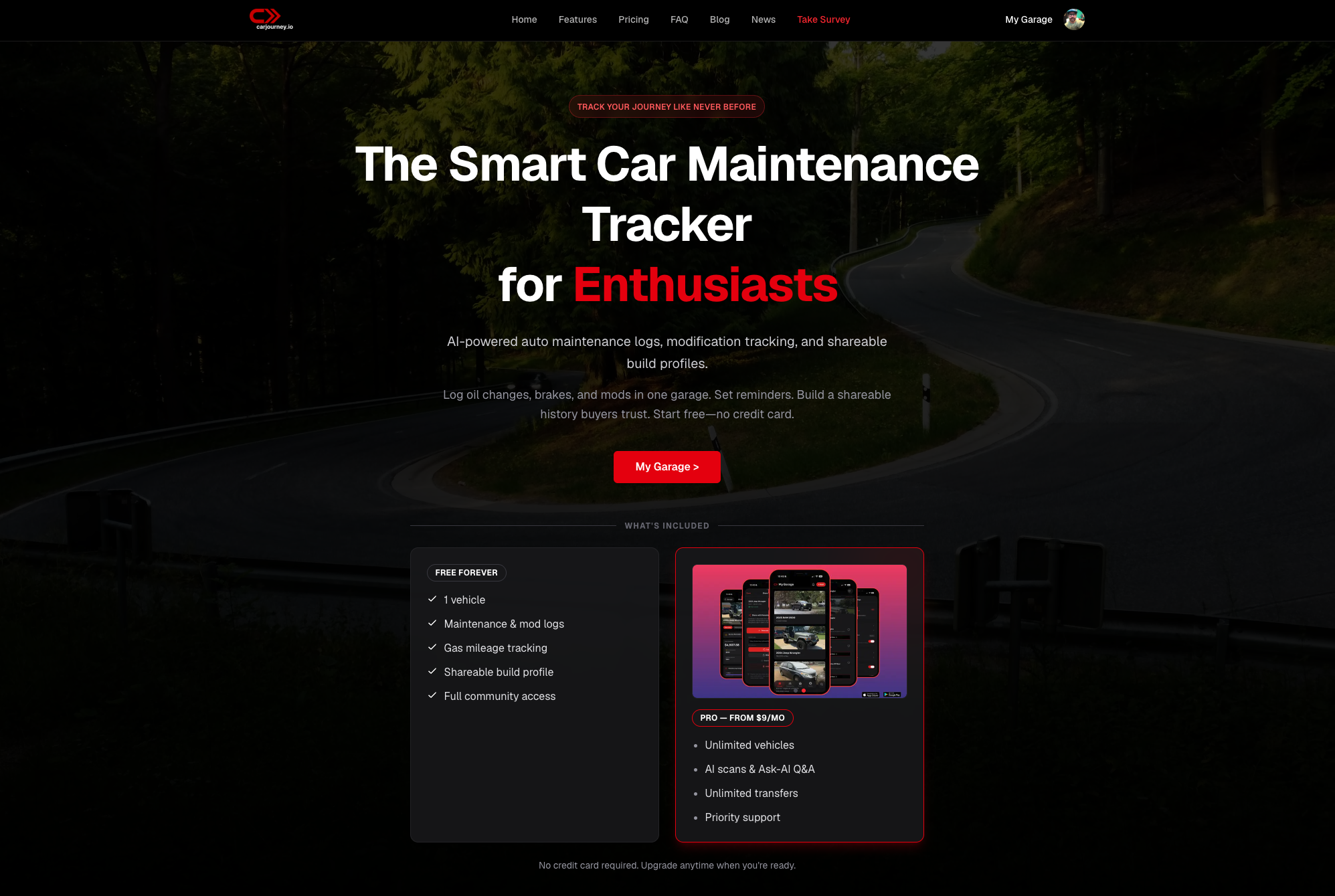
CarJourney was built specifically for this. We’re a small team of gearheads and engineers in Virginia who got tired of scattered receipts and generic advice that ignores your actual build. The CarJourney maintenance tracker uses AI to scan your service documents, learn your vehicle’s exact requirements, and send you reminders based on your real mileage and driving patterns. No guessing. No more windshield stickers from shops with a financial incentive to bring you back early. To learn more about what we’re building and why, check out our vehicle maintenance company page. Try it free and see what a proper maintenance record actually looks like.
Frequently asked questions
How do I know if my oil needs changing before the recommended interval?
Look for dashboard warnings, check oil color and level on the dipstick, and listen for increased engine noise. Modern oil life monitors adjust for driving conditions, so trust your OLM percentage alongside a visual check.
Can I switch between synthetic and conventional oil?
Yes, modern oils are compatible and switching won’t harm your engine, but follow your owner’s manual for the recommended type and never mix different oils within the same service interval.
Does driving style affect oil change intervals?
Absolutely. Severe use like frequent short trips, towing, or extreme temperatures can halve your safe interval because the oil degrades faster under those stress conditions.
Are quick-lube shops trustworthy for oil changes?
Many provide reliable service, but always confirm they’re using the correct oil specification and filter for your vehicle, and quick-lubes often push shorter intervals than your OEM actually recommends, so keep your own records.
How much can I save by following the recommended oil change interval?
Following your owner’s manual instead of an arbitrary 3,000-mile schedule can save hundreds of dollars annually, since the 3,000-mile rule drives unnecessary services that modern synthetic oils and engines simply don’t require.