 carjourney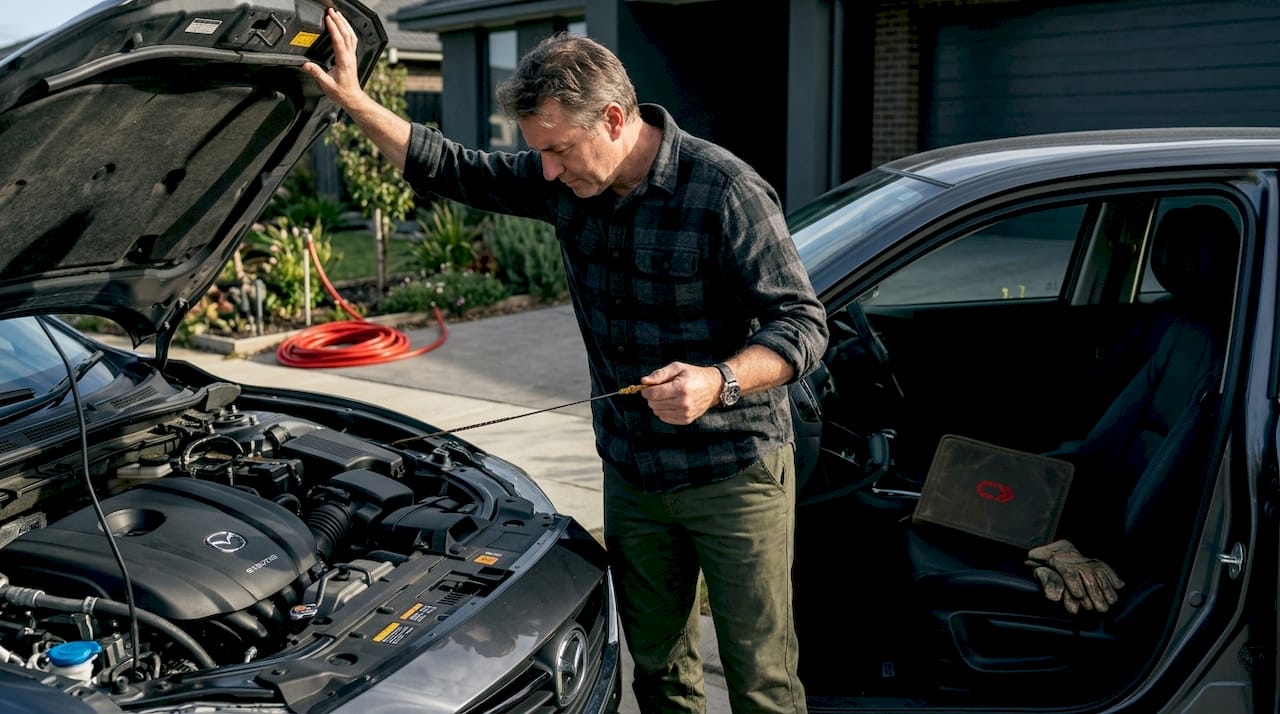
Most drivers assume that scheduling an annual inspection covers their bases. It doesn’t. That one-per-year visit to a shop can’t catch the slow tire pressure drop that sets in during a cold snap, the brake fluid that’s absorbed moisture over six months, or the corroded battery terminal quietly killing your starting reliability. Early issue detection in critical systems like brakes, tires, fluids, and battery can be the difference between a $30 fix and a $3,000 repair. This guide walks you through what to check, how often, and exactly how much money consistent habits can save you.
Table of Contents
- Understanding the purpose of regular vehicle checks
- Key systems to check and how often
- Comparing maintenance costs: Routine checks vs unexpected repairs
- How to implement regular vehicle checks in your routine
- The uncomfortable truth experts rarely share about vehicle maintenance
- Take action with smarter maintenance tracking
- Frequently asked questions
Key Takeaways
| Point | Details |
|---|---|
| Routine checks prevent breakdowns | Early detection through regular maintenance avoids surprises and costly repairs. |
| Major savings over time | Consistent maintenance cuts long-term costs by thousands, especially for reliable brands. |
| DIY and professional balance | Combining DIY checks with expert diagnostics ensures comprehensive care for your vehicle. |
| Easy scheduling solutions | Tracking tools and reminders make staying on top of maintenance effortless. |
Understanding the purpose of regular vehicle checks
The phrase “regular vehicle checks” sounds vague until you break it down. It refers to a structured habit of inspecting your vehicle’s critical systems at defined intervals, whether that’s weekly, monthly, or seasonally, rather than waiting for a warning light to appear or a noise to get worse.
Your car is made up of interconnected systems that degrade at different rates. Some parts wear slowly and predictably. Others can fail with little warning if ignored. Routine inspection covers the full range of critical systems including brakes, tires, fluids, battery, lights, and suspension, each of which affects both safety and longevity in distinct ways.
Here’s what’s actually at stake when you skip those checks:
- Tires: Under-inflation increases blowout risk and reduces fuel efficiency by up to 3% per PSI drop. Over-inflation causes uneven wear and reduces traction.
- Brakes: Worn brake pads that go unchecked can score your rotors, turning a $150 pad replacement into a $400 to $600 rotor and pad job.
- Fluids: Low coolant can trigger engine overheating. Old transmission fluid accelerates internal wear. Degraded brake fluid reduces stopping power in wet conditions.
- Battery: Corrosion on terminals restricts current flow and can cause no-start situations, especially in extreme heat or cold.
- Lights: A burned-out brake light or headlight is both a safety risk and a reason for a traffic stop.
- Suspension: Worn shocks affect handling and can create uneven tire wear patterns that shorten tire life significantly.
“Early detection through regular vehicle inspections prevents breakdowns, reduces the risk of major repairs, and protects both the driver and other road users. Each system affects the others, meaning a problem in one area often accelerates wear in another.”
The safety case alone is compelling. But the financial argument is what motivates most drivers to actually build the habit. If you want a solid starting point for what to actually inspect, our car maintenance guide covers the full picture system by system. You can also check maintenance recommendations tailored to different vehicle types and driving conditions.
Key systems to check and how often
Knowing what to check matters. But knowing when to check it is what makes the habit stick. Different systems wear at different rates, and matching your inspection frequency to the actual wear cycle is what separates proactive owners from reactive ones.
Here’s a straightforward breakdown, ordered from most to least frequent:
- Weekly (or every fill-up): Tire pressure and visual condition. Check for cuts, bulges, or uneven wear patterns. Also glance at all exterior lights when walking to your car.
- Monthly: Engine oil level and color. Clean oil is amber to light brown. Dark, gritty oil or oil below the minimum line on the dipstick needs attention. Also check windshield washer fluid and power steering fluid if applicable.
- Every 3 months or 3,000 miles: Coolant level and condition, brake fluid level, battery terminals for corrosion, and air filter condition. This is also a good cadence to check wiper blade effectiveness.
- Every 6 months: Full brake inspection including pad thickness and rotor condition. Inspect belts and hoses for cracks or wear. Check tire tread depth using a tread gauge or the penny test.
- Annually: Suspension inspection, transmission fluid check, full electrical system check, and spark plug evaluation on gasoline engines. Align this with your yearly vehicle maintenance schedule.
DIY checks on tires, oil, and fluids are well within reach for any driver with basic knowledge and 10 minutes. The goal is to complement, not replace, professional service intervals. Use your car service schedule as the backbone and fill in the gaps yourself between visits.
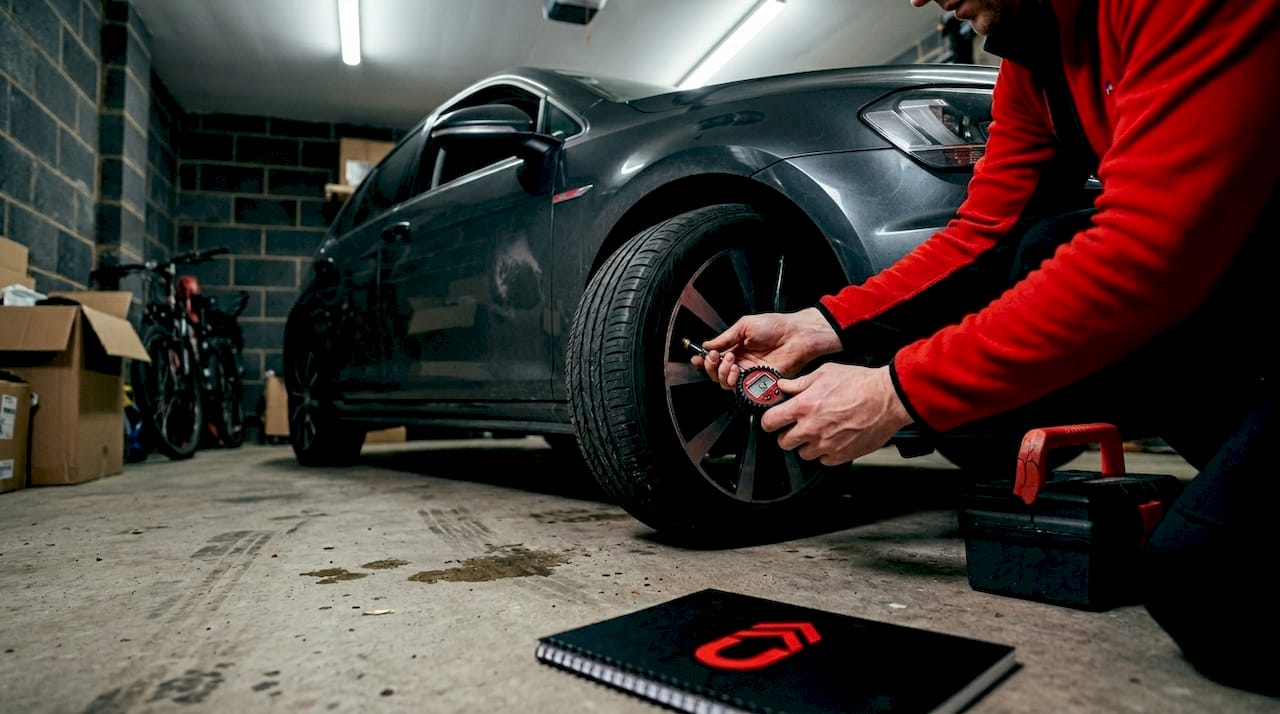
Pro Tip: Buy a quality digital tire pressure gauge and keep it in your glove box. Physical stick gauges wear out and lose accuracy. A $15 digital gauge that you actually use is worth far more than a $5 one you can’t trust.
Complex issues like brake system performance, charging system diagnostics, and engine misfires require professional equipment and expertise. The line is clear: visual checks and fluid top-offs are DIY territory; anything involving disassembly or electronic diagnostics belongs in a shop.
Comparing maintenance costs: Routine checks vs unexpected repairs
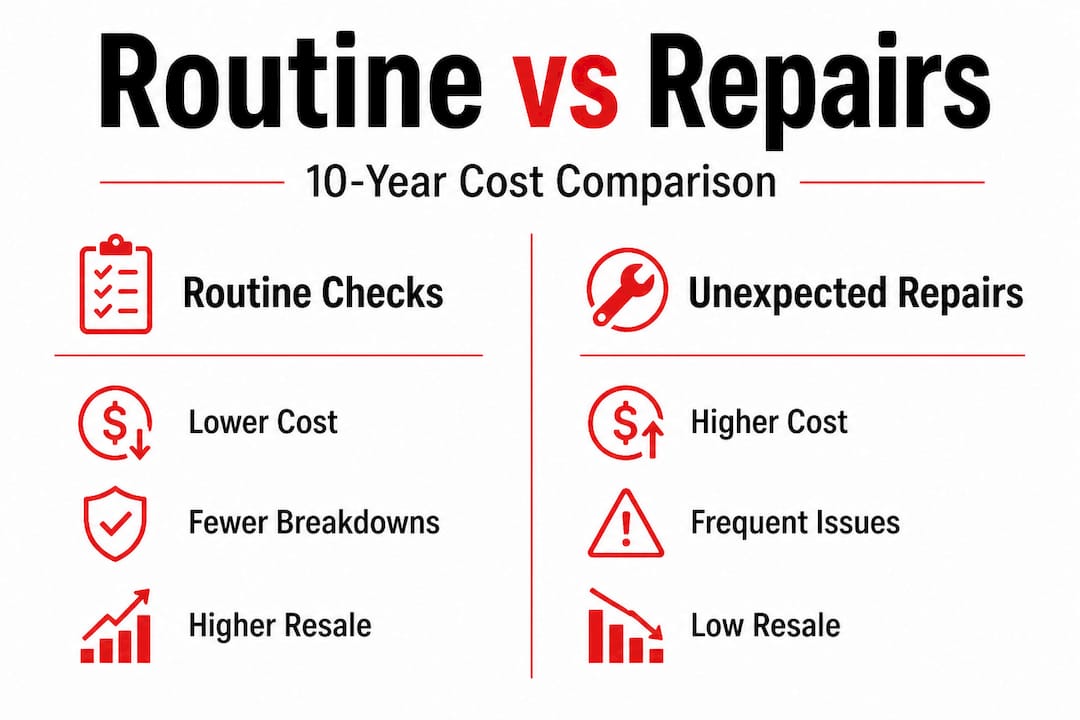
Numbers tell the most honest story here. The 10-year maintenance cost gap between reliable brands and less reliable ones is staggering: Toyota and Buick owners average around $5,300 over a decade, while Land Rover owners face close to $17,000. That’s not just a brand quality difference. It also reflects how well owners of more reliable vehicles tend to follow maintenance habits consistently.
| Vehicle type | Average 10-year maintenance cost | Notes |
|---|---|---|
| Toyota (gas) | ~$5,300 | Known for reliability when maintained |
| Buick (gas) | ~$5,300 | Lower-than-expected maintenance burden |
| BMW (gas) | ~$10,900 | Complex systems drive up service costs |
| Land Rover | ~$17,000 | High parts costs, frequent issues |
| EV (first 3 years) | ~$77 | No oil changes, fewer moving parts |
| Gas vehicle (first 3 years) | ~$228 | Oil, filters, spark plugs add up early |
The EV comparison is worth noting. Early EV maintenance costs average just $77 in the first three years compared to $228 for gas vehicles, largely because EVs eliminate oil changes, timing belts, and spark plugs from the equation. But even EVs need regular checks on tires, brakes, coolant for battery thermal management, and software updates.
What happens when you skip routine maintenance? The cost spiral is predictable:
- A missed oil change leads to sludge buildup, which accelerates engine wear and can eventually cause oil pump failure.
- Ignored tire rotation means uneven tread wear that forces early replacement, adding $400 to $800 in costs compared to the $50 rotation that would have extended tire life.
- A neglected coolant flush allows the inhibitors that protect your engine block and radiator from corrosion to break down. The result can be a cracked block or failed water pump, potentially a $1,500 to $3,500 repair.
The real savings aren’t just in the repair bills. They’re in resale value. A vehicle with documented, consistent maintenance history commands hundreds to thousands more at trade-in or private sale. Buyers pay a premium for confidence, and a tidy service record provides exactly that. For a deeper look at the numbers behind vehicle upkeep, our maintenance costs guide breaks down expenses by system and vehicle age. And if you’re building a household budget around your car, the maintenance budget tips section walks you through a practical planning framework.
How to implement regular vehicle checks in your routine
Knowing what to do is step one. Building the habit is where most drivers fail. Life gets busy, and unless vehicle checks are embedded into an existing routine, they slip. Here’s how to make them stick.
Start with a master checklist. Write down every check, its interval, and the last date it was completed. Keep a physical copy in your glove box and a digital version in your phone’s notes app or a maintenance tracking app. A simple table works perfectly:
| System | Check interval | Last checked | Next due |
|---|---|---|---|
| Tire pressure | Weekly | Note date | 7 days out |
| Oil level | Monthly | Note date | 30 days out |
| Brake fluid | Every 3 months | Note date | 90 days out |
| Brake pads | Every 6 months | Note date | 180 days out |
| Full suspension | Annually | Note date | 12 months out |
Use your owner’s manual as your primary reference. Manufacturers design maintenance schedules around specific engineering tolerances for your exact build. Generic advice like “change oil every 3,000 miles” may not apply to your car at all; many modern engines specify 7,500 to 10,000 mile intervals on full synthetic oil. Consult your owner’s manual before applying any one-size-fits-all schedule. Your manual is also where you’ll find the correct tire pressure spec, not the number printed on the tire itself, and the correct fluid types your vehicle requires.
Pairing your checklist with a mileage maintenance schedule approach works better than calendar-only tracking for drivers who rack up irregular mileage each month.
Bullet points for building the habit:
- Anchor checks to an existing routine: Do your monthly oil check every time you wash your car, or the first day of every month.
- Set phone reminders: Create recurring calendar events labeled with the specific task, not just “check car,” so there’s no thinking required.
- Keep supplies in the vehicle: A clean rag, tire gauge, and flashlight mean there’s no excuse to skip a quick inspection.
- Log everything immediately: The date and what you found. Even “all normal” is valuable documentation.
- Know when to call a professional: Any brake noise, fluid leaks, warning lights, or changes in ride quality need professional evaluation. DIY checks are for monitoring, not diagnosing complex faults. Follow the service maintenance guide for clear guidance on when home checks stop and shop visits begin.
Pro Tip: Set a separate recurring reminder every 5,000 miles to review your full checklist. Mileage-based triggers catch what calendar reminders miss for high-mileage drivers.
The uncomfortable truth experts rarely share about vehicle maintenance
Here’s what most maintenance articles won’t say directly: the reason most owners fall behind on vehicle checks isn’t lack of knowledge. It’s psychology.
Maintenance feels invisible. You change your oil and nothing dramatic happens. You check your tire pressure and everything seems fine. The reward is the absence of a bad outcome, and the human brain is notoriously bad at valuing negative outcomes that were prevented. So the habit slips. You push the oil change another 1,500 miles. You tell yourself the brakes feel fine. Until they don’t.
We’ve seen this pattern repeatedly in how drivers talk about their vehicles. The ones who maintain consistently don’t necessarily love the process more. They’ve just made a mindset shift: maintenance is reliability insurance, not optional upkeep. Every check you do is a payment into a fund that pays out in uninterrupted, predictable transportation.
The other thing experts gloss over is that procrastination on maintenance is almost always more expensive than the thing being avoided. That $80 oil change you pushed off for three months doesn’t just cost $80 later. It costs $80 plus whatever additional wear occurred in those extra months. The costs compound quietly.
The drivers who come out ahead financially aren’t necessarily the ones driving the most reliable brands. They’re the ones following consistent check-in habits on whatever they drive. Easy wins exist for everyone: a weekly tire pressure check takes 90 seconds and can prevent a blowout or save you $40 a year in fuel. A monthly oil check takes two minutes and can catch a slow leak before it becomes catastrophic.
Setting up car maintenance reminders removes the mental load of remembering. And reviewing annual service tips gives you a yearly reset point to catch anything that slipped through the cracks.
The mindset shift isn’t complicated. Stop thinking about maintenance as reactive firefighting. Start thinking about it as the most reliable way to protect a significant asset you depend on every single day.
Take action with smarter maintenance tracking
Building a consistent maintenance habit is easier when you have the right tools backing you up. Scattered receipts and vague memories of when you last had your oil changed create gaps that cost you money and reliability.
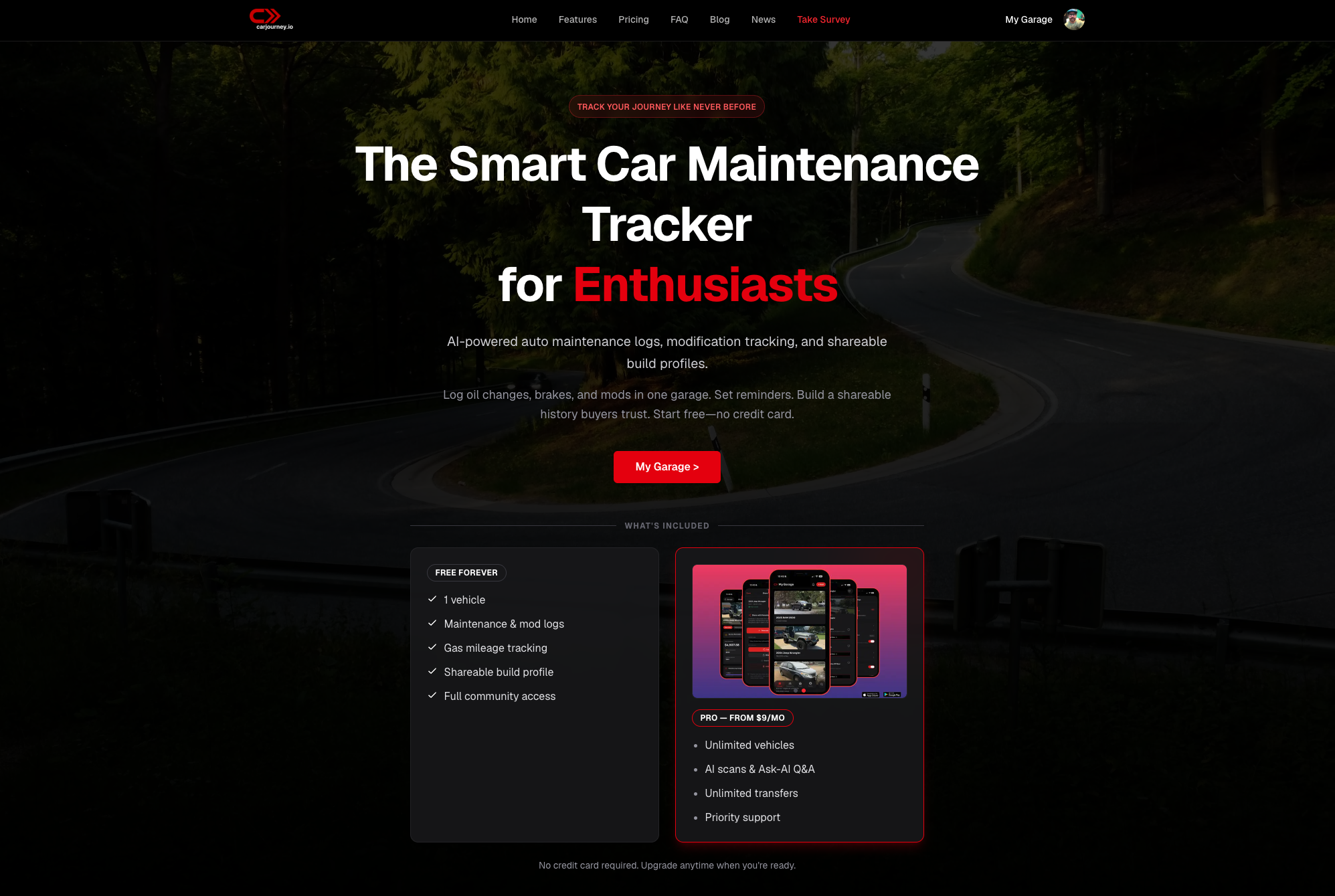
That’s exactly the problem CarJourney was built to solve. Our platform uses AI to scan your service documents, track your vehicle’s history, and surface personalized maintenance recommendations based on your exact build and driving patterns, not generic schedules that ignore what you actually drive. You can set reminders, log every check, and access a community of enthusiasts who share real-world experience with the same vehicles. If you want a complete maintenance guide built around your specific car rather than generic advice, CarJourney brings everything into one place so managing your vehicle’s health stops feeling like a second job.
Frequently asked questions
Which vehicle systems should I check most often?
Focus on tires, oil, and lights weekly, then expand to fluids, battery, brakes, and suspension on monthly to annual cycles. Critical systems like brakes and suspension affect both safety and downstream repair costs if left unchecked.
How much can regular maintenance save me in the long run?
Consistent maintenance can mean the difference between $5,300 and $17,000 over ten years depending on your vehicle and habits. 10-year ownership costs vary sharply based on how well routine care is maintained, not just the brand you drive.
What can I do myself versus needing a professional mechanic?
Tire pressure, oil level, fluid checks, and light inspections are all straightforward DIY tasks you can handle in minutes. Professional diagnostics are essential for brake system performance, misfires, suspension faults, and any issue triggering a dashboard warning.
How should I remember when maintenance is due?
Use a combination of your owner’s manual intervals, a physical checklist in your glove box, and digital calendar reminders set to recurring intervals. Owner’s manual schedules are more accurate for your specific vehicle than generic advice you find online.
Recommended
- Service Reminder App – Maintenance Alerts | CarJourney
- Car Service Every Year: Essential Maintenance Guide – CarJourney Blog
- How to Maintain Car: Complete Guide for Vehicle Care – CarJourney Blog
- Auto Maintenance Tracker: Your Guide to Smart Vehicle Care – CarJourney Blog
- How Does Ceramic Coating Enhance Your Vehicle’s Appearance