 carjourney
From the CarJourney journal
How to Build a Car Portfolio: A Designer's Guide
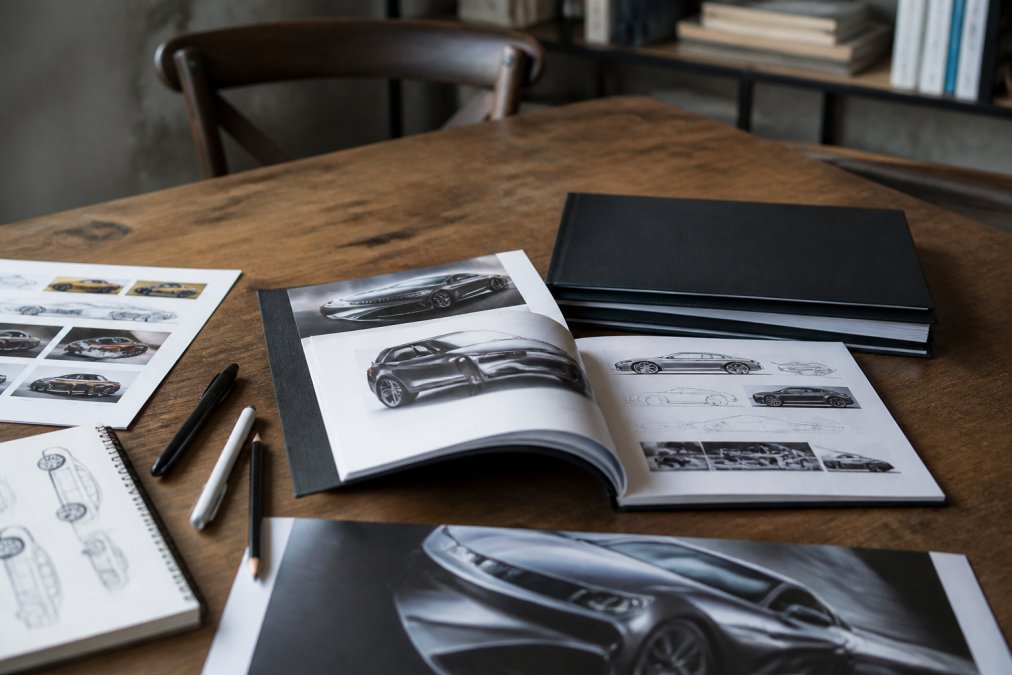
Table of Contents
- Understanding What a Car Portfolio Actually Is
- Structuring Your Design Projects for Maximum Impact
- Automotive Design Portfolio Examples That Work
- Mastering the Design Narrative and Storytelling
- Technical Skills: Sketching, Rendering, and Digital Modeling
- Best Software for Car Design and Portfolio Presentation
- Professional Presentation and Digital Portfolio Hosting
- Common Mistakes to Avoid When Building Your Car Portfolio
Last Updated: August 3, 2026
Understanding What a Car Portfolio Actually Is
A car portfolio is a curated narrative demonstrating your design thinking, technical skills, and creative vision through automotive projects. It answers the fundamental question hiring managers ask: "Can this person deliver quality automotive design work?"
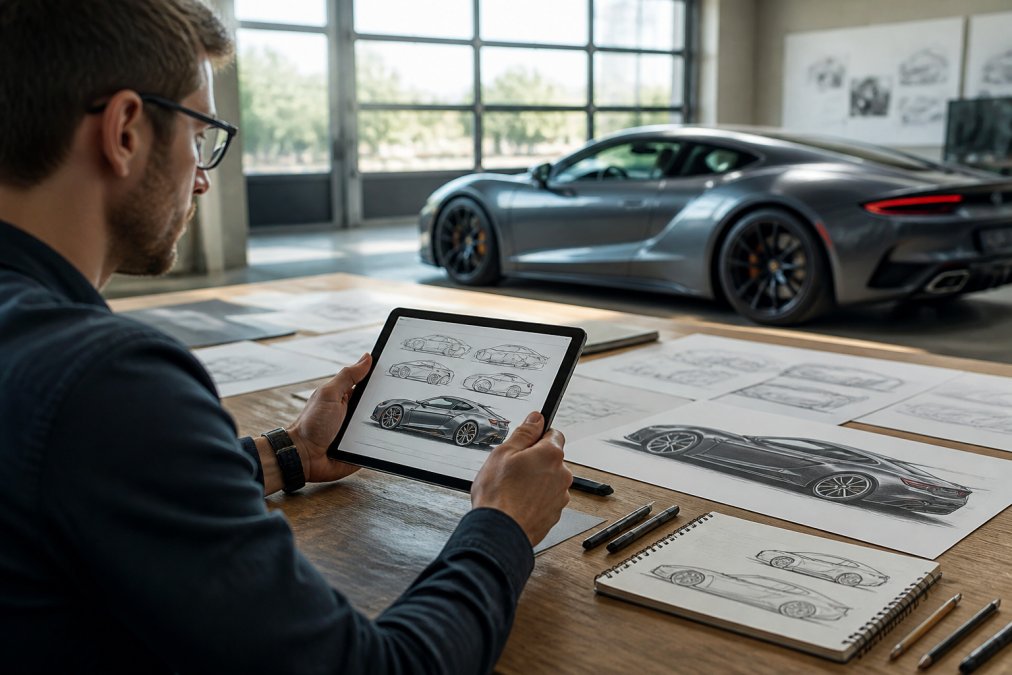
According to Automotive Design Industry Standards from ADDA, portfolios demonstrating clear design intent, technical understanding, and storytelling rank significantly higher in recruiter evaluations than those simply displaying finished images.
The Recruiter's Perspective on Portfolio Quality
Recruiters spend an average of 90 seconds reviewing a portfolio before deciding whether to move forward. They evaluate across three dimensions: technical competence (sketching, rendering, modeling), design thinking (understanding the design process), and communication (explaining your work).
The critical insight most portfolio guides miss: recruiters want to see your decision-making, not just output. They want to understand why you chose specific colors, proportions, and design language. A single project with clear reasoning beats five projects presented without context.
Pro Tip Include a 2-3 sentence explanation with every major project. Explain the design challenge, your approach, and the outcome. This transforms a portfolio from a gallery into a demonstration of your thinking.Structuring Your Design Projects for Maximum Impact
Start with your strongest work. The opening project sets the tone and should demonstrate both technical skill and design maturity. Follow with 3-5 additional projects showing range across vehicle types, design approaches, and scales.
Each project should follow a consistent structure: challenge statement, design approach, key decisions, and final outcome. This consistency makes your portfolio feel professional and organized.
Quality Over Quantity: Choosing Your Best Work
A portfolio with four excellent projects outperforms one with eight mediocre projects. Evaluate each project honestly: Does it demonstrate a skill you want to be known for? Does it show growth or unique perspective? Would you defend every design decision during an interview?
Your portfolio should contain 4-8 projects for entry-level positions and 6-10 for mid-career designers. Each project should warrant 3-5 minutes of viewing time.
Watch Out Including student work alongside professional work signals insufficient professional experience. Be consistent, show either all student work or all professional work, not a mix.Essential Project Types to Include
Include at least one project from each category:
- Electric vehicle or future mobility concept: Shows understanding of current industry direction
- Commuter or daily driver redesign: Demonstrates practical design thinking and package engineering
- Luxury or premium vehicle: Shows design language, proportion, and brand positioning understanding
- Personal project or passion build: Reveals genuine interest and creative freedom
- Modification or restyling project: Proves ability to work within existing constraints
This mix signals versatility across market segments, design philosophies, and technical challenges.
Automotive Design Portfolio Examples That Work
A well-executed portfolio might feature a redesigned electric city car as the opening project, explaining the brief, showing initial sketches exploring proportions, including orthographic views demonstrating package efficiency, and presenting final renderings with context about design language. The viewer understands not just what the car looks like, but why.
Another strong example: a luxury SUV redesign including competitive analysis showing differentiation, sketches showing design language evolution, and final renderings in real-world contexts rather than sterile studio backgrounds.
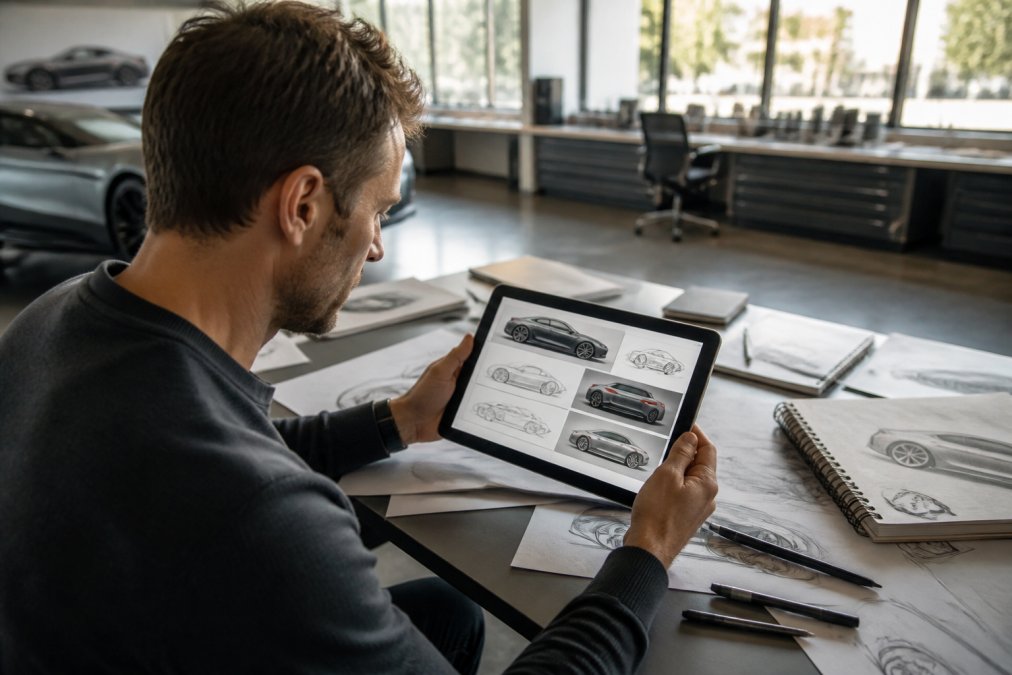
The most effective portfolios include project documentation showing the design process, before-and-after sketches, iteration studies, and concept evolution, demonstrating refined thinking rather than instant final answers.
Mastering the Design Narrative and Storytelling
Every project needs a narrative explaining why the design matters and why your approach was right. Strong narratives follow a simple structure: context (market, customer, constraints), challenge (problem being solved), approach (methodology and key decisions), and outcome (results and lessons learned).
This structure mirrors how real design projects unfold and gives viewers a framework for understanding your thinking. Keep narratives concise: two to three sentences per section balances brevity with clarity.
How to Present Your Design Process in Your Portfolio
Showing process separates strong portfolios from weak ones. It demonstrates methodology, not just taste, and proves you can explain and defend decisions.
Include 3-5 key process images per major project: initial sketches showing concept exploration, proportional studies, development sketches showing evolution, and technical views demonstrating package efficiency. Arrange chronologically to show progression.
Sketching is particularly important, it reveals your ability to generate ideas quickly and explore multiple directions. Include both rough ideation and refined development sketches.
Digital modeling and rendering should also be documented. Show wireframe views, clay renders, and final photorealistic renderings, demonstrating technical proficiency and communication at different fidelity levels.
Key Takeaway The most hireable designers explain their process clearly. Include process documentation as your competitive advantage.Technical Skills: Sketching, Rendering, and Digital Modeling
Technical competence in three core areas separates professionals from enthusiasts: sketching, rendering, and digital modeling.
Sketching ability signals quick idea generation and three-dimensional thinking. Strong sketches show understanding of perspective, proportion, and design language. Include both rough ideation and refined development sketches.
Rendering ability demonstrates mastery of color, material, lighting, and context. Renderings should be photorealistic or stylized consistently, mixing styles looks unprofessional.
Digital modeling proficiency shows competence with industry-standard tools. Include wireframe views, orthographic projections, and multiple viewing angles, proving understanding of package engineering and proportional accuracy.
Best Software for Car Design and Portfolio Presentation
Most professional automotive designers use a combination of sketching software, 3D modeling tools, and rendering engines. Your portfolio should demonstrate proficiency with industry-standard tools employers recognize.
Sketching tools like Procreate, Clip Studio Paint, or Adobe Fresco are industry standards. 3D modeling typically happens in Alias, CATIA, or Rhino. If unavailable, Fusion 360 or Blender demonstrate 3D competency. Rendering engines like KeyShot, V-Ray, or Unreal Engine produce professional-quality images.
Research from Automotive Design Hiring Survey indicates employers prioritize Alias and CATIA proficiency but recognize emerging designers often use alternative tools. What matters most is technical execution quality.
Professional Presentation and Digital Portfolio Hosting
Your portfolio website should load quickly, display beautifully on mobile devices, and enable intuitive navigation. Viewers should understand your work within 30 seconds of landing on your site.
The website design should reflect your personal design philosophy, clean, organized, and professional, with your work as the star. Include contact information prominently, a brief bio establishing experience level and design interests, and links to actively maintained social media or professional networks.
Choosing the Right Digital Portfolio Platform
Squarespace and Wix offer portfolio-specific templates requiring no coding knowledge. Adobe Portfolio integrates with Creative Cloud for seamless workflow. Cargo and Format are design-focused with tailored features. Custom websites via WordPress or Webflow offer maximum flexibility.
| Platform | Starting Price | Best For | Customization | Mobile-Friendly |
|---|---|---|---|---|
| Squarespace | $12/month | Beginners | Moderate | Excellent |
| Adobe Portfolio | Free with CC | Adobe users | Limited | Excellent |
| Cargo | $15/month | Design-focused | High | Excellent |
| Webflow | $12/month | Advanced users | Maximum | Excellent |
| WordPress | $5/month | Custom builds | Maximum | Configurable |
Portfolio Metrics and Analytics to Track
Track which projects attract the most attention and how long viewers spend on each. Monitor where viewers exit your site. Use this data to refine your portfolio, replace underperforming projects and improve engagement.
Pay attention to traffic sources to focus promotional efforts effectively.
Common Mistakes to Avoid When Building Your Car Portfolio
The biggest mistake is including too much work. A portfolio with 12 mediocre projects signals inability to evaluate your own work critically.
The second biggest mistake is presenting work without context. Always include brief project descriptions explaining the challenge, approach, and outcome.
Inconsistent presentation standards, mixing photorealistic and stylized renders, or including process documentation for some projects but not others, make portfolios look disorganized. Establish standards and apply them consistently.
Watch Out Avoid placeholder text or generic descriptions. "This is a concept [car design](/blog/best-apps-for-car-enthusiasts)" tells viewers nothing. "This electric city car concept prioritizes accessibility for elderly users by lowering the floor height by 200mm and widening the door opening by 15%" explains your thinking precisely.Avoid showcasing only personal or only client work. The best portfolios mix both, showing genuine interests alongside real problem-solving within constraints. Invest in high-quality photography or rendering, low-resolution images look unprofessional. Finally, keep your portfolio website design timeless and professional, not trendy.
Building a car portfolio that attracts attention requires strategic curation, clear storytelling, and professional presentation. CarJourney helps automotive enthusiasts and professionals document their projects with precision, tracking every modification, upgrade, and design iteration so your portfolio foundation is built on verified project history. Start organizing your automotive projects with CarJourney and transform scattered documentation into a compelling narrative that buyers, employers, and collaborators trust.
Frequently Asked Questions
How many projects should I include in my car portfolio?
Most hiring managers review 4 to 8 strong projects rather than 15 weak ones. Focus on depth: each project should clearly show your design process, from initial sketching through final rendering. Include work that demonstrates range across different vehicle types or design challenges. A graduate designer typically starts with 4-6 polished pieces; experienced designers often feature 8-12. Quality storytelling matters more than quantity.
What are the most common mistakes in automotive design portfolios?
Hiring managers frequently see portfolios that skip the design process entirely, showing only final renders without sketches or ideation. Others fail to explain design intent or decisions. Weak presentations, inconsistent layout standards, and poor image quality also hurt perception. Many designers neglect orthographic views or package engineering details that prove technical competence. Avoid treating your portfolio as a gallery; treat it as evidence of how you think and solve problems.
Do I need 3D modeling and rendering skills for a car design portfolio?
Technical proficiency in digital modeling strengthens your portfolio, but strong sketching and concept development can compensate if your design narrative is clear. Many successful portfolios combine hand sketching with digital rendering to show both ideation and refinement. What matters most is demonstrating your design language, proportions, and surfacing intent. If 3D is not your strength, excel at perspective drawing, color and trim visualization, and explaining your design philosophy.
How do I show my design process in a portfolio when space is limited?
Use a structured layout that guides viewers through your thinking. Start with a brief design brief or problem statement, then show 3-4 key sketches from ideation, followed by refined concepts, and finally the developed design with orthographic views. Include annotations explaining your decisions about proportions, surfacing, and design intent. Digital portfolios allow you to expand sections on demand, while physical portfolios benefit from a clean grid layout that maximizes information density without clutter.
What's the difference between a personal branding portfolio and a job application portfolio?
A job application portfolio focuses on technical skills, design process, and problem-solving relevant to the role. A personal branding portfolio can be broader, showing your design philosophy, creative network connections, and unique perspective. For early-career designers, job portfolios should emphasize mobility systems, electric vehicles, and user experience thinking. Personal branding portfolios can include experimental work, side projects, or community contributions that demonstrate your voice and values as a designer.
Should I include personal projects or only professional work in my car portfolio?
Personal projects are valuable if they demonstrate skills and thinking comparable to professional work. A well-executed student project or hobby design can be stronger than weak professional work. What matters is execution quality, clear documentation of your design process, and evidence of technical skills like sketching, rendering, and digital modeling. Include personal work if it fills a gap in your portfolio or shows your design language more authentically than available professional pieces.
Get Started TodayThis article was written using GrandRanker