 carjourney
From the CarJourney journal
How to Create a Car Maintenance Schedule (2026 Guide)
Table of Contents
- Why a Car Maintenance Schedule Matters More Than You Think
- Start With Your Owner's Manual Maintenance Schedule
- Build a Car Maintenance Schedule by Mileage and Time
- Vehicle Maintenance Log Template: What to Record and Why
- Car Maintenance Spreadsheet vs. Digital Tracker
- Prioritize Safety-Critical and Overdue Maintenance
- Budgeting for Routine Service and Major Repairs
- Conclusion
- Frequently Asked Questions
Last Updated: October 8, 2026
Why a Car Maintenance Schedule Matters More Than You Think
A car maintenance schedule is a written plan listing every service your vehicle needs, when it needs it, and how you will track it.
Preventive maintenance protects your most expensive asset after your home, keeping your vehicle safe, holding resale value, and preventing breakdowns.
Yet most drivers run on memory and hope. They remember the oil change but forget the brake fluid.
Key Takeaway A car maintenance schedule turns vague good intentions into dated, trackable tasks. That single shift is what separates a well-kept vehicle from an expensive surprise.Start With Your Owner's Manual Maintenance Schedule
Your owner's manual is the only maintenance schedule written specifically for your vehicle, listing the exact service intervals the manufacturer recommends for your make, model, and engine.
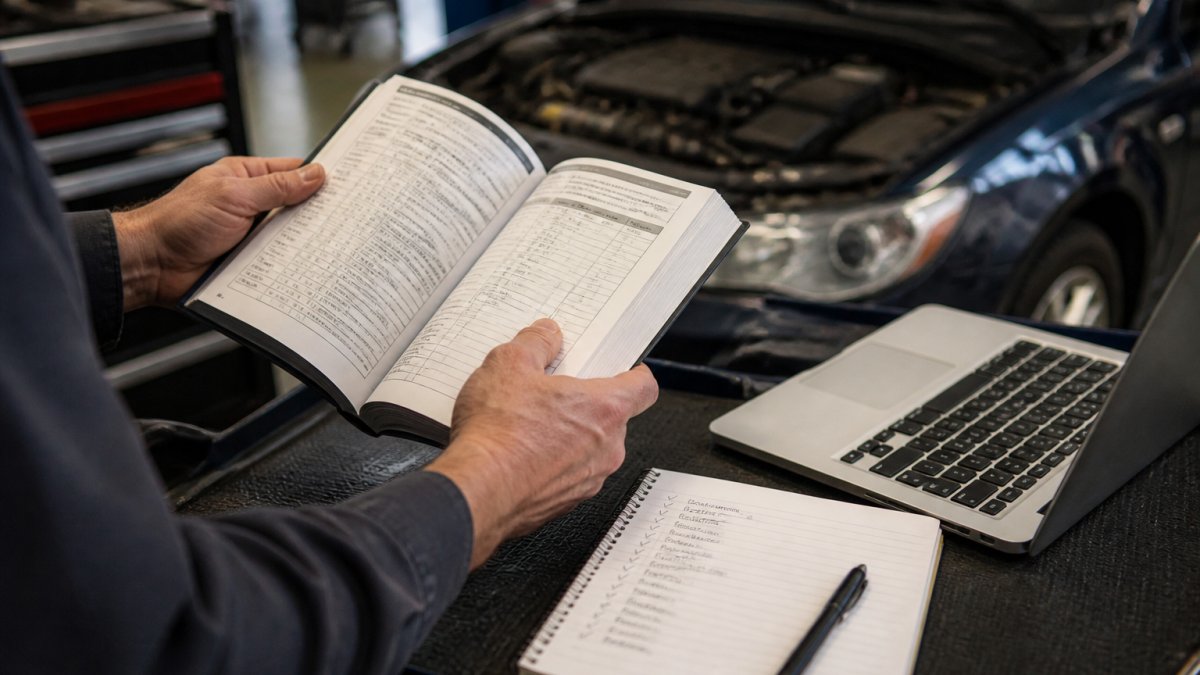
Start there, not with a generic online chart: charts guess, your manual knows.
Here is how to pull the schedule out of it:
- Find the maintenance section, usually near the back.
- Locate the interval table for your model year and engine.
- Note every item with a mileage or time trigger.
- Flag the "severe service" column if you drive in traffic, dust, or extreme heat or cold.
What most guides miss is that the manual often lists two schedules: normal and severe. Most city drivers actually fall under severe service without realizing it.
For a deeper look at what manufacturers recommend, the National Highway Traffic Safety Administration vehicle safety resources is a solid starting point.
Build a Car Maintenance Schedule by Mileage and Time
A complete car maintenance schedule by mileage combines two clocks: the odometer and the calendar. Whichever comes due first wins, the rule that trips up most owners.
Mileage-Based Intervals
Mileage intervals trigger service based on how far you have driven, oil changes, tire rotations, and filter replacements, checked against your odometer, not the date.
Time-Based Intervals
Time intervals trigger service based on the calendar, regardless of miles driven. Fluids degrade, belts dry out, and batteries weaken even when a car sits parked, brake fluid, coolant, and transmission fluid often fall here.
When Both Intervals Compete: Which Wins?
When both intervals apply to the same part, service it at whichever arrives first. A low-mileage car that sits for months still needs fresh fluids on schedule, while a high-mileage commuter may blow past the calendar date long before the mileage mark.
- Oil and filter: mileage first for most drivers
- Brake fluid: time first, it absorbs moisture
- Coolant: whichever comes first
Vehicle Maintenance Log Template: What to Record and Why
A vehicle maintenance log template captures what you did, when, and at what mileage. Its real power shows up at resale, when a documented history proves your car was cared for.
The worksheet is the plan; the log is the proof. Build the worksheet first, then let the log fill itself in as each task is completed.
Step 1: Build the Worksheet From Your Owner's Manual
Open the maintenance section of your manual and copy every service item into a single table. Do not filter yet, capture everything, even items you think you will never need. Prune later.
Use these columns:
| Service Item | Interval (Miles) | Interval (Months) | Severe-Duty Interval | Last Done (Miles/Date) | Next Due (Miles/Date) | Done? |
|---|---|---|---|---|---|---|
| Engine oil and filter | ||||||
| Tire rotation | ||||||
| Cabin air filter | ||||||
| Engine air filter | ||||||
| Brake fluid | ||||||
| Coolant | ||||||
| Transmission fluid | ||||||
| Spark plugs | ||||||
| Battery test | ||||||
| Drive belts | ||||||
| Wiper blades |
Fill the interval columns straight from the manual, including both normal and severe schedules. Most drivers who sit in stop-and-go traffic, take frequent short trips, tow, or drive in dust or extreme temperatures fall under severe service without realizing it, check that column first.
Step 2: Convert Intervals Into Due Dates
An interval is not a schedule until it has a date attached. For each row, add the interval to your current odometer reading for the next due mileage, and add the month interval to today's date for the next due date.
Example: your manual calls for oil and filter every 7,500 miles or 12 months. You are at 42,000 miles today, and your last oil change was 8 months ago. Next due mileage is 49,500; next due date is 4 months out.
Step 3: Set Reminders at Both Triggers
Set a calendar reminder for the due date and a mileage reminder for the due odometer reading, a sticky note on the dashboard or a phone reminder you reset at each fill-up. Neither clock should run silently.
Step 4: Log Every Completed Service
When a task is done, move it from the worksheet to the log. Record these fields for every service:
- Date of service
- Odometer reading
- Service performed
Here is a fill-in log entry you can copy today:
Date: __________ Odometer: __________ Service: ______________________________ Parts/Fluids: __________________________ Shop or DIY: ___________________________ Cost: $________ Receipt: [ ] yes [ ] no Next due (miles/date): _________________
Why the Worksheet Beats a Generic Chart
A generic online chart guesses at intervals; your manual knows them for your exact make, model, engine, and model year. The worksheet pulls those numbers into one place, attaches real dates, and keeps a completion record beside each task, the difference between good intentions and a schedule you can actually run.
Keep every receipt, and photograph them if paper piles up. A log without receipts is just a diary; a worksheet without a log is just a wish list.
Pro Tip If your manual lists a service you have never heard of, do not skip it. Look up what it does before deciding it is optional. Some items, like brake fluid and coolant, protect expensive components even when the car feels fine.Car Maintenance Spreadsheet vs. Digital Tracker
A car maintenance spreadsheet works fine for one car if you enjoy fiddling with rows and formulas.
| Method | Best For | Weakness |
|---|---|---|
| Paper notebook | One simple car | Easy to lose, no reminders |
| Spreadsheet | One car, tech-comfortable owner | Manual entry, no alerts |
| Digital tracker | Multiple cars, project builds | Needs setup time |
Spreadsheets demand discipline. You have to remember to open the file, and nothing nudges you when an oil change comes due.
This is exactly where CarJourney fits.
For owners juggling a daily driver and a weekend project, that single hub beats five scattered notes every time.
Prioritize Safety-Critical and Overdue Maintenance
When services pile up, tackle safety-critical ones first. Brakes, tires, steering, and lights protect your life; cosmetic or comfort items can wait.
Sort your overdue list into three tiers:
- Stop driving until fixed: brake issues, bald tires, failed lights
- Fix this month: worn belts, low fluids, weak battery
- Fix this season: cabin filter, wiper blades, detailing
A weekly walk-around catches small problems before they grow: check tire pressure, tread depth, and leaks. A monthly fluid check adds another layer of protection.
Watch Out Ignoring a brake or tire warning to save money now often leads to a crash or a far bigger repair bill later. Safety items are never the place to cut corners.Budgeting for Routine Service and Major Repairs
Routine service costs far less than emergency repairs, and planning for both keeps your budget steady. Set aside a monthly amount so a surprise never wrecks your finances, the trick is knowing what routine actually costs, how driving conditions change the number, and how to tell a required service from an optional one.
Separate Scheduled Maintenance From Repairs
These are two different budgets, and mixing them blindsides owners.
- Scheduled maintenance is what your owner's manual calls for at a set interval: oil and filter, tire rotation, fluid changes, filter replacements, inspections. It is predictable, and you can plan for it months ahead.
- Repairs are unplanned failures: a worn-out alternator, a leaking water pump, a cracked radiator, a failed wheel bearing. You cannot schedule them, but you can expect them eventually.
A common pattern is to fund scheduled maintenance from a monthly set-aside and repairs from a separate cushion. When a shop recommends a service, ask one question: is this in my owner's manual's maintenance table? If yes, it is scheduled maintenance; if no, it is a repair or an optional service, and optional services deserve a second look before you approve them.
Realistic Cost Ranges to Plan Around
Actual prices vary widely by vehicle, region, and whether you use a dealer or an independent shop, but these ranges are a reasonable planning baseline for a typical gasoline passenger car:
| Service | Typical Range |
|---|---|
| Oil and filter change (conventional or blend) | $40-$80 |
| Oil and filter change (full synthetic) | $70-$130 |
| Tire rotation | $20-$60 (often free with an oil change) |
| Cabin air filter | $30-$80 installed |
| Engine air filter | $30-$80 installed |
| Brake fluid flush | $80-$150 |
| Coolant flush | $100-$200 |
| Transmission fluid service | $150-$400 |
| Spark plugs (four-cylinder) | $150-$400 |
| Battery replacement | $150-$300 |
| New tires (set of four, installed) | $500-$1,200 |
| Brake pads and rotors (per axle) | $300-$800 |
Treat these as planning numbers, not quotes. Get two or three estimates for anything over a few hundred dollars, and ask whether the price includes parts, labor, and disposal fees.
How Driving Conditions Change the Math
Your owner's manual's severe-service schedule is not a marketing gimmick, it is a shorter interval, and shorter intervals mean more spending per year. If you tow, sit in stop-and-go traffic, take frequent short trips, or drive in dust or extreme temperatures, expect to service fluids and filters more often. Budget accordingly.
Vehicle type matters too:
- Hybrids often use regenerative braking, which stretches brake pad life but still requires brake fluid service on schedule. Engine oil intervals can be longer, but the engine still cycles on and off, so short-trip wear is real.
- Electric vehicles skip oil, spark plugs, and most fluid services, but they still need tire rotation, cabin air filter changes, brake fluid service, coolant service on some models, and battery thermal management checks. Tire costs can run higher because EVs are heavier and wear tires faster.
- Older cars tend to need more frequent fluid and belt service, and parts availability can push repair costs up.
A Simple Monthly Set-Aside Method
Estimate your yearly scheduled maintenance, add a repair cushion, and divide by twelve. Deposit that amount into a dedicated account each month. When a service comes due, the money is already there.
Track what you actually spend in your maintenance log. After a year, your own numbers become the best predictor of next year's costs, better than any generic chart, because they reflect your car, your driving, and your local labor rates.
Watch Out A shop recommendation is not the same as a manufacturer requirement. Before approving any service not listed in your owner's manual, ask what problem it solves and what happens if you wait. Legitimate preventive services will have a clear answer. Vague answers are a signal to get a second opinion.Consumer Financial Protection Bureau money management tools offers free budgeting resources if you want a structured system for the set-aside.
Conclusion
Building a car maintenance schedule takes an afternoon, but the payoff lasts the life of your vehicle. Start with your owner's manual, combine mileage and time intervals, log every service, and fund both routine care and big repairs.
CarJourney makes that whole process simpler.
Get started with CarJourney and turn scattered receipts into a service history you can actually trust.
Frequently Asked Questions
What is the 30-60-90 rule for car maintenance?
The 30-60-90 rule is a budgeting guideline: set aside $30 per month for routine maintenance, $60 monthly for a newer car's potential repairs, and $90 monthly for an older vehicle. It helps you avoid surprise bills by saving consistently. Adjust based on your car's age, mileage, and condition. Pair it with a car maintenance schedule that includes oil changes, tire rotations, and fluid checks.
Should I follow my owner’s manual or a general maintenance schedule?
Always follow your owner’s manual maintenance schedule first. It lists intervals specific to your make, model, and engine. General schedules are a fallback if the manual is missing. Your driving conditions (towing, short trips, extreme temperatures) may require more frequent service than the manual states. Use the manual as your baseline, then adjust for how you actually drive.
How do I track car maintenance by mileage and time?
Record both the odometer reading and the date for every service. Use a vehicle maintenance log template or a car maintenance spreadsheet with columns for date, mileage, service performed, cost, and next due. Whichever comes first (miles or months) triggers the service. A digital tracker like CarJourney can send reminders for both, so you never miss an oil change or tire rotation.
What should a car maintenance checklist include?
A basic checklist covers oil and filter changes, tire pressure and tread checks, tire rotations, fluid level inspections (coolant, brake, transmission, windshield washer), brake inspections, battery checks, and a walk-around for lights and leaks. Add manufacturer-specific items from your owner’s manual. Review the checklist monthly and update your log after every service to keep your maintenance history complete.
Start free